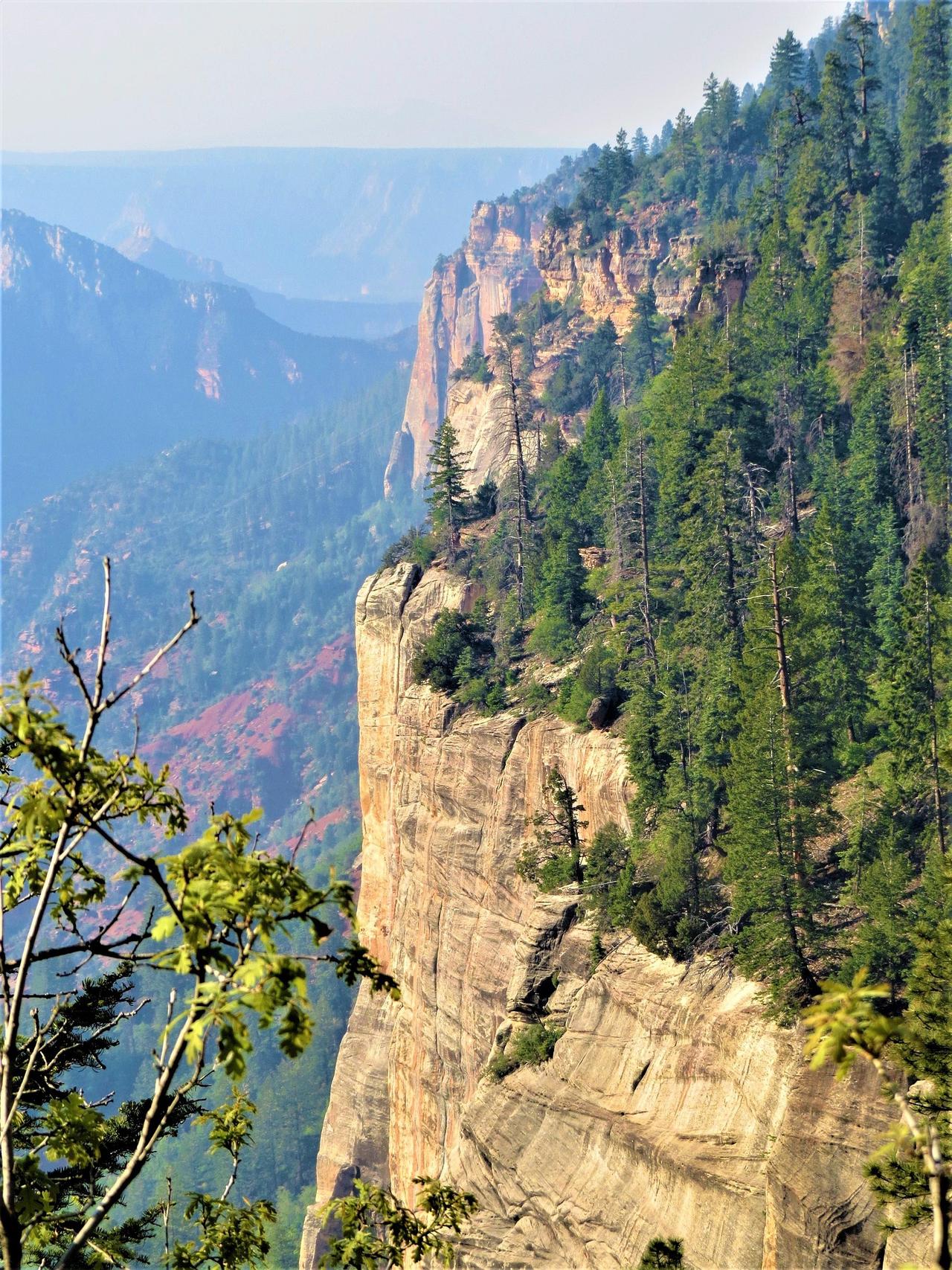


This article was automatically translated from the original Turkish version.
+1 More
Grand Canyon, located in the state of Arizona in the United States of America, is one of the most extensive and complex geomorphological systems on Earth, formed by deep erosion of the Colorado Plateau. The canyon’s origin, a subject of intense scientific debate for nearly 150 years, resulted not from the linear and continuous erosion of a single river system but from the integration of older, independently carved paleocanyons during different geological periods, which were later connected by the Colorado River through basin integration【1】. Although the modern canyon’s final morphological unity was completed approximately 5 to 6 million years ago, some of the fundamental valley units forming the canyon have an erosion history dating back as far as 70 million years【2】.
The formation of the Grand Canyon is explained by the “paleocanyon integration” model, a synthesis of the “young canyon” (5–6 million years) and “old canyon” (70–55 million years) hypotheses. Advanced thermochronological methods such as apatite fission-track and helium dating have determined that the modern canyon consists of five main segments, each with its own distinct erosion and cooling history【3】.
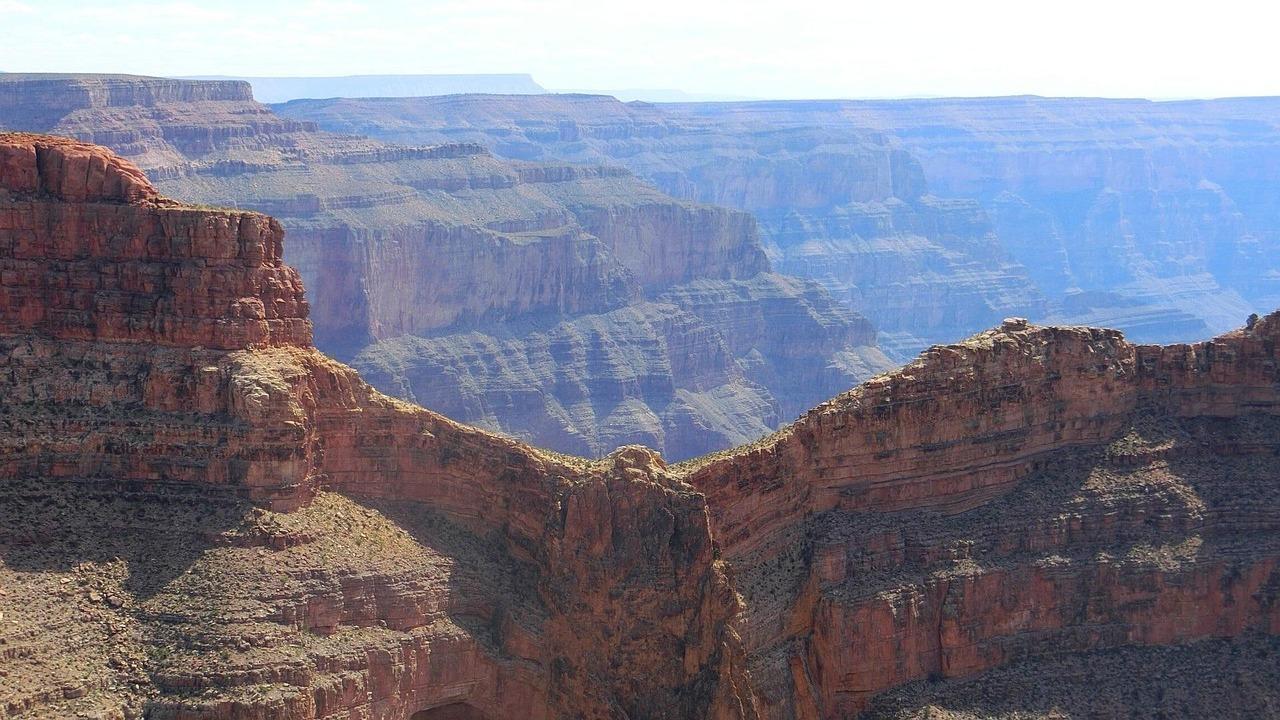
Grand Canyon(Pixabay)
One of the oldest sections, formed approximately 65–50 million years ago by the Hualapai paleoriver, which flowed northward and carved to nearly half the depth of the modern canyon【4】.
A middle-aged segment carved along the Kaibab Uplift between 25 and 15 million years ago, part of the pre-Colorado River drainage system and known as the “East Kaibab paleocanyon”【5】.
These sections represent the geologically youngest parts of the canyon and were carved contemporaneously with the Colorado River’s connection to the Gulf of California less than 5–6 million years ago【6】.
Following the integration of these fragmented paleovalley systems by the Colorado River 5–6 million years ago, the canyon has continued to deepen steadily at a rate of 100–200 meters per million years over the past 4 million years【7】.
The Grand Canyon’s morphological character consists of a vast series of stepped cliffs formed by differential erosion of sedimentary layers with varying resistance【8】. The canyon’s vertical and horizontal dimensions are defined by the following technical data.
The vertical depth from the rim to the riverbed ranges between 4,000 and 6,000 feet (1,200–1,800 meters)【9】. The aerial distance between rims averages 8 miles, decreases to 6 miles in narrow gorges, and reaches up to 13 miles in the widest and deepest embayments【10】. The total length of the canyon along the Colorado River channel is 225 miles, excluding the 52-mile Marble Gorge section【11】. The canyon’s vertical profile is dominated by characteristic geological strata: approximately 400 feet high limestone cliffs known as the “White Wall” dominate the upper profile, while 550-foot formations known as the “Red Wall,” comparable in height to the Washington Monument, occur at mid-levels【12】.
At the canyon’s lowest level, the river has carved a narrow V-shaped “Granite Gorge,” approximately 1,000 to 1,300 feet deep, through hard Precambrian crystalline rocks【13】.
The systematic topographic mapping of the Grand Canyon was initiated in 1902 by the United States Geological Survey (USGS) and completed after 22 years of fieldwork. This project is regarded as one of the most complex endeavors in the history of modern cartography due to the extreme terrain conditions【14】.
Due to the canyon’s steep, unobstructed views, mapping was conducted entirely using the plane-table method【15】. During traverse measurements on the plateaus, canyon interior details were determined through thousands of long-distance intersections from rim stations【16】.
Field teams encountered extreme temperatures, reaching 96°F (35.5°C) even at 6:00 a.m. at the canyon floor【17】. Due to the absence of water sources, drinking water had to be transported 35 miles by tank wagons, trucks, and pack animals【18】.
In the early stages, with no bridges over the river, equipment transport was achieved by navigating the swift waters with primitive boats and by swimming animals across【19】.
To effectively represent the canyon’s steep morphology, the map was printed at a scale of 1:48,000 with a contour interval of 50 feet (approximately 15 meters)【20】.
The Grand Canyon was granted National Park status in 1919, placing it under federal protection, and has since become one of the most visited natural areas in the United States of America 【21】. Park management focuses on preserving the ecosystem and maintaining the river system’s balance. Within this framework, institutional and public awareness campaigns are conducted to oppose projects such as dams and mining that threaten the canyon’s natural structure【22】.
A Brief History of Grand Canyon National Park |National Geographic
The park’s modern management implements technical projects aimed at minimizing the negative impacts of human intervention—particularly dams—on the river’s natural dynamics. The operation of the Glen Canyon Dam has blocked the river’s natural sediment transport, leading to erosion of riverbanks and habitats【23】. To reverse this process, periodic high-flow water releases are conducted to create artificial floods, depositing sediments along the riverbanks and constructing new sandbars【24】. Additionally, protecting endangered endemic species and maintaining scientific access to the river corridor are among the top priorities【25】.
The Grand Canyon holds strict conservation status at both national and international levels, with strategies for protecting its natural heritage encompassing legal regulations and public awareness initiatives【26】. Established in 1919, the National Park Service oversees federal-level monitoring of all activities that could compromise the canyon’s geological and ecological integrity. Research agreements with various scientific institutions are maintained to monitor the canyon’s natural state, and access to the river corridor is granted under controlled conditions for scientific purposes【27】. Civil society organizations have also assumed advocacy roles by informing the public about congressional initiatives and federal projects that threaten the canyon’s natural heritage. Active sediment management and coastal restoration projects are regularly carried out to repair the destructive ecological impacts of human-made interventions such as dams【28】.
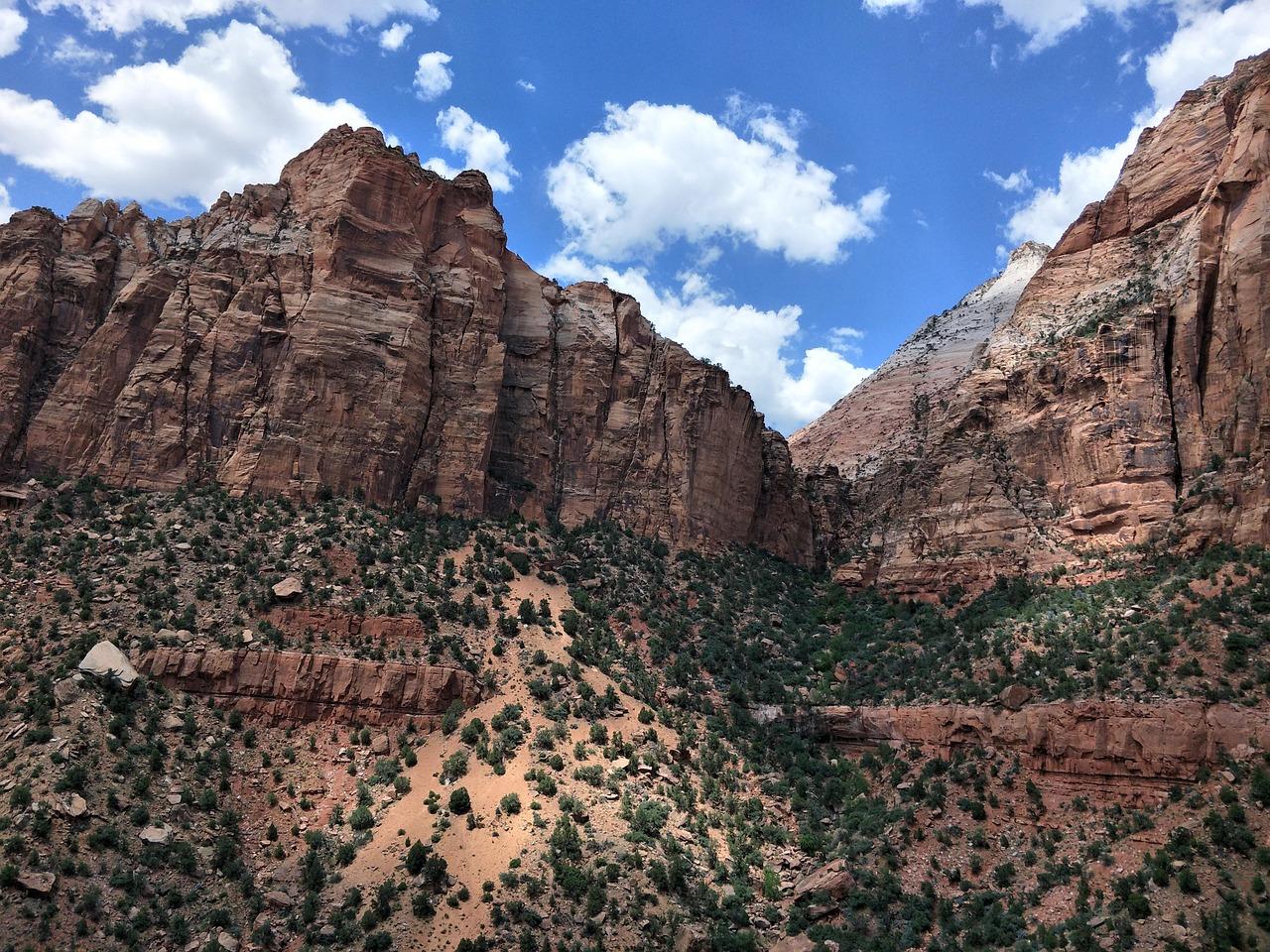
Gran Canyon Ulusal Park (Pixabay)
Due to its universal geological and ecological value, the Grand Canyon was inscribed on the UNESCO World Heritage List in 1979. It is recognized as one of the most significant sites on Earth, displaying a stratigraphic section spanning approximately 2 billion years from the Precambrian to the present. UNESCO status affirms the responsibility to preserve the region’s geological integrity and maintain it as a laboratory for international scientific research【29】.
[1]
Karl E. Karlstrom vd., "Formation of the Grand Canyon 5 to 6 Million Years Ago Through Integration of Older Palaeocanyons," Nature Geoscience 7, sy. 3 (2014): 239, erişim 4 Nisan 2026,https://doi.org/10.1038/ngeo2065
[2]
Karl E. Karlstrom vd., "Formation of the Grand Canyon 5 to 6 Million Years Ago Through Integration of Older Palaeocanyons," Nature Geoscience 7, sy. 3 (2014): 239, erişim 4 Nisan 2026,https://doi.org/10.1038/ngeo2065
[3]
Karl E. Karlstrom vd., "Formation of the Grand Canyon 5 to 6 Million Years Ago Through Integration of Older Palaeocanyons," Nature Geoscience 7, sy. 3 (2014): 239, erişim 4 Nisan 2026,https://doi.org/10.1038/ngeo2065
[4]
Karl E. Karlstrom vd., "Formation of the Grand Canyon 5 to 6 Million Years Ago Through Integration of Older Palaeocanyons," Nature Geoscience 7, sy. 3 (2014): 221-42, erişim 4 Nisan 2026,https://doi.org/10.1038/ngeo2065
[5]
Karl E. Karlstrom vd., "Formation of the Grand Canyon 5 to 6 Million Years Ago Through Integration of Older Palaeocanyons," Nature Geoscience 7, sy. 3 (2014): 240, erişim 4 Nisan 2026,https://doi.org/10.1038/ngeo2065
[6]
Karl E. Karlstrom vd., "Formation of the Grand Canyon 5 to 6 Million Years Ago Through Integration of Older Palaeocanyons," Nature Geoscience 7, sy. 3 (2014): 239, erişim 4 Nisan 2026,https://doi.org/10.1038/ngeo2065
[7]
Karl E. Karlstrom vd., "Formation of the Grand Canyon 5 to 6 Million Years Ago Through Integration of Older Palaeocanyons," Nature Geoscience 7, sy. 3 (2014): 243, erişim 4 Nisan 2026,https://doi.org/10.1038/ngeo2065
[8]
Francois E. Matthes ve Richard T. Evans, “Grand Canyon Ulusal Parkı Haritası,” Askeri Mühendis 18, sy. 99 (Mayıs–Haziran 1926): 196, erişim 4 Nisan 2026,https://www.jstor.org/stable/44691197
[9]
Francois E. Matthes ve Richard T. Evans, “Grand Canyon Ulusal Parkı Haritası,” Askeri Mühendis 18, sy. 99 (Mayıs–Haziran 1926): 188, erişim 4 Nisan 2026,https://www.jstor.org/stable/44691197
[10]
Francois E. Matthes ve Richard T. Evans, “Grand Canyon Ulusal Parkı Haritası,” Askeri Mühendis 18, sy. 99 (Mayıs–Haziran 1926): 188, erişim 4 Nisan 2026,https://www.jstor.org/stable/44691197
[11]
Francois E. Matthes ve Richard T. Evans, “Grand Canyon Ulusal Parkı Haritası,” Askeri Mühendis 18, sy. 99 (Mayıs–Haziran 1926): 188, erişim 4 Nisan 2026,https://www.jstor.org/stable/44691197
[12]
Francois E. Matthes ve Richard T. Evans, “Grand Canyon Ulusal Parkı Haritası,” Askeri Mühendis 18, sy. 99 (Mayıs–Haziran 1926): 196, erişim 4 Nisan 2026.
[13]
Francois E. Matthes ve Richard T. Evans, “Grand Canyon Ulusal Parkı Haritası,” Askeri Mühendis 18, sy. 99 (Mayıs–Haziran 1926): 196, erişim 4 Nisan 2026,https://www.jstor.org/stable/44691197
[14]
Francois E. Matthes ve Richard T. Evans, “Grand Canyon Ulusal Parkı Haritası,” Askeri Mühendis 18, sy. 99 (Mayıs–Haziran 1926): 188, erişim 4 Nisan 2026,https://www.jstor.org/stable/44691197
[15]
Matthes ve Evans, “Büyük Kanyon Ulusal Parkı Haritası”, 196.
Erişim Tarihi: 4 Nisan 2026.
[16]
Francois E. Matthes ve Richard T. Evans, “Grand Canyon Ulusal Parkı Haritası,” Askeri Mühendis 18, sy. 99 (Mayıs–Haziran 1926): 199, erişim 4 Nisan 2026,https://www.jstor.org/stable/44691197
[17]
Francois E. Matthes ve Richard T. Evans, “Grand Canyon Ulusal Parkı Haritası,” Askeri Mühendis 18, sy. 99 (Mayıs–Haziran 1926): 196, erişim 4 Nisan 2026,https://www.jstor.org/stable/44691197
[18]
Francois E. Matthes ve Richard T. Evans, “Grand Canyon Ulusal Parkı Haritası,” Askeri Mühendis 18, sy. 99 (Mayıs–Haziran 1926): 189, erişim 4 Nisan 2026,https://www.jstor.org/stable/44691197
[19]
Matthes ve Evans, “Büyük Kanyon Ulusal Parkı Haritası”, 196-97.
Erişim Tarihi: 4 Nisan 2026.
[20]
Francois E. Matthes ve Richard T. Evans, “Grand Canyon Ulusal Parkı Haritası,” Askeri Mühendis 18, sy. 99 (Mayıs–Haziran 1926): 201, erişim 4 Nisan 2026,https://www.jstor.org/stable/44691197
[21]
Francois E. Matthes ve Richard T. Evans, “Grand Canyon Ulusal Parkı Haritası,” Askeri Mühendis 18, sy. 99 (Mayıs–Haziran 1926): 188, erişim 4 Nisan 2026,https://www.jstor.org/stable/44691197
[22]
Kenneth Light, “Büyük Kanyon,” Science News 91, sy. 16 (22 Nisan 1967): 372, erişim 4 Nisan 2026,https://doi.org/10.2307/3951236
[23]
Jenessa Duncombe, “Büyük Kanyon'da Kum Tepeleri Oluşturmak,” Eos, 12 Şubat 2024, erişim 4 Nisan 2026,. https://eos.org/features/building-sandbars-in-the-grand-canyon
[24]
Kenneth Light, “Büyük Kanyon,” Science News 91, sy. 16 (22 Nisan 1967): 372, erişim 4 Nisan 2026,https://doi.org/10.2307/3951236
[25]
P. E. Grams vd., "Building Sandbars in the Grand Canyon," Eos, 12 Şubat 2024, erişim 4 Nisan 2026.https://eos.org/features/building-sandbars-in-the-grand-canyon
[26]
P. E. Grams vd., "Building Sandbars in the Grand Canyon," Eos, 12 Şubat 2024, erişim 4 Nisan 2026
https://eos.org/features/building-sandbars-in-the-grand-canyon
[27]
UNESCO World Heritage Centre, “Grand Canyon National Park,” erişim 4 Nisan 2026,https://whc.unesco.org/en/list/75/.
[28]
UNESCO World Heritage Centre, “Grand Canyon National Park,” erişim 4 Nisan 2026,https://whc.unesco.org/en/list/75/
[29]
UNESCO World Heritage Centre, “Grand Canyon National Park,” erişim 4 Nisan 2026,https://whc.unesco.org/en/list/75/


Geomorphological Evolution and Segmentalization Theory
Hurricane Fay Segment
East Grand Canyon (East Kaibab)
Marble Canyon and Western Terminus Segment
River Integration and Incision
Physiographic Features and Stratigraphic Structure
Cartographic Research and Technical Methodology
Plane-Table Applications
Logistical and Climatic Challenges
River Logistics
Publication Standards
Institutional Management and National Park Service
Ecological Restoration Strategies
Conservation Status and Safeguarding Natural Heritage
International Status and UNESCO World Heritage