

This article was automatically translated from the original Turkish version.
+1 More
Building Type | Public service structure | ||||||||
|---|---|---|---|---|---|---|---|---|---|
Location | Fatih - Istanbul / Türkiye | ||||||||
Architectural Style(s) | Neoclassical Turkish Style | ||||||||
Protection Status | Group I immovable cultural asset | ||||||||
Architect(s) | Vedat Tek | ||||||||
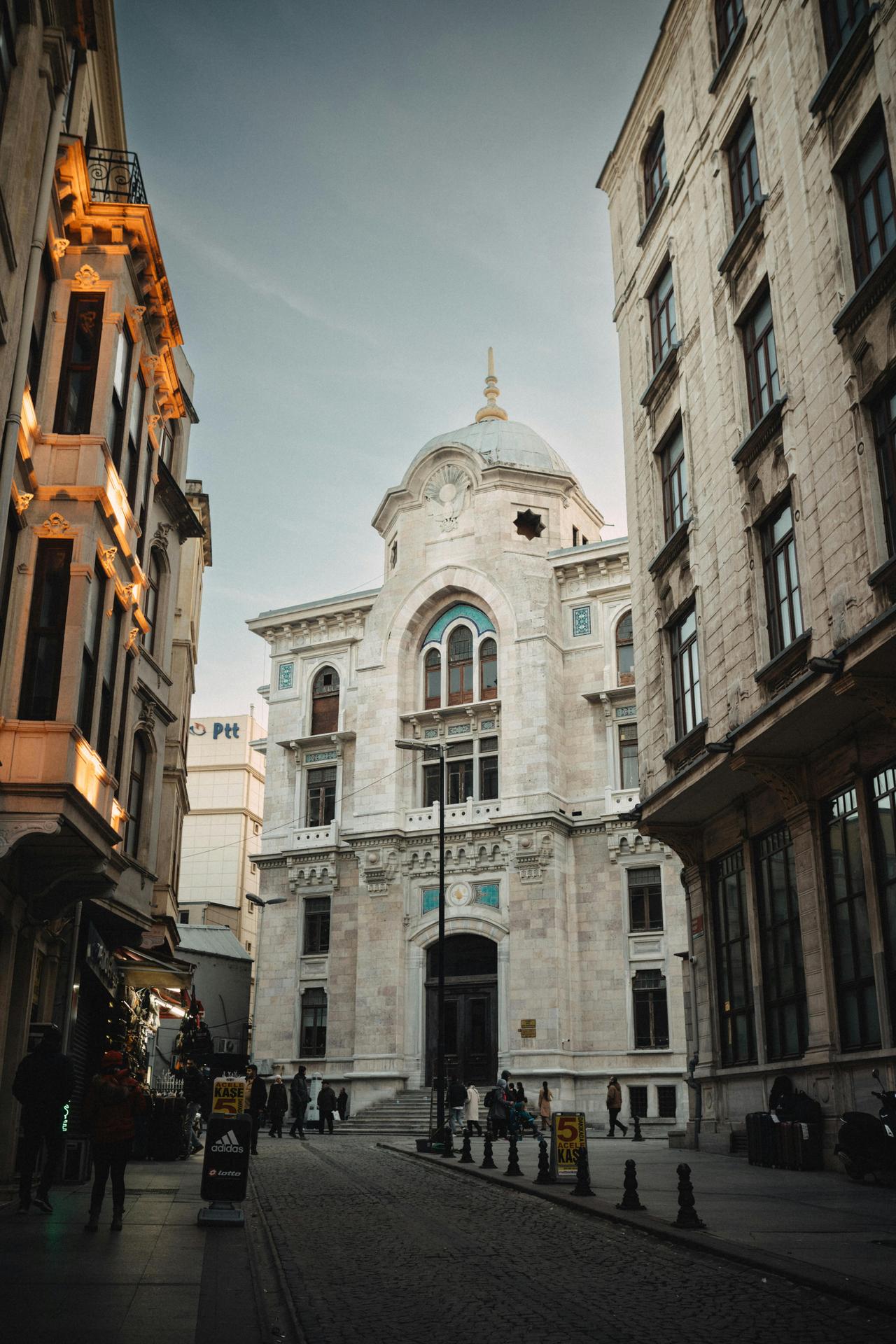
Grand Post Office is a public building located in the Sirkeci district of Istanbul, constructed during the Ottoman period. It was registered as a Category I immovable cultural heritage within the Historic Peninsula Urban and Historic Site Area by Decision No. 6848 of the Istanbul No. 1 Council for the Protection of Cultural and Natural Heritage dated 12 July 1995. The Grand Post Office was designed by Vedat Bey, one of the first Turkish architects, and planned to meet the operational needs of the Postal and Telegraph Administration.

Grand Post Office (pexels)
The Grand Post Office building is an example of the representative and functional architectural approach developed for public buildings in early 20th century Ottoman architecture. Its architect, Vedat Bey, one of the first Turkish architects of the era, designed the structure to accommodate the administrative and service requirements of the Postal and Telegraph Administration. The building has a rectangular plan measuring 90 by 40 metres and features a functional internal spatial organization.
At the center of the building is a large hall measuring 28.15 by 17.5 metres and spanning three storeys in height. This central space is covered by a coloured glass ceiling and has become the building’s primary element, serving both to admit natural light and to create visual emphasis.
The structural system incorporates metal elements and steel trusses reflecting the advanced technology of the period, enabling large open spans. Architectural elements on the façade and interior spaces show influences of Turkish Neoclassical style. Decorative motifs such as rumi patterns, muqarnas, tiles and arches are among the key features defining the building’s aesthetic character.
The interior design prioritized functionality and comfort. The centrally controlled heating and ventilation system, considered innovative for its time, exemplifies this approach. The distributed spaces on each floor were organized to serve the post office, technical services, PTT offices and the PTT Museum.
The ground floor is allocated to units where postal services are most intensively conducted. The large central hall on this level is surrounded by counters designated for individual postal transactions. Technical service areas located around the hall ensured the orderly execution of mail transportation and support operations.
The upper floors house administrative units and PTT offices. These sections encompass spaces for various institutional functions such as correspondence, accounting, telegraph operations and management. A section of the building also houses the PTT Museum.
Various repair and restoration works carried out on the Grand Post Office building over different periods have been conducted in accordance with decisions of the Council for the Protection of Cultural and Natural Heritage, with the aim of preserving the building’s historical and architectural integrity. The first comprehensive decision was issued by the Istanbul No. 1 Council for the Protection of Cultural and Natural Heritage on 26 November 1999, confirming the building’s registration as a Category I immovable cultural heritage. The same decision required the submission of marble flooring surveys, the replacement of flooring in service areas around the postal hall with wood according to approved drawings, and the removal of existing flooring in other areas to investigate the original pavement. Additionally, a restoration project for the roof was requested, including provisions for lead details.
Following a series of council decisions, a number of interventions were carried out between 1999 and 2001. These included the replacement of doors with solid wood, installation of signage on the façade, simple roof repairs, and the application of gold leaf to the PTT lettering and emblem. Documentation confirmed that the calligraphic ornamentation renewals in the PTT Museum section, supervised by the Directorate of Turkish and Islamic Arts Museum, were faithful to the original and that exhibition and arrangement procedures were conducted under museum supervision.
A 2001 council decision specified that glazed partitions and later additions such as ceilings, walls and floor coverings in areas such as the Telegraph Directorate and Accounting Service could be removed. Where original elements such as embroidered decoration were revealed, their restoration using original materials and forms was permitted.
The Istanbul No. 4 Protection Council decision of 2007 approved the restoration of damaged architectural elements at the entrance—such as wood, stone, metal and terracotta—using the same materials and in accordance with their original forms. It also deemed appropriate the restoration of interior and exterior claddings, plaster and colour schemes while maintaining visual harmony.
Two elevators added to the building in 1976 to meet contemporary needs are located in the stairwell on the south side and the stair hall on the north side. These elevators have been recognized as qualified period additions and preserved during the restoration process.
Since 16 November 2017, the building has undergone a comprehensive restoration process. However, due to the absence of detailed information regarding materials, construction techniques and spatial arrangements in the survey and restoration project report based on the Istanbul No. 4 Protection Council’s Decision No. 3146 dated 7 January 2015, quantitative data on works carried out during this period could not be obtained.
The interventions undertaken have aimed to preserve the building’s physical integrity and its original materials and architectural features. Various interventions over different periods have ensured that the Grand Post Office continues to function without compromising its historical identity.

Grand Post Office Façade (unsplash)
The PTT Museum, located within the Grand Post Office building, was established to document the building’s historical function and to present the cultural heritage of postal services to the public. The adaptations made to convert this section into a museum were carried out in accordance with decisions of the Istanbul No. 1 Council for the Protection of Cultural and Natural Heritage.
In the museum area, period-specific calligraphic ornamentation and original furniture have been preserved and displayed, transforming the space into a section that reflects the building’s cultural memory through exhibition and arrangement functions.
The Director’s Office within the museum is one of the significant sections where the building’s historical fittings have been preserved and exhibited. The director’s desk, director’s cabinet, letter cabinet, original doors and windows have been documented alongside other interior elements of the building. Additionally, interior furniture such as the wooden writing desk and benches in the central hall, originally intended for public use, have been integrated into the museum function as handcrafted original examples.
The PTT Museum initiatives were planned and implemented to document the building’s historical identity and ensure cultural continuity. Throughout the entire process, all decisions of the protection council were strictly followed; historical ornamentation and fixed fittings were restored faithfully to their original state and presented to visitors.
Bill, Paul. "a large building with a clock on the front of it JPG." Unsplash. Accessed November 23, 2025. https://unsplash.com/photos/a-large-building-with-a-clock-on-the-front-of-it-_SHF9eH65KE
Ekimci, Gelengül Betül, and Küçükaltay, Ece. "Osmanlı Posta Teşkilatı Yapılarının Kültürel Miras Değerleri Bağlamında İncelenmesi." *TÜBA-KED* 27, (2023): 149–177. Accessed November 23, 2025. https://www.academia.edu/109512406/Osmanli_Posta_Te%C5%9Fki_lati_K%C3%BClt%C3%BCr_Mi_rasi_%C3%9Czeri_ne_Bi_r_De%C4%9Ferlendi_rme
Hut, Davut. "İstanbul Haberleşme Tarihi." *Büyük İstanbul Tarihi.* Accessed November 23, 2025. https://istanbultarihi.ist/228-istanbul-haberlesme-tarihi
Kaya, İrem Nur. "İletişim tarihine tanıklık eden yapı: Büyük Postane." *gzt.* Accessed November 23, 2025. https://www.gzt.com/arkitekt/iletisim-tarihine-taniklik-eden-yapi-buyuk-postane-3660689
Kerimoğlu, Ömür. "Büyük Postane İç Donanımı ve Koruma Sorunları." Master's thesis, İstanbul Kültür Üniversitesi, 2018. Accessed November 23, 2025. https://openaccess.iku.edu.tr/entities/publication/c799c3d3-f2ff-4237-a63d-8271f1f89e51
Ortaç, Musa. "fotoğraf kent şehir JPG." *Pexels*. Accessed November 23, 2025. https://www.pexels.com/tr-tr/fotograf/kent-sehir-kent-simgesi-gorulecek-yer-20170866/
Türk, Sami. "Büyük Postane JPG." Pexels. Accessed November 23, 2025. https://www.pexels.com/tr-tr/fotograf/insanlar-sokak-yurumek-binalar-14156212/

Building Type | Public service structure | ||||||||
|---|---|---|---|---|---|---|---|---|---|
Location | Fatih - Istanbul / Türkiye | ||||||||
Architectural Style(s) | Neoclassical Turkish Style | ||||||||
Protection Status | Group I immovable cultural asset | ||||||||
Architect(s) | Vedat Tek | ||||||||
Architectural Design and Structural Features
Functional Layout
Repair and Restoration Works
PTT Museum