


This article was automatically translated from the original Turkish version.
Green roof systems are applications in which the roof surface of a building is planted with vegetation on a specially designed growing medium installed above a waterproofing layer. Green roofs are primarily constructed not for aesthetic or recreational purposes but to efficiently cover a large portion of the roof and thereby enhance the building’s insulation and energy performance.
These systems are also referred to as “living roofs” or “ecoroofs.” The concept of a roof garden, however, typically describes areas designed for recreational use, equipped with potted plants and outdoor elements, and accessible to people, distinguishing them from green roofs in this regard.
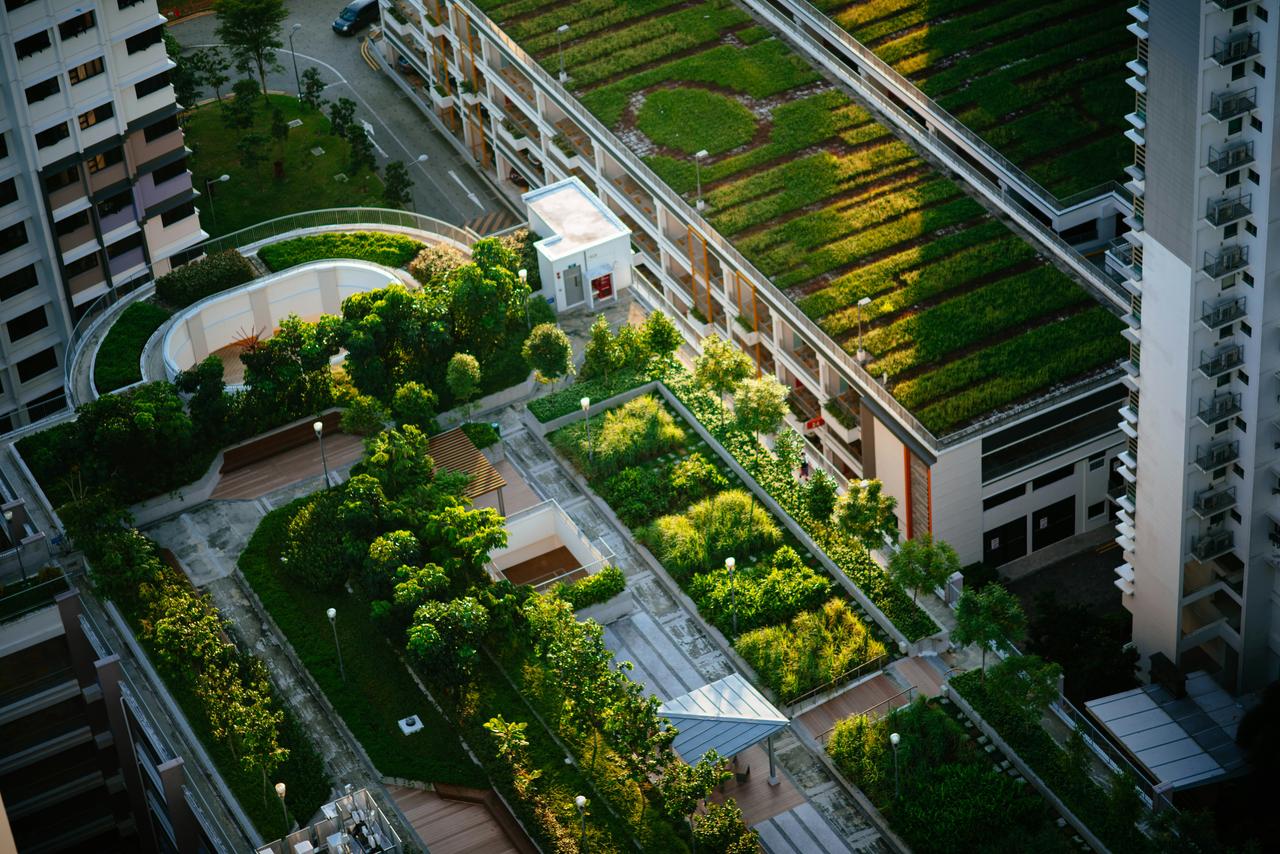
Example of Green Roof System Application (Unsplash)
The practice of vegetating roofs extends back to ancient times. Ziggurats in Mesopotamian civilizations, dating from around 4000 BCE, are among the earliest examples of elevated gardens. The Hanging Gardens of Babylon are another well-known example of such applications. From 800 to 1000 CE during the Viking era, turf-covered roofs were widely used in the North Atlantic regions and Scandinavia. The primary purpose of these practices was generally insulation and protection.
The foundations of modern green roof technology were laid in the late 19th and early 20th centuries, particularly in Germany. In the 1930s, German landscape architect Harry Maasz and architect Le Corbusier supported the idea of treating rooftops as green spaces. In the 1970s, organizations such as the Research Association for Landscape Development and Landscape Construction (FLL) in Germany played a significant role in the widespread adoption of green roofs by developing standardized guidelines for their design and implementation.
Green roofs are primarily classified into two main categories based on factors such as planting density, depth of the growing medium, maintenance requirements, and load on the structural system. The first is intensive green roofs. Intensive green roofs typically have a growing medium deeper than 15 cm, and this depth can reach up to 4.5 meters depending on the plant species. These systems allow for a wide variety of vegetation including shrubs, trees, and diverse groundcovers, and require regular irrigation, fertilization, and maintenance. They are generally accessible to people and used for recreational purposes such as parks and gardens. They can impose a load of approximately 300 to 400 kg per square meter on the structure.
The other category is extensive green roofs. Extensive green roofs have a shallower growing medium, typically between 2 cm and 15 cm. These systems are suitable for species that are resilient to harsh conditions such as drought, wind, and frost, including Sedum species, mosses, and certain herbaceous plants. They are usually not accessible to people and their primary purpose is to provide ecological benefits. They impose an average load of about 100 kg per square meter on the structure. Between these two main types, there also exist semi-intensive green roof systems, which exhibit characteristics intermediate between intensive and extensive systems.
A typical green roof system consists of several layers, each serving distinct functions. At the top is the vegetation layer, composed of plant species selected according to the type of green roof and local climatic conditions. Directly beneath this is the growing medium (substrate), a lightweight mixture with water retention and drainage properties necessary for root development. Below the growing medium lies the filter layer, which prevents fine particles from migrating into the drainage layer and causing clogging.
The drainage layer beneath the filter layer facilitates the removal of excess water from the roof while retaining a portion of moisture for plant use. Beneath this is the protective layer against mechanical damage, which safeguards the waterproofing and root barrier layers from physical harm. Below this, the root barrier layer prevents plant roots from penetrating and damaging the waterproofing membrane.
The waterproofing layer is one of the most critical components, protecting the roof structure from water infiltration. All these layers are installed on a structural roof system capable of supporting the static load of all components and the vegetation layer.
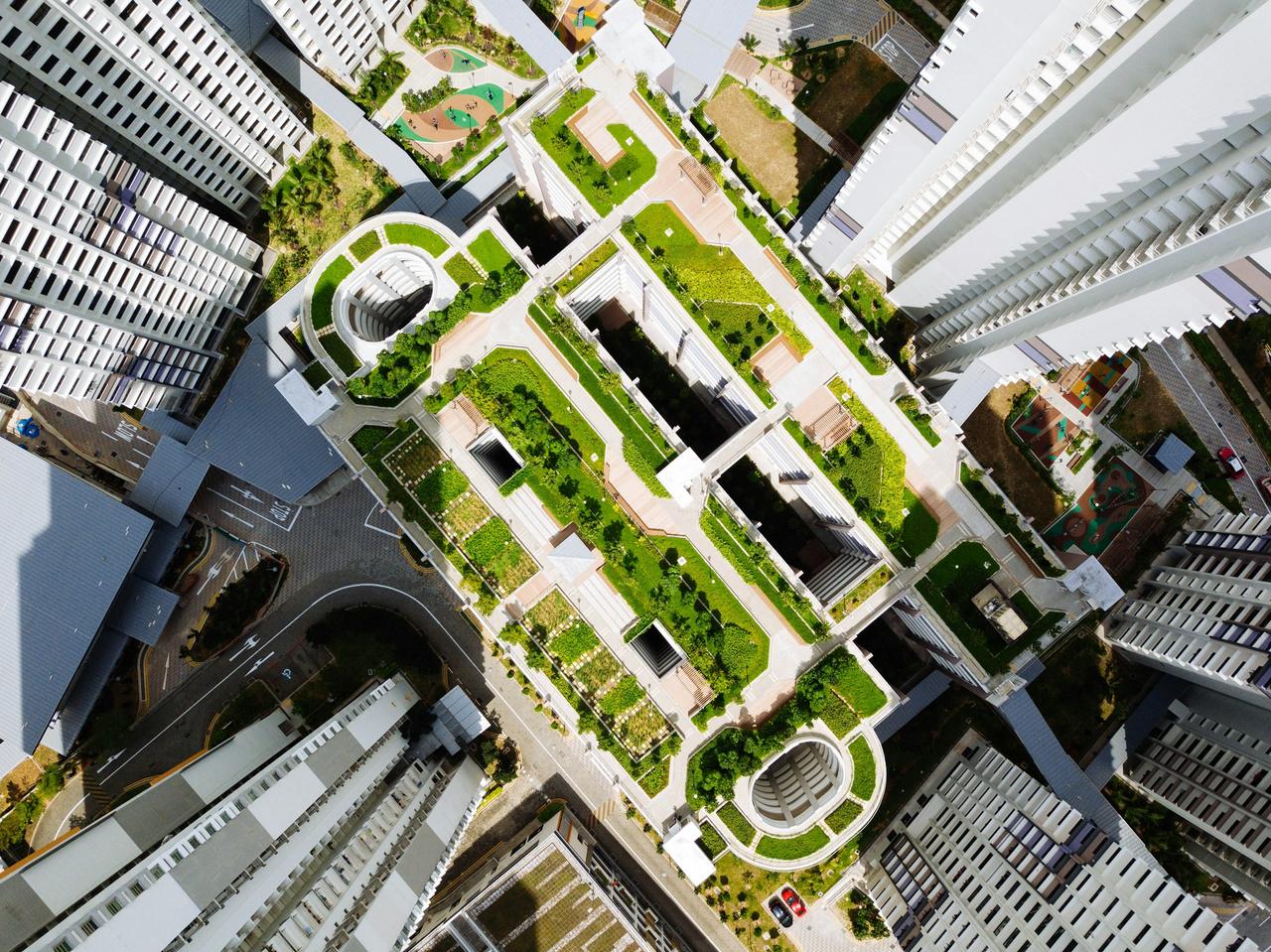
Example of Green Roof System Application (Unsplash)
Green roof systems offer a range of benefits for urban environments and buildings. These advantages can be categorized under ecological, economic, and social headings.
Conservation of Habitat and Biodiversity: Urban vegetation creates new habitats for insects and birds, contributing to biodiversity. A study in Switzerland found that 254 insect species and 78 spider species established populations across 17 newly constructed green roof surfaces.
Reduction of the Urban Heat Island Effect: Through evapotranspiration and shading, vegetation lowers ambient temperatures and mitigates the urban heat island effect. A study in Toronto indicated that converting just 6% of the city’s rooftops to green roofs could reduce summer temperatures by 1 to 2°C. Measurements in Japan have shown that green roofs can significantly lower surface temperatures compared to conventional roofs—for example, from 60°C to 30°C.
Rainwater Management: Green roofs retain rainwater, reducing surface runoff, alleviating pressure on sewer systems, and decreasing flood risk. Depending on the depth of the growing medium and moisture conditions, green roofs can retain between 12.8% and 100% of rainfall and delay its entry into drainage systems by up to 23 hours. For instance, a study at the University of Michigan observed that a low-slope (2–6%), extensively vegetated green roof reduced total runoff by 69–74%.
Improvement of Air Quality: Plants filter dust, particles, and pollutants from the air; through photosynthesis, they absorb carbon dioxide (CO2) and produce oxygen (O2). It has been estimated that one square meter of green roof can filter 0.2 kg of airborne particles annually. A study in Chicago calculated that a 19.8-hectare green roof area removed 1,675 kg of air pollutants annually—including ozone, nitrogen dioxide, particulate matter, and sulfur dioxide.
Noise Reduction: Vegetation and the growing medium absorb or reflect sound waves, reducing the transmission of external noise into and around buildings. Soil layers absorb low-frequency sounds, while plant layers absorb higher-frequency sounds. A measurement at Frankfurt Airport found that a green roof with a 10 cm thick growing medium reduced ambient noise levels by up to 5 decibels.
Reduction of Electromagnetic Radiation: Research conducted in Germany has shown that green roofs can significantly reduce electromagnetic radiation from buildings. A green roof system with a 10 cm soil layer has been reported to reduce electromagnetic radiation by up to 99%.
Green roof systems make significant contributions to energy efficiency. By reducing the energy required for building heating and cooling, they help lower energy costs. The vegetation and growing medium act as insulation, limiting heat transfer. A study by Canada’s National Research Council found that a green roof can achieve daily energy savings of up to 75% compared to a conventional roof. Additionally, green roofs extend the roof lifespan by protecting the waterproofing membrane from harmful ultraviolet radiation, sudden temperature fluctuations, and mechanical damage, thereby reducing maintenance and repair costs. These systems can extend the lifespan of roofing materials by up to 60 years by isolating insulation from environmental stressors.
Green roof systems also present important opportunities for job creation. New employment opportunities arise in the design, installation, maintenance, and production of materials and vegetation. Furthermore, green roofs enable urban agriculture, allowing the cultivation of vegetables, fruits, and other plant products on rooftops, thereby supporting local food production and enhancing food security.
Green roof systems offer significant benefits in densely built urban areas by creating public and recreational spaces. They provide green, aesthetically pleasing areas where people can relax, socialize, and engage in various activities such as hobby gardens, seating areas, and play spaces.
Their impact on human health and well-being is also noteworthy. It is well established that green spaces and natural environments have positive psychological effects, reducing stress, improving concentration, and enhancing overall mood. Research has shown that individuals in environments with natural views experience fewer illnesses and recover more quickly when sick. Moreover, green roofs provide an aesthetic contribution by adding visual richness to buildings and urban landscapes, thereby enhancing the aesthetic quality of the environment.
Green roof systems also have some potential disadvantages:
Initial Installation Cost: Green roofs have higher initial costs compared to conventional roofing systems. These costs include waterproofing, drainage systems, specialized growing media, planting, and structural reinforcement.
Structural Load: Intensive systems, in particular, impose significant weight on the roof. This may require a reassessment of the structural capacity of existing buildings and, if necessary, structural strengthening.
Maintenance Requirements: Intensive green roofs require regular irrigation, fertilization, pruning, and overall plant health management. Although extensive systems require less maintenance, they are not entirely maintenance-free.
Need for Expertise: Successful design, installation, and sustainable operation of green roofs require multidisciplinary teams with expertise in architecture, landscape architecture, and structural engineering.
Risk of Leakage: If the waterproofing layer is inadequately installed or deteriorates over time, leakage risks arise. Similar issues can occur if the root barrier layer is damaged. However, modern systems minimize these risks through specialized layers.
Climate and Plant Compatibility Issues: If plant selection is not suited to local climate and roof conditions (such as wind, sunlight, and shade), plants may suffer, and system performance may decline.
Fire Risk (in cases of neglect): In dry climates, lack of maintenance can cause vegetation to dry out, increasing fire risk. Therefore, regular maintenance is especially critical for intensive systems.
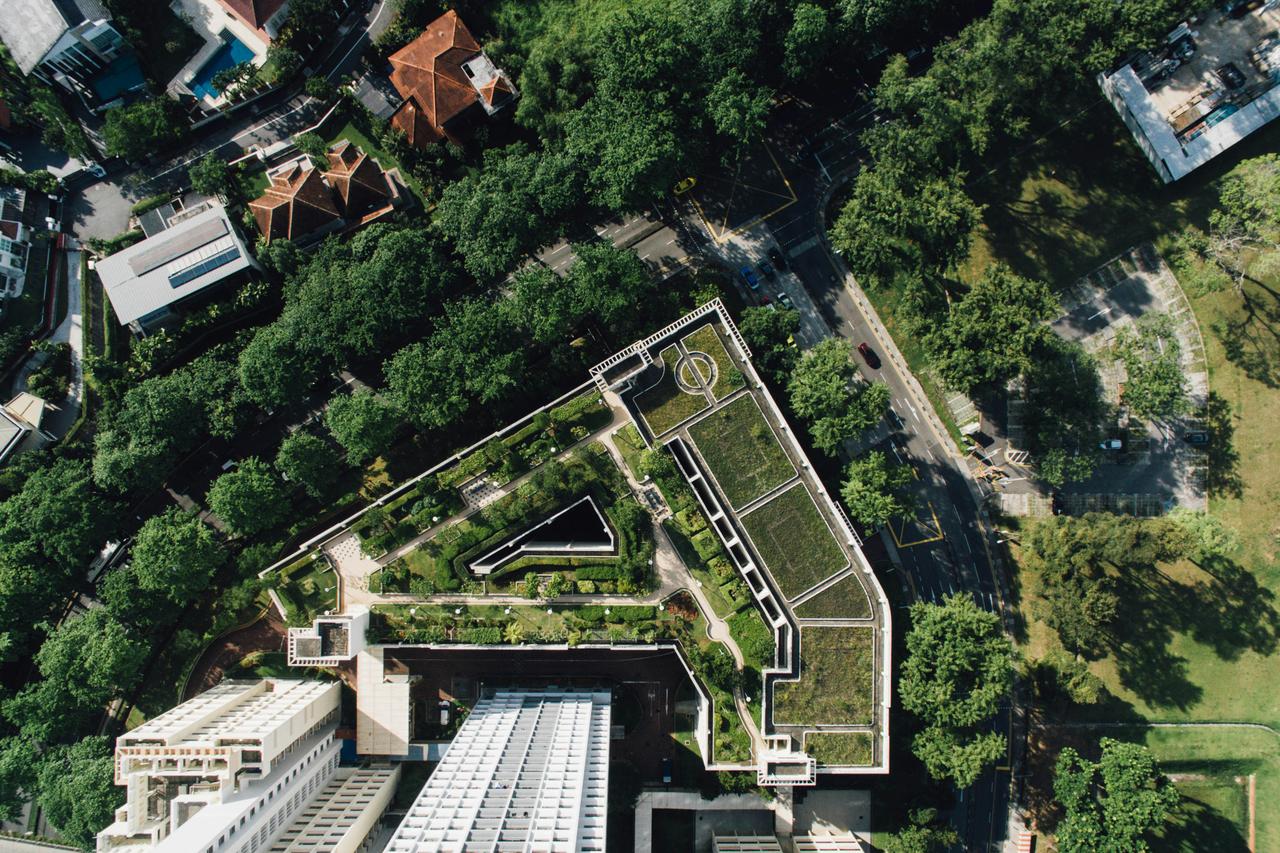
Example of Green Roof System Application (Pexels)
To ensure the performance and quality of green roof systems, various countries have developed standards, guidelines, and certification programs. Guidelines developed in Germany by FLL (Research Association for Landscape Development and Landscape Construction) have gained international recognition and have served as a foundation for many countries’ own standards. These guidelines cover planning, installation, maintenance, material specifications, plant selection, and testing methods for green roofs.
International certification systems such as LEED (Leadership in Energy and Environmental Design) and BREEAM (Building Research Establishment Environmental Assessment Method), which evaluate the environmental performance of green buildings, also include green roofs. These systems assess buildings based on criteria such as energy efficiency, water conservation, material selection, indoor environmental quality, and land use, and green roofs can earn points in these evaluations.
In Türkiye, awareness and application of green roofs have increased in recent years, but their prevalence has not yet reached the levels seen in some European countries and North America. Green roof applications are mostly found in large-scale commercial buildings, shopping centers, office buildings, and some residential projects. Türkiye currently lacks comprehensive legal frameworks or widespread incentive mechanisms directly regulating green roofs. However, existing regulations such as the Energy Efficiency Law and the Energy Performance of Buildings Regulation indirectly support green roof applications by promoting energy savings and environmentally friendly technologies.
Organizations such as ÇEDBİK (Association for Environmentally Friendly Green Buildings) are working to promote the adoption of green buildings and green roofs in Türkiye and raise public awareness. Efforts are also underway to develop local green building certification systems for Türkiye (e.g., ÇEDBİK-Housing, SEEB-TR). In Turkish applications, green roofs are often used more for visual and promotional purposes than for their ecological and energy performance benefits.
Green roofs are recognized as an important tool in achieving urban sustainability goals. In an era of rapidly depleting natural resources and increasing environmental challenges from urbanization, green roofs contribute ecologically by improving air quality, reducing urban heat, and managing stormwater. They also provide economic benefits through energy savings and extended roof lifespan, and social benefits by enhancing quality of life. These systems enable the partial restoration of green space lost to urban development and support the resilience of urban ecosystems.
Akpınar Külekçi, E. “Geçmişten Günümüze Yeşil Çatı Sistemleri ve Yeşil Çatılarda Kalite Standartlarının Belirlenmesine Yönelik Bir Araştırma.” *ATA Planlama ve Tasarım Dergisi* 1, no. 1 (2017): 35–53. Accessed May 21, 2025. https://dergipark.org.tr/en/pub/ataplanlamavetasarim/issue/38298/443087
Aras, Baran Barış. “Kentsel Sürdürülebilirlik Kapsamında Yeşil Çatı Uygulamaları.” *MANAS Sosyal Araştırmalar Dergisi* 8, no. 1 (January 2019): 469–504. Accessed May 21, 2025. https://doi.org/10.33206/mjss.474314
Ekşi, Mert, and Adnan Uzun. “Yeşil Çatı Sistemlerinin Su ve Enerji Dengesi Açısından Değerlendirilmesi.” *İstanbul Üniversitesi Orman Fakültesi Dergisi* 66, no. 1 (January 2016): 119–138. Accessed May 21, 2025. https://doi.org/10.17099/jffiu.67110
Tohum, Nihan. "Sürdürülebilir Peyzaj Tasarım Aracı Olarak Yeşil Çatılar." Master's thesis, İstanbul Teknik Üniversitesi, 2011. Accessed May 21, 2025. https://polen.itu.edu.tr:8443/server/api/core/bitstreams/a23be6f7-ff1b-47ad-bafd-633687da9976/content
Unsplash. “Aerial Photography of Buildings JPG.” Unsplash. Accessed May 21, 2025.
Unsplash. “Aerial Photography of Buildings JPG.” Unsplash. Accessed May 21, 2025. https://unsplash.com/photos/aerial-photography-of-buildings-oqJxJ4TYoQg
Unsplash. “Top View of Building with Trees JPG.” Unsplash. Accessed May 21, 2025. https://unsplash.com/photos/top-view-of-building-with-trees-IfmqOuOkaOA

Historical Development
Classification of Green Roof Systems
Layers of a Green Roof System
Advantages
Ecological Advantages
Economic Advantages
Social Advantages
Disadvantages
Standards and Certification
Current Situation in Türkiye
Role in Sustainability