


This article was automatically translated from the original Turkish version.
Gresham’s Law is an economic principle asserting that when two or more currencies circulate with the same nominal (legal) value but different intrinsic (metallic or market) values, the “bad” currency—those with lower intrinsic value or overvalued relative to their metal content—will drive out the “good” currency—those with higher intrinsic value or undervalued relative to their metal content—from circulation. This law is commonly summarized as “Bad money drives out good.” It operates under fixed exchange rate regimes or legal tender laws. The law rests on the rational behavior of individuals who prefer to use the less valuable currency (bad money) for payments while hoarding, melting down, or exporting the more valuable currency (good money).
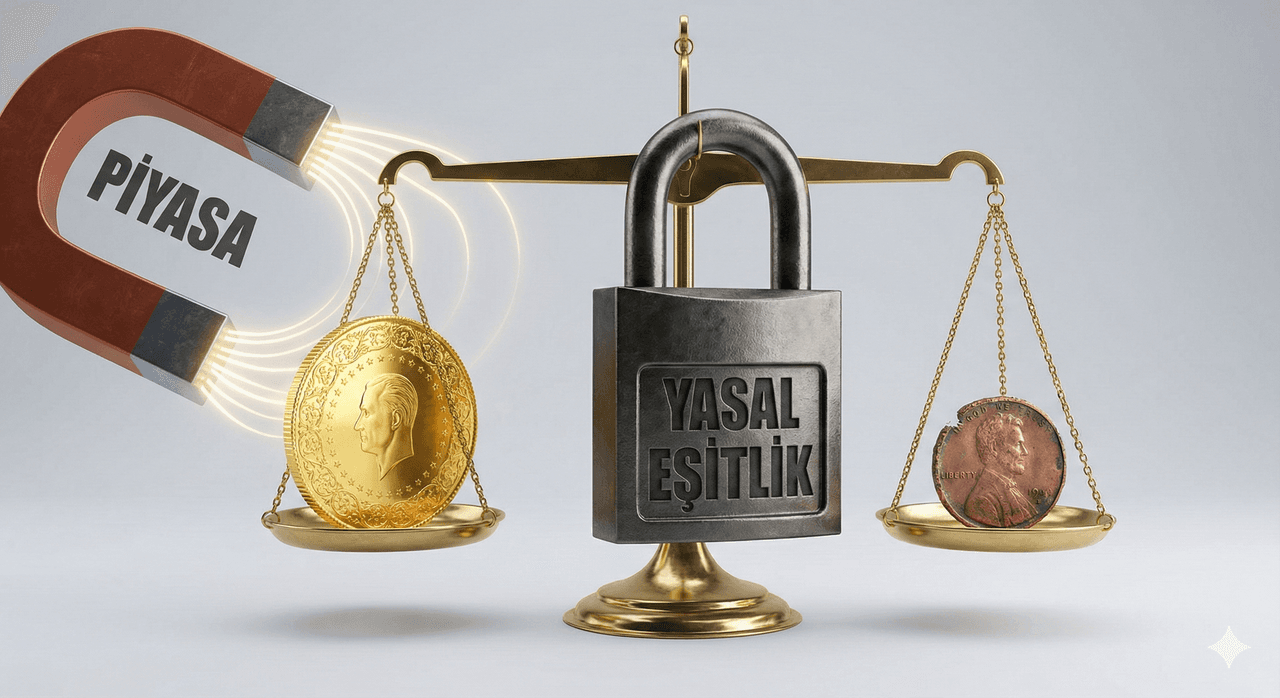
Representative of Good and Bad Money Equated by Law but Pulled Apart by Market Forces (Generated by Artificial Intelligence)
The law is named after Sir Thomas Gresham (1519–1579), financial advisor to Queen Elizabeth I. In a letter to the Queen in 1558, Gresham noted that prior monarchs’ practices of debasement—reducing the precious metal content in coins—had caused pure gold coins to leave England. However, the principle’s origins extend to antiquity. In the 5th century BCE, Aristophanes criticized in his play “The Frogs” how full-value Athenian coins were replaced by debased bronze coins. In the 14th century, Nicholas Oresme explicitly articulated this principle in his work De Moneta. The term “Gresham’s Law” was first introduced into economic literature by economist H.D. Macleod in 1858.

Historical Evolution of Gresham’s Law from Ancient Athens to the Modern Crypto World (Generated by Artificial Intelligence)
Gresham’s Law is not merely about the coexistence of two currencies but encompasses the collective rational responses of market actors to legal regulations and economic costs. Its operation depends on underlying dynamics such as fixed exchange rate constraints, transaction costs, game theory equilibria, and social acceptance tipping points.
The fundamental precondition of Gresham’s Law is the state or authority fixing two currencies with different intrinsic (market) values at the same nominal (legal) value. According to Robert Mundell, a more accurate formulation of the law is not “Bad money drives out good” but “Cheap money drives out expensive money, if both are transacted at the same price.”
If the state legally equates a currency that is cheaper to produce or has depreciated in intrinsic value (cheap money) with a more valuable currency (expensive money), debtors will prefer to settle obligations using the cheaper currency.
The more valuable currency—for example, a fully minted gold coin—is withdrawn from circulation to be melted into bullion or used in international trade.
Critics such as Rolnick and Weber argue that good money does not always disappear; under certain conditions, it may remain in circulation at a premium price—for instance, valued at 1.05 dollars instead of 1 dollar. However, Greenfield and Rockoff propose a more refined operational model, termed the “93% Version.”
Although theoretically possible for good money to circulate at a premium, it is practically difficult. Every transaction would require calculating the current bullion value of the good money, negotiating between parties, and monitoring its fluctuating worth—creating high transaction costs.
Ordinary sellers such as butchers or bakers, unable to track constantly changing metal values, prefer to use the state-fixed “bad” money (token money). Consequently, good money tends to migrate only to areas dominated by large merchants and bullion dealers or to international trade.
George Selgin modeled the operation of Gresham’s Law as a Prisoner’s Dilemma game. In this model, the key driver enabling the law’s operation is the coercive pressure created by legal tender laws.
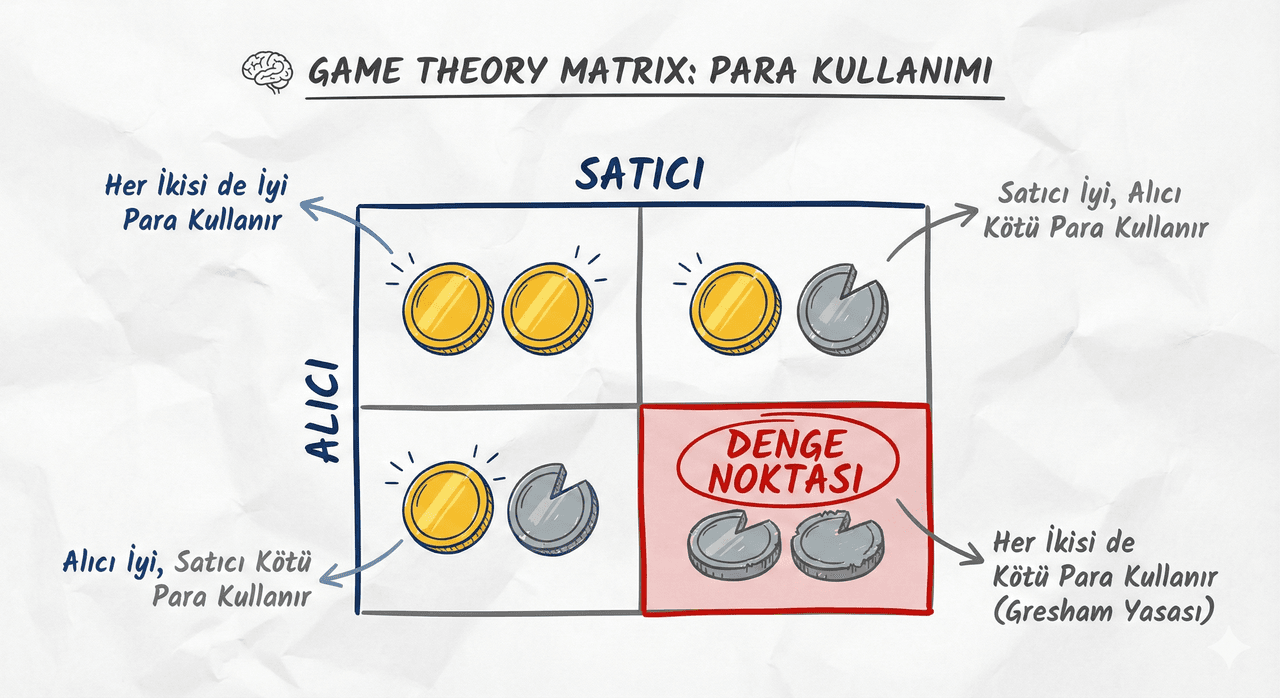
Prisoner’s Dilemma Matrix Illustrating the Equilibrium of Bad Money Between Buyers and Sellers Under Gresham’s Law (Generated by Artificial Intelligence)
If the state penalizes sellers for refusing to accept “bad” money or for demanding additional payment for “good” money, sellers are compelled to accept the inferior currency.
Buyers, aware that spending “bad” money and hoarding or melting “good” money is more profitable, continuously flood the market with bad money. Sellers, seeking to avoid legal penalties, accept it. As a result, a “non-cooperative equilibrium” emerges where only bad money circulates.
Currency circulation is a matter of social acceptance. Greenfield and Rockoff adapted Thomas Schelling’s Tipping Point model to Gresham’s Law.
Individuals act based on expectations of what others will accept. If the majority of society begins using “bad” money due to legal pressure or habit, the system eventually tips entirely toward the dominance of bad money.
In rare cases—such as in California during the American Civil War—local commercial and social pressures can lead to the rejection of legally mandated paper money (bad money) and the preservation of the gold standard (good money). In such instances, the system tips away from the state-imposed currency toward the market-preferred currency.
In high-inflation environments, when the national currency completely loses its store-of-value function, the reverse of Gresham’s Law may operate. In this case, the legally mandated but rapidly depreciating local currency (bad money) is rejected by the public.
Economic agents begin using stable foreign currencies (good money) to preserve wealth, even if such currencies are not legal tender or entail high transaction costs.
Inflationary expectations and declining confidence in the local currency trigger a process of dollarization, where good money drives out bad money.
Gresham’s Law and its modern derivatives have produced significant effects in both the monetary history of the Ottoman Empire and the phenomenon of currency substitution (dollarization) in modern Türkiye’s economy.
Economic fluctuations in the 16th and 17th centuries in the Ottoman Empire offer important examples of Gresham’s Law in classical operation.
State interventions such as the major debasement of 1585 reduced the silver content of coins, creating an abundance of “bad money” (low-grade akçe). The circulation of these coins, legally equal but intrinsically different from higher-grade ones, led to the withdrawal or outflow of “good money” (high-grade akçe and gold) from the market.

Visual Symbolizing the Transformation of the Ottoman Akçe from Rose Petal to Dewdrop Through Debasement (Generated by Artificial Intelligence)
The recently examined Beçin Hoard provides concrete numismatic evidence confirming how Gresham dynamics operated during the reigns of Selim II and Murad III, demonstrating how the public and merchants hoarded high-quality coins.
The Empire implemented “two-region monetary policies,” such as minting akçes of different weights near the Iranian border, in an attempt to prevent silver outflows (the Gresham effect of good money leaving the region).

Map Showing the Flow of High-Quality Silver Across Ottoman Borders in the 16th Century (Generated by Artificial Intelligence)
In modern Türkiye’s economy, particularly during periods of high inflation, the reverse of Gresham’s Law—known in literature as “Thiers’ Law”—has been observed.

Transition from National Currency to Foreign Currency and Full Substitution in Inflationary Environments (Generated by Artificial Intelligence)
During periods of high inflation, the national currency (TL) may lose its functions as a store of value and unit of account. In such cases, economic agents turn to foreign currencies—such as the US dollar or euro—perceived as “good money” to preserve wealth. Unlike classical Gresham’s Law, here the depreciating national currency (bad money) is avoided, while the stable foreign currency (good money) is increasingly demanded and gains dominance in circulation.
Rising holding costs of the national currency in inflationary environments lead households to shift deposits into foreign currencies. Following financial liberalization steps after 1980 and regulatory changes in the exchange rate regime in Türkiye, institutional barriers to holding foreign currency were removed, enabling this process.
This process in Türkiye complicates the Central Bank’s control over money supply, introduces instability into money demand, and reduces seigniorage revenues.
Between 1792 and 1834, silver in the United States was overvalued relative to gold by the mint ratio, becoming “bad money” and driving gold out of circulation, effectively placing the country on a silver standard. During the Civil War, unredeemable paper money (Greenbacks) displaced metallic coins in the eastern states.
One of the earliest documented examples of the law occurred in 5th century BCE Athens. Near the end of the Peloponnesian War (407 BCE), the Athenian state melted down gold statues from temples to mint emergency coins and then introduced silver-plated copper coins (bad money). The famous playwright Aristophanes recorded in his play “The Frogs” how citizens hoarded or used overseas the older, full-silver coins (good money) while circulating the debased copper coins.
During the reigns of Henry VIII and Edward VI, the Great Debasement drastically reduced the silver content of English coins. As Sir Thomas Gresham noted in his letter to Queen Elizabeth I, these “bad” coins caused pure gold and silver coins (good money) to leave England. A similar situation occurred in the 1690s before the Great Recoinage: clipped and worn silver coins (bad money) remained in circulation, while newly minted full-weight coins (good money) were immediately melted or exported.
During the French Revolution, paper money known as Assignats rapidly lost value compared to metallic coins. Despite the revolutionary government’s harsh laws—imposing the death penalty on those who refused paper money or hoarded specie (“Terror Laws”)—silver and gold coins (good money) vanished from circulation and were hidden away, leaving only the depreciating paper money (bad money) in use.
In the 19th century, countries like France operating under bimetallic systems (both gold and silver standards) experienced the operation of Gresham’s Law due to shifts in market prices. In the 1850s, gold discoveries lowered the market value of gold, making it “cheap” relative to silver under legal ratios. As a result, gold (bad money) drove silver (good money) out of circulation, altering France’s monetary composition. Similarly, in 18th-century England, Sir Isaac Newton, as Master of the Mint, set a ratio that overvalued gold relative to silver (gold = bad money), leading to silver’s outflow and England’s de facto transition to a gold standard.
Rolnick and Weber (1986) argue that good money does not always disappear; under conditions of low transaction costs, it can remain in circulation at a premium alongside bad money.
Beyond economics, situations such as multiple-choice testing (mechanical/bad) displacing critical thinking (good) from curricula have been termed “Gresham’s Pedagogical Law.” Similarly, in information technology, low-level cognitive processes replacing high-level ones have also been used as a metaphor for the law.
Greenfield, Robert L., and Hugh Rockoff. "Gresham’s Law in Nineteenth-Century America." *Journal of Money, Credit and Banking* 27, no. 4 (1995): 1086–98. https://doi.org/10.2307/2077791.
Greenfield, Robert L., and Hugh T. Rockoff. "Gresham's Law Regained." NBER Working Paper No. h0035, 1992. https://ssrn.com/abstract=382141.
Greenfield, Robert L., and Rockoff, Hugh T. Gresham's Law Regained (January 1992). NBER Working Paper No. h0035. Available at SSRN: https://ssrn.com/abstract=382141
McCluskey, Lawrence. "Gresham’s Law, Technology, and Education." The Phi Delta Kappan 75, no. 7 (1994): 550–52. http://www.jstor.org/stable/20405165.
Mundell, Robert. "Uses and Abuses of Gresham’s Law in the History of Money." Zagreb Journal of Economics 2.2 (1998): 3-38. https://www.mainelli.org/wpcontent/uploads/2023/02/Uses_and_Abuses_of_Greshams_Law_in_the_History_of_Money.pdf
Selgin, George. “Salvaging Gresham’s Law: The Good, the Bad, and the Illegal.” Journal of Money, Credit and Banking 28, no. 4 (1996): 637–49. https://doi.org/10.2307/2078075.
Çakal, Esra. "Osmanlı’nın Para ile İmtihanı." *Tarih Kritik Dergisi* 9, no. 2 (April 2023): 175–77. https://dergipark.org.tr/tr/pub/tarihkritik/issue/76929/1288170.

Etiology and Historical Development
Theoretical Framework and Mechanism of Operation
Fixed Exchange Rates and the Dominance of Cheap Money
Mechanism
Outcome
Transaction Costs and the “93% Version” of Gresham’s Law
Transaction Costs
Specialization
Game Theory and the Prisoner’s Dilemma
Legal Coercion
Equilibrium Point
Schelling’s Tipping Point Model
Social Behavior
Shift in Equilibrium
Reverse Gresham’s Law (Thiers’ Law) and Currency Substitution
Currency Substitution
Process
Manifestations in Türkiye and the Ottoman Geography
Monetary Policies in the Ottoman Empire
Debasement and the Disappearance of Good Money
Findings from the Beçin Hoard
East-West Silver Flow
Modern Türkiye and Currency Substitution (Reverse Gresham’s Law)
Currency Substitution (Dollarization)
Reason for Operation
Consequences
Other Historical Applications
United States (19th Century)
Ancient Greece (Athens)
England (Tudor Period and the Great Debasement)
France (Revolutionary Period and Assignats)
Global Bimetallic Examples
Criticisms and Alternative Approaches
Rolnick and Weber’s Objection
Metaphorical Applications