


This article was automatically translated from the original Turkish version.
+2 More
Hamsiköy Sütlacı
Registration Number | 255 | ||||||||
|---|---|---|---|---|---|---|---|---|---|
Registration Date | 01.12.2017 | ||||||||
Application Number | C2017/153 | ||||||||
Application Date | 06.10.2017 | ||||||||
Name of the Geographical Indication | Hamsiköy Sütlacı | ||||||||
Product / Product Group(s) | Sütlaç / Fırıncılık ve Pastacılık Mamulleri Tatlılar Hamur İşleri | ||||||||
Type of Geographical Indication | Mahreç İşareti | ||||||||
Applicant/Registrant(s) | Maçka Esnaf ve Sanatkârlar Odası Başkanlığı | ||||||||
Address of the Registrant | Merkez Mah. Hacıosmanoğlu Cad. İkizevler Apt. Kat:1 Maçka TRABZON | ||||||||
Geographical Boundary | Trabzon İli Maçka İlçesi Hamsiköy Beldesi Sınırları | ||||||||
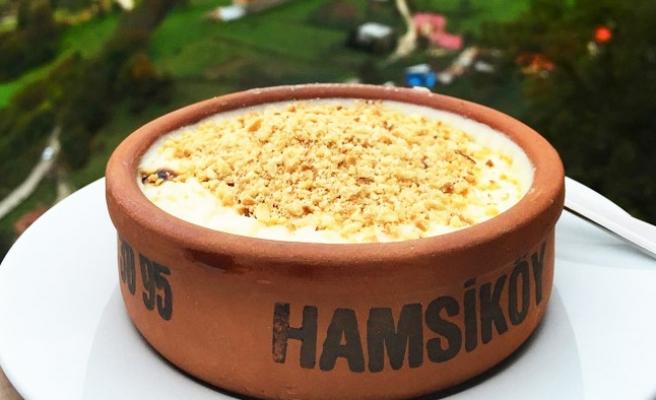
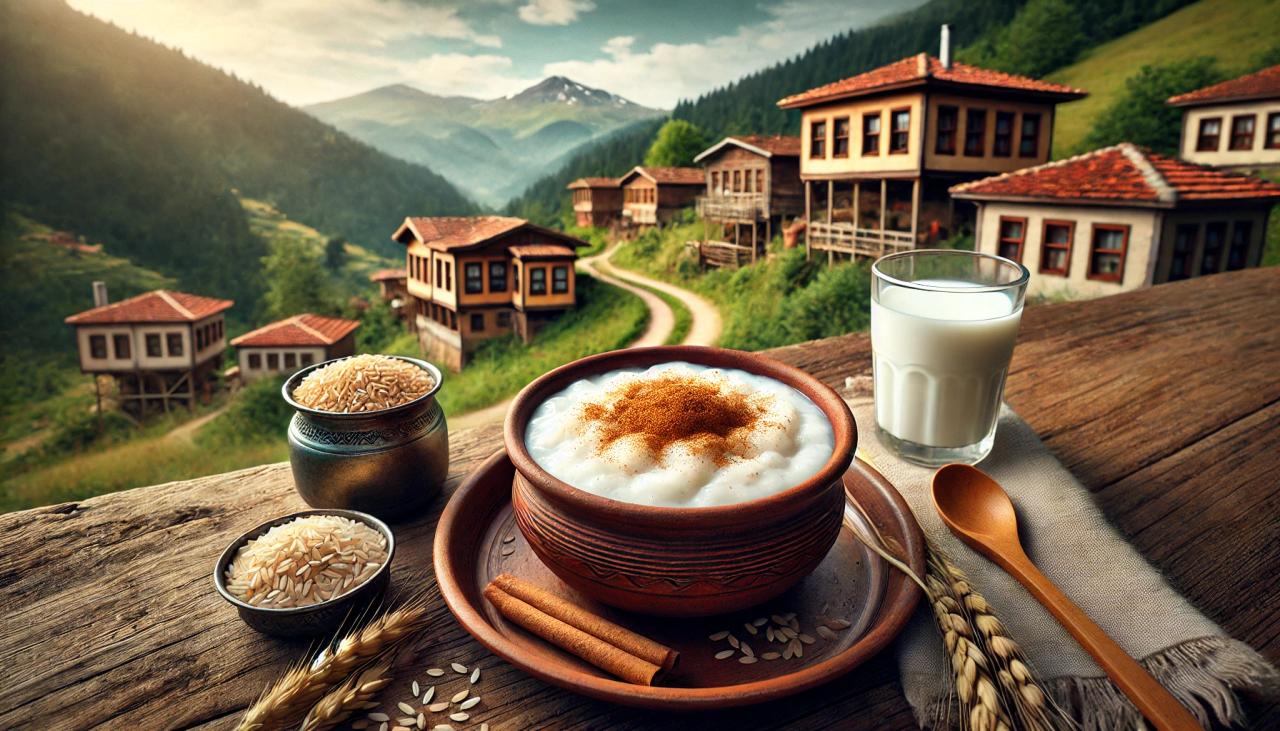
Hamsiköy sütlacı is a traditional milk-based dessert unique to the Hamsiköy neighborhood of the Maçka district in Türkiye’s Trabzon province and is officially registered as a geographical indication. Prepared using basic ingredients such as rice, milk, and sugar, this dessert acquires its distinctive texture and prominent brown crust through prolonged cooking and baking processes. The defining characteristic of the product lies in the use of high-fat natural milk from cows grazed in the pastures of Hamsiköy and its surroundings, prepared using traditional methods. Hamsiköy sütlacı is typically served in single-portion earthenware bowls and is an integral element of the regional culinary culture.
Hamsiköy Sütlacı, (generated by artificial intelligence.)
Hamsiköy is part of the same geographical unit as the villages of Çıralı, Güzelyayla, Dikkaya, and Başar. It is situated on the northern slope of Zigana Mountain at an elevation of 1200 to 1600 meters.
One of the distinguishing features of Hamsiköy sütlacı is the variation in the milk used during production, which is directly influenced by local geographical conditions. Hamsiköy sütlacı is distinguished not only by its ingredients but also by the source of those ingredients, the cooking methods employed, and its texture. The milk must originate exclusively from cows raised on natural pastures in the Hamsiköy region. This requirement forms the fundamental basis for the geographical indication’s registration as a “specific origin mark.”
The dessert’s unique texture contains no starch or thickening agents. It is consumed either fresh or in its baked form.
The northern slopes experience a Black Sea climate, characterized by heavy rainfall throughout the year and dense vegetation, while the southern and inland areas are dominated by a continental climate. This contrast enhances the diversity of plant species in the meadows and pastures, significantly influencing the flavor of the milk. The local vegetation directly affects the diet of dairy animals and plays a decisive role in shaping the distinctive taste of Hamsiköy sütlacı.
Hamsiköy sütlacı is prepared by carefully cooking the basic ingredients in prescribed proportions according to traditional methods. The standard recipe calls for approximately 60 grams of rice, 70 grams of sugar, and half a teaspoon of salt per liter of raw cow’s milk. The quantities of ingredients can be proportionally increased; for example, when producing 20 liters of milk, all other ingredients are scaled up accordingly.
The cooking process occurs in two stages. First, the milk is boiled in one pot, then transferred with the rice to another pot. The mixture is stirred continuously but gently to prevent the rice grains from breaking. The milk and rice are cooked for approximately 40 to 45 minutes, after which sugar and salt are added and the mixture is boiled for an additional 10 to 20 minutes. Cooking time varies depending on the fat content of the milk; skimmed milk requires a longer cooking period. Readiness is tested by observing the flow of a sample poured from a height: if the mixture flows continuously like honey, it is fully cooked.
The entire production process of Hamsiköy sütlacı must take place within the boundaries defined by the geographical indication, specifically only in the Hamsiköy locality. This includes all stages: milk sourcing, processing, cooking, and packaging. Production outside these boundaries is not recognized under the registration.
Monitoring activities are carried out by two experts appointed by the Maçka Chamber of Tradesmen and Artisans in coordination with the Maçka District Directorate of Agriculture and Forestry. Inspections are conducted at least once annually and may be increased in frequency in response to complaints or as deemed necessary.
The inspection criteria include:
Maçka Esnaf of Tradespeople and Artisans. "Hamsiköy Sütlacı (Mahreç İşareti Teknik Şartnamesi)." Turkish Patent and Trademark Office, Registration No: 255, December 1, 2017. Accessed May 20, 2025. https://ci.turkpatent.gov.tr/cografi-isaretler/detay/38380.
Turkish Patent and Trademark Office (TÜRKPATENT). 2017. *Hamsiköy Sütlacı: Coğrafi İşaret Tescil Belgesi*. Ankara: TÜRKPATENT. Accessed May 20, 2025. https://ci.turkpatent.gov.tr/Files/GeographicalSigns/5a68e1b6-47df-4b2b-ae49-69ec02ab3931.pdf.

Hamsiköy Sütlacı
Registration Number | 255 | ||||||||
|---|---|---|---|---|---|---|---|---|---|
Registration Date | 01.12.2017 | ||||||||
Application Number | C2017/153 | ||||||||
Application Date | 06.10.2017 | ||||||||
Name of the Geographical Indication | Hamsiköy Sütlacı | ||||||||
Product / Product Group(s) | Sütlaç / Fırıncılık ve Pastacılık Mamulleri Tatlılar Hamur İşleri | ||||||||
Type of Geographical Indication | Mahreç İşareti | ||||||||
Applicant/Registrant(s) | Maçka Esnaf ve Sanatkârlar Odası Başkanlığı | ||||||||
Address of the Registrant | Merkez Mah. Hacıosmanoğlu Cad. İkizevler Apt. Kat:1 Maçka TRABZON | ||||||||
Geographical Boundary | Trabzon İli Maçka İlçesi Hamsiköy Beldesi Sınırları | ||||||||
Geographical Location and Characteristics
Impact of Climatic Conditions
Recipe
Ingredients:
Optional garnishes for serving:
Serving Methods
Geographical Boundary and Production Area
Monitoring and Control Mechanism