This article was automatically translated from the original Turkish version.
+2 More
Han Underground City is an ancient underground settlement carved into natural rocky terrain within the boundaries of Han District, affiliated with Eskişehir province in Türkiye’s Central Anatolia Region. The settlement occupies a strategic position along major west–east and north–south communication routes across Anatolia. Archaeological findings and historical records indicate that Han Underground City was in use from the Roman and Byzantine periods onward, and continued to serve a functional role during the Ottoman period as the region developed into a key staging post. Its multi-layered structure extending downward reveals a design intended for defense and shelter.【1】
Han Underground City features a complex architectural layout composed of galleries, rooms, passageways, and corridors carved directly into the main rock mass. The settlement is estimated to cover an area of approximately 1.5 km². Access is provided through a rectangular opening cut into the primary rock face. The structure consists of interconnected multi-level spaces, with narrow corridors and controlled access points reflecting a defensive architectural approach.
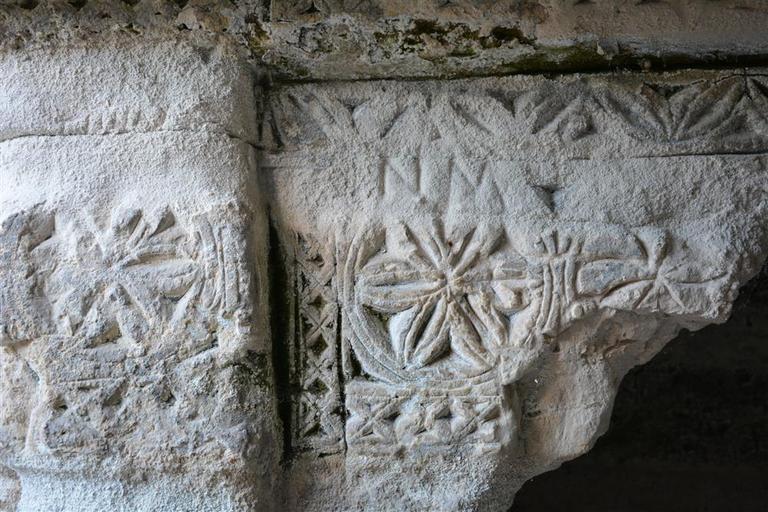
At the lowest level of the underground system, a connection to a clean water channel originating from the north has been identified. Burial chambers hold significant importance among the spaces. The walls and ceilings of these chambers are adorned with decorative motifs including rosettes, baklava slices, bows, leaves, and spirals. Additionally, traces of grain storage silos have been detected within the settlement, suggesting that the underground city was designed as a self-sufficient refuge capable of sustaining its inhabitants during sieges or periods of danger.
The spatial organization of Han Underground City comprises multi-level areas linked by corridors. The underground system was deliberately planned with narrow passages and controlled connections, reflecting a design philosophy oriented toward defense and concealment. At the lower levels of the structure, a connection to a northern-sourced clean water channel has been confirmed. This feature indicates that the settlement was planned for long-term habitation, with its water needs met through the underground system.
Burial chambers occupy a prominent position among the spaces within the settlement. The walls and ceilings of these chambers are decorated with motifs including rosettes, baklava slices, bows, leaves, and spirals.
Within Han Underground City, numerous units have been identified that were likely used for food storage alongside residential areas. Among these, traces of grain silos are particularly notable. These storage areas are systematically arranged within the settlement’s layout and form an integral part of the overall architectural design.
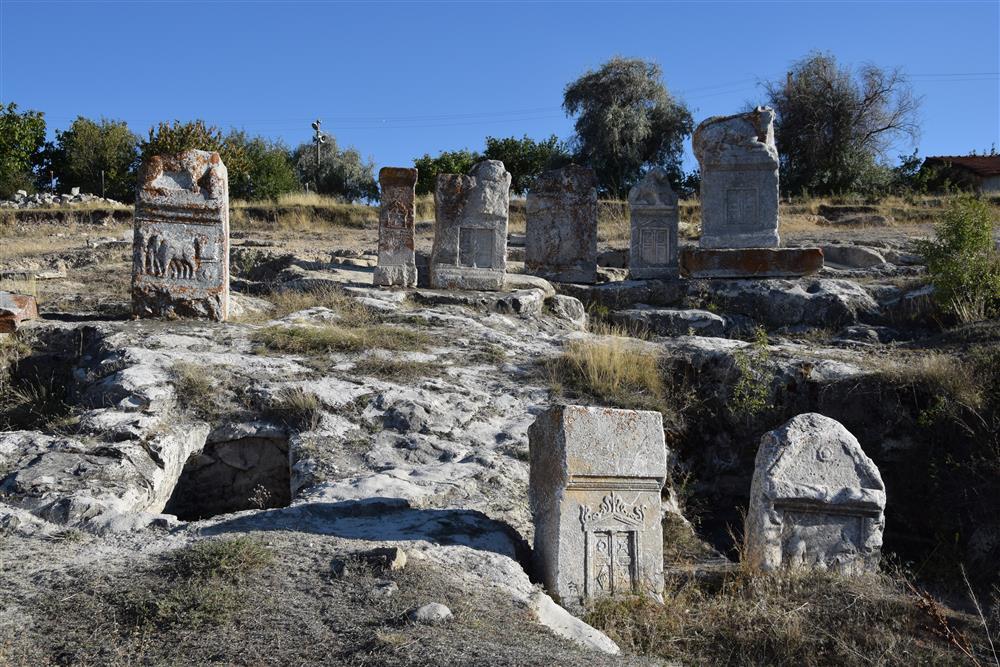
Han Underground City (Ministry of Culture and Tourism of the Republic of Türkiye)
The presence of these structures demonstrates that Han Underground City was designed as a long-term shelter capable of sustaining its population during potential threats or sieges. The storage units are among the key architectural elements that reveal the settlement’s capacity for self-sufficiency.
Settlement traces, surface finds, and archaeological data from the necropolis area surrounding Han Underground City indicate intensive use of the region during the Roman and Byzantine periods.
The settlement’s location along major west–east and north–south communication routes across Anatolia ensured its significance for military and commercial mobility throughout history. This strategic position was a decisive factor in the continued use of Han Underground City across successive historical periods.
A necropolis has been identified on the rocky slopes, particularly in the southern part of the district surrounding Han Underground City. Over 100 burial structures have been documented, including single graves and chamber tombs. Archaeological evidence indicates that these tombs were actively used from the 1st century CE to the 6th century CE.
The necropolis provides important insights into the continuity and demographic structure of the settlement in and around Han Underground City. The types and distribution of the tombs are closely associated with the settlement patterns of the Roman and Byzantine periods.
Han Settlement maintained its strategic position during the Ottoman period. Under the Ottoman State, the region functioned as an important staging post and resting place along the pilgrimage route. During this era, Han became a center where caravans and pilgrims halted for rest and resupply.
As a staging post during the Ottoman period, the settlement was regarded as one of the critical halts providing logistical support and ensuring travel safety.
Scientific investigations at Han Underground City were initiated in 1992–1993 by the Eskişehir Museum Directorate. Subsequent research campaigns have yielded significant archaeological data concerning the underground galleries, passage systems, and the necropolis area. These studies have been conducted with contributions from the Department of Art History at Anadolu University.
Based on the findings, Han Underground City and its surroundings have been officially registered as a protected archaeological site. The area has been incorporated into conservation-focused urban planning regulations and is legally protected as part of Türkiye’s cultural heritage.
[1]
T.C. Kültür ve Turizm Bakanlığı, “Han Yeraltı Şehri ve Çevresi - Eskişehir,” Türkiye Kültür Portalı, Accessed 13 January 2026, https://www.kulturportali.gov.tr/turkiye/eskisehir/gezilecekyer/han-yeralti-sehri-ve-cevresi

No Discussion Added Yet
Start discussion for "Han Underground City" article
Architectural Features
Spatial Organization and Decorations
Storage Units
Historical and Archaeological Context
Necropolis Area
Ottoman Period and Staging Post Function
Archaeological Research and Conservation Status