

This article was automatically translated from the original Turkish version.
+2 More
Registration Number | 1353 | ||||||||
|---|---|---|---|---|---|---|---|---|---|
Registration Date | 08.05.2023 | ||||||||
Applicant/Registrant(s) | Antakya Chamber of Commerce and Industry | ||||||||
Type of Geographical Indication | Mahreç Sign | ||||||||
Hatay halhalı zeytini is a table olive variety derived from the halhalı cultivar of the species Olea europaea L., unique to Hatay in southern Türkiye. Its geographical indication was registered on 8 May 2023 by the Antakya Chamber of Commerce and Industry, and the product is protected under the “geographical indication” framework. The olive is marketed in two forms: crushed green olive and brined green olive, distinguished by its physical, chemical and morphological characteristics.
Hatay halhalı zeytini is cultivated exclusively within the boundaries of Hatay Province. The region is among Türkiye’s areas with the longest annual sunshine duration, averaging 2997 hours per year. Winter temperatures range from 1.1 to 8.1 °C, while summer temperatures vary between 33.0 and 35.5 °C. Annual average relative humidity ranges from 60 to 69 percent, and annual precipitation falls between 776.9 and 797.4 mm. These climatic parameters directly influence quality indicators such as the olive’s phenolic compound content.
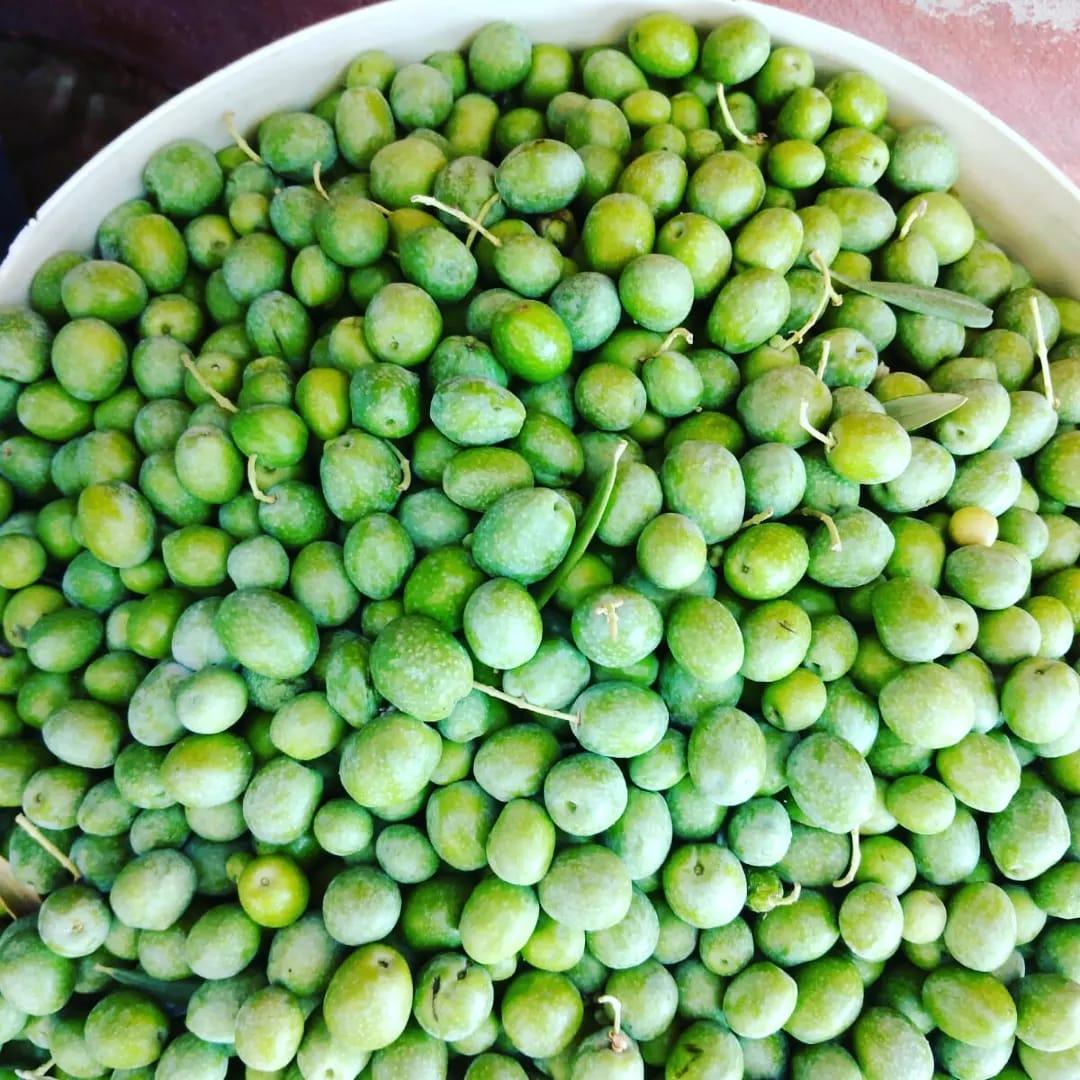
Hatay halhalı zeytini is a table olive harvested during the green ripe stage (September–October), with medium size (2.5–3.0 g) and an oval to nearly spherical shape. Its surface is smooth and symmetrical, with medium firmness of flesh and low bitterness. The stone separates easily from the flesh. Locally, the olive is also known by the name “hilhale,” derived from Arabic.
The olive has a high oil content (>21 percent), low moisture content (<47 percent), and a total phenolic compound content ranging from 322 to 525 mg/kg of oil. A low level of palmitic acid is also a distinguishing feature of the product.
Orchard Establishment: Planting of saplings occurs between September and March. Soil structure must be rich in organic matter, slightly calcareous, well-drained, and have a pH between 6 and 8. Orchards are laid out in square, rectangular or triangular patterns. Inter-tree spacing ranges from 5 to 7 metres.
Irrigation: The olive tree requires 750–800 mm of rainfall during its vegetative cycle. Additional irrigation is necessary when natural precipitation is insufficient; otherwise, yield and quality may decline.
Fertilization: Fertilization is carried out using chemical or organic fertilizers based on soil analysis. It is typically applied at the time of planting.
Harvesting: Harvesting takes place between September and October. Olives are collected by hand, using mechanical methods, or with poles. A ground cover is used to prevent contact with soil, and the olives are transported in plastic crates.
Pruning: Pruning is performed after harvest. It is not carried out during the first two years of young saplings; thereafter, it is conducted to regulate tree productivity and shape.
The olives are marketed in two forms.
In traditional brining, the “egg standard” method is used, with salt concentrations of 20–22 percent. In industrial production, this range is reduced to 12–15 percent. Products are sold in plastic or glass packaging of 250–1000 g capacity. Shelf life ranges from 6 to 12 months.
The production and processing of the product are monitored by a three-member oversight board coordinated by the Antakya Chamber of Commerce and Industry. The board includes representatives from the Hatay Provincial Directorate of Agriculture and Forestry, Mustafa Kemal University, and ATSO. Monitoring is conducted annually as a routine procedure and additionally as needed.
The monitoring criteria are as follows:
Antakya Ticaret of Commerce and Industry. Hatay Halhalı Zeytini Coğrafi İşaret Tescil Belgesi. Turkish Patent and Trademark Office, 2023. Accessed https://ci.turkpatent.gov.tr/Files/GeographicalSigns/4cad4749-606e-496a-99bc-54e54177fcbe.pdf.
Turkish Patent and Trademark Office. "Hatay Halhalı Zeytini (Mahreç İşareti)." Accessed https://ci.turkpatent.gov.tr/cografi-isaretler/detay/3192.

Registration Number | 1353 | ||||||||
|---|---|---|---|---|---|---|---|---|---|
Registration Date | 08.05.2023 | ||||||||
Applicant/Registrant(s) | Antakya Chamber of Commerce and Industry | ||||||||
Type of Geographical Indication | Mahreç Sign | ||||||||
No Discussion Added Yet
Start discussion for "Hatay Halhalı Olive" article
Geographical Boundaries and Ecological Conditions
Product Definition and Characteristics
Morphological and Physicochemical Characteristics
Hatay Halhalı Zeytini Tree
Hatay Halhalı Zeytini Fruit
Production Process
Processing and Market Presentation
Brining and Packaging
Monitoring Process