This article was automatically translated from the original Turkish version.
+1 More
Location | Adıyaman Türkiye | ||||||||
|---|---|---|---|---|---|---|---|---|---|
Dating | 1st century BCE – Kingdom of Commagene period | ||||||||
Building Type | relief-decorated tomb entrance possibly a single-room structure Rock-carved tomb | ||||||||
Symbolic Element | Relief of the God-King Alliance | ||||||||
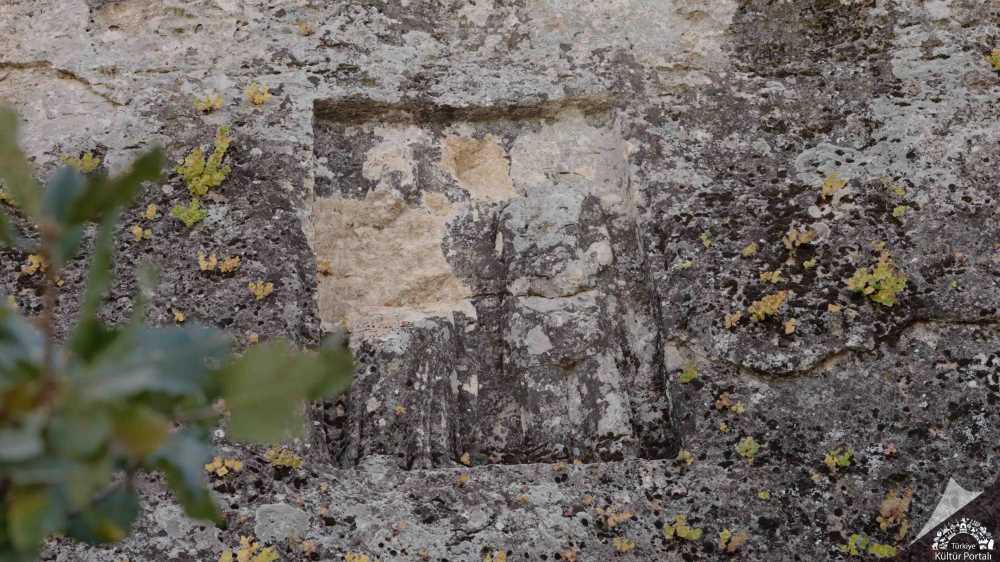
Haydaran Rock Tombs are burial structures carved into the main rock face and dated to the Kingdom of Commagene. They are located within the boundaries of Taşgedik village, approximately 17 kilometers north of the provincial center. Adıyaman The burial site is notable for a relief scene carved into the rock surface, depicting the handshake between King Antiochus I of Commagene and the Sun God Helios. In this regard, it constitutes an important representation of royal cult iconography in the region.

Haydaran Rock Tombs (Türkiye Culture Portal)
The Haydaran Rock Tombs are situated on a slope facing the Euphrates basin. The settlement is part of the broader tradition of rock-cut tombs prevalent in the Adıyaman region and its surroundings during the Kingdom of Commagene. It is considered alongside numerous other rock tombs in the same area, including Perre Ancient City, Turuş Rock Tombs, Karadağ Tumulus, and Beştepeler.
The tombs were carved directly into a steep face of the main rock. The relief scene located immediately above or beside the entrance imparts a cultural and symbolic dimension to the structure. Although detailed information about the internal layout is lacking, it is likely that the tombs follow the single-chamber plan typical of Commagene funerary architecture.
The most striking feature of the tombs is the relief depicting the handshake between the Sun God Helios and King Antiochus. This scene exemplifies the divine-royal handshake iconography frequently encountered in Commagene art. In the relief, Helios is portrayed wearing a radiate crown, while Antiochus is depicted in royal attire and symbols of authority. This iconography reflects a narrative strategy emphasizing the king’s divine legitimacy within the Commagene belief system.
The figure of the king in the relief is generally identified as Antiochus I, and accordingly, the Haydaran Rock Tombs are dated to the mid-first century BCE, during the period of the Kingdom of Commagene.
The Haydaran Rock Tombs are currently registered and listed as accessible cultural heritage sites by the Adıyaman Provincial Directorate of Culture and Tourism. The architectural structure and reliefs have suffered minimal damage and are well suited for archaeological and epigraphic documentation.
The Haydaran Rock Tombs carry traces of cultic practices in the provincial administrative areas of the Kingdom of Commagene, as evidenced by their relief figures and architectural positioning. When considered alongside similar scenes at the Nemrut Dağı Tumulus, the Helios-Antiochus handshake highlights the reach of royal cult beyond the central regions into rural territories. In this respect, Haydaran holds a significant place among the archaeological manifestations of Commagene art and belief systems.
Adıyaman İl Directorate of Culture and Tourism. "Antik Kent, Kaya Mezarları ve Mağaralar." *adiyaman.ktb.gov.tr*. Accessed July 7, 2025. https://adiyaman.ktb.gov.tr/TR-61374/antik-kent-kaya-mezarlari-ve-magaralar.html
Adıyaman İl Kültür ve Turizm Müdürlüğü. "Kaya Mezarları ve Mağaralar." Accessed July 7, 2025. https://adiyaman.ktb.gov.tr/TR-61392/kaya-mezari-ve-magaralar.html
T.C. Kültür ve Turizm Bakanlığı. "Kaya Mezarları." *kulturportali.gov.tr*. Accessed July 7, 2025. https://www.kulturportali.gov.tr/turkiye/adiyaman/gezilecekyer/kaya-mezarlari
Topaloğlu, Yasin. “Yeni Buluntular Işığında Kuzeydoğu Anadolu Kaya Mezarları.” *Kafkas Üniversitesi Sosyal Bilimler Enstitüsü Dergisi*, no. 10 (2012): 131–163. Accessed July 7, 2025. https://www.kafkas.edu.tr/dosyalar/sobedergi/file/010/7.pdf

Location | Adıyaman Türkiye | ||||||||
|---|---|---|---|---|---|---|---|---|---|
Dating | 1st century BCE – Kingdom of Commagene period | ||||||||
Building Type | relief-decorated tomb entrance possibly a single-room structure Rock-carved tomb | ||||||||
Symbolic Element | Relief of the God-King Alliance | ||||||||
No Discussion Added Yet
Start discussion for "Haydaran Kaya Graves" article
Location and Environmental Context
Architectural Features
Relief Composition
Dating
Conservation Status and Research