



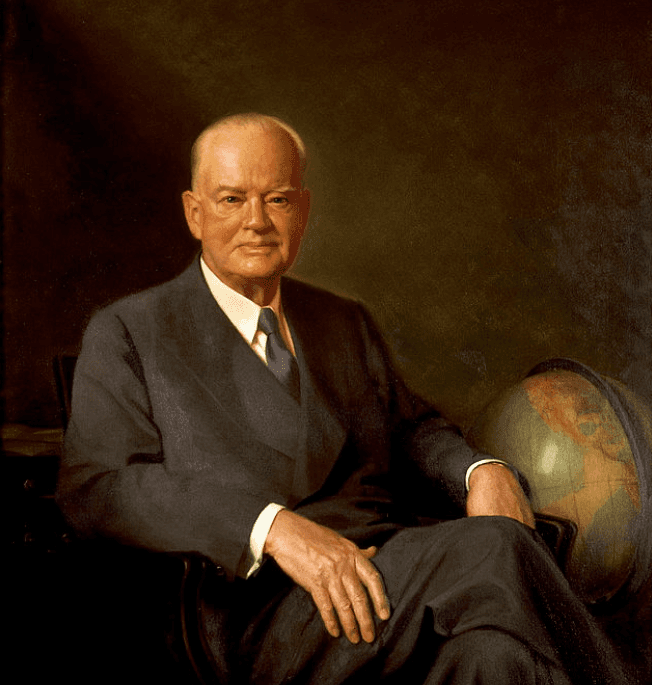
Herbert Hoover
Eş | Lou Henry Hoover | ||||||||
|---|---|---|---|---|---|---|---|---|---|
Date of Birth | 10 August 1874 | ||||||||
Place of Birth | West Branch, Iowa, United States of America | ||||||||
Date of Death | 20 October 1964 | ||||||||
Presidential Order | 31st President of the United States (1929–1933) | ||||||||
Çocuk | Allan Henry Hoover Herbert Hoover Jr. | ||||||||
Herbert Clark Hoover was born on August 10, 1874, in the town of West Branch, Iowa. His father, Jesse Hoover, was a blacksmith and his mother, Hulda Minthorn Hoover, was a seamstress. Hoover lost both parents at an early age and lived with various relatives before being raised under the guardianship of his uncle, Henry Minthorn, in Oregon.
Throughout his childhood, he became familiar with agriculture and manual trades and entered the workforce at a young age. At fourteen, he left school to work in his uncle’s real estate office. Three years later, in 1891, he enrolled at the newly established Stanford University to pursue an engineering education. Despite performing poorly on the entrance examinations, he was admitted and supported himself through various jobs during his studies. He completed his undergraduate degree in geology in 1895.
After graduation, Hoover pursued an international career in engineering. He first worked in Australia and then as a mining engineer in China, where he served as chief engineer for the Imperial Chinese Mining Bureau. During the Boxer Rebellion in 1900, Hoover was in Tianjin and participated in civil defense efforts; his wife, Lou Henry Hoover, served in field hospitals.
From this period onward, he conducted mining investments and engineering projects in numerous countries worldwide. In 1908, he founded his own mining consulting firm and by 1914 had built an extensive office network and a substantial personal fortune.

Herbert Hoover (Hoover Archives)
With the outbreak of World War I, Hoover was in London and organized the evacuation of Americans stranded in Europe. He subsequently established the Commission for Relief in Belgium to respond to the food crisis in German-occupied Belgium. This organization ensured the basic needs of millions of people were met through non-governmental funding.
After the United States entered the war in 1917, President Woodrow Wilson appointed Hoover as head of the newly created Food Administration. In this role, Hoover promoted voluntary conservation campaigns to ensure efficient use of scarce resources and continued relief efforts in Europe after the war’s end. As director of the American Relief Administration, he oversaw food and aid distribution in more than twenty countries across continental Europe. In 1921, he also arranged aid to the Soviet Union during a severe famine.
Proposed as a presidential candidate by both Democratic and Republican circles after the war, Hoover was appointed Secretary of Commerce by President Warren Harding in 1921 and continued in this role under President Calvin Coolidge. As Secretary, he developed policies promoting industrial standardization, reduction of waste, and encouragement of new technologies. He played a key role in regulating emerging industries such as radio and aviation. He also supported the formation of trade associations and advocated voluntary economic cooperation between the private sector and government. In his 1922 book American Individualism, he defined individualism as the foundation of social order.

New Year’s Reception, White House, 01/01/1930 (Hoover Archives)
In 1928, following President Coolidge’s decision not to seek re-election, Hoover became the Republican Party’s presidential candidate and won the election by a large margin. Shortly after taking office on March 4, 1929, the stock market crashed in October of the same year, triggering the Great Depression. The Hoover administration accelerated public investment, proposed tax cuts, and encouraged business to maintain employment. By 1932, unemployment had reached ten million.
Hoover rejected direct federal relief, arguing that local governments and voluntary organizations should assume responsibility for aid. In 1932, he established the Reconstruction Finance Corporation to provide credit to private-sector and state relief programs. Federal Home Loan Banks were also created to support citizens at risk of losing their homes. However, Hoover’s reluctance to implement direct federal assistance was widely criticized, especially after unemployment reached ten million in 1932. In the same year’s election, he was defeated by Franklin D. Roosevelt.

1930 – President Hoover throws out the first ball at the opening game between the Boston Red Sox and the Washington Senators. (Hoover Archives)
After leaving the presidency, Hoover did not fully withdraw from public life; he engaged in various activities through public administration reform initiatives, relief organizations, and think tanks. He chaired two separate federal administrative reform commissions in 1947 and 1953. Additionally, the Hoover War Library, which he founded at Stanford University in 1919, was reorganized in 1957 as the Hoover Institution on War, Revolution and Peace and became a center for academic research.
Throughout his life, Hoover published more than forty books, articulating his views on social structure and governance. He made his final visit to his birthplace, West Branch, in 1962, attending the opening of the museum named in his honor. He died on October 20, 1964, in New York and was buried near the house of his birth.
Hoover Institution. "About Herbert Hoover." Hoover.org. Accessed May 17, 2025. https://www.hoover.org/about/herbert-hoover
Hoover Presidential Foundation. "The Biography of Herbert Hoover." HooverPresidentialFoundation.org. Accessed May 17, 2025. https://hooverpresidentialfoundation.org/herbert-hoover/
Hoover Presidential Library and Museum. "President Herbert Hoover – Gallery (Bölüm 50)." Hoover.archives.gov. Accessed May 17, 2025. https://hoover.archives.gov/galleries/president-herbert-hoover#50
Hoover Presidential Library and Museum. "President Herbert Hoover – Gallery (Section 54)." Hoover.archives.gov. Accessed May 17, 2025. https://hoover.archives.gov/galleries/president-herbert-hoover#54
Hoover Presidential Library and Museum. "President Herbert Hoover – Gallery (Section 55)." Hoover.archives.gov. Accessed May 17, 2025. https://hoover.archives.gov/galleries/president-herbert-hoover#55
Hoover Presidential Library and Museum. "President Herbert Hoover." Hoover.archives.gov. Accessed May 17, 2025. https://hoover.archives.gov/hoovers/president-herbert-hoover
Miller Center, University of Virginia. Hamilton, David E. “Herbert Hoover: Life Before the Presidency.” MillerCenter.org. Accessed May 17, 2025. https://millercenter.org/president/hoover/life-before-the-presidency
Presidential Pet Museum. "Herbert Hoover Biography." PresidentialPetMuseum.com. Accessed May 17, 2025. https://www.presidentialpetmuseum.com/presidents/31hh/
Trump White House Archives. "Herbert Hoover." TrumpWhiteHouse.gov. Accessed May 17, 2025. https://bidenwhitehouse.archives.gov/about-the-white-house/presidents/herbert-hoover/
White House Historical Association. “Herbert Hoover.” White House History. Accessed May 17, 2025. https://www.whitehousehistory.org/bios/herbert-hoover

Herbert Hoover
Eş | Lou Henry Hoover | ||||||||
|---|---|---|---|---|---|---|---|---|---|
Date of Birth | 10 August 1874 | ||||||||
Place of Birth | West Branch, Iowa, United States of America | ||||||||
Date of Death | 20 October 1964 | ||||||||
Presidential Order | 31st President of the United States (1929–1933) | ||||||||
Çocuk | Allan Henry Hoover Herbert Hoover Jr. | ||||||||
Public Service and Activities Before the Presidency
Presidency, Crisis Management, and Aftermath