


This article was automatically translated from the original Turkish version.
+2 More
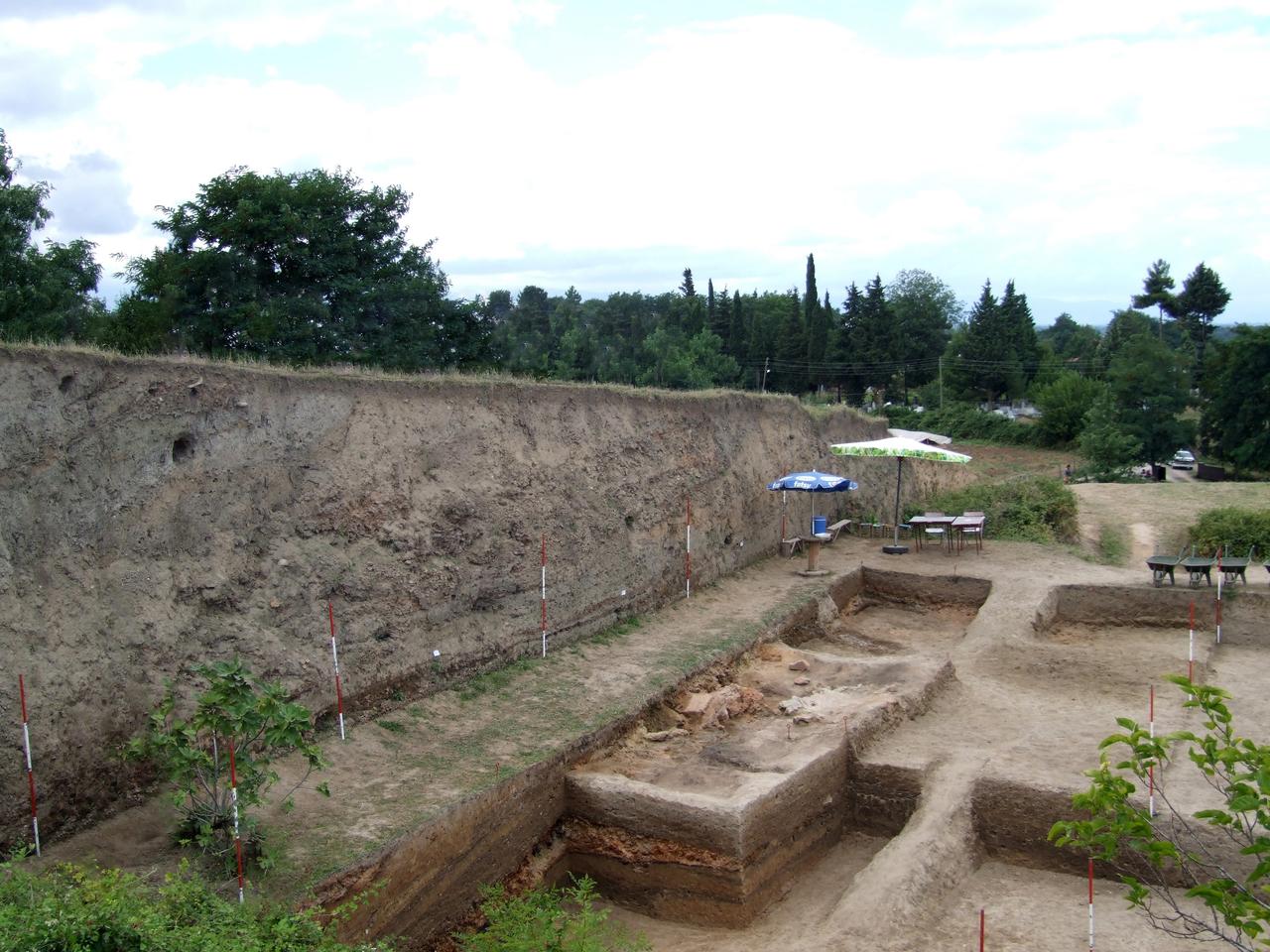
İkiztepe Höyüğü
Location | Samsun Bafra Plain | ||||||||
|---|---|---|---|---|---|---|---|---|---|
Period(s) | Chalcolithic Late Bronze Age Early Bronze Age | ||||||||
Significance | One of the Oldest Settlements in the Black Sea Region | ||||||||
Structure(s) | Mudbrick Houses Graves Wall Remnants | ||||||||
Protection | Archaeological Site Area | ||||||||
İkiztepe Höyüğü is located within the boundaries of Bafra district, Samsun province, in the northeastern part of the Kızılırmak Delta. The site is approximately 7 km from the point where the Kızılırmak River flows into the Black Sea. The settlement, situated at an elevation of about 10 meters above sea level, consists of four mounds and contains occupation layers from different periods. The region is recognized as one of the centers providing the most comprehensive archaeological data for the Bronze Age in the Black Sea area.
The first scientific excavations at İkiztepe were conducted in 1948 by Veli Sevin. Systematic excavations began in 1974 under the leadership of Prof. Dr. Önder Bilgi, then head of the Department of Prehistory at Istanbul University. These excavations continued until the mid-2000s and revealed the cultural layers of the mound in great detail. The findings have made significant contributions to understanding the cultural and economic relationships between the Black Sea region and the interior of Anatolia.

İkiztepe Höyüğü (Ministry of Culture and Tourism of Türkiye)
Four main cultural layers have been identified at İkiztepe Höyüğü:
The architectural structures at İkiztepe were constructed using mudbrick and wood. The settlement plan reveals a complex arrangement of streets, courtyards and rooms. Houses from the Middle Bronze Age are organized around courtyards. These architectural features are considered important for understanding Bronze Age settlement patterns in the Black Sea region.
The cemetery areas are located on the outer edges of the settlement. The deceased were generally buried in a fetal position. Grave goods such as ceramics, metal objects and ornaments have been found within the graves. Some graves contain stone-built tomb structures. These burial types and practices serve as fundamental sources for understanding early funerary traditions in the Black Sea region.

İkiztepe Höyüğü (Samsun Metropolitan Municipality)
Among the finds recovered from the excavations are stone tools, bone objects, bronze weapons, ornaments and pottery. The surgical instruments found at İkiztepe are recognized as among the oldest known medical tools in Anatolia. Additionally, evidence of mining and metallurgy provides important insights into the economic development of the region.
The inhabitants of the settlement relied on agriculture, animal husbandry and fishing for their livelihood. Zooarchaeological data indicate that domesticated animals such as cattle, sheep and goats were raised, and that fishing was also significant. Cereals and legumes were cultivated. The importance of this economic structure lies in its demonstration of a developed and widespread settlement pattern in the Black Sea region during the Bronze Age.
Anthropological analyses have revealed numerous examples of cranial trepanation at İkiztepe. These findings, among the earliest systematically practiced surgical interventions known in Anatolia, demonstrate that the region had advanced medical and surgical practices. Evidence of healing after trepanation indicates the effectiveness of medical treatments during this period.
Bafra Belediyesi. "İkiztepe Höyüğü ve Kazıları." Bafra Municipality Official Website. Accessed May 31, 2025. https://www.bafra.bel.tr/Sayfa/559bccfbfdcac109a4c27bdc/Ikiztepe-Hoyugu-ve-Kazilari.
Karadeniz Kalkınma Ajansı. "İkiztepe Höyüğü." Karadeniz Kalkınma Ajansı Resmi Web Sitesi. Accessed May 31, 2025. https://karadeniz.gov.tr/ikiztepe-hoyugu/.
Samsun Büyükşehir Municipality. "İkiztepe Höyüğü." Samsun Metropolitan Municipality Official Website. Accessed May 31, 2025. https://mobil.samsun.bel.tr/ikiztepehoyugu.html.
T.C. Ministry of Culture and TourismSamsun İl Directorate of Culture and Tourism. "İkiztepe Höyüğü." Accessed May 31, 2025. https://samsun.ktb.gov.tr/TR-216806/ikiztepe-hoyugu.html.

İkiztepe Höyüğü
Location | Samsun Bafra Plain | ||||||||
|---|---|---|---|---|---|---|---|---|---|
Period(s) | Chalcolithic Late Bronze Age Early Bronze Age | ||||||||
Significance | One of the Oldest Settlements in the Black Sea Region | ||||||||
Structure(s) | Mudbrick Houses Graves Wall Remnants | ||||||||
Protection | Archaeological Site Area | ||||||||
History of Excavations
Settlement Phases and Stratigraphy
Architectural Remains
Burial Practices and Cemetery Area
Artifacts and Material Culture
Economy and Subsistence Resources
Health and Trepanation Findings