

 Recently Added:
This article was automatically translated from the original Turkish version.
The removal of South Korea’s President Yoon Suk Yeol was the result of a constitutional process finalized by a ruling of the Constitutional Court on 4 April 2025. This development followed a political and legal crisis that began after Yoon declared a state of emergency on the night of 3 December 2024. Yoon became the second president in South Korean history to be removed from office by a Constitutional Court decision.
Moments of the Court’s approval of the removal of South Korean President Yoon, 4 April 2025 – South China Morning Post
On 3 December 2024, Yoon Suk Yeol announced via television that he had declared a state of emergency. He accused the ruling party of engaging in “anti-state activities” and ordered interference with the operations of the National Assembly. This declaration led to actual interventions, including the deployment of military units toward the National Assembly building and special operations forces attempting to enter the Assembly premises. The emergency decree was lifted within six days following intervention by the National Assembly and the Cabinet.
The National Assembly of South Korea, citing that the emergency declaration violated the constitution, approved an impeachment motion against President Yoon on 14 December 2024. The motion was passed with the required qualified majority. Under the constitution, impeachment requests against presidents are referred to the Constitutional Court for evaluation. Within this process, Yoon was temporarily removed from office.
While the impeachment process was ongoing, the South Korean Prosecution Service initiated a criminal investigation into Yoon. On 15 January 2025, he was arrested. Yoon became the first sitting president in South Korean history to be taken into custody. On 19 January 2025, the Seoul Central District Court ordered his detention on charges of “inciting rebellion” and “abuse of power.” On 8 February 2025, the Seoul Central District Court ruled to end his detention and ordered that his trial proceed without incarceration.
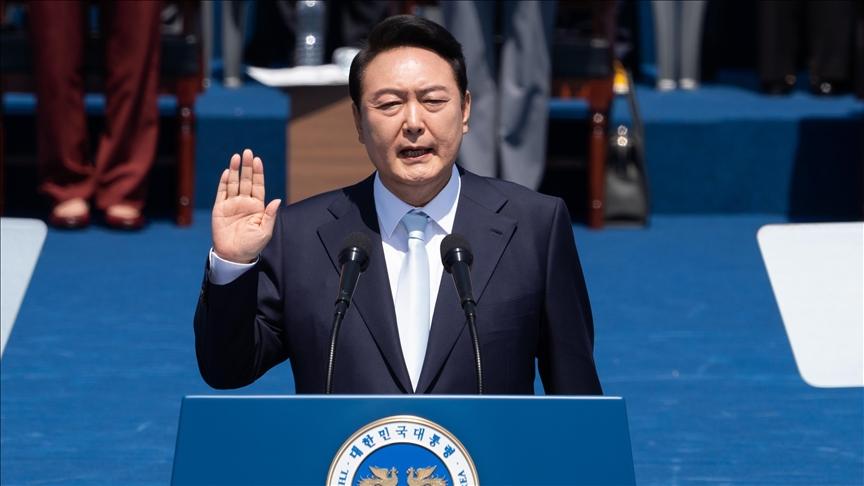
Yoon Suk Yeol – Anadolu Ajansı
On 4 April 2025, the Constitutional Court ruled unanimously to remove Yoon from office. In the ruling delivered by Acting Chief Justice Moon Hyung-bae, the Court found that Yoon’s emergency declaration of 3 December lacked constitutional basis and failed to meet the criteria for a “national crisis.” The Court further determined that by ordering the military to deploy toward the National Assembly, Yoon had undermined the Assembly’s authority and interfered with the functioning of constitutional institutions. These actions were deemed to threaten the constitutional order and necessitated his removal.
Immediately following the Constitutional Court’s ruling, Yoon Suk Yeol’s presidential powers were terminated. Acting President, Prime Minister Inn Duck-soo, assumed temporary authority. As required by the constitution, a new presidential election must be held within 60 days of the removal decision. Yoon was also stripped of all official privileges and pension rights granted to former presidents.
Extensive security measures were implemented in the capital, Seoul, both before and after the impeachment decision. On the day of the ruling, 14,000 riot police were deployed in Seoul, and special precautions were taken against external disturbances and unmanned aerial vehicles. Following the announcement, various social groups gathered on the streets of Seoul. Some groups held celebrations in support of the Court’s decision, while others staged protests against it.
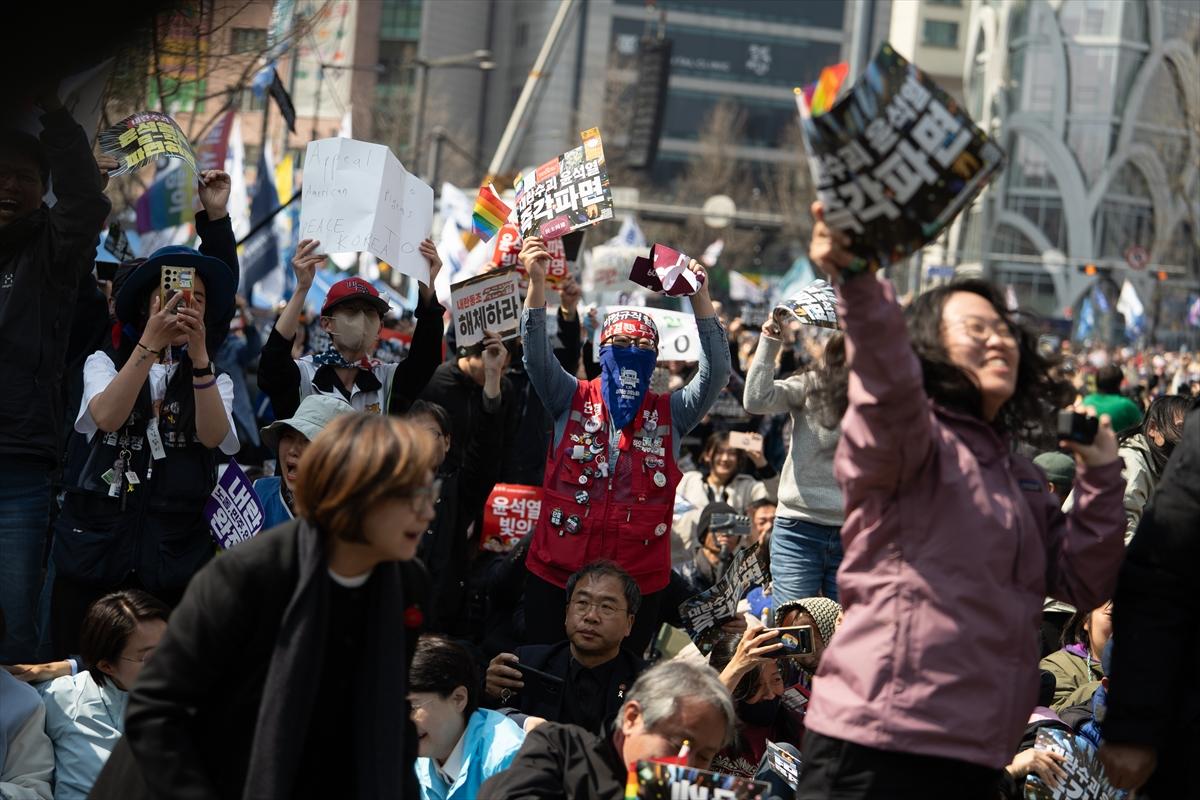
Crowds celebrating the impeachment decision near the Constitutional Court building in Seoul, 4 April 2025 – Anadolu Ajansı
Criminal proceedings initiated against Yoon continue after his removal. The first hearings for various charges, including the primary accusation of “uprising offense,” are scheduled to begin on 14 April 2025. These charges are alleged to carry severe penalties under South Korean criminal law. Additionally, with the lifting of presidential immunity, other judicial investigations previously blocked have now been opened.
Following the Constitutional Court’s ruling, several high-ranking state officials close to Yoon announced their resignations. These included key figures from the presidential office such as the Director of the Presidential Security Service and the National Security Advisor. Furthermore, the ruling People’s Power Party declared its acceptance of the impeachment decision and affirmed its support for the constitutional process.
Al Jazeera. “South Korea’s Constitutional Court Removes President Yoon from Office.” Al Jazeera English. Accessed April 4, 2025. https://www.aljazeera.com/news/2025/4/4/south-koreas-constitutional-court-removes-president-yoon-from-office.
Anadolu Ajansı. “Güney Kore Anayasa Mahkemesi Yoon’un Azline 4 Nisan’da Karar Verecek.” Anadolu Ajansı, April 2, 2025. https://www.aa.com.tr/tr/dunya/guney-kore-anayasa-mahkemesi-yoonun-azline-4-nisanda-karar-verecek/3525344.
Anadolu Ajansı. “Güney Kore'de Anayasa Mahkemesi Devlet Başkanı Yoon’un Azline Karar Verdi.” Anadolu Ajansı, April 4, 2025. https://www.aa.com.tr/tr/dunya/guney-korede-anayasa-mahkemesi-devlet-baskani-yoonun-azline-karar-verdi/3527799.
Anadolu Ajansı. “Güney Kore'de Devlet Başkanlığı Görevinden Uzaklaştırılan Yoon Tahliye Edildi.” Anadolu Ajansı, March 28, 2025. https://www.aa.com.tr/tr/dunya/guney-korede-devlet-baskanligi-gorevinden-uzaklastirilan-yoon-tahliye-edildi/3502507.
Anadolu Ajansı. “Güney Kore'de Devlet Başkanlığına Vekalet Eden Başbakan Han İstikrarı Koruma Mesajı Verdi.” Anadolu Ajansı, April 4, 2025. https://www.aa.com.tr/tr/dunya/guney-korede-devlet-baskanligina-vekalet-eden-basbakan-han-istikrari-koruma-mesaji-verdi/3527805.
Anadolu Ajansı. “Güney Kore'de Sıkıyönetim İlanı Sonrası Tutuklanan Yoon 52 Günün Ardından Tahliye Edildi.” Anadolu Ajansı, March 29, 2025. https://www.aa.com.tr/tr/dunya/guney-korede-sikiyonetim-ilani-sonrasi-tutuklanan-yoon-52-gunun-ardindan-tahliye-edildi/3503999.
Anadolu Ajansı. “Güney Kore'de Yoon’un Azil Davasının Karar Gününde Seul’de 14 Bin Polis Konuşlandırılacak.” Anadolu Ajansı, March 31, 2025. https://www.aa.com.tr/tr/dunya/guney-korede-yoonun-azil-davasinin-karar-gununde-seulde-14-bin-polis-konuslandirilacak/3513882.
BBC News. “South Korea: President Yoon Removed from Office.” BBC News. Accessed April 4, 2025. https://www.bbc.com/news/articles/c86py30qezvo.
Reuters. “South Korea’s Impeached President Yoon Faces Court Ruling to Decide His Fate.” Reuters, April 3, 2025. https://www.reuters.com/world/asia-pacific/south-koreas-impeached-president-yoon-faces-court-ruling-decide-his-fate-2025-04-03/.
YouTube. "Court Upholds Impeachment of South Korean Leader Yoon." South China Morning Post, YouTube, Accessed April 4, 2025. https://www.youtube.com/watch?v=abB4i3fgivU

Güney Kore Devlet Başkanı Yoon Suk Yeol, 4 Nisan 2025’te Anayasa Mahkemesi kararıyla görevden alındı. Karar, 3 Aralık 2024’te ilan edilen sıkıyönetim ve meclise yönelik askeri müdahale sonrası başlayan krizin sonucunda alındı. Yoon, anayasal düzeni ihlal ettiği gerekçesiyle azledilen ikinci Güney Kore başkanı oldu. Başbakan Han Duck-soo geçici olarak göreve getirildi.
No Discussion Added Yet
Start discussion for "Impeachment of Yoon Suk Yeol in South Korea" article
December 3, 2025
Declaration of Emergency
December 3, 2025
Impeachment Process
December 3, 2025
Arrest and Detention
December 3, 2025
Constitutional Court Ruling
December 3, 2025
Security Measures and Public Events
December 3, 2025
Ongoing Legal Proceedings
December 3, 2025
Political Consequences and Resignations