


This article was automatically translated from the original Turkish version.
+1 More
Iridium
Iridium
Symbol | Ir | ||||||||
|---|---|---|---|---|---|---|---|---|---|
Periodic Table | 6 | ||||||||
Atomic Number | 77 | ||||||||
Group | 9 (Transition Metal) | ||||||||
Atomic Weight | (192.217) g/mol | ||||||||
Electron Configuration | [Xe] 4f¹⁴5d⁷6s² | ||||||||
Phase (Room Temp.) | Solid | ||||||||
Density | 22.56 g/cm³ | ||||||||
Melting Point | 2446 °C | ||||||||
Boiling Point | 4428 °C | ||||||||
Atomic Radius | ~213 pm | ||||||||
Electronegativity | 2.2 | ||||||||
Electron Affinity | 150.884 kJ/mol | ||||||||
Important Isotopes | ¹⁹¹Ir (%37.3), ¹⁹³Ir (%62.7) (natural, stable) | ||||||||
Year of Discovery(ies) | 1803 | ||||||||
Discoverer(s) | Smithson Tennant | ||||||||
Etymology(s) | Greek 'iris' (rainbow) | ||||||||
Iridium is a transition metal located at the 77th position in the periodic table and is one of the platinum group metals, characterized by its silvery-white color. Known for being the most corrosion-resistant metal and for its high density, iridium was discovered in 1803 by Smithson Tennant. The element derives its name from the diverse colors of its compounds, and it is both extremely rare in the Earth’s crust and plays a role in specialized technological applications.
Iridium (Ir) is a transition metal located in the 6th period and 9th group of the periodic table. It belongs to the platinum group metals (ruthenium, rhodium, palladium, osmium, platinum). Its electron configuration is [Xe] 4f¹⁴5d⁷6s². At room temperature, it exists as a solid. Iridium is very hard and brittle, making it difficult to machine. Its density is approximately 22.56 g/cm³, making it the second densest known element after osmium.
Iridium was discovered in 1803 by the English chemist Smithson Tennant in London, alongside osmium. Tennant observed that when he dissolved natural platinum ores from South America in aqua regia, a black, insoluble residue remained. Believing this residue contained a new element, Tennant conducted detailed chemical analyses and successfully isolated two new elements from the black powder: one named “osmium” due to its pungent-smelling oxide, and the other named “iridium” because of the wide variety of vivid colors exhibited by its salts.

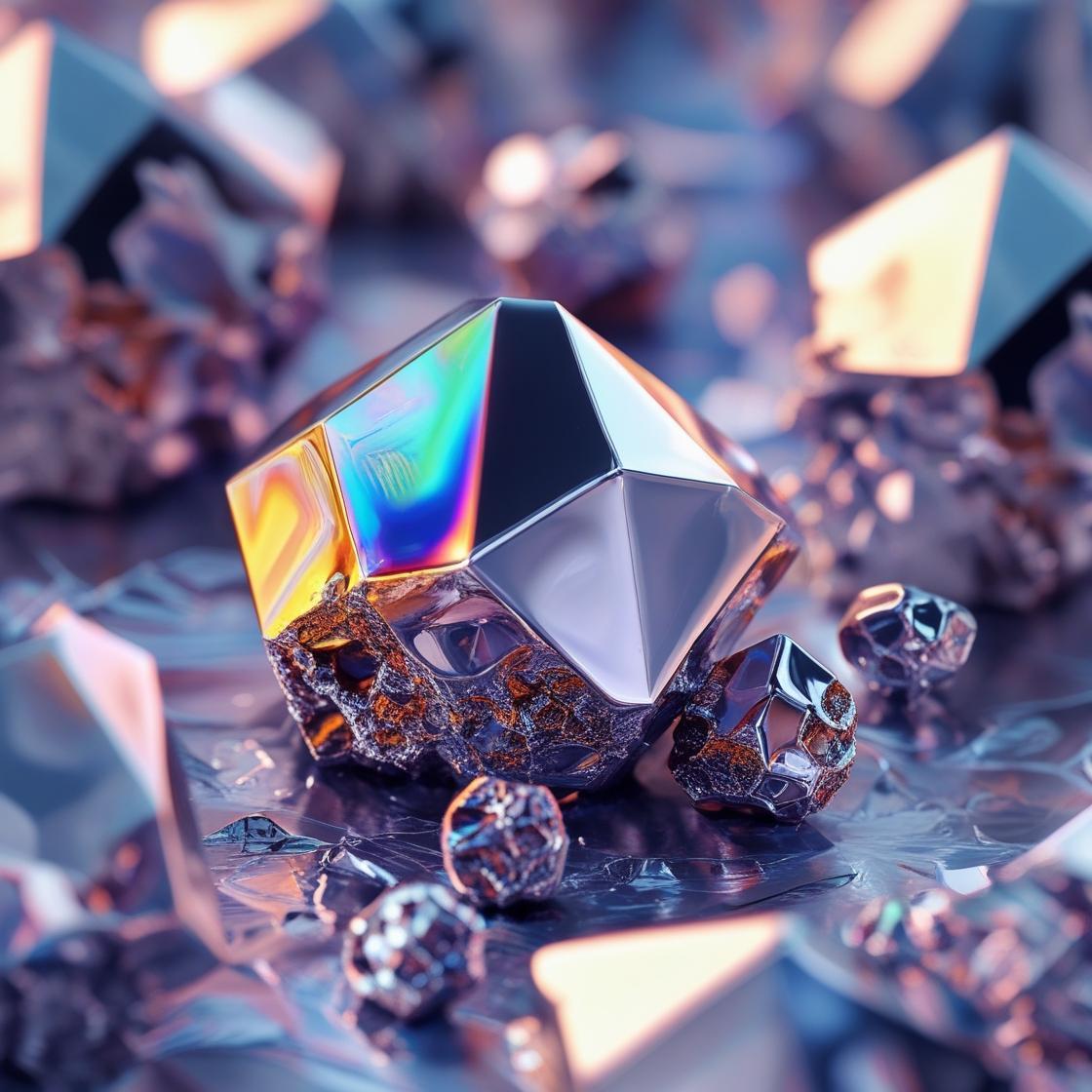
Iridium (Generated by Artificial Intelligence.)
The element’s name was coined by its discoverer, Smithson Tennant, from the Greek word “iris” (ἶρις), meaning “rainbow.” This naming references the wide array of bright and varied colors displayed by iridium compounds and salts.
Iridium is one of the rarest stable elements in the Earth’s crust, even less abundant than gold and platinum. It is rarely found in nature in its pure form but typically occurs in association with other platinum group metals, especially osmium (in naturally occurring alloys known as osmiridium or iridosmine), or with nickel and copper ores.
The widely accepted theory holds that a significant portion of iridium on Earth’s surface was delivered by meteorite impacts, such as the asteroid collision approximately 66 million years ago that contributed to the extinction of the dinosaurs at the Cretaceous–Paleogene (K–Pg) boundary. This is because meteorites contain much higher concentrations of iridium than the Earth’s crust. Commercially, iridium is obtained as a by-product of nickel and copper mining.
The physical and chemical properties of iridium make it industrially valuable. It is a silvery-white, extremely hard and brittle metal. Its melting point is 2446 °C and its boiling point is 4428 °C, both exceptionally high. Its atomic radius is approximately 213 pm and its electronegativity is 2.2. Its electron affinity is reported as 150.884 kJ/mol. Iridium is the most corrosion-resistant metal known.
At room temperature, iridium is completely inert toward air, water, acids, and even aqua regia. This resistance persists even at high temperatures such as 2000 °C. However, at elevated temperatures, it can react with certain substances such as molten salts and halogens. Iridium exhibits a wide range of oxidation states from -3 to +9, although the most common are +3 and +4.
Naturally occurring iridium has two stable isotopes: iridium-191 (¹⁹¹Ir) and iridium-193 (¹⁹³Ir).
Iridium has no known biological role. Metallic iridium is generally not considered toxic due to its extreme chemical inertness and lack of reactivity with the body. However, finely divided iridium powder may be flammable and can cause eye irritation. Soluble iridium compounds may be potentially toxic, though this is a rare concern. When working with radioactive isotopes such as iridium-192, standard radiation safety protocols must be strictly followed.
National Center for Biotechnology Information. "Iridium." *PubChem Compound Database.* Accessed July 7, 2025. https://pubchem.ncbi.nlm.nih.gov/compound/Iridium
TÜBİTAK Bilim Genç. "İridyum." *Bilim Genç.* Accessed July 7, 2025. https://bilimgenc.tubitak.gov.tr/periyodik-tablo/iridyum

Iridium
Iridium
Symbol | Ir | ||||||||
|---|---|---|---|---|---|---|---|---|---|
Periodic Table | 6 | ||||||||
Atomic Number | 77 | ||||||||
Group | 9 (Transition Metal) | ||||||||
Atomic Weight | (192.217) g/mol | ||||||||
Electron Configuration | [Xe] 4f¹⁴5d⁷6s² | ||||||||
Phase (Room Temp.) | Solid | ||||||||
Density | 22.56 g/cm³ | ||||||||
Melting Point | 2446 °C | ||||||||
Boiling Point | 4428 °C | ||||||||
Atomic Radius | ~213 pm | ||||||||
Electronegativity | 2.2 | ||||||||
Electron Affinity | 150.884 kJ/mol | ||||||||
Important Isotopes | ¹⁹¹Ir (%37.3), ¹⁹³Ir (%62.7) (natural, stable) | ||||||||
Year of Discovery(ies) | 1803 | ||||||||
Discoverer(s) | Smithson Tennant | ||||||||
Etymology(s) | Greek 'iris' (rainbow) | ||||||||
Classification and Fundamental Properties
Discovery
Etimology
Natural Occurrence
Physical and Chemical Properties
Isotopes
Applications
Biological Role and Safety Precautions