


This article was automatically translated from the original Turkish version.
Irritable Bowel Syndrome (IBS) is a functional gastrointestinal disorder characterized by chronic and recurrent abdominal pain in the absence of structural or biochemical abnormalities. It commonly presents with symptoms such as abdominal pain, gas, bloating, constipation, and diarrhea. The incomplete understanding of IBS’s pathogenic mechanisms complicates its management and necessitates multidisciplinary approaches.
IBS is among the most common functional gastrointestinal disorders worldwide. Its global prevalence ranges between 10% and 20%.【1】 Research conducted in Türkiye has revealed a prevalence of 19% for IBS, with a higher incidence among women.【2】 The prevalence in women is approximately twice that in men.【3】 IBS typically begins in early adulthood and may persist into middle age. Prevalence tends to decrease in older age groups.
The exact cause of IBS remains unknown, but its development involves multifactorial mechanisms.
Brain–Gut Axis Dysfunction: Disruptions in the bidirectional communication between the brain and the gut are among the core mechanisms of IBS. This leads to increased visceral sensitivity and gastrointestinal motility disturbances.
Visceral Hypersensitivity: An exaggerated pain response occurs to normal intestinal distension. This contributes to more pronounced abdominal pain in individuals with IBS.
Gastrointestinal Motility Disorders: Irregular bowel movements can result in constipation, diarrhea, or mixed-pattern symptoms.
Microbiota Alterations: The composition of the gut microbiota is altered in IBS. The observation that certain probiotics reduce symptoms supports the role of microbiota in the condition.
Role of the Immune System: Inflammatory responses and mast cell activation are observed in the intestinal mucosa.
Psychosocial Factors: Psychosocial factors such as stress, anxiety, and depression can trigger or exacerbate IBS symptoms. Psychosomatic effects may alter gut motility and sensitivity. Neurotic personality traits have been associated with IBS.
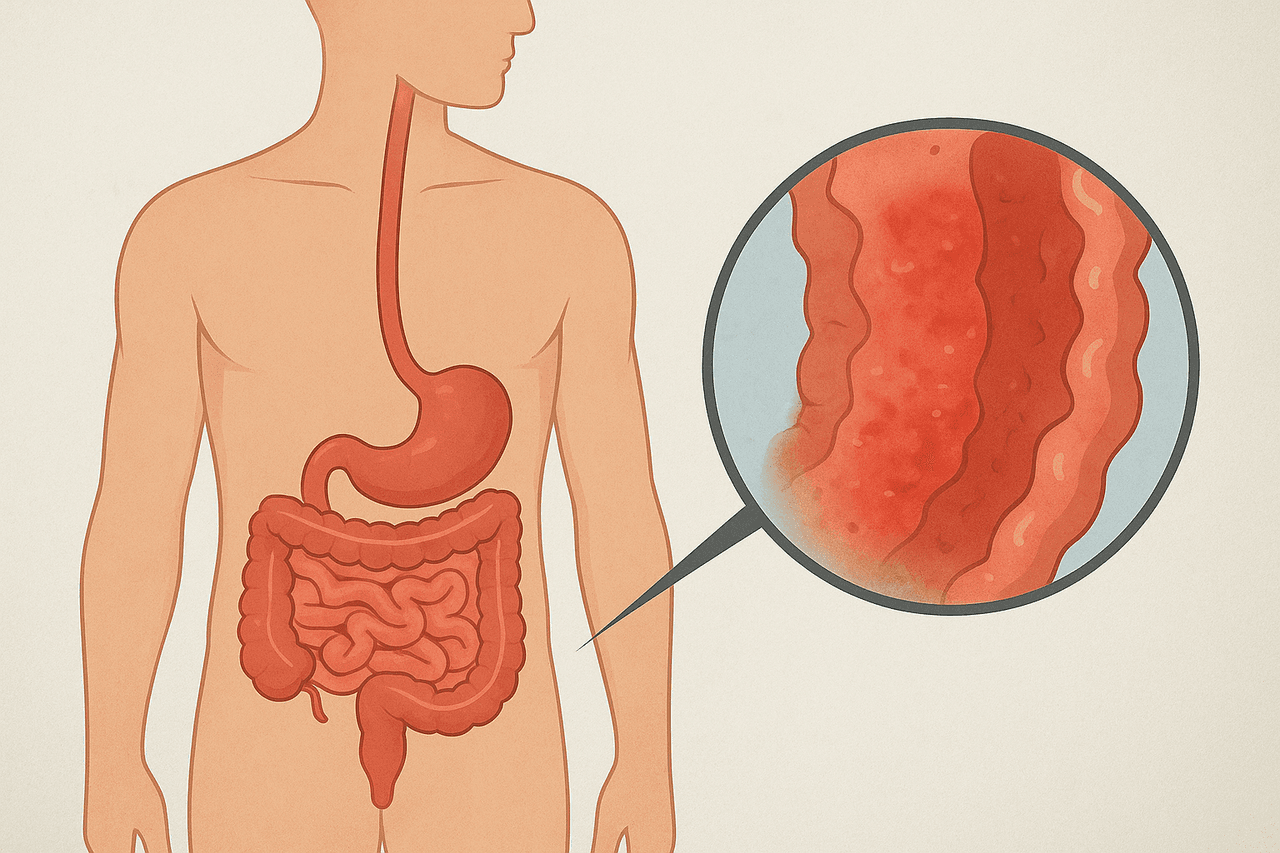
Intestinal Structures Affected in IBS (Generated by Artificial Intelligence)
Certain foods can trigger IBS symptoms. Common triggers include high-carbohydrate foods, fatty foods, coffee, alcohol, spicy foods, and wheat or gluten-containing products. Consumption of these foods may lead to luminal distension, immune system activation, mast cell inflammation, and increased visceral sensitivity, thereby worsening symptoms. Therefore, limiting intake of such foods or tailoring dietary choices according to individual intolerances is essential in IBS management.
The hallmark feature of IBS is recurrent abdominal pain. This pain is typically associated with defecation and is accompanied by changes in stool frequency or consistency. Main symptoms include abdominal pain or discomfort, bloating, gas, altered defecation frequency, constipation and/or diarrhea, and an urgent need to defecate.
According to the Rome IV criteria, IBS is clinically classified into four main subtypes:
Diagnosis requires exclusion of organic diseases. Laboratory and endoscopic evaluations are typically normal. The Rome IV criteria are used to diagnose IBS. These criteria state that, over the past three months, the patient must have experienced abdominal pain or discomfort on at least one day per week, associated with defecation, and accompanied by changes in stool frequency or consistency.
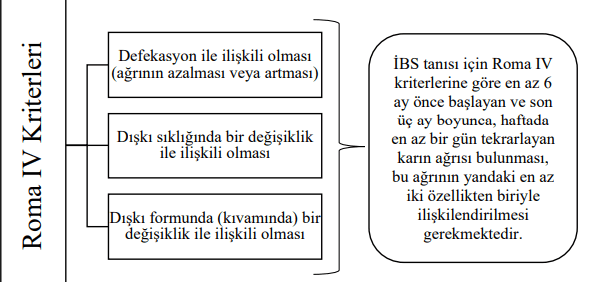
Rome IV Diagnostic Criteria for IBS(Dere, 2025)
【4】
The management of IBS requires a multidisciplinary approach. Given its multifactorial nature, treatment must be individualized according to the patient’s symptoms and lifestyle. Dietary and lifestyle modifications play a central role. Balanced nutrition, adequate fluid intake, and regular physical activity contribute to symptom control. Pharmacological treatment is also important, particularly for alleviating dominant symptoms such as pain, diarrhea, or constipation. Psychosocial interventions are a key component of therapy; cognitive behavioral therapy and stress management techniques can reduce the frequency and severity of symptoms. Additionally, dietary supplements such as probiotics, prebiotics, and fiber are considered supportive elements in IBS management by helping to restore gut microbiota balance.
Dietary adjustments play a crucial role in controlling IBS symptoms. Patients should consume meals regularly, avoid skipping meals, and chew food thoroughly. Adequate fluid intake is essential; it is generally recommended to drink 1.5 to 2 liters of water daily. Alcohol, caffeine, carbonated beverages, and spicy foods should be limited as they may increase intestinal sensitivity. Regular physical activity also aids in regulating bowel movements and maintaining overall well-being.
This diet aims to restrict foods containing fermentable oligosaccharides, disaccharides, monosaccharides, and polyols (FODMAPs). It has been shown to be effective in reducing IBS symptoms, but should be implemented under the supervision of a qualified dietitian.
A gluten-free diet can reduce symptoms in IBS patients with gluten sensitivity. However, other wheat components besides gluten may also contribute to symptom development.
A lactose-free diet can alleviate symptoms in IBS patients with lactose intolerance. However, it should be noted that not all IBS patients exhibit lactose intolerance.
Fructose malabsorption may exacerbate symptoms in some IBS patients. Fructans, as fermentable carbohydrates, can cause bloating, gas, and abdominal pain.
Probiotics are live microorganisms that, when administered in adequate amounts, confer a health benefit to the gut microbiota. Certain probiotic strains may reduce gastrointestinal symptoms in specific IBS subtypes. Effects are strain-specific, and there is currently no consensus on which strains are most effective. A minimum of four weeks of regular consumption is recommended to evaluate probiotic efficacy.
Prebiotics are dietary components selectively utilized by the gut microbiota. Psyllium (soluble fiber) may improve symptoms across all IBS subtypes. Wheat bran (insoluble fiber) may be effective in some patients over the long term but can worsen symptoms in others. Fiber supplements should be increased gradually; otherwise, they may cause abdominal bloating and discomfort.
Warning: The content in this article is provided solely for general encyclopedic informational purposes. The information herein should not be used for diagnosis, treatment, or medical advice. Always consult a physician or qualified healthcare professional before making any health-related decisions. The author and KÜRE Encyclopedia assume no responsibility for any consequences arising from the use of this information for diagnostic or therapeutic purposes.
Bozkurt, Adile, Derya Atik, and Ayşe İnel Manav. "İrritabl barsak sendromunun kişilik özellikleri ile ilişkisi." *Haliç Üniversitesi Sağlık Bilimleri Dergisi* 4, no. 1 (2021): 9–16. Accessed September 28, 2025. https://dergipark.org.tr/tr/doi/10.48124/husagbilder.805410
Dere, Harun. *İrritabl Bağırsak Sendromunda Egzersiz ve Vagus Sinir Uyarımının Bağırsaklar Üzerine Etkisi.* PhD thesis, Bahçeşehir Üniversitesi, 2025. Accessed September 28, 2025. https://tez.yok.gov.tr/UlusalTezMerkezi/TezGoster?key=5NNqZKwwGohPh6_KCcfp-gSGlp-bS3SCbrFLbh8u2SNieGdd0lx2oKezMbeixgRg
Düşünsel, Ayşe Damla, and Gül Eda Kılınç. "İrritabl Bağırsak Sendromunda Düşük Fermente Edilebilir Oligosakkaritler, Disakkaritler, Monosakkaritler, Polioller Diyet Tedavisi." *Balıkesir Sağlık Bilimleri Dergisi* 12, no. 2 (2023): 417-424. Accessed September 28, 2025. https://dergipark.org.tr/en/pub/balikesirsbd/issue/78283/1004488
Özyürek, Fatmanur, and Kadriye Melike Pekcan. "İrritabl Bağırsak Sendromunda Diyet Tedavisi ve Tedavi Yaklaşımı Olarak Besin Destekleri." *Turkiye Klinikleri Nutrition and Dietetics-Special Topics* 9, no. 1 (2023): 57–63. Accessed September 28, 2025. https://www.researchgate.net/profile/Fatmanur-Ozyurek-Arpa/publication/370628015_Irritabl_Bagirsak_Sendromunda_Diyet_Tedavisi_ve_Tedavi_Yaklasimi_Olarak_Besin_Destekleri_Dietary_Treatment_and_Nutritional_Supplements_as_a_Treatment_Approach_in_Irritable_Bowel_Syndrome/links/645a534e6090c43d0f5bd57b/Irritabl-Bagirsak-Sendromunda-Diyet-Tedavisi-ve-Tedavi-Yaklasimi-Olarak-Besin-Destekleri-Dietary-Treatment-and-Nutritional-Supplements-as-a-Treatment-Approach-in-Irritable-Bowel-Syndrome.pdf
[1]
Harun, Dere. İrritabl Bağırsak Sendromunda Egzersiz ve Vagus Sinir Uyarımının Bağırsaklar Üzerine Etkisi. Doktora Tezi, Bahçeşehir Üniversitesi, (2025): 7. Erişim 28 Eylül 2025. https://tez.yok.gov.tr/UlusalTezMerkezi/TezGoster?key=5NNqZKwwGohPh6_KCcfp-gSGlp-bS3SCbrFLbh8u2SNieGdd0lx2oKezMbeixgRg
[2]
Fatmanur, Özyürek, ve Kadriye Melike, Pekcan. "İrritabl Bağırsak Sendromunda Diyet Tedavisi ve Tedavi Yaklaşımı Olarak Besin Destekleri." Turkiye Klinikleri Nutrition and Dietetics-Special Topics 9, no. 1. (2023): 57. Erişim 28 Eylül 2025. https://www.researchgate.net/profile/Fatmanur-Ozyurek-Arpa/publication/370628015_Irritabl_Bagirsak_Sendromunda_Diyet_Tedavisi_ve_Tedavi_Yaklasimi_Olarak_Besin_Destekleri_Dietary_Treatment_and_Nutritional_Supplements_as_a_Treatment_Approach_in_Irritable_Bowel_Syndrome/links/645a534e6090c43d0f5bd57b/Irritabl-Bagirsak-Sendromunda-Diyet-Tedavisi-ve-Tedavi-Yaklasimi-Olarak-Besin-Destekleri-Dietary-Treatment-and-Nutritional-Supplements-as-a-Treatment-Approach-in-Irritable-Bowel-Syndrome.pdf
[3]
Harun, Dere. İrritabl Bağırsak Sendromunda Egzersiz ve Vagus Sinir Uyarımının Bağırsaklar Üzerine Etkisi. Doktora Tezi, Bahçeşehir Üniversitesi, (2025): 7. Erişim 28 Eylül 2025. https://tez.yok.gov.tr/UlusalTezMerkezi/TezGoster?key=5NNqZKwwGohPh6_KCcfp-gSGlp-bS3SCbrFLbh8u2SNieGdd0lx2oKezMbeixgRg
[4]
Harun, Dere. İrritabl Bağırsak Sendromunda Egzersiz ve Vagus Sinir Uyarımının Bağırsaklar Üzerine Etkisi. Doktora Tezi, Bahçeşehir Üniversitesi, (2025): 7. Erişim 28 Eylül 2025. https://tez.yok.gov.tr/UlusalTezMerkezi/TezGoster?key=5NNqZKwwGohPh6_KCcfp-gSGlp-bS3SCbrFLbh8u2SNieGdd0lx2oKezMbeixgRg

No Discussion Added Yet
Start discussion for "Irritable Bowel Syndrome (IBS)" article
Epidemiology
Pathogenic Mechanisms
Food Sensitivities
Clinical Features
Subtypes
Diagnosis
Treatment Approaches
Dietary and Nutritional Approaches
General Dietary Recommendations
Special Diets
Low FODMAP Diet
Gluten-Free Diet
Lactose-Free Diet
Fructose-Free Diet
Dietary Supplements
Probiotics
Prebiotics and Fiber