


This article was automatically translated from the original Turkish version.
Probiotic
Natural Resources | Boza Vinegar Şalgam Pickle Kefir Yogurt | ||||||||
|---|---|---|---|---|---|---|---|---|---|
Common Probiotic Bacteria | Enterococci Bifidobacteria Lactobacilli | ||||||||
Probiotics are live microorganisms that, when administered in adequate amounts, confer a health benefit on the host (e.g. humans). The term is derived from the Greek phrase pro bios, meaning “for life”. Probiotics primarily consist of bacteria that naturally inhabit the human digestive tract and live in symbiotic relationship with the body. These microorganisms play a role in balancing the gut microbiota, regulating digestive functions, and supporting the immune system.

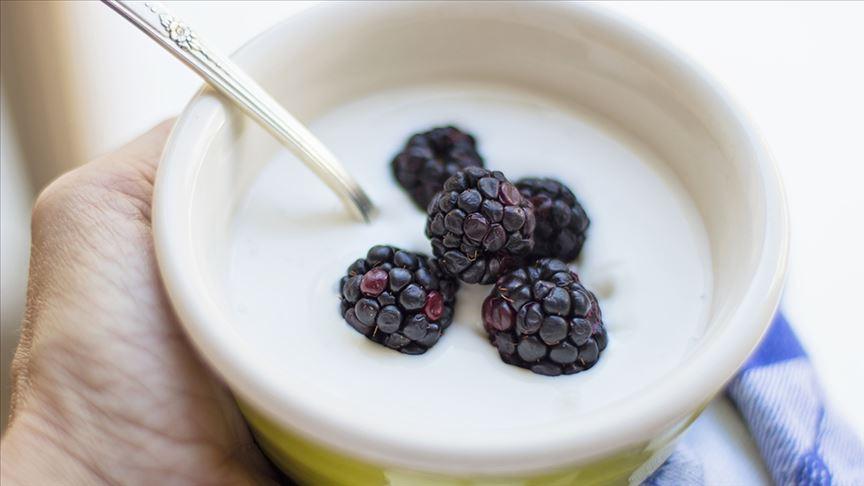
Probiotic (Anadolu Agency)
Probiotic microorganisms are generally classified into three main groups:
They are primarily found in the small intestine. By producing lactic acid, they lower the intestinal pH and inhibit the growth of harmful bacteria.
They are densely populated in the large intestine. They contribute to the production of B vitamins and enhance nutrient absorption.
These bacteria naturally occur in the digestive system and have regulatory effects on the immune system.
These microorganisms may also include yeast species; however, the term probiotic is generally used to refer to beneficial bacterial strains.
The health effects of probiotics have been studied scientifically and are known to play roles in various physiological functions. These effects are categorized as follows:
Probiotics are microorganisms that can be naturally consumed through food. The following foods are rich in probiotics:
These products exhibit probiotic properties as long as they contain live and active microorganisms. To preserve these benefits, they must not be subjected to processes such as pasteurization. Additionally, production conditions must be hygienic and appropriate temperature levels must be maintained.
Ceyhan, Nur., and Alıç, Halime. "Bağırsak Mikroflorası ve Probiyotikler." *Türk Bilimsel Derlemeler Dergisi* (2012): 107–113. https://dergipark.org.tr/en/pub/derleme/issue/35085/389098 (Accessed May 16, 2025).
Gümüşhane İl Directorate of Health. “Probiyotik Kullanımına Dikkat!” _Official Website of the Gümüşhane Provincial Directorate of Health, Ministry of Health of the Republic of Turkey_. https://gumushaneism.saglik.gov.tr/TR-284125/probiyotik-kullanimina-dikkat.html#:~:text=Ev%20yap%C4%B1m%C4%B1%20yo%C4%9Furt%2C%20kefir%2C%20tur%C5%9Fu,olduk%C3%A7a%20sa%C4%9Fl%C4%B1kl%C4%B1%20birer%20probiyotik%20kayna%C4%9F%C4%B1d%C4%B1r.&text=Prebiyotikler%20sindirim%20ve%20ba%C4%9F%C4%B1%C5%9F%C4%B1kl%C4%B1k%20sistemini,ba%C4%9F%C4%B1rsakta%20geli%C5%9Fimini%20ve%20ya%C5%9Fam%C4%B1n%C4%B1%20destekler Accessed May 16, 2025.
Hongur, Andaç. "Prof. Dr. Karakan: Probiyotikler Salgın Hastalıklara Kalkan." Anadolu Ajansı. https://www.aa.com.tr/tr/saglik/prof-dr-karakan-probiyotikler-salgin-hastaliklara-kalkan/654111 Accessed May 16, 2025.
İsmailoğlu, Özlem, and Yılmaz, Hande Öngün. "PROBİYOTİK KULLANIMININ BAĞIRSAK MİKROBİYOTASI ÜZERİNE ETKİSİ." *Bandırma Onyedi Eylül Üniversitesi Sağlık Bilimleri ve Araştırmaları Dergisi* (2019): 38–56. https://dergipark.org.tr/en/download/article-file/750182 (Accessed May 16, 2025).
Şenses Kurukız, Hatice. "Probiyotikler Kilo Kontrolüne Destek Oluyor." Anadolu Ajansı. Accessed May 16, 2025.

Probiotic
Natural Resources | Boza Vinegar Şalgam Pickle Kefir Yogurt | ||||||||
|---|---|---|---|---|---|---|---|---|---|
Common Probiotic Bacteria | Enterococci Bifidobacteria Lactobacilli | ||||||||
Main Probiotic Types
Lactobacilli (Lactobacillus spp.)
Bifidobacteria (Bifidobacterium spp.)
Enterococci (Enterococcus spp.)
Effects on Health
Natural Sources of Probiotics