


This article was automatically translated from the original Turkish version.
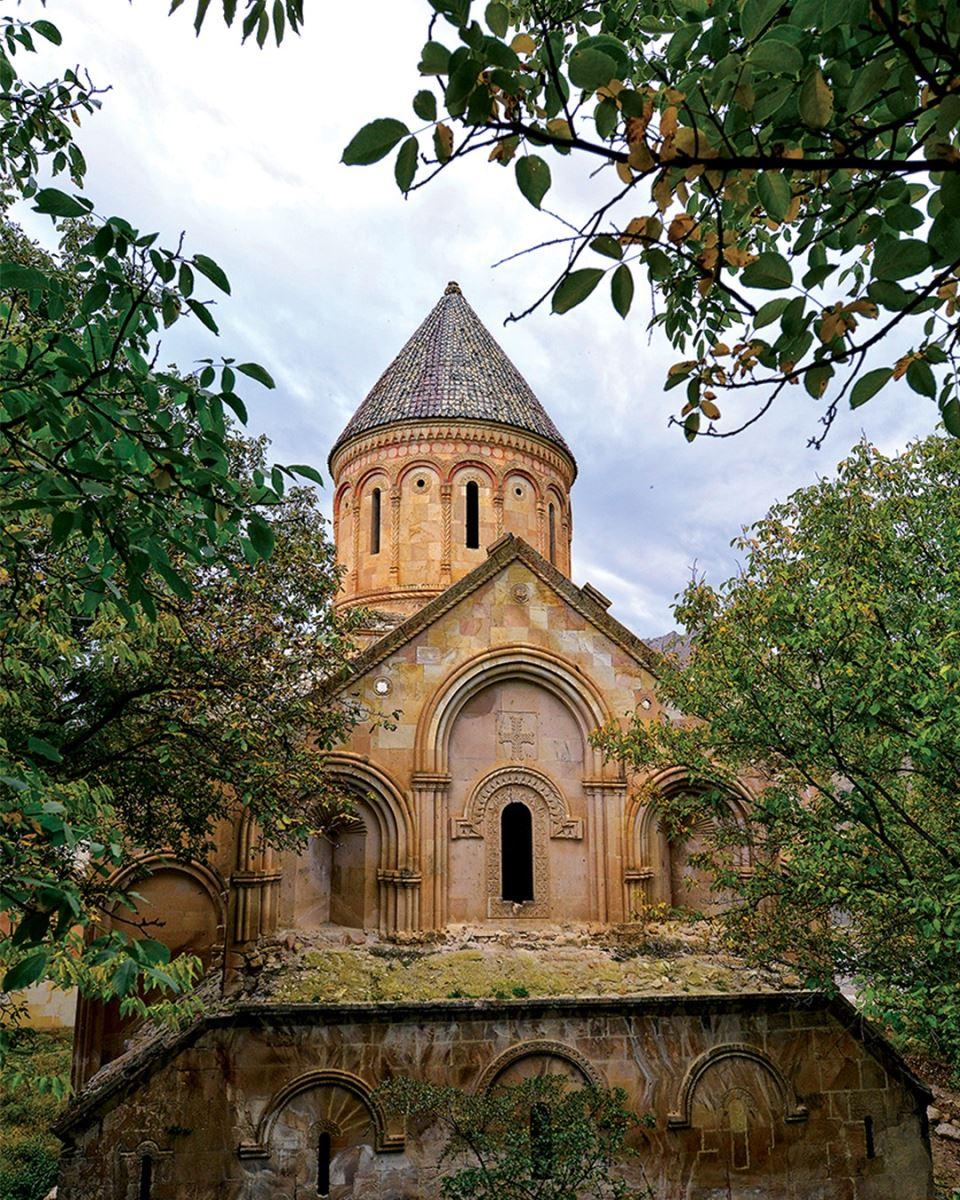
İşhan Kilisesi
Function(s) | İşhan Kilisesi is a church that was used as a place of worship by Georgian Orthodox Christians during the historical period. | ||||||||
|---|---|---|---|---|---|---|---|---|---|
Architectural Type | Medieval Armenian church | ||||||||
Material(s) | Stone | ||||||||
The İşhan Church is located within the boundaries of İşhan Village in the Yusufeli district of Artvin Province. Access to the structure is via a approximately 7-kilometer road branching north from the 92nd kilometer of the state highway connecting Artvin and Erzurum via the Oltu route.
According to a manuscript dated 951, the church was constructed by Priest Seba, nephew and student of Priest Khandza (759–861), with the financial support and patronage of King Andernase. Construction of the monastery began during the reign of the Georgian King David in 955 and was completed in 1027 by the Bagratid King Magistros.

Exterior Facade of the İşhan Church -AA
The Monastery Church is a cruciform structure with external dimensions of approximately 35 by 20.7 meters. The central square space is covered by a dome resting on four free-standing piers. The central area is extended by arms in four directions, with the eastern arm terminating in a semicircular apse. The apse is characterized by eight columns connected by arches, and the upper levels of the flanking two-story spaces were designated for hermits in seclusion.
The western arm of the cross is three times the length of the other arms. During the church’s conversion into a mosque, a wall was built in this area and two doors on the south and west walls were sealed. The section where the southern door was located became the mosque’s mihrab, while the northern annex served as the final congregation space.
Many legends surround this historical structure, which remained buried underground for centuries and was rediscovered and restored during the Seljuk period. Among these tales, the most widely known is the contest held for a woman named Elen, famed for her beauty. The love of one of the Seljuk castle governors, who had overseen the church’s restoration, for Elen—his own daughter—cost many lives. According to the legend, a competition of archery was organized among young men seeking to marry Elen; however, those who lost the contest were executed, leading the structure to become known among the people as the “Blood Church.”
Under a protocol signed between Türkiye and Georgia, restoration work on the approximately 1200-year-old İşhan Church in İşhan Village, Yusufeli district of Artvin, began in 2012. The restoration, carried out by the Ministry of Culture and Tourism, cost 3 million Turkish lira.
Anadolu Ajansı. "Artvin'de bin 200 yıllık İşhan Kilisesi'nin restorasyonu sürüyor." Accessed May 16, 2025.
Artvin İl Kültür ve Turizm Müdürlüğü. "İşhan Manastır Kilisesi." Accessed May 16, 2025.
Türkiye Turizm Ansiklopedisi. "İşhan Manastırı." Accessed May 16, 2025.

İşhan Kilisesi
Function(s) | İşhan Kilisesi is a church that was used as a place of worship by Georgian Orthodox Christians during the historical period. | ||||||||
|---|---|---|---|---|---|---|---|---|---|
Architectural Type | Medieval Armenian church | ||||||||
Material(s) | Stone | ||||||||
History
Architectural Features
The Story of the Church
Restoration