This article was automatically translated from the original Turkish version.
+1 More
Transportation(s) | 118 kilometers from the city center of Erzurum | ||||||||
|---|---|---|---|---|---|---|---|---|---|
Location | Erzurum Province Oltu district center The southern bank of Oltu Creek | ||||||||
Total Project Budget | Approximately 53 million Turkish lira | ||||||||
Restoration Project (2024) | KUDAKA | ||||||||
Mısri Zinnun Tomb | The grave of Zinnun, the Kadı of Çıldır, who was martyred in 1655 | ||||||||
Inner Castle (Ehmedek) | Cisterns, guard rooms, and a hidden waterway descending to Oltu Creek | ||||||||
Architectural Structure | Regularly cut stone | ||||||||
Area Covered | Approximately 3,000 square meters | ||||||||
Construction Period | 4th century BCE, Urartian period | ||||||||
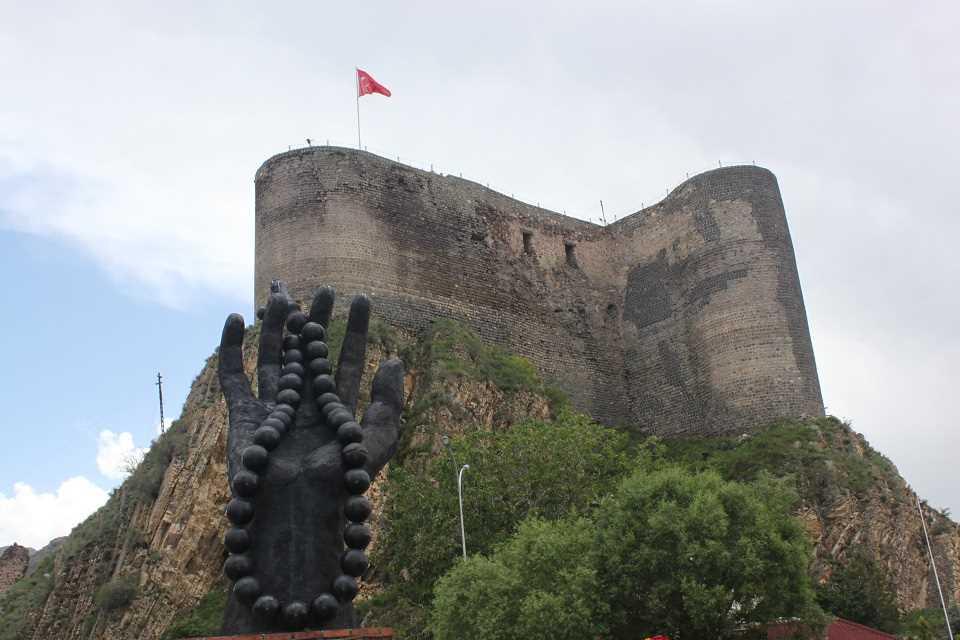
Oltu Castle is a historical defensive structure built on an area of approximately 3,000 square meters, strategically positioned on a pass south of the Oltu River, in the district center of Oltu, Erzurum Province.【1】 Constructed with regular cut stone, the castle retains its grandeur through its inner fortress, known today as Ehmedek, and is regarded as one of the region’s cultural heritage sites due to its cisterns, hidden water channels, and religious architectural structures representing different faiths.
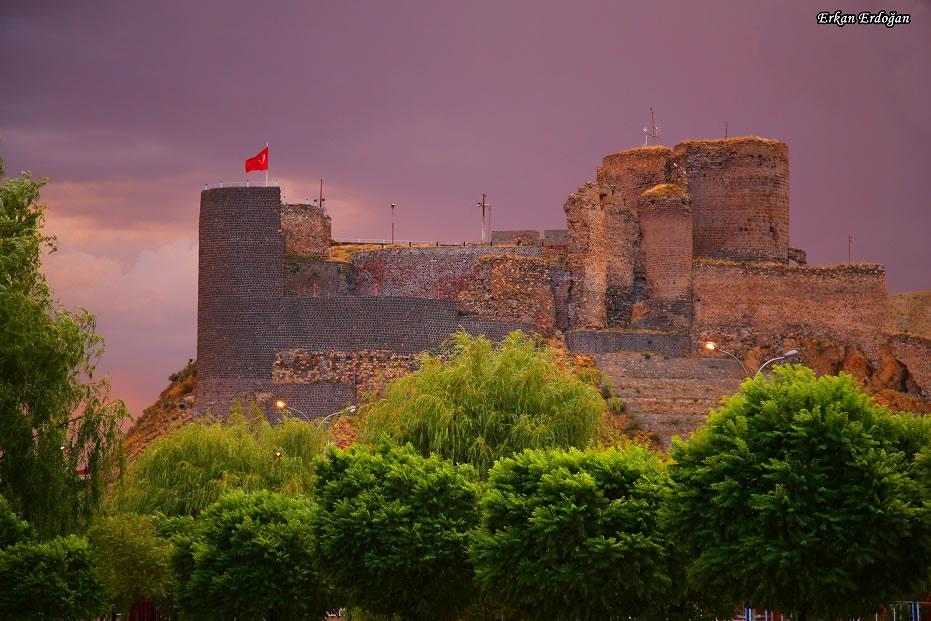
Oltu Kalesi (T.C. Oltu Kaymakamlığı)
Although the exact construction date of the castle is unknown, its location and architectural features lead scholars to believe it was built by the Urartians in the 4th century BCE. The structure is thought to have been used by the Romans and Genoese to secure the Silk Road trade routes and underwent various repairs during the Byzantine, Seljuk, Akkoyunlu, and Karakoyunlu periods.
During the Ottoman period, the castle also served for a time as a caravanserai and underwent its most recent comprehensive restoration between 1998 and 1999.【2】 A significant event in the castle’s Ottoman history occurred in 1655, when Zinnun, the qadi of Çıldır Eyalet, was martyred while defending the castle against Georgian and Celali threats, underscoring its strategic importance.
The castle was constructed on steep, defensible cliffs, with its main gate opening to the south (qibla) direction. The inner fortress is reinforced by high and thick curtain walls and towers.

Oltu Kalesi (T.C. Oltu Kaymakamlığı)
Within the castle, structures representing different cultural layers are preserved:
As of 2024, a comprehensive project has been launched to integrate the castle into tourism. The project, with a total budget of approximately 53 million Turkish Lira, is funded to the extent of 47.7 million Turkish Lira by the Northeastern Anatolia Development Agency. The restoration aims to preserve the castle’s historical fabric and enhance its level of social development.【3】
Anadolu Ajansı. "Oltu Kalesi, yerli ve yabancı turistlerin ilgisini çekiyor." Accessed February 18, 2026.
Culture Portal. "Oltu Kalesi - Erzurum." Accessed February 18, 2026. https://www.kulturportali.gov.tr/turkiye/erzurum/gezilecekyer/oltu-kalesi
Kuzeydoğu Anadolu Kalkınma Ajansı. "Tarihi Oltu Kalesi Turizme Kazandırılıyor." August 14, 2024. Accessed February 18, 2026. https://kudaka.gov.tr/haber/tarihi-oltu-kalesi-turizme-kazandiriliyor/617
Oltu Kalesi. "Oltu Castle Restoration: Signatures Were Placed!" August 16, 2024. Accessed February 18, 2026. https://oltu.bel.tr/haber/oltu-kalesi-restorasyonunda-imzalar-atildi
Oltu Kaymakamlığı. "Oltu Kalesi Hakkında." Accessed February 18, 2026. https://www.oltu.gov.tr/oltu-kalesi-hakkinda
[1]
Kuzeydoğu Anadolu Kalkınma Ajansı. "Tarihi Oltu Kalesi Turizme Kazandırılıyor." 14 Ağustos 2024. Erişim 18 Şubat 2026. https://kudaka.gov.tr/haber/tarihi-oltu-kalesi-turizme-kazandiriliyor/617
[2]
Kültür Portalı. "Oltu Kalesi - Erzurum." Erişim 18 Şubat 2026. https://www.kulturportali.gov.tr/turkiye/erzurum/gezilecekyer/oltu-kalesi
[3]
Kuzeydoğu Anadolu Kalkınma Ajansı. "Tarihi Oltu Kalesi Turizme Kazandırılıyor." 14 Ağustos 2024. Erişim 18 Şubat 2026. https://kudaka.gov.tr/haber/tarihi-oltu-kalesi-turizme-kazandiriliyor/617

Transportation(s) | 118 kilometers from the city center of Erzurum | ||||||||
|---|---|---|---|---|---|---|---|---|---|
Location | Erzurum Province Oltu district center The southern bank of Oltu Creek | ||||||||
Total Project Budget | Approximately 53 million Turkish lira | ||||||||
Restoration Project (2024) | KUDAKA | ||||||||
Mısri Zinnun Tomb | The grave of Zinnun, the Kadı of Çıldır, who was martyred in 1655 | ||||||||
Inner Castle (Ehmedek) | Cisterns, guard rooms, and a hidden waterway descending to Oltu Creek | ||||||||
Architectural Structure | Regularly cut stone | ||||||||
Area Covered | Approximately 3,000 square meters | ||||||||
Construction Period | 4th century BCE, Urartian period | ||||||||
History
Architectural Structure
Religious Structures
Current Restoration Project