


This article was automatically translated from the original Turkish version.
+1 More
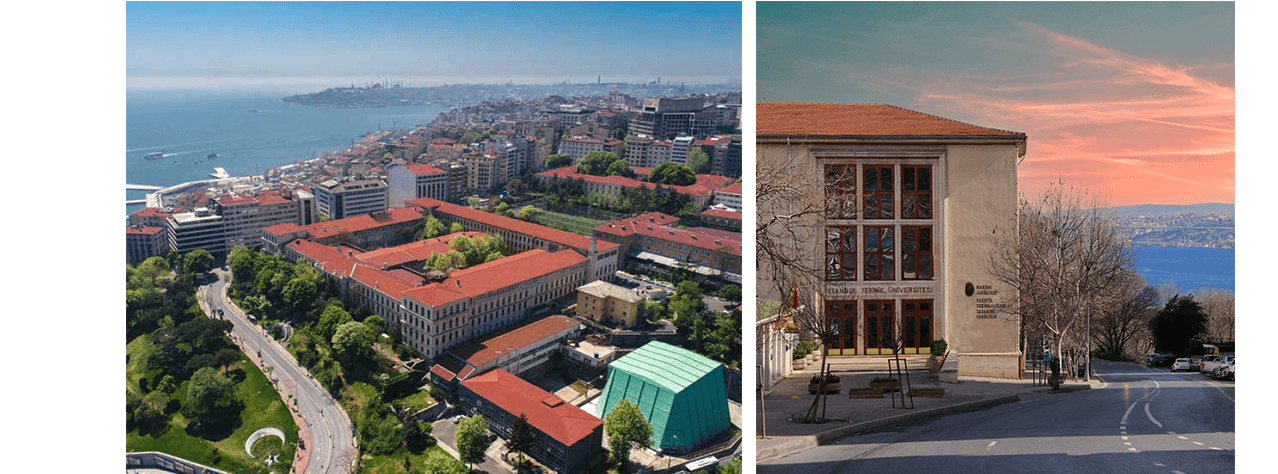
Istanbul Technical University Faculty of Mechanical Engineering
Address | Gümüşsuyu İnönü Cd. No:65 34437 Beyoğlu/İstanbul | ||||||||
|---|---|---|---|---|---|---|---|---|---|
Building Construction Year | 1862 | ||||||||
Establishment | 1944 | ||||||||
Number of Laboratories | 27 | ||||||||
Language of Instruction | Turkish, English | ||||||||
The Faculty of Mechanical Engineering, one of the foundational faculties of Istanbul Technical University, traces its origins back over a century. With the university reform of 1933, the Institute of Electricity and Mechanical Engineering under the Faculty of Science of Istanbul Darülfünunu was dissolved, and the Department of Electrical-Mechanical Engineering was established at the Higher Engineering School, initiating education in Mechanical and Electrical Engineering. In 1944, a law was enacted that renamed the Higher Engineering School as Istanbul Technical University, and the Department of Mechanical Engineering became an independent faculty under the name Faculty of Mechanical Engineering.
The Faculty of Mechanical Engineering is one of the most established institutions in Türkiye for education and research in mechanical engineering. Over time, various engineering disciplines within the faculty have also attained faculty status. In 1969, the Faculty of Naval Architecture and Marine Sciences was established as an independent faculty; in 1983, the Faculty of Aeronautics and Astronautics; and in 2004, the Faculty of Textile Technologies and Design.
The Faculty of Mechanical Engineering conducts education and research activities in the design, development, and production planning of mechanical systems and energy conversion systems through its Department of Mechanical Engineering. Ongoing research and development efforts span numerous sectors including automotive, energy production, petrochemicals, robotics, defense industry, textiles, reverse engineering, clean energy, renewable energy, underground coal gasification, MEMS, nanotechnology, pharmaceutical technology, and biomolecular engineering.
Today, as a modern institution of education and research aligned with global technological standards, the Faculty of Mechanical Engineering at Istanbul Technical University is among the faculties with the most extensive research laboratories in Türkiye.
Construction of the Gümüşsuyu Building began in 1840 during the reign of Ottoman Sultan Mahmud II. It was initially erected to provide accommodation for unmarried workers employed at the Tüfekhane-i Amire, a state armory located in Dolmabahçe. During construction, internal modifications were made, and the building was converted into a military barracks. The wooden structure, completed in 1843 by Armenian architect Garabet Amira Balyan, began operating as the Gümüşsuyu Barracks.
In 1857, Sultan Abdülmecid ordered the renovation of the neglected Gümüşsuyu Barracks to repurpose it for the Hademe-i Hassa and Muzika-i Hümayun, service units serving the Dolmabahçe Palace. Consequently, in 1862, the main structure of the barracks was rebuilt in stone, and the project was completed during the reign of Sultan Abdülaziz by architect Sarkis Balyan.

The early years of the Gümüşsuyu Barracks. (İstanbul Teknik Üniversitesi)
During the Ottoman period, the Gümüşsuyu Barracks housed the Muzika-i Hümayun, established to train musicians for the palace band and orchestra and to provide instruction in Turkish music. In this capacity, it is one of the earliest buildings of today’s Presidential Symphony Orchestra. Additionally, the barracks were used to train the Hademe-i Hassa unit, responsible for ceremonial and service personnel within the palace. In later years, part of the barracks was allocated to the Tulumbacılar Birliği, a fire-fighting unit, and the Süvari Birliği, a mounted guard unit. The area now used as a sports hall and open field was designated in 1863 as stables for the Süvari Birliği.

Dolmabahçe and Gümüşsuyu Barracks in the early 20th century. (İstanbul Teknik Üniversitesi)
In 1909, the Gümüşsuyu Barracks suffered a fire due to the negligence of soldiers serving in the cartography department. Despite the efforts of the fire brigade, the delayed response caused extensive damage.

The Gümüşsuyu Barracks after the fire of 1909. (İstanbul Teknik Üniversitesi)
In 1884, Türkiye’s first civil engineering school, the Hendese-i Mülkiye Mektebi, was established under the Mühendishane-i Berri-i Hümayun and began instruction at the Mühendishane in Halıcıoğlu. However, due to disagreements between military and civilian administrators, in 1909 it separated from the Mühendishane-i Berri-i Hümayun, adopted the name Mühendis Mekteb-i Âlîsi, and relocated to the Faik Paşa Mansion in Tophane under the Ministry of Public Works (Nafıa Nezareti). Before finally moving to the Gümüşsuyu Barracks, the school was forced to operate in seven different buildings—including Notre Dame de Sion and Harbiye Mektebi—due to factors such as a typhus epidemic, the First World War, and occupation.
On 28 November 1918, Sultan Vahdettin assigned the Gümüşsuyu Barracks to the Mühendis Mektebi. At the time, equipment for physics and chemistry laboratories was stored in the mosque located in the central courtyard of the barracks. However, just one week later, before students could settle in, British forces occupied the building and converted it into a hospital. The Mühendis Mektebi, left vacant for a period, returned to its former building in Halıcıoğlu after leaving some of its equipment in the mosque. After the occupation of Istanbul, this building too was assigned to British forces, leaving the school without a facility once again. The Gümüşsuyu Barracks, then serving as a hospital, was completely destroyed in a major fire on the southern wing facing Gümüşsuyu Street in April 1920.

View of the Gümüşsuyu Building from Dolmabahçe. (İstanbul Teknik Üniversitesi)
After prolonged use of unsuitable buildings—where lectures were held in dormitories and dining halls—decisions were made in 1923 to return the Gümüşsuyu Barracks to the Mühendis Mektebi. Following the War of Independence and the liberation of Istanbul, on 12 March 1923, then Minister of Foreign Affairs İsmet (İnönü) Paşa requested that British General Harrington vacate the building. In September 1923, it was decided that the Gümüşsuyu Barracks would serve both the Mühendis Mektebi and the Kondüktör Mektebi to meet urgent needs. In 1937, the Kondüktör Mektebi relocated to Yıldız under the name Teknik Okul and later became Yıldız Technical University in 1992.
On 20 October 1923, the Mühendis Mektebi moved into the Gümüşsuyu Barracks and resumed classes. However, repairs and renovations continued for several years due to the building’s ruined state upon handover by the British. The details of this process are described in the research book “Yüksek Mühendis Okulu”: “The southern section of the building’s waterfront (now housing the Faculty of Mechanical Engineering’s secretariat and beyond) was substantially reconstructed during the first directorship of Fikri Bey. The lecture hall and its extension were completed during the rectorship of Suphi Bey. The surrounding walls were largely rebuilt, while other sections were repaired. The garden facing Dolmabahçe was landscaped. On 1 June 1935, Suphi Tanıg was appointed director by the Minister of Public Works, succeeding Fikri Bey. At this time, it was decided to construct a separate dormitory to fully dedicate the building to educational and laboratory activities. A modern dormitory with a capacity of 300 students was built on the site of the former cavalry barracks, providing excellent accommodation, rest, and dining facilities. The sections previously used as dormitories and dining halls were converted into educational spaces. The wing facing Gümüşsuyu Street was also rebuilt. These renovations increased student capacity and expanded laboratories. Reconstruction and expansion efforts, begun in earlier years, accelerated rapidly. Three sides of the Gümüşsuyu Building were repaired and reconstructed during the directorships of Fikri and Suphi Bey, while the western side (currently facing the Philips buildings) was entirely demolished and rebuilt as a four-story structure. The lower floors housed a printing press and laboratories, while the upper floors accommodated the library and faculty members. To accommodate the growing student population, partitions between classrooms were removed to enlarge them. Previously, the physics and chemistry laboratories, which could only accommodate 30 students, were expanded to double their capacity. A new amphitheater was constructed, and the old one was converted into a communication laboratory. Additionally, a Mechanical Workshop was established for student internships. During this period, Electrical and Mechanical divisions were created, and departments in Aeronautical Engineering and Naval Architecture Engineering were added.”
By law adopted on 24 May 1928, the school, originally established as Mühendis Mekteb-i Âlîsi, was renamed Yüksek Mühendis Mektebi and transferred to the Gümüşsuyu Building. During the Second World War, the Yüksek Mühendis Mektebi expanded its faculty with international scholars and began training the nation’s elite technical personnel from 1931 onward. Initially located in the Gümüşsuyu Barracks, the institution grew with the addition of the Taşkışla and Maçka Silahhanesi buildings and was officially renamed Istanbul Technical University in 1944. Upon the end of Ord. Prof. Osman Tevfik Taylan’s directorship on 20 July 1944, as mandated by law, he was appointed the first Rector of the newly established Technical University.

Photograph of National Education Minister Hasan Ali Yücel cutting the ribbon at the opening of ITU in 1944. (İstanbul Teknik Üniversitesi)
Originally constructed as a barracks, the Gümüşsuyu Building underwent numerous changes when repurposed for educational use. Bathhouses and cavalry stables were removed, additional floors were added, and the original structure was significantly altered. The Conference Hall within the Gümüşsuyu Building, part of the Faculty of Mechanical Engineering, has remained a historically significant space since the faculty’s founding, hosting meetings of rectors and deans, undergoing renovations and restorations in various periods while preserving its historical character. Today, with a capacity of 17 people, it continues to be used for meetings of the Dean and Rector.

Photograph of the Faculty of Mechanical Engineering Professors’ Council meeting in 1955. (İstanbul Teknik Üniversitesi)
The photograph above shows the Faculty of Mechanical Engineering Professors’ Council meeting in 1955. From left to right (clockwise): Prof. Dr. Fahri Terzioğlu (Aeronautics), Prof. Dr. Fikret Narter (Mechanical), Prof. Dr. Kamuran Görgün (Mechanical), Prof. Dr. Ratip Berker (Founding Dean), Prof. Dr. Hilmi İleri (Mechanical), Assoc. Prof. Dr. Mesut Savcı (Naval Architecture), Prof. Dr. Hikmet Binark (Dean), Assoc. Prof. Dr. Selim Palavan (Mechanical), Prof. Dr. Muzaffer Sağışman (Mechanical), Prof. Dr. Ata Nutku (Naval Architecture), Prof. Dr. Bekir Dizioğlu (Mechanical), Prof. Dr. François Duscio (Mechanical).

Evolution of the Gümüşsuyu Campus over time. (İstanbul Teknik Üniversitesi)

Historic entrance gate to the Faculty of Mechanical Engineering at Istanbul Technical University (Dolmabahçe façade). (İstanbul Teknik Üniversitesi)
The inscription above the historic entrance gate of the Faculty of Mechanical Engineering at Istanbul Technical University is a significant artifact documenting the construction of the barracks during the reign of Ottoman Sultan Abdülaziz. The inscription, dated 1278 according to the Rumi calendar (corresponding to 1862 in the Gregorian calendar), reflects the aesthetic principles of Ottoman calligraphy and the literary style of the period. It references the construction of the barracks and Sultan Abdülaziz’s urban development initiatives. Written in calligraphic script and adorned with Ottoman Turkish expressions, the text serves as both a historical and architectural document. Below is presented the original inscription, its transliteration into Latin letters, and a simplified modern Turkish translation.

Inscription. (
1- Taht-ı iclâle cülûsundan beru ikdâm ile // Mülkün i’mâr etmede şâh-ı cihan Abdülaziz // Eyleyüb inşâ Gümüşsuyu’nda bu nev kışlayı
2- Nakd-i cûdın askere kıldı revan Abdülaziz // Mülk ve millet sâye-i lütfunda görsün rahatı // Padişah-ı âlem olsun her zaman Abdülaziz
3- Harrerehû Abdülfettâh Sersikkegünân-ı // Söyledi tarih mu’cem bende-i hass-ı Ziyâ // Mevkiinde kışlayı yaptırdı Hân-ı Abdülaziz // Hazîne-i Hassa-i Şâhâne
4- 1278
Harrerehû Abdülfettah Sersikkegünân-ı Hazîne-i Hassa-i Şâhâne 1278 (Rumi 1862)
Since ascending the throne,
The sovereign of the world, Sultan Abdülaziz,
Commissioned the construction of this new barracks at Gümüşsuyu.
With generous gifts to the military, Sultan Abdülaziz,
May the nation and people enjoy peace under his grace.
May Sultan Abdülaziz remain the emperor of the world forever.
The chronicle was recorded by the servant Ziya,
Who commissioned the barracks at this location, Sultan Abdülaziz.
Written by Sersikkegünan Abdülfettah, serving in the Imperial Treasury.
Mu’cem tarih: A historical date calculated by summing only the dotted letters in the Arabic script.
Hazîne-i Hassa: The Ottoman institution managing the personal revenues and expenditures of the sultan.
Sersikkegünan: The chief official responsible for producing coin dies.
Translations prepared by Arş. Gör. Kubilay Arpacı, Department of Art History, Istanbul Medeniyet University.
The Faculty of Mechanical Engineering at Istanbul Technical University has made significant contributions to the developing Turkish industry since the early years of the Republic. It has also played a pivotal role in Türkiye’s development and modernization, producing numerous graduates who gained international recognition as political leaders and scientists. Notable graduates include Necmettin Erbakan, Ratip Berker, Fazıl Erdoğan, Çağla Kubat, Üzeyir Garih, Mehmet Toner, Orhan Öcalgiray, and Fahir Sabunis.
Istanbul Technical University, Faculty of Mechanical Engineering. *Makina Fakültesi Hakkında*. 2025.https://mkn.itu.edu.tr/hakkimizda/fakultetanitim
Istanbul Technical University. *Makina Mühendisliği Bölümü Broşürü*. 2025.https://tanitim.itu.edu.tr/docs/librariesprovider230/brosurler/makina.pdf
İstanbul Teknik Üniversitesi Makina Fakültesi. "Hakkımızda." İTÜ Makina Fakültesi. Accessed April 22, 2025.https://mkn.itu.edu.tr/hakkimizda.
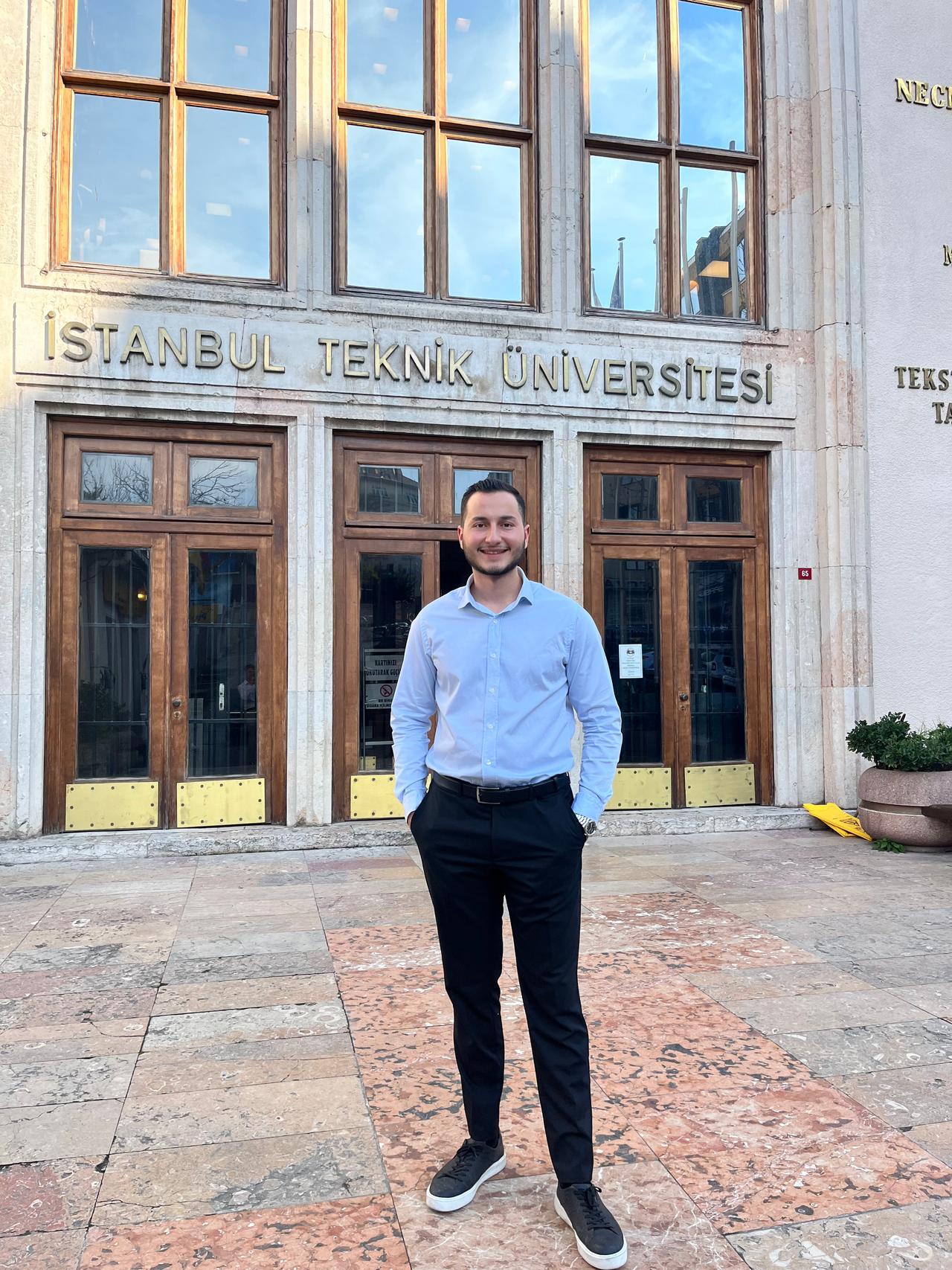
Istanbul Technical University Faculty of Mechanical Engineering
Address | Gümüşsuyu İnönü Cd. No:65 34437 Beyoğlu/İstanbul | ||||||||
|---|---|---|---|---|---|---|---|---|---|
Building Construction Year | 1862 | ||||||||
Establishment | 1944 | ||||||||
Number of Laboratories | 27 | ||||||||
Language of Instruction | Turkish, English | ||||||||
No Discussion Added Yet
Start discussion for "Istanbul Technical University Faculty of Mechanical Engineering" article
Campus History
Transition of Gümüşsuyu Barracks to Engineering Education
Historic Gate
Transliteration
Calligrapher’s Signature
Simplified Translation
Laboratories
Graduates