+2 More

Doğum tarihi | 1849-09-14 | ||||||||
|---|---|---|---|---|---|---|---|---|---|
Ölüm tarihi | 1936-02-27 | ||||||||
Education | Saint Petersburg University Faculty of Medicine (1879) | ||||||||
Known Works | Lectures on the Work of the Digestive Glands (1897), Conditioned Reflexes (1927) | ||||||||
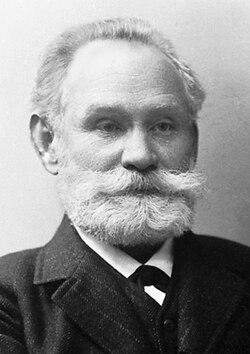
Ivan Petrovich Pavlov (1849–1936) was a Russian scientist renowned for his work bridging the disciplines of physiology and psychology at the end of the 19th century and the beginning of the 20th century. His early research focused on digestive physiology, and through surgical techniques he developed, he investigated the regulation of digestive secretions. These studies earned him the Nobel Prize in Physiology or Medicine in 1904. The phenomenon of conditioned reflexes observed in Pavlov’s laboratory provided not only new insights into digestive physiology but also a novel methodological approach for the experimental study of learning processes.
Pavlov’s scientific interest was directed toward explaining how organisms respond to environmental stimuli within the framework of nervous system function. This approach, known as “nervism,” emphasized that behavioral responses are rooted in neural processes. Pavlov’s findings significantly influenced numerous schools of psychology, especially behaviorism, and contributed to the development of learning theories in educational psychology and clinical applications. However, Pavlov’s experimental framework has been criticized for attempting to explain human behavior solely at the physiological level and for largely neglecting psychological and social dimensions.
Ivan Petrovich Pavlov was born on 14 September 1849 in Ryazan, Russia. His father, Petr Dmitrievich Pavlov, was an Orthodox priest, and his mother, Varvara Ivanovna Uspenskaya, was a traditional figure within the family. His family planned for him to pursue religious education and join the clergy. To this end, he was sent to the Ryazan Church School and later to a theological seminary. However, Pavlov abandoned his religious studies during childhood due to his growing interest in natural sciences and physiology, and decided to pursue a scientific career.
In 1869 he enrolled at St. Petersburg University, where he studied natural sciences, chemistry, and physiology. During his university years, he was influenced by the ideas of Ivan Sechenov, a pioneer of Russian physiology, and turned his attention to the relationship between the nervous system and behavior. After graduation, he moved to the St. Petersburg Military Medical Academy and received his medical doctorate in 1879.
After completing his education, he traveled to Germany to participate in experimental physiology research at the universities of Leipzig and Breslau. The experience he gained in the laboratories of Carl Ludwig and Rudolf Heidenhain significantly shaped his research methods. Upon returning to Russia in the late 1880s, he focused on cardiovascular physiology and conducted extensive experiments on the circulatory system and heart function.
In 1881 Pavlov married Seraphima Karchevskaya, with whom he had four children. Despite occasional financial difficulties within his family, he continued his scientific work. In 1890 he became head of the Physiology Chair at the St. Petersburg Military Medical Academy, a position he held for many years.
Pavlov’s research on digestive physiology made significant advances thanks to the surgical techniques he developed. As a result of these studies, he was awarded the Nobel Prize in Physiology or Medicine in 1904. His later work on conditioned reflexes became widely cited in the scientific literature.
Pavlov remained actively engaged in laboratory research until the final years of his life. He died on 24 February 1936 in Leningrad (today’s St. Petersburg) from pneumonia. His death was regarded as a major loss by the Soviet scientific community and the international academic world.
Pavlov’s scientific career was shaped initially by his experiments on the digestive system. Through the surgical techniques he developed, he gained the ability to study salivary and other digestive secretions in animals over prolonged and controlled periods. In these experiments, dogs were observed to secrete saliva in response to food. Pavlov later noted that these responses also occurred in the presence of stimuli associated with food, not just the food itself. This phenomenon formed the basis of the concept of the conditioned reflex.
Pavlov’s experimental approach established methodological links between physiology and psychology. Conditioned reflexes made it possible to study learning processes experimentally and laid the groundwork for new research methods in the behavioral sciences. During these studies, Pavlov conducted controlled laboratory experiments to systematically measure stimulus-response relationships. The methods he developed established a scientific standard for understanding the connection between the nervous system and behavior.
Pavlov’s nervism approach aimed to explain an organism’s responses to environmental stimuli at the level of the nervous system. This perspective examined behavior exclusively through physiological mechanisms, revealing fundamental principles of behavioral processes. Research on conditioned reflexes enabled the experimental testing of learning, adaptation, and habit formation.
In addition, Pavlov developed long-term observation and data collection methods in experimental physiology. These methods formed the methodological foundation for later work in experimental psychology and neuroscience. The experiments conducted in Pavlov’s laboratory emphasized the importance of systematic observation using animal models.
Pavlov’s research not only contributed to the concept of classical conditioning but also advanced the understanding of the biological foundations of learning processes. His work provided the basis for applied research in educational psychology, behavioral therapy, and neuroscience. However, Pavlov’s approach has been criticized for its limitations in explaining human behavior solely at the physiological level and for excluding psychological and social dimensions.
Pavlov’s scientific contributions are documented in his publications on experimental physiology and learning processes. Some of his major works include:
Pavlov’s works have been recognized not only in digestive physiology but also as references in the fields of learning and behavioral sciences. His experimental approach to conditioned reflexes provided a methodological foundation for subsequent research.
Ivan Pavlov’s scientific contributions have been recognized through various national and international awards and academic honors. His principal awards and titles include:
He was awarded the Nobel Prize for his experimental work on digestive physiology. This honor formally acknowledged the methodological contribution of Pavlov’s laboratory research to the understanding of physiological processes.
He was elected a foreign member of the Royal Society based in England.
He was awarded an honorary doctorate by Cambridge University.
This medal, awarded by the Royal Society, formally recognized Pavlov’s contributions to experimental physiology.
He was honored by the Soviet Union with an official recognition for his academic and scientific achievements.
These awards and honors demonstrate the recognition Pavlov’s research received from both national and international scientific communities.
Pavlov’s experimental work on conditioned reflexes has found applicability across multiple disciplines in understanding learning and behavioral processes.
Although Ivan Pavlov’s research made significant methodological contributions to classical conditioning and experimental physiology, it has faced criticism from several perspectives:
Cambiaghi, Marco, and Benedetto Sacchetti. “Ivan Petrovich Pavlov (1849–1936).” Journal of Neurology 262, no. 6. Accessed September 8, 2025. https://www.researchgate.net/publication/275217458_Ivan_Petrovich_Pavlov_1849-1936
Patel, Ankit. “Person of the Issue: Ivan Petrovich Pavlov (1849–1936).” The International Journal of Indian Psychology 1, no. 3 (2014). Accessed September 8, 2025. https://www.researchgate.net/publication/263779485_Person_of_the_Issue_Ivan_Petrovich_Pavlov_1849-1936
The Nobel Prize. "Ivan Pavlov – Biographical." Accessed September 8, 2025. https://www.nobelprize.org/prizes/medicine/1904/pavlov/biographical/
Windholz, George. “Ivan P. Pavlov: An Overview of His Life and Psychological Work.” American Psychologist 52, no. 9. Accessed September 8, 2025. https://www.researchgate.net/publication/232424280_Ivan_P_Pavlov_An_Overview_of_His_Life_and_Psychological_Work
Wood, Jackie D. “The First Nobel Prize for Integrated Systems Physiology: Ivan Petrovich Pavlov, 1904.” *Physiology* 19, no. 6 (2004): 326–330. Accessed September 8, 2025. https://www.researchgate.net/publication/8179977_The_First_Nobel_Prize_for_Integrated_Systems_Physiology_Ivan_Petrovich_Pavlov_1904
Üsküdar University. "İvan Pavlov (1849–1926)." Accessed September 8, 2025. https://uskudar.edu.tr/ivan-pavlov

Doğum tarihi | 1849-09-14 | ||||||||
|---|---|---|---|---|---|---|---|---|---|
Ölüm tarihi | 1936-02-27 | ||||||||
Education | Saint Petersburg University Faculty of Medicine (1879) | ||||||||
Known Works | Lectures on the Work of the Digestive Glands (1897), Conditioned Reflexes (1927) | ||||||||
Life and Education
Academic Contributions and Experimental Work
Key Publications
Awards and Honors
Applications
Criticisms