


This article was automatically translated from the original Turkish version.
+2 More
İznik Müşküle Grape
Registration Number | 869 | ||||||||
|---|---|---|---|---|---|---|---|---|---|
Registration Date | 20.08.2021 | ||||||||
Application Number | C2020/413 | ||||||||
Application Date | 24.11.2020 | ||||||||
Name of the Geographical Indication | İznik Müşküle Grape | ||||||||
Product / Product Group(s) | Grape / Processed and Unprocessed Fruits and Vegetables and Mushrooms | ||||||||
Type of Geographical Indication | Place of Origin | ||||||||
Applicant/Registrant(s) | İznik Municipality | ||||||||
Address of the Registrant | Selçuk Mah. Rauf Denktaş Cad. No: 4 İznik BURSA | ||||||||
Geographical Boundary | İznik District Bursa Province | ||||||||
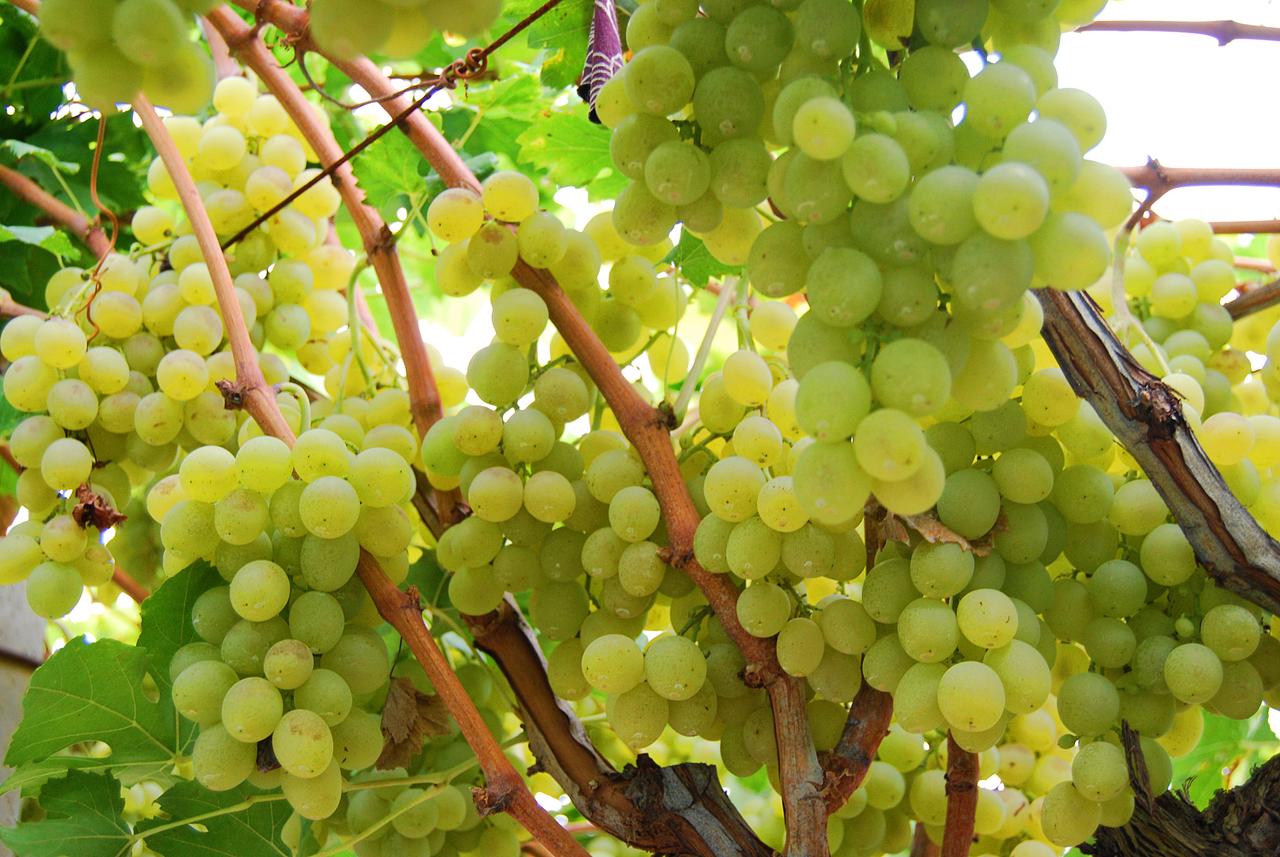
İznik Müşküle grape is a table grape variety native to the İznik district of Bursa Province in Türkiye. It features large, slightly elliptical berries with thick skins. Its color ranges from pale yellow-green, with sun-exposed surfaces developing a reddish hue close to harvest time. This grape variety holds a geographical indication registration and is produced exclusively within its designated geographical boundaries. The region’s proximity to the sea, elevation of approximately 1,000 meters, climate, and soil structure determine the grape’s firm, juicy, and late-ripening characteristics. Cultivated using traditional training and pruning methods, İznik Müşküle grape is harvested from late September to November and can be stored for extended periods due to its durability.

İznik Müşküle Grape (AA)
İznik Müşküle grape is a geographically indicated grape variety cultivated in the İznik district of Bursa Province, Türkiye. Registered under number 869, this product was officially recognized as a geographical indication on 20 August 2021 and is protected by the İznik Municipality. The application number is C2020/413, with the application date being 24 November 2020.
The most distinctive physical feature of İznik Müşküle grape is its large, slightly elliptical berries with thick skins. The color is hazy, translucent, and ranges from yellow-green; sun-exposed surfaces develop a reddish tint near harvest. The bunches are winged and conical in shape, averaging 400 to 500 grams in weight, with dense clustering. Berry color is amber-yellow, the flesh is firm and juicy, and each berry weighs approximately 5 grams. The number of seeds per berry ranges from one to four.
The ecological conditions within the designated geographical boundary play a major role in shaping the distinctive characteristics of İznik Müşküle grape. The proximity of İznik district to the sea, the terrain at an elevation of approximately 1,000 meters, soil composition, and climatic conditions contribute to the grape’s firmness, juiciness, and large berry size. İznik Müşküle grape is a late-ripening variety, reaching maturity three to four weeks after other table grape types. This trait enables a longer storage life.
Traditional Goble and Telli training systems are used in İznik Müşküle grape production. Pruning is carried out twice annually: winter pruning and summer pruning. During winter pruning, 70 to 80 percent of the previous year’s canes are removed. In summer pruning, 30 to 40 percent of the total green mass is removed through shoot thinning or similar techniques.
Soil management is conducted to maintain air and moisture balance and regulate soil temperature. In autumn, the soil is tilled to a depth of 20 to 25 centimeters and left in clods to allow winter rains to penetrate. In spring and summer, shallower tillage of 10 to 15 centimeters removes weeds, breaks up crusted soil layers formed after rainfall or irrigation, improves aeration, and reduces water loss.
To sustain vine growth and maintain product quality, nutrients depleted from the soil are replenished annually using both organic and inorganic fertilizers. Irrigation is carried out two to three times during the flowering period, depending on local humidity, rainfall, and fertilization conditions.
Chemical treatments against potential vineyard diseases are conducted in accordance with procedures established by the Ministry of Agriculture and Forestry.
Harvesting occurs when the grapes reach maturity. Maturity is assessed based on berry color, bunch stem and rachis color, seed color, ease of seed separation from the flesh, and flavor characteristics. Due to its late ripening and durability, İznik Müşküle grape can be harvested from late September through November. In a well-maintained vineyard, yields of approximately 2 to 2.5 tons per hectare are achieved.
After harvest, damaged, rotten, bruised, sunburned, or chemically burned grapes are removed using fine-tipped scissors. The product is placed in standard grape crates, reusable packaging, or plastic and thick cardboard containers. During loading, crates must be stabilized to prevent movement and ensure full contact of their bases with the surface. A clearance of approximately 50 centimeters is maintained between the ceiling and crates to allow for air circulation.
The product is transported over short distances under conditions of 13 to 18 ºC temperature and 85 to 95 percent relative humidity. In chilled transport using ice, direct contact between ice and grapes must be avoided. Pre-cooling must be completed within 24 hours after harvest to prevent weight loss due to water evaporation and to inhibit the development of fungal diseases. If the product is to be shipped directly to distant markets, it is loaded into refrigerated vehicles after crating.
The production and marketing processes of İznik Müşküle grape are monitored by a control authority composed of one expert each from the İznik District Directorate of Agriculture and Forestry and the İznik Chamber of Commerce and Industry, under the coordination of İznik Municipality. These inspections are conducted annually, and additional inspections may be carried out upon complaint or when deemed necessary. Inspections examine production stages, physical characteristics of the product, and proper use of the geographical indication emblem. Support may be obtained from experts in public or private institutions, or services may be procured as needed. The registering authority is responsible for managing legal procedures.
Balcıkoca, Sinan. “Coğrafi İşaretli İznik Müşküle Üzümünde Hasat Zamanı.” Anadolu Ajansı. Accessed May 31, 2025. https://www.aa.com.tr/tr/ekonomi/cografi-isaretli-iznik-muskule-uzumunde-hasat-zamani/2399719.
Turk Patent and Trademark Office. "Coğrafi İşaretler Detay – İznik Müşküle Üzümü." Turk Patent and Trademark Office. Accessed May 31, 2025. https://ci.turkpatent.gov.tr/cografi-isaretler/detay/3003.
Turk Patent and Trademark Office. "İznik Müşküle Üzümü Tescil Belgesi (PDF)." Turk Patent and Trademark Office. Accessed May 31, 2025. https://ci.turkpatent.gov.tr/Files/GeographicalSigns/3595c954-afba-47ab-b14b-9b47218aa561.pdf.

İznik Müşküle Grape
Registration Number | 869 | ||||||||
|---|---|---|---|---|---|---|---|---|---|
Registration Date | 20.08.2021 | ||||||||
Application Number | C2020/413 | ||||||||
Application Date | 24.11.2020 | ||||||||
Name of the Geographical Indication | İznik Müşküle Grape | ||||||||
Product / Product Group(s) | Grape / Processed and Unprocessed Fruits and Vegetables and Mushrooms | ||||||||
Type of Geographical Indication | Place of Origin | ||||||||
Applicant/Registrant(s) | İznik Municipality | ||||||||
Address of the Registrant | Selçuk Mah. Rauf Denktaş Cad. No: 4 İznik BURSA | ||||||||
Geographical Boundary | İznik District Bursa Province | ||||||||
No Discussion Added Yet
Start discussion for "İznik Müşküle Grape" article
General Characteristics
Physical and Morphological Characteristics
Ecological and Geographical Factors
Production and Cultivation Methods
Training and Pruning
Soil Management
Fertilization and Irrigation
Pest and Disease Control
Harvest and Post-Harvest Operations
Sorting and Packaging
Transport and Storage
Monitoring and Control