This article was automatically translated from the original Turkish version.
+1 More
Registration Number | 339 | ||||||||
|---|---|---|---|---|---|---|---|---|---|
Registration Date | 10.04.2018 | ||||||||
Application Number | C2016/078 | ||||||||
Application Date | 19.09.2016 | ||||||||
Name of the Geographical Indication | Kahramanmaraş Yemenisi | ||||||||
Type of the Geographical Indication | Mahreç İşareti | ||||||||
Applicant/Registrant(s) | Kahramanmaraş Metropolitan Municipality | ||||||||
Geographical Boundary | Kahramanmaraş Province | ||||||||
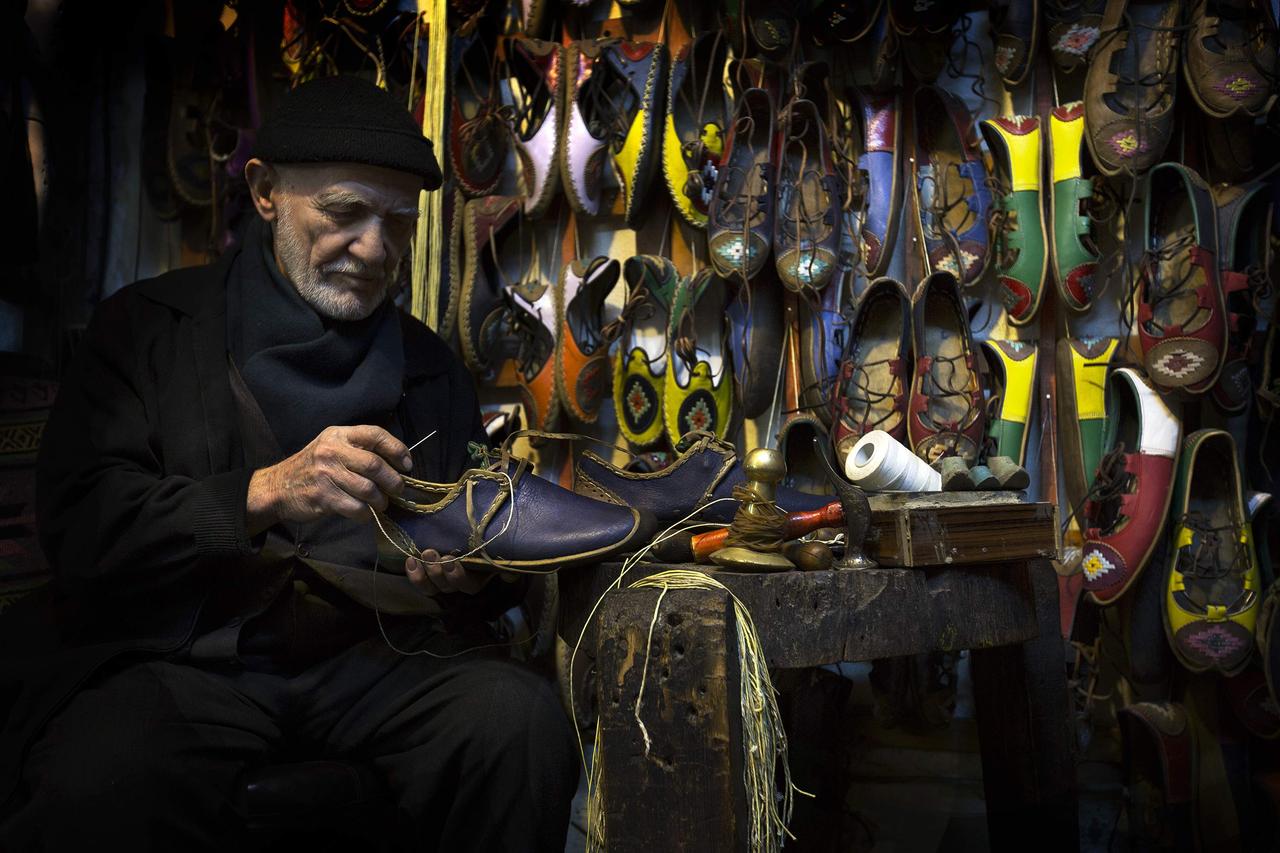
Kahramanmaraş Yemenisi is a type of lightweight shoe produced entirely with natural materials using traditional methods native to Kahramanmaraş. Calfskin is used for the upper part of the shoe, thin goat leather for the binding (kıyı), sheepskin for the inner sole and camelskin or buffalo hide for the outer sole. A layer of clay is placed between the inner and outer soles, which are then bonded together using a natural adhesive derived from tree roots, and the yemenis are sewn entirely by hand using cotton thread.

Kahramanmaraş Yemenisi (Ministry of Culture and Tourism of the Republic of Türkiye)
The Kahramanmaraş Yemenisi is distinguished by its durability and comfort. The toe area is upturned in a spur-like shape to protect the toes. It comes in both laced and unlaced varieties. Distinctive features include the types of leather used, the double-layered sole, hand-stitching with cotton thread, and coloring with root and earth dyes. Black (tulum yemeni or kara yemeni) and red (gül şeftali) are the characteristic colors. The shoe’s symmetrical, bidirectional shape—lacking a distinct left or right—is unique to Kahramanmaraş.
In the production of Kahramanmaraş Yemenisi, hides are cleaned and prepared for use. Leaves of the palamut tree are used to remove hair from the upper leather. Leaves and branches of the tetiri tree are ground in a mill and soaked in water-filled basins, where the hides are left for 15 to 30 days. The surface of the leather is treated with wool and natural oils. The hides are dyed using root and earth pigments; after each layer applied with felt dries, additional layers are added. The inner and outer soles are bonded together using clay and a natural adhesive derived from tree roots. Stitching is done entirely by hand using cotton thread, which is waxed with beeswax. After sewing, the shoes are placed on wooden lasts and left for 24 hours. They are then shaped by beating with a mallet, and excess leather from the sole and toe area is trimmed with a knife. Final edge adjustments are made, and the shoes are decorated according to their type.

Kahramanmaraş Yemenisi (Kahramanmaraş Metropolitan Municipality)
Today, the types of yemenis produced in Kahramanmaraş include the kelik, a boot-style shoe; the edik, worn by women; and the tokalı Osmanlı yemenisi, worn during weddings, engagements and special occasions. The fatih yemenisi is used for daily wear; tokalı and tokasız saray yemenisi are worn indoors or in palaces; and the Karadağ çarığı is preferred for work in fields, vineyards and gardens. Yemenis are worn not only for daily use but also during special occasions and in occupational settings. Additionally, in foreign countries, hotel staff wear them to maintain an authentic appearance.
Kahramanmaraş Yemenisi is dyed using various root and earth pigments. Black is known as tulum yemeni or kara yemeni; red is called gül şeftali. Yellow is obtained from walnut shells, green from olive branches and leaves, and purple from plant roots. The red color (gül şeftali) is achieved by soaking the local tetiri tree in water.

Kahramanmaraş Yemenisi (Ministry of Culture and Tourism of the Republic of Türkiye)
The Kahramanmaraş Yemenisi is associated with the geographical boundaries of Kahramanmaraş Province in terms of both production and use. The production process relies exclusively on local natural materials, root dyes and traditional methods. The shape, manufacturing technique and materials used are unique to Kahramanmaraş.
Kahramanmaraş Yemenisi and its sandals are exported to Greece, the United States, England and Ireland. Many hotels abroad equip their staff with sandals sourced from Kahramanmaraş to maintain an authentic appearance.
The production of Kahramanmaraş Yemenisi is monitored by a commission composed of three members from the Kahramanmaraş Metropolitan Municipality Inspection Department, the Kahramanmaraş Chamber of Commerce and Industry, and the Karacasu Technical Sciences Vocational School of Kahramanmaraş Sütçü İmam University, Department of Handicrafts. Inspections are conducted at least twice a year and in response to consumer complaints. The commission verifies that calf leather is used for the upper, goat leather for the binding, sheep, camelskin and buffalo hide for the sole, that the sole is bonded with tree root adhesive, that stitching is done with cotton thread, and that dyeing is performed using root and earth pigments. The commission may consult expert specialists when necessary and initiate legal proceedings to protect these rights.
Kahramanmaraş Metropolitan Municipality. "Kahramanmaraş Yemenisi." Accessed August 19, 2025. https://kahramanmaras.bel.tr/kahramanmaras-yemenisi
Kahramanmaraş Provincial Directorate of Culture and Tourism. Köşkerlik-Yemenicilik. Accessed August 19, 2025. https://kahramanmaras.ktb.gov.tr/TR-150387/koskerlik-yemenicilik.html
Turk Patent and Trademark Office. Kahramanmaraş Yemenisi. Accessed August 19, 2025. https://ci.turkpatent.gov.tr/cografi-isaretler/detay/38214
Türk Patent ve Marka Kurumu. (2018, April 10). No: 339 – Mahreç İşareti KAHRAMANMARAŞ YEMENİSİ. Accessed August 19, 2025. https://ci.turkpatent.gov.tr/Files/GeographicalSigns/3ef78b11-06a1-47d3-ab8d-41482e398101.pdf

Registration Number | 339 | ||||||||
|---|---|---|---|---|---|---|---|---|---|
Registration Date | 10.04.2018 | ||||||||
Application Number | C2016/078 | ||||||||
Application Date | 19.09.2016 | ||||||||
Name of the Geographical Indication | Kahramanmaraş Yemenisi | ||||||||
Type of the Geographical Indication | Mahreç İşareti | ||||||||
Applicant/Registrant(s) | Kahramanmaraş Metropolitan Municipality | ||||||||
Geographical Boundary | Kahramanmaraş Province | ||||||||
No Discussion Added Yet
Start discussion for "Kahramanmaraş Yemeni" article
Distinctive Features
Production Method
Tools Used in Yemeni Making
Varieties and Uses
Colors and Their Meanings
Geographical Boundaries and Characteristics
Exports and Foreign Use
Supervision