

 Recently Added:
This article was automatically translated from the original Turkish version.
Typhoon Kajiki (2025) is a tropical cyclone that formed off the Philippines in August 2025, affected the southern coast of China, and made landfall on the northern central coast of Vietnam on 25 August. The typhoon caused at least three fatalities and injured between 10 and 13 people in Vietnam. Approximately 7,000 homes were damaged, 28,800 hectares of rice fields were submerged, 18,000 trees were uprooted, and 331 power poles were destroyed.
Roads in Hanoi and surrounding areas were closed due to flooding reaching up to one meter in depth, isolating several villages. Around 1.3 million people across the country lost electricity. A total of more than 586,000 people were evacuated to safe areas before and during the typhoon.
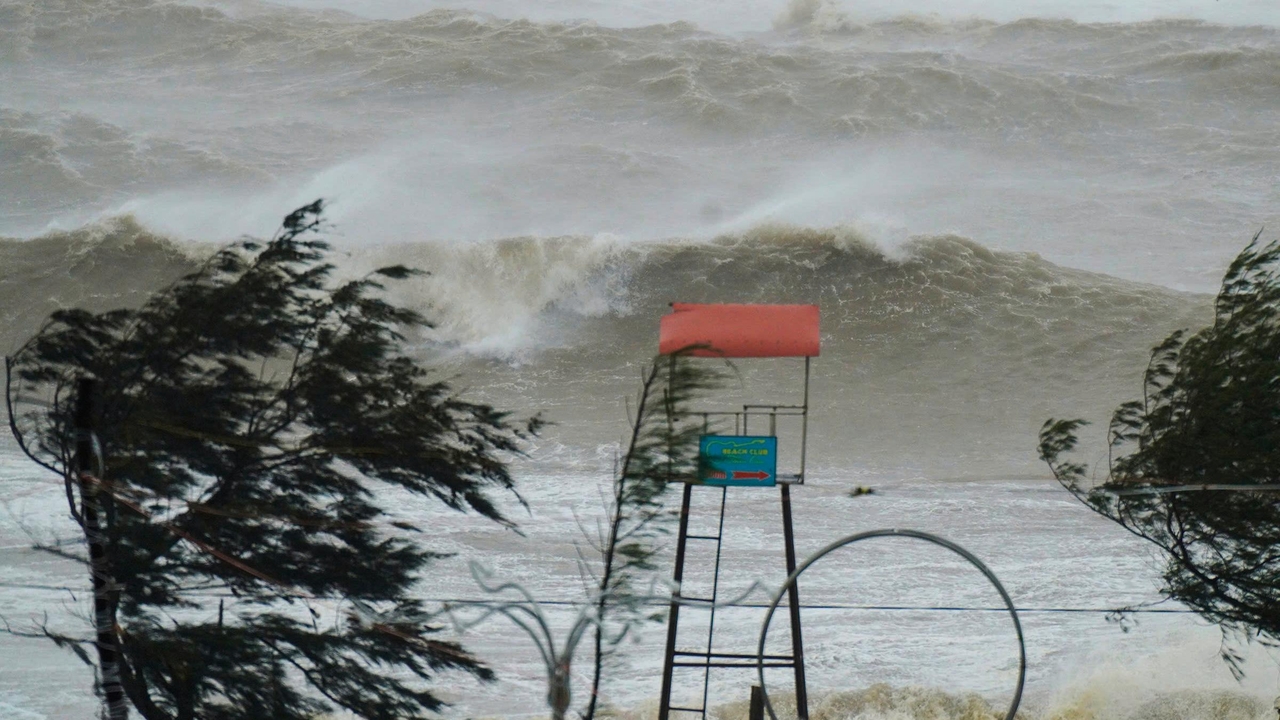
Some Images of the Impact Caused by Typhoon Kajiki - (Unstoppable Weather)
Typhoon Kajiki first formed as a low-pressure area over Luzon Island in the Philippines on 23 August 2025. By early morning of the same day, the system entered the South China Sea and rapidly intensified to tropical storm strength.
Throughout 23 August, the typhoon strengthened rapidly, increasing by four intensity levels to reach a wind speed of 12th level by midday. By midday on 24 August, wind speeds had risen to 14th level and remained at that intensity for approximately 24 hours.
The typhoon made landfall on the coasts of Nghệ An and Hà Tĩnh in Vietnam in the afternoon of 25 August. At landfall, wind speeds were measured between 118–133 km/h, with peak gusts reaching 166 km/h. Rainfall totals reached 300–600 mm within a short period.
After approximately 10 hours of impact over Vietnam, Typhoon Kajiki weakened into a tropical depression as it crossed into Laos on the morning of 26 August, with wind speeds dropping to 61 km/h.
Before reaching Vietnam, Typhoon Kajiki affected the southern coast of China. On 23 August 2025, the China National Meteorological Center issued a yellow alert for Hainan and Guangdong provinces and declared a Level 4 emergency in both regions.
In Hainan Island, particularly in the city of Sanya, businesses and public transportation services were suspended. Coastal cities in Guangdong, including Maoming, Yangjiang, and Jiangmen, experienced heavy rainfall and strong winds.
According to China’s official news agency Xinhua, approximately 20,000 people were evacuated from high-risk areas in Hainan. Residents in tourist zones were directed to shelters and maritime transport was temporarily halted.
Typhoon Kajiki made landfall on the coasts of Nghệ An and Hà Tĩnh in Vietnam in the afternoon of 25 August 2025. Wind speeds at landfall were recorded between 118–133 km/h, with a peak of 166 km/h.
Rainfall amounts reached 300–600 mm within a short time. Rainfall of 200–300 mm was recorded in the regions of Ninh Bình, Thanh Hóa, Nghệ An, Quảng Trị, and Hưng Yên, while Hà Tĩnh received up to 500–600 mm.
Coastal areas saw damage to some fish farms and tourist facilities, with floating aquaculture installations swept away by waves. Airports in Thanh Hóa and Quảng Bình provinces were closed and numerous flights were canceled.
Beaches and schools across Vietnam were temporarily closed and public transportation services experienced disruptions.
Extensive evacuation operations were carried out before and during Typhoon Kajiki. In Vietnam’s Thanh Hóa, Quảng Trị, Huế, and Da Nang regions, more than 586,000 people were relocated from hazardous areas to safe zones.
Before the typhoon reached Vietnam’s coast, 44,000 people from five provinces were evacuated in advance. All fishing vessels were ordered to return to port.
The Vietnamese government mobilized 16,500 soldiers and 107,000 paramilitary personnel for evacuation and potential search-and-rescue operations. Prime Minister Phạm Minh Chính ordered the deployment of all available resources, including helicopters, for evacuation efforts.
In areas expected to be hit by the typhoon, schools and public buildings were converted into temporary shelters and train services were suspended.
Impacts of Typhoon Kajiki - (Global News)
The impact of Typhoon Kajiki in Vietnam was severe. Official reports indicate at least three people lost their lives and between 10 and 13 were injured.
During the typhoon, approximately 7,000 homes were either completely destroyed or severely damaged. In agriculture, 28,800 hectares of rice fields were submerged. Additionally, 18,000 trees were uprooted and 331 power poles were toppled.
In the capital Hanoi, water levels rose to up to one meter in some areas, causing numerous streets and boulevards to be closed. Reports indicated vehicles submerged in floodwaters and water entering homes in several neighborhoods.
In the Bắc Ninh region, many villages were completely isolated due to flooding, cutting off road access. Nationwide, approximately 1.3 million people lost electricity. In Hà Tĩnh province, electricity was completely cut off in 60 of 69 settlements, leaving residents without power for extended periods.
Telecommunications and water infrastructure were also severely affected. In Hà Tĩnh and Nghệ An, disruptions occurred in telephone lines and internet access, and water supply networks were disabled in some areas.
Major transportation disruptions occurred. Airports in Thanh Hóa and Quảng Bình provinces were closed for safety reasons, and Vietnam Airlines and other carriers canceled dozens of flights. Rail transport also experienced delays, with some train services suspended.
Traffic flow was halted on major roads due to fallen trees and downed power lines. In some areas, roads were submerged under meters of water.
Following Typhoon Kajiki, the Vietnamese government activated its emergency response plans. On the evening of 25 August, Prime Minister Phạm Minh Chính issued Directive No. 147/CD-TTg, ordering all institutions in affected areas—including Thanh Hóa, Nghệ An, Hà Tĩnh, Quảng Trị, and Ninh Bình—to mobilize all personnel, vehicles, and resources.
According to the Prime Minister’s directive, the evacuation of residents in areas vulnerable to flooding, landslides, and sudden inundations was made mandatory, along with ensuring the provision of basic needs such as food and shelter. Additional measures were taken to secure the safety of irrigation systems, hydroelectric dams, and levees.
The government decided to deploy army, police, and youth units to assist in repairing homes, schools, and health centers, cleaning the environment, and restoring electricity, water, and telecommunications services.
Additionally, the Prime Minister instructed the Ministries of National Defense and Public Security to direct units of Quân Khu 4 (Military Region 4) to the affected region with vehicles and equipment. Special tasks were also assigned to ministries of science, environment, trade, education, health, and construction to address the aftermath of the disaster.
Typhoon Kajiki caused heavy rainfall and severe flooding in the capital Hanoi and surrounding areas. By the morning of 26 August, many streets and boulevards in the city were covered with water up to one meter deep, trapping vehicles on roads.
The West Lake in Hanoi overflowed due to rainfall, submerging nearby residential areas. One of the national highways, National Road 6 heading northwest, was closed in several sections due to water levels of approximately one meter.
The flooding in Hanoi also disrupted preparations for the country’s largest National Day parade, scheduled to commemorate the 80th anniversary of the nation’s founding.
In the province of Bắc Ninh, several villages were completely cut off by floodwaters, with road access severed. Meteorological agencies warned that rainfall in northern regions could reach up to 150 mm, with continued risks of sudden flooding and landslides.
After affecting Vietnam for approximately 10 hours, Typhoon Kajiki entered Laos on the morning of 26 August. At that time, it had weakened into a tropical depression, with maximum wind speeds measured at 61 km/h. After crossing into Laos, the system’s movement direction was recorded as west-northwest, advancing at a speed of 15–20 km/h and gradually weakening further.

Kajiki Typhoon made landfall on the coasts of Nghệ An and Hà Tĩnh provinces in Vietnam on 25 August 2025. During the typhoon three people lost their lives more than ten people were injured and over 586,000 people were evacuated. Approximately 7,000 homes suffered damage 28,800 hectares of rice fields were submerged and 1.3 million people were left without electricity. On the morning of 26 August the typhoon moved into Laos weakened and transformed into a tropical depression.
No Discussion Added Yet
Start discussion for "Kajiki Typhoon (2025)" article
August 26, 2025
Development and Path
August 26, 2025
Impacts in China
August 26, 2025
Landfall in Vietnam
August 26, 2025
Evacuations and Preventive Measures
August 26, 2025
Damage and Losses in Vietnam
August 26, 2025
Government Response in Vietnam
August 26, 2025
Situation in Hanoi and Northern Vietnam
August 26, 2025
Weakening of the Typhoon