This article was automatically translated from the original Turkish version.
Founding Period | Hellenistic Period | ||||||||
|---|---|---|---|---|---|---|---|---|---|
Settlement Plan | and terraced structures on the eastern and western slopes high rocky cliffs on the north surrounded by walls on the south Built on sloping terrain | ||||||||
Burial and Sculpture Finds | and statues are exhibited at the Isparta Museum Sarcophagus graves and sarcophagus lids with figurative reliefs on the grave covers | ||||||||
Kapıkaya Harabesi is located approximately 5 km from Güneyce Village, between the villages of Güneyce and Çukurca in the central district of Isparta Province. The ancient city’s name and exact founding date remain unknown. However, considering the location and architectural features of the ruins, it is understood to have been established during the Hellenistic period.
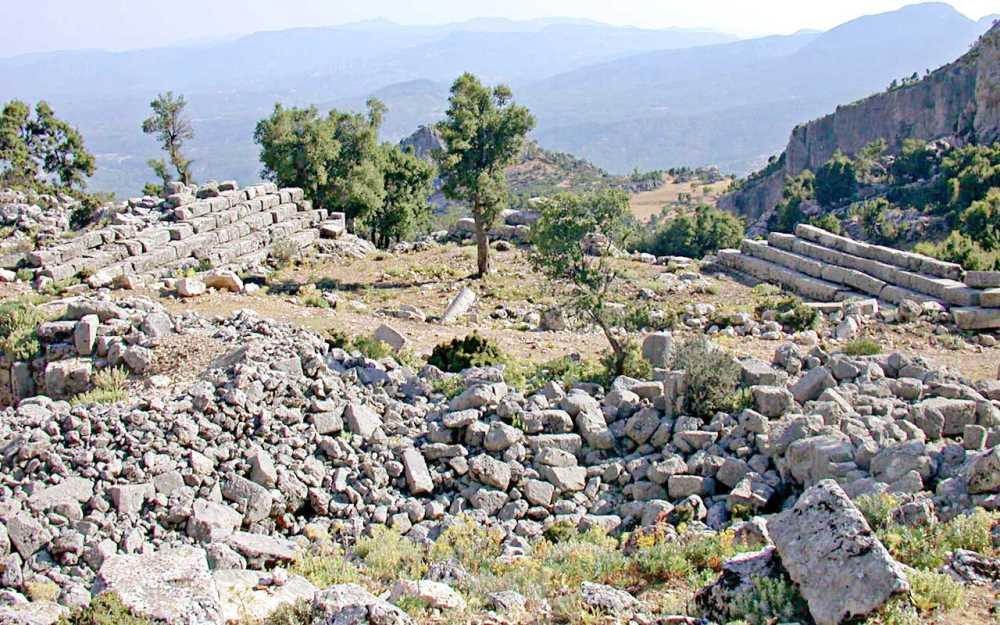
Kapıkaya Harabesi (Türkiye Culture Portal)
Kapıkaya Harabesi is thought to possibly correspond to one of the cities mentioned in ancient sources but whose location has not been definitively identified, such as Sandallion, Minassos, or Tityassos. The architectural remains and structural arrangements in the region support this view.
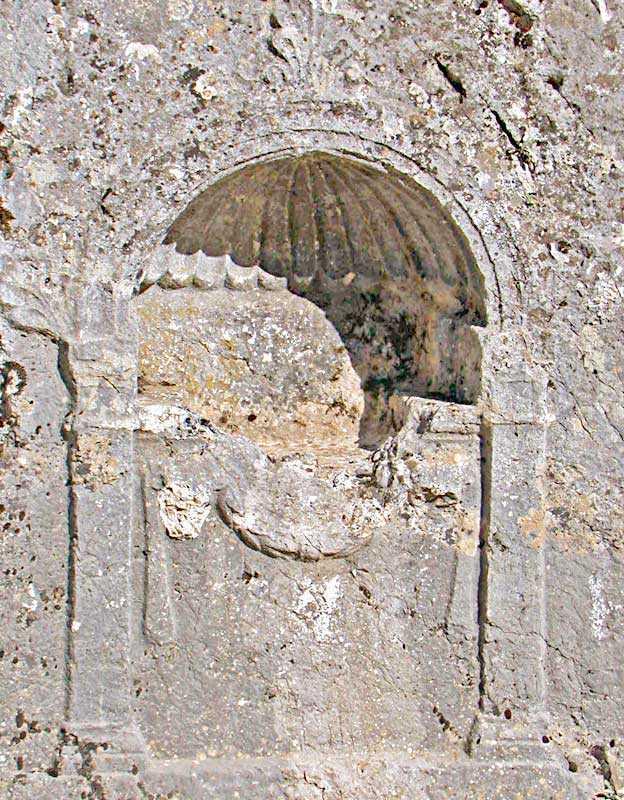
The ancient city was built on a sloping terrain. The southern part is enclosed by walls, while the northern side rises steeply with a high rocky outcrop. At the entrance to the city, niches were carved into the rocks on either side, similar to the example at Sagalassos, and ostracons (ash urns) were placed within them. This provides information about the burial customs of the city’s inhabitants and reflects the architectural practices of the period.
Terraces were constructed along the eastern and western slopes, and buildings were erected upon these terraces. In the wide flat area to the south, a horseshoe-shaped assembly space consisting of five rows of seating steps is located. To the east of this assembly area stands a building, whose function has not been precisely determined but is identified as the largest structure in the city.
At Kapıkaya Harabesi, a structure believed to have been a temple and a cross-shaped chapel have been identified. These buildings indicate that the ancient city bears traces from both the Hellenistic and early Christian periods. To the southwest of the city lies a natural cave accessible via ancient steps. This cave is presumed to have been used as a sacred space. When compared with similar natural formations at other cult centers in Anatolia, this cave constitutes an important example of how sacred natural features were integrated into ancient urban structures.
The city contains sarcophagus tombs, some of which feature carved portraits of the deceased on their lids. Additionally, statues discovered at the site have been transferred to the Isparta Museum. The reliefs on the sarcophagus lids reflect the stylistic characteristics of figurative art in the region during this period.
Kapıkaya Harabesi is regarded as one of the small Pisidian cities whose name has not survived or been definitively established. Its architectural arrangements, religious structures, tomb typologies, and sculptural finds give it a unique position among the ancient cities of the Isparta region. The current state of the ruins contributes to the understanding of rural settlement patterns from the Hellenistic and Roman periods in the area.
Ministry of Culture and Tourism. "Isparta Kapıkaya Harabesi." *Kültür Portalı*. Accessed July 4, 2025. https://www.kulturportali.gov.tr/turkiye/isparta/gezilecekyer/kapikaya-harabesi
Ministry of Culture and Tourism. "Isparta Kültür Turizmi." *T.C. Isparta Valiliği İl Kültür veTurizm Müdürlüğü. Accessed July 4, 2025. https://isparta.ktb.gov.tr/TR-70972/kultur-turizmi.html
Ministry of Culture and Tourism. "Isparta Ören Yerleri." *T.C. Isparta Valiliği İl Kültür veTurizm Müdürlüğü. Accessed July 4, 2025. https://isparta.ktb.gov.tr/TR-70971/oren-yerleri.html
Western Mediterranean Development Agency (BAKA). "Isparta’yı Keşfet – Turizm." *baka.gov.tr*. Accessed July 4, 2025. https://baka.gov.tr/isparta-yi-kesfet/turizm

Founding Period | Hellenistic Period | ||||||||
|---|---|---|---|---|---|---|---|---|---|
Settlement Plan | and terraced structures on the eastern and western slopes high rocky cliffs on the north surrounded by walls on the south Built on sloping terrain | ||||||||
Burial and Sculpture Finds | and statues are exhibited at the Isparta Museum Sarcophagus graves and sarcophagus lids with figurative reliefs on the grave covers | ||||||||
Historical Background
Architectural Layout and Urban Planning
Religious and Public Buildings
Necropolis and Sculpture