

This article was automatically translated from the original Turkish version.
+2 More
Karagöl–Sahara National Park is a protected natural area located within the boundaries of Artvin province in northeastern Türkiye, specifically in the Şavşat district. It consists of two distinct sections: Karagöl and Sahara plateau.【1】 The area has been designated as a national park due to its forest ecosystems, wetlands, alpine meadows, and rich biological diversity.National park status recognizes it as an area where natural landscapes, geological features, flora and fauna diversity, and recreational opportunities coexist.

Karagöl-Sahara National Park (Şavşat Municipality)
Karagöl–Sahara National Park was granted national park status in 1994 to preserve its natural and cultural values. The protected area covers approximately 3,766 hectares. This status aims to conserve the area’s natural ecosystems, manage recreational use sustainably, and protect biological diversity.【2】
The declaration of the national park was influenced by the region’s natural landscapes, rich flora and fauna, plateau culture, and recreational potential. The park’s division into two distinct sections allows for the coexistence of different ecological and geographical characteristics.
Karagöl-Sahara National Park (General Directorate of Nature Conservation and National Parks)
Karagöl–Sahara National Park is located within the boundaries of Şavşat district in Artvin province in northeastern Türkiye. The park lies in the northern and northwestern parts of Şavşat and falls within the influence of the Eastern Black Sea mountain system.
The park consists of two distinct sections: the Karagöl section and the Sahara section. These two sections differ in both geographical features and ecosystem structures. The Karagöl section is characterized by a lake ecosystem surrounded by forests, while the Sahara section is dominated by plateau and alpine meadow ecosystems.

Karagöl Section of Karagöl-Sahara National Park (Culture Portal)
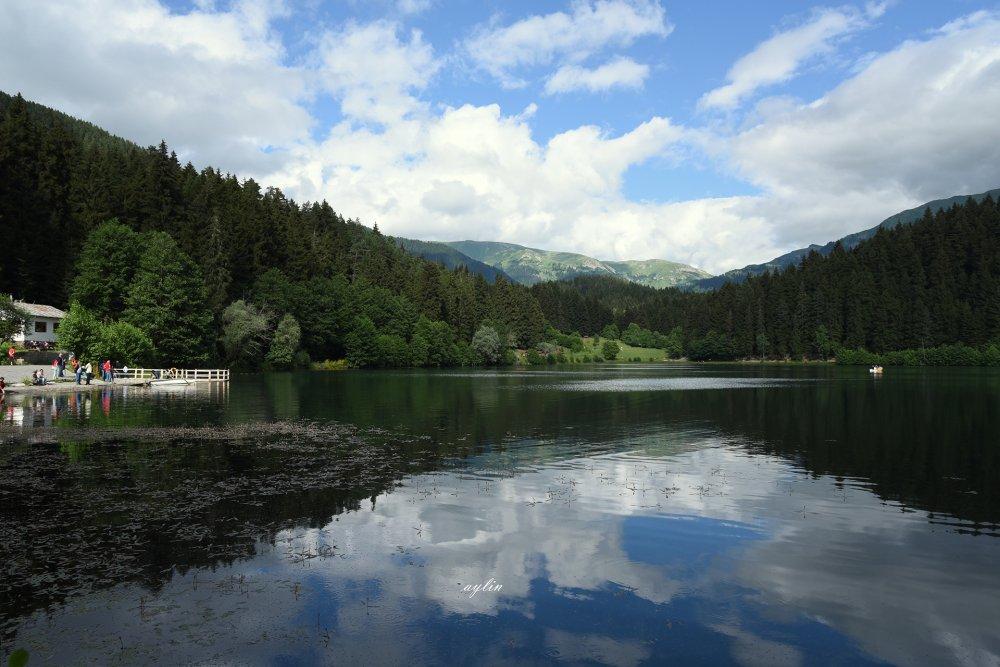
The Karagöl section is located approximately 45 kilometers north of the Şavşat district center.【3】 This section comprises a lake basin surrounded by forests and mountainous terrain. The area around Karagöl is one of the region’s most striking natural landscapes.
The surroundings of Karagöl are densely covered by forests, forming a unified natural system with the lake ecosystem. The topography around the lake is fragmented by valleys, creating a steep and rugged terrain.
Several settlements affiliated with Meşeli village are located within or near the boundaries of the national park.

Sahara Plateau (Culture Portal)
The Sahara section is located approximately 17 kilometers from the Şavşat district center.【4】 This section consists of higher elevation areas compared to the Karagöl section. Sahara Plateau and its surrounding alpine meadows constitute the primary natural features of this area.
The Sahara region comprises extensive plateau plains surrounded by mountainous terrain. These plateau areas, situated at elevations of approximately 1,700 to 1,800 meters, serve as important areas for transhumance activities.【5】
The Sahara section includes various plateau settlements, including Kocabey Plateau. These plateau areas are used primarily during summer months for livestock grazing and traditional transhumant lifestyles.
Although the two sections of the national park differ in natural landscapes and ecological structures, together they form a cohesive ecosystem that embodies the region’s biological diversity and natural richness.
The national park area contains geological formations from the Paleogene and Neogene periods. A significant portion of the region’s rocks are sedimentary in origin. The terrain is dissected by valleys, resulting in a topography prone to landslides and mass movements.【6】
Karagöl is a lake formed by a landslide. Water accumulated behind the blocked valley, creating the lake. For this reason, it is classified as a landslide lake.【7】
The Sahara region features a geological structure characterized by basalt cover. In areas where the basalt has eroded, Tertiary formations are exposed. The topography is deeply dissected by valleys with steep slopes.
The overall topography of the national park is mountainous and rugged. The Sahara section consists of limited flat areas at elevations of approximately 1,700 to 1,800 meters, surrounded by steep mountainous terrain.【8】
The Karagöl area consists of a lake basin situated within a forested mountainous region. This area exhibits a fragmented topography with intermittent valleys.
The most important hydrological feature of the national park is Karagöl. Formed by a landslide, the lake, together with its surrounding forest ecosystem, constitutes a significant natural landscape element. Various streams and rivers flow around the lake and play a vital role in forming the region’s wetland ecosystems.

Winter Landscape of Karagöl-Sahara National Park (Anadolu Agency)
Karagöl–Sahara National Park lies in a region influenced by both Eastern Black Sea and Eastern Anatolian climatic characteristics. Due to its high elevation, the area experiences heavy snowfall during winter months. This results in the park being completely covered by snow during winter, significantly altering its natural landscape and giving it a distinct seasonal character.
Karagöl–Sahara National Park is one of the areas with rich plant diversity. Research in the region has identified numerous plant taxa distributed across different vegetation types.
The national park also exhibits rich faunal diversity.
Traditional transhumance activities continue in the plateau areas. These practices form an essential part of the local community’s economic and cultural life.
One of the traditional events held in the Sahara region is the Sahara Beetroot Festival. These events involve participation from locals living outside the region and are regarded as important elements of local cultural heritage.【13】

Accommodation Facilities in Karagöl-Sahara National Park Covered in Snow (Culture Portal)
Karagöl–Sahara National Park possesses significant potential for recreation and nature-based tourism due to its natural landscapes. The forested areas around Karagöl provide suitable spaces for day-use activities and camping.
Accommodation facilities are available in the Karagöl section of the national park. Activities such as hiking, nature observation, and photography are conducted around the lake.
The Sahara section is used for plateau tourism, nature walks, and cultural events.
The natural landscapes, flora and fauna diversity, and recreational opportunities of the region constitute the main factors underlying the park’s tourism potential.
The primary objective in the conservation and management of Karagöl–Sahara National Park is to ensure the continuity of its natural ecosystems and biological diversity. Accordingly, efforts are made to protect the vegetation cover, natural habitats, and ecological structures within the park. Human activities are strictly regulated to prevent disruption of this natural balance. Furthermore, sustainable use of the park’s natural values while maintaining its ecological integrity remains a fundamental principle of its management approach.
[1]
Şavşat Belediyesi, “Karagöl-Sahara Milli Parkı,” access date 13 March 2026, https://www.savsat.bel.tr/sayfa/karagol-sahara-milli-parki
[2]
Şavşat Belediyesi, “Karagöl-Sahara Milli Parkı,” access date 13 March 2026, https://www.savsat.bel.tr/sayfa/karagol-sahara-milli-parki.
[3]
Şavşat Belediyesi, “Karagöl-Sahara Milli Parkı,” access date 13 March 2026, https://www.savsat.bel.tr/sayfa/karagol-sahara-milli-parki.
[4]
Şavşat Belediyesi, “Karagöl-Sahara Milli Parkı,” access date 13 March 2026, https://www.savsat.bel.tr/sayfa/karagol-sahara-milli-parki.
[5]
Turkey Culture Portal, “Sahara Karagöl National Park,” Ministry of Culture and Tourism of the Republic of Türkiye, access date 13 March 2026, https://www.kulturportali.gov.tr/turkiye/artvin/gezilecekyer/sahara-karagol-milli-parki.
[6]
Turkey Culture Portal, “Sahara Karagöl National Park,” Ministry of Culture and Tourism of the Republic of Türkiye, access date 13 March 2026, https://www.kulturportali.gov.tr/turkiye/artvin/gezilecekyer/sahara-karagol-milli-parki.
[7]
Turkey Culture Portal, “Sahara Karagöl National Park,” Ministry of Culture and Tourism of the Republic of Türkiye, access date 13 March 2026, https://www.kulturportali.gov.tr/turkiye/artvin/gezilecekyer/sahara-karagol-milli-parki.
[8]
Şavşat Belediyesi, “Karagöl-Sahara Milli Parkı,” access date 13 March 2026, https://www.savsat.bel.tr/sayfa/karagol-sahara-milli-parki.
[9]
Turkey Culture Portal, “Sahara Karagöl National Park,” Ministry of Culture and Tourism of the Republic of Türkiye, access date 13 March 2026, https://www.kulturportali.gov.tr/turkiye/artvin/gezilecekyer/sahara-karagol-milli-parki.
[10]
Turkey Culture Portal, “Sahara Karagöl National Park,” Ministry of Culture and Tourism of the Republic of Türkiye, access date 13 March 2026, https://www.kulturportali.gov.tr/turkiye/artvin/gezilecekyer/sahara-karagol-milli-parki.
[11]
Şavşat Belediyesi, “Karagöl-Sahara Milli Parkı,” access date 13 March 2026, https://www.savsat.bel.tr/sayfa/karagol-sahara-milli-parki.
[12]
Turkey Culture Portal, “Sahara Karagöl National Park,” Ministry of Culture and Tourism of the Republic of Türkiye, access date 13 March 2026, https://www.kulturportali.gov.tr/turkiye/artvin/gezilecekyer/sahara-karagol-milli-parki.
[13]
Turkey Culture Portal, “Sahara Karagöl National Park,” Ministry of Culture and Tourism of the Republic of Türkiye, access date 13 March 2026, https://www.kulturportali.gov.tr/turkiye/artvin/gezilecekyer/sahara-karagol-milli-parki.
No Discussion Added Yet
Start discussion for "Karagöl-Sahara National Park" article
Establishment and Status
Geographical Location
Karagöl Section
Sahara Section
Geomorphological and Geological Features
Topography
Hydrography
Climate
Flora
Fauna
Sahara Plateau and Transhumance
Recreation and Tourism
Conservation and Management