

This article was automatically translated from the original Turkish version.
+1 More
Condition(s) | Accessible and open for worship | ||||||||
|---|---|---|---|---|---|---|---|---|---|
Type(s) | Mosque | ||||||||
Location | Dumlupınar Neighborhood Karesi District Balıkesir | ||||||||
Relations | Karaoğlan türbesi (Paşa Sultan) | ||||||||
Ownership | General Directorate of Foundations | ||||||||
Restorers | Sultan II. Abdülhamid (patronage), Mehmed Ali (Governor of Karesi) | ||||||||
Construction Material | There was no rubble; it was constructed of stone and brick; large block stones at the corners | ||||||||
Reconstruction Date | -1 | ||||||||
Founder (Original) | Karaoğlan (the akıncı who crossed into Rumelia with Gazi Süleyman Pasha) | ||||||||
Original Construction Date | 1356 | ||||||||
Culture / Period | Ottoman | ||||||||
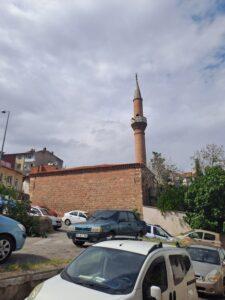
Karaoğlan Camii is a religious structure located in the Karesi district of Balıkesir province, with a history extending back to the early periods of Ottoman architecture. The building was originally constructed in 1356 by a figure known as Karaoğlan, who participated alongside Gazi Süleyman Paşa in the Ottoman conquests of Rumelia. The structure is regarded as an important component of the early Ottoman settlement and religious architectural heritage of the region.
After serving for centuries following its initial construction in 1356, the mosque was largely destroyed by a severe earthquake in 1897. Remaining in ruins for approximately ten years, it was rebuilt between 1907 and 1908 (Hijri 1325) through the initiative and patronage of Mehmed Alî Bey, the Mutasarrıf of the Karesi Sanjak at the time. The current structure is the product of this reconstruction effort during the reign of Sultan Abdülhamid II.
The mosque is situated within the boundaries of present-day Dumlupınar Neighborhood in central Balıkesir. It is located on the corner parcel where Karaoğlan Street intersects with Sancar Street. Immediately adjacent to the building is the Karaoğlan Türbesi, traditionally believed to be the tomb of the founder, also known as Paşa Sultan.
The current load-bearing walls are constructed of roughly dressed stone and brick. To enhance structural stability, large stone blocks are intermittently incorporated at corners and critical points. Overall, the architectural character of the structure is classified under the theme of "Restored Structures."
An inscription above the mosque’s entrance documents its multiple phases of reconstruction. The text was composed by Muharrem Hasbî Efendi, while the calligraphy was executed by Hüseyin Hâzım Efendi. The inscription records the date of reconstruction as Hijri 1325, marking the completion of the restoration.
The inscription’s text glorifies the individuals responsible for the restoration and the political authority of the period. It states that the structure was rebuilt under the patronage of İmâmü'l-müslimîn Sultan Abdülhamid II, and that the ruined building was restored through the benevolence of Mutasarrıf Mehmed Alî Bey, thereby elevating the name of Allah. The inscription concludes with a prayer for the perpetual honor of women, invoking the recitation of the adhan and the performance of prayers.
Karaoğlan Camii was registered as a "Monumental Structure" by the High Council for Immovable Cultural Heritage and Monuments (GEEAYK) on 14 March 1986 under Decision No. 2134. The property is owned by the General Directorate of Foundations.
The structure is currently maintained, accessible, and in good condition. As a registered cultural heritage site, the mosque continues to function as a place of worship in its original capacity.
"Karaoğlan Camii, Balıkesir." Kültür Envanteri. Accessed October 13, 2025.
Accessed November 26, 2025.
Balıkesir İl Kültür ve Turizm Müdürlüğü. "Tarihi Yapılar." Accessed May 24, 2024.
Balıkesir İl Kültür ve Turizm Müdürlüğü. Balıkesir Kültür Envanteri. Balıkesir: İl Özel İdaresi, 2010. Aktaran: "Karaoğlan Camii - Balıkesir." Kültür Portal
Karesi Belediye Başkanlığı. "Tescilli Anıtsal Cami, Türbe ve Mezarlar." Accessed May 24, 2024.
Sakar, Ekrem and Mustafa Polat. "Balıkesir Şehir Merkezindeki Tarihî Cami Kitabelerine Detaylı Bir Bakış." Aktaran: "Karaoğlan Camii, Balıkesir." Kültür Envanter
Condition(s) | Accessible and open for worship | ||||||||
|---|---|---|---|---|---|---|---|---|---|
Type(s) | Mosque | ||||||||
Location | Dumlupınar Neighborhood Karesi District Balıkesir | ||||||||
Relations | Karaoğlan türbesi (Paşa Sultan) | ||||||||
Ownership | General Directorate of Foundations | ||||||||
Restorers | Sultan II. Abdülhamid (patronage), Mehmed Ali (Governor of Karesi) | ||||||||
Construction Material | There was no rubble; it was constructed of stone and brick; large block stones at the corners | ||||||||
Reconstruction Date | -1 | ||||||||
Founder (Original) | Karaoğlan (the akıncı who crossed into Rumelia with Gazi Süleyman Pasha) | ||||||||
Original Construction Date | 1356 | ||||||||
Culture / Period | Ottoman | ||||||||
Destruction and Restoration Process
Architectural Features and Structural Analysis
Location and Site Layout
Construction Materials and Techniques
Epigraphic Data and Inscription
Inscription Content and Artistic Value
Textual Analysis
Administrative Status and Conservation Condition
Registration and Ownership Information
Current Use