

This article was automatically translated from the original Turkish version.
+1 More
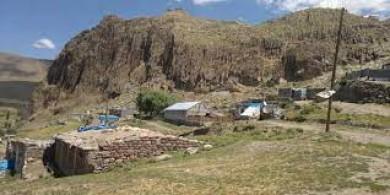
Karlıca Castle (Şoşik Castle) is a historical fortress located within the boundaries of Karlıca (Şoşik) Village in the Hamur district of Ağrı Province, in Türkiye’s Eastern Anatolia Region, at the Merga Şemo site. Geographically, it is situated at the foot of the Aladağlar mountain range and commands a strategic position overlooking the Murat Valley. Due to this strategic location, the fortress has attracted the interest of various civilizations throughout history and also dominates the surrounding settlements.
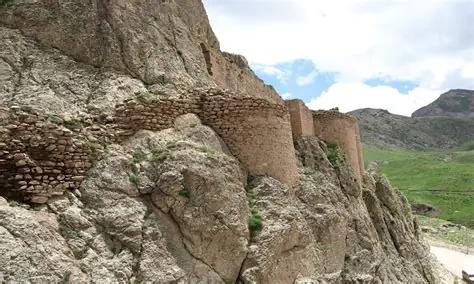
Şoşik Castle (Urban Ağrı)
No written records exist regarding the exact date of construction or the civilization responsible for building the fortress. However, based on its architectural features and the historical context of the region, it is believed to date from the Medieval period. Architectural elements particularly indicate influences from the Seljuk and Beylik eras. The region’s history includes the presence of various political entities such as the Urartians, the Kingdom of Armenia, the Seljuk State, and the Ottoman Empire. In this context, Şoşik Castle is assessed to have served military and administrative purposes during different historical periods.
Şoşik Castle was constructed atop a natural rocky elevation, providing it with inherent defensive advantages. The stone materials used in its construction and the defensive walls clearly demonstrate its military design. It is believed to have contained remnants of towers, storage areas, cistern-like structures, and living quarters. The fortress integrates harmoniously with the surrounding topography; its walls, built upon high rock masses, blend seamlessly with the natural landscape. Stonemasonry shows traces of both Seljuk and regional architectural influences.
Şoşik Castle is not merely a military structure but also functions as a center reflecting cultural interactions in the region. Archaeological remains found at and around the castle indicate the presence of habitation areas and possibly religious structures in antiquity. In an area where traces of Armenian settlements have been identified, inscriptions and architectural elements point to chronological cultural diversity. Furthermore, the stone structure remnants within the castle provide clues about the social life of the region.
Şoşik Castle was officially registered as a “Protected Immovable Cultural Asset” by the Erzurum Regional Board for the Protection of Cultural and Natural Heritage on 22 December 2006 under Decision No. 477. On 27 October 2020, the Van Regional Board for the Protection of Cultural Heritage updated its status, declaring the castle a first-degree archaeological site. Accordingly, the area encompassing the castle has been placed under protection and its use has been restricted in accordance with the principles established by the Supreme Council for the Protection of Cultural Heritage.
The Hamur district, where the castle is located, has historically been under the control of various states. The district was incorporated into Ottoman territory in 1578, attached to Ağrı in 1927, and granted district status in 1958. Other historical structures in the district include the Sürmeli Mahmut Paşa Kümbeti, exhibiting Seljuk architectural characteristics, the Urartian underground houses and tombs in Beklemez Village, and the ruins of Havaran Castle. Karlıca Village itself houses significant historical structures such as Şoşik Castle and Karlıca Castle.
Şoşik Castle is an important structure from historical, architectural, and archaeological perspectives. This protected site provides valuable insights into the region’s historical processes, cultural structure, and architectural heritage. Its location, construction technique, and functional roles across different periods make Şoşik Castle one of the notable elements in the historical topography of Eastern Anatolia.
Ağrı İl Directorate of Culture and Tourism. "Karlıca Kalesi (Şoşik) – Hamur." T.C. Kültür veTurizm Bakanlığı. Accessed July 7, 2025. https://agri.ktb.gov.tr/TR-393065/karlica-kalesi-sosik-hamur.html
Hamur İlçe National Education Directorate. "İlçemiz Tanıtım." T.C. Millî Eğitim Bakanlığı. Accessed July 7, 2025. https://hamur.meb.gov.tr/www/ilcemiz-tanitim/icerik/15
T.C. Ministry of Culture and Tourism. “Ağrı İli,Hamur İlçesi,Şoşik Kalesi Registration Update.” *High Council for the Protection of Cultural Assets*. Accessed July 7, 2025. https://korumakurullari.ktb.gov.tr/Eklenti/78858,11-agri-ili-hamur-ilcesi-sosik-kalesi-tescil-guncelleme-.pdf?0

Historical Background
Architectural Features
Cultural and Archaeological Significance
Protection Status
Regional Context and Additional Information