


This article was automatically translated from the original Turkish version.
+2 More
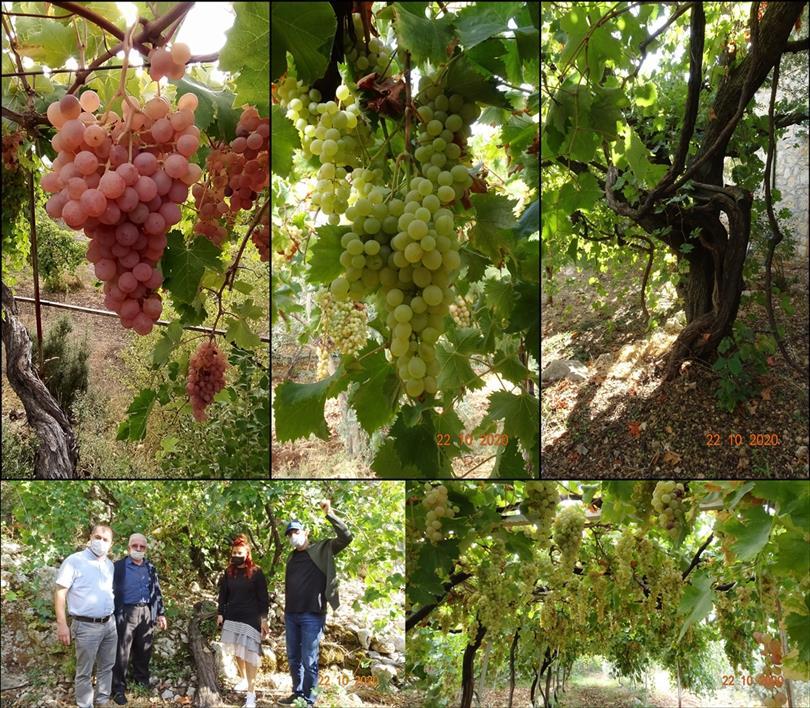
Kaş Margaz Grape
Registration Number | 1731 | ||||||||
|---|---|---|---|---|---|---|---|---|---|
Registration Date | 02.05.2025 | ||||||||
Application Number | C2023/000262 | ||||||||
Application Date | 20.10.2023 | ||||||||
Name of the Geographical Indication | Kaş Margaz Grape | ||||||||
Product / Product Group(s) | Grape / Processed and Unprocessed Fruits and Vegetables and Mushrooms | ||||||||
Type of Geographical Indication | Place of Origin | ||||||||
Applicant/Registrant(s) | Kumluca Chamber of Commerce and Industry | ||||||||
Address of the Registrant | Yeni Mahallesi Ahmet Ali Ağa Bulvarı Kumluca ANTALYA | ||||||||
Geographical Boundary | The districts of Üzümlü Kasaba and Uğrar in the Kaş district of Antalya province Doğantaş Ortabağ Gürsu Beldibi Sütleğen Hacıoğlan İkizce Bezirgan Çamlıova Pınarbaşı Yuvacık Palamut Çamlıköy Aklar Çavdır Kemer Dere Çayköy İslamlar | ||||||||
Kaş Margaz Grape is a local grape variety cultivated in specific neighborhoods of the Kaş district in Antalya Province, Türkiye, and consumed as a table grape. It is produced using the Margaz variety of Vitis vinifera L. and develops under the influence of the Mediterranean climate in soils characterized by sandy-loamy-silty texture and slightly alkaline properties. Cultivation primarily on south-facing slopes, combined with low summer rainfall and sufficient sunlight exposure, endows the grape with distinctive qualities including high sugar content (Brix %20 and above), balanced acid-tannin structure, and extended shelf life. Thanks to its robust stalk and skin structure, Kaş Margaz Grape offers advantages for both fresh consumption and storage.

Kaş Margaz Grape (Turkish Patent)
Kaş Margaz Grape is a table grape variety cultivated within a limited geographical area in the Kaş district of Antalya Province, Türkiye, using the Margaz variety of Vitis vinifera L. It was officially registered on 2 May 2025 under registration number 1731 as a geographical indication of the “place of origin” type. The applicant is the Kumluca Chamber of Commerce and Industry, and its supervision is coordinated by the Kaş Chamber of Agriculture.
Kaş Margaz Grape is cultivated within the geographical boundaries encompassing the neighborhoods of Üzümlü, İslamlar, Çayköy, Dere, Kemer, Çavdır, Aklar, Çamlıköy, Palamut, Yuvacık, Pınarbaşı, Çamlıova, Bezirgan, İkizce, Hacıoğlan, Sütleğen, Beldibi, Gürsu, Ortabağ, Doğantaş, Kasaba, and Uğrar under Kaş district. The soils in these areas are generally sandy-loamy-silty, sufficiently rich in organic matter, with slightly alkaline pH, high lime content, low salinity, and no drainage issues.
In this region dominated by the Mediterranean climate, grape cultivation is supported by wind movements that fulfill chilling requirements, adequate rainfall patterns, and sufficient sunlight exposure. The reduction in rainfall during June to September (e.g., 27–55 mm range) and the cultivation of grapes on south-facing slopes positively influence the sugar-acid-tannin balance.
Kaş Margaz Grape can remain on the vine for extended periods due to its sturdy stalk and berry structure. In areas at elevations of 800–1100 meters, the grapes can be preserved on the vine until January. During this period, a transition in skin color toward a rose hue is observed.
Physical and chemical analyses have yielded the following values:
Cluster weight ranges from 440 to 500 g, and berry weight from 3 to 5 g. Berries are typically broad elliptical in shape and green-yellow in color, turning pinkish-red when left on the vine. Skin thickness is medium, and the stalk-berry detachment resistance is high.
Young shoots exhibit dense downward-facing hairs, with anthocyanin pigmentation visible at the shoot tip. Young leaf upper surfaces display anthocyanin spots. Mature leaves are typically five-lobed; the petiole sinus is semi-open and U-shaped. Lower leaf surfaces show medium-density pubescence, with sparse upright hairs.
For establishing new vineyards of Kaş Margaz Grape, soil preparation (plowing) to a depth of approximately 40 cm is carried out during autumn when the soil is dry. Depending on terrain slope and soil structure, goblet, wall, or pergola systems are selected with planting spacings of 1.5 x 3 m or 1.5 x 2 m. Seedlings are grafted onto American rootstocks—41 B, 420 A, or 140 Ru—considering factors such as stoniness and nematode infestation. High-quality cuttings, scions, and seedlings are essential for successful establishment. In rare cases, vineyards are also established on own roots. Row orientation in established vineyards takes into account environmental factors such as sunlight exposure and slope; optimal light exposure is achieved with north-south or east-west alignment. On small plots, rows are typically arranged parallel to the longest side. The first two years of vineyard establishment focus on training and root development; economic yields are generally attained from the third or fourth year onward.
Soils in the production area are generally light to medium textured, well-aerated, capable of retaining moisture, low in salinity, and high in lime content. These soils exhibit a sandy-loamy-silty character and slightly alkaline pH. In this region within the Mediterranean climatic zone, sea-influenced air movements, temperature, and humidity balance are key climatic factors affecting grape cultivation. An environment free of rainfall and fog during pollination, with daily average temperatures above 15 °C, is preferred.
Soil management activities are conducted to control weeds, improve soil aeration, enhance water retention, and make nutrients more available to plants. Soil is worked twice annually, in autumn and spring. Due to the region’s climate, weed pressure is low, but light surface tillage may be applied in spring and summer if necessary. Fertilization is carried out in two stages: basal fertilization before budbreak and top-dressing during berry development. Both organic and mineral fertilizers are used, and fertilization practices must be tailored according to soil analysis results.
Pruning is performed annually to control vine vigor and yield potential. In Kaş Margaz Grape, pruning is typically carried out using short pruning with 4–5 buds. Systematic pruning is recommended.
Irrigation is applied in newly established vineyards, during the growth phase, and especially during summer months depending on climatic conditions. Irrigation becomes essential during periods of irregular or insufficient rainfall. In pergola systems, drip irrigation is the preferred method.
During cultivation, measures are taken to combat diseases, pests, and weeds. Approved plant protection products in accordance with relevant legislation are applied. Practices such as soil tillage, weeding, and soil aeration are also important for weed control and maintaining soil health.
The harvest period, dependent on climatic conditions, generally occurs between late August and early September. Harvesting begins when berries mature and attain yellow-green tones. Clusters are carefully picked with their stalks intact to avoid vine damage and placed in containers suitable for food contact.
Kaş Margaz Grape is suitable for storage and transport due to its firm stalk and skin structure. The product can be consumed fresh or stored in dry, cool, odor-free, and hygienic environments. Care must be taken to avoid stacking grapes on top of each other during storage.
The product is marketed in packaging suitable for food contact and bearing labeling information compliant with regulations. Appropriate storage and transportation conditions must be ensured before reaching the consumer.
Monitoring activities for Kaş Margaz Grape are coordinated by the Kaş Chamber of Agriculture. The monitoring team consists of at least three members selected from knowledgeable personnel within the Kaş Chamber of Agriculture, Kumluca Chamber of Commerce and Industry, and the Kaş Directorate of Agriculture and Forestry. Monitoring is conducted at least once annually, and additional inspections may be carried out as needed or upon complaint.
The following criteria are primarily considered during monitoring:
The monitoring authority may seek support from public or private institutions and their qualified personnel, or procure services externally, as necessary for implementation. The registering body undertakes legal actions to protect rights related to the geographical indication.
Bagcılık Araştırma Enstitüsü Müdürlüğü. “Margaz Üzüm Çeşidine Coğrafi İşaret Alınması Çalışmalarına Başladık.” Accessed June 15, 2025. https://arastirma.tarimorman.gov.tr/bagcilik/Haber/156/Margaz-Uzum-Cesidine-Cografi-Isaret-Alinmasi-Calismalarina-Basladik.
Turkish Patent and Trademark Office. "Kaş Margaz Üzümü Coğrafi İşaret Tescil Belgesi ve Teknik Şartnamesi (PDF)." Accessed June 15, 2025. https://ci.turkpatent.gov.tr/Files/GeographicalSigns/17d15b09-12c0-4b82-b1a3-def933a22cbd.pdf.
Turkish Patent and Trademark Office. "Kaş Margaz Üzümü." *Geographical Indications Information System*. Accessed June 15, 2025. https://ci.turkpatent.gov.tr/cografi-isaretler/detay/10326.
Zeki Kara and Aysel Honamlı, “Margaz Üzüm (Vitis vinifera L.) Variety’s Ampelographic Characteristics,” *Bahçe* 53, Special Issue 1 (July 2024): 197–206, https://doi.org/10.53471/bahce.1483092.

Kaş Margaz Grape
Registration Number | 1731 | ||||||||
|---|---|---|---|---|---|---|---|---|---|
Registration Date | 02.05.2025 | ||||||||
Application Number | C2023/000262 | ||||||||
Application Date | 20.10.2023 | ||||||||
Name of the Geographical Indication | Kaş Margaz Grape | ||||||||
Product / Product Group(s) | Grape / Processed and Unprocessed Fruits and Vegetables and Mushrooms | ||||||||
Type of Geographical Indication | Place of Origin | ||||||||
Applicant/Registrant(s) | Kumluca Chamber of Commerce and Industry | ||||||||
Address of the Registrant | Yeni Mahallesi Ahmet Ali Ağa Bulvarı Kumluca ANTALYA | ||||||||
Geographical Boundary | The districts of Üzümlü Kasaba and Uğrar in the Kaş district of Antalya province Doğantaş Ortabağ Gürsu Beldibi Sütleğen Hacıoğlan İkizce Bezirgan Çamlıova Pınarbaşı Yuvacık Palamut Çamlıköy Aklar Çavdır Kemer Dere Çayköy İslamlar | ||||||||
Geographical Boundaries and Cultivation Conditions
Botanical and Chemical Properties
Ampelographic Characteristics
Vineyard Establishment
Soil and Climate Conditions
Soil Management and Fertilization
Pruning
Irrigation
Plant Protection
Harvesting
Storage and Preservation
Market Placement
Monitoring and Protection