

This article was automatically translated from the original Turkish version.
Type of Geographical Indication | Place of Origin | ||||||||
|---|---|---|---|---|---|---|---|---|---|
Registration Number | 1190 | ||||||||
Registration Date | 12.08.2022 | ||||||||
Product / Product Group(s) | Honey | ||||||||
Province(s) | Kastamonu | ||||||||
Applicant/Registrant(s) | Kastamonu Province Beekeepers Association | ||||||||
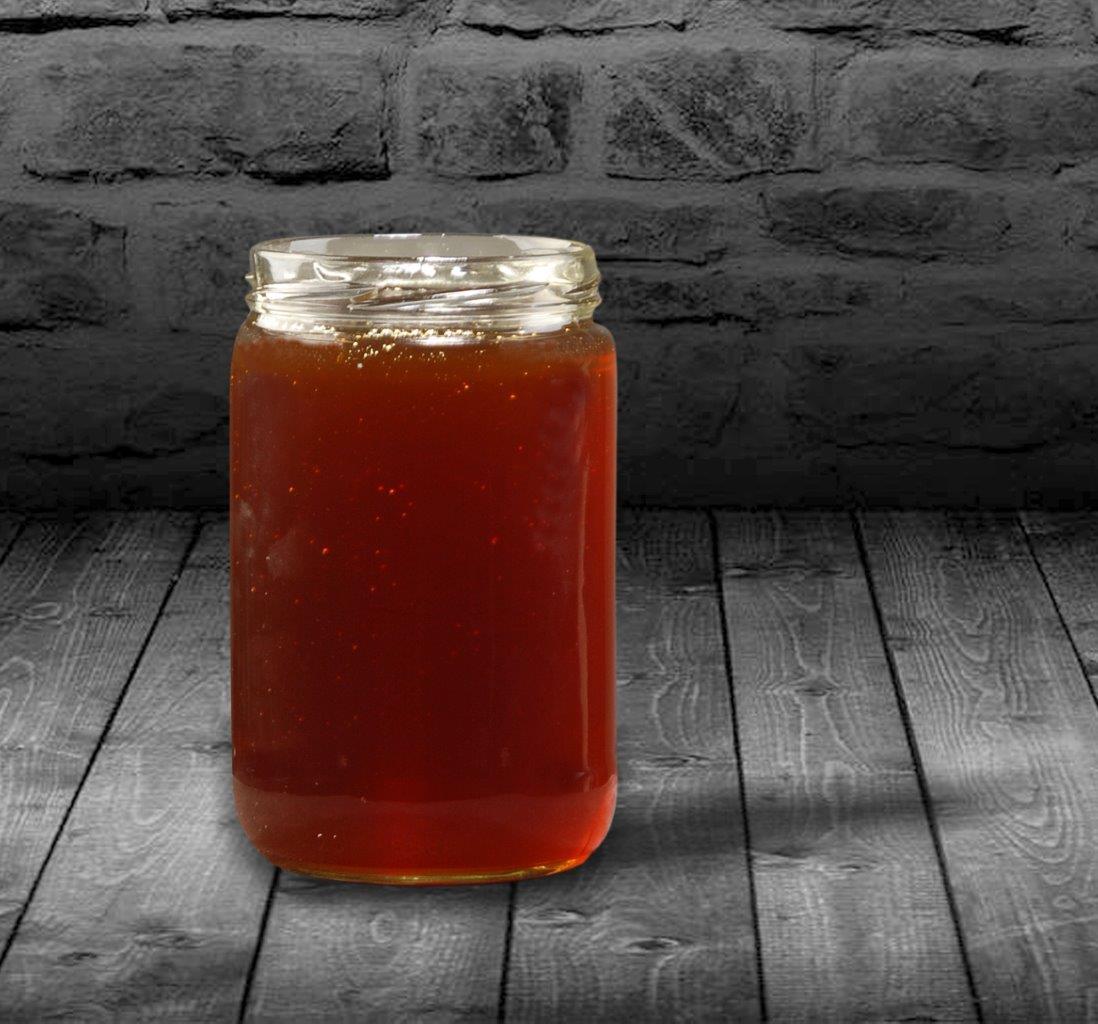
Kastamonu chestnut honey is a monofloral honey variety registered with its geographical origin name, unique to Kastamonu Province. This product is produced by bees utilizing the nectar from the region’s extensive chestnut forests during a short nectar flow period. The limited diversity of nectar-bearing plants in the area ensures that the honey contains a high proportion of chestnut pollen. The expression “Kastamonu chestnut honey” and its geographical origin emblem are used on the product itself or its packaging.
Kastamonu chestnut honey is primarily obtained from the flowers of chestnut trees (Castanea sativa) and possesses a distinctive color, taste, and aroma profile. Its defining characteristic is the presence of at least 70% chestnut (Castanea sativa) pollen. This high concentration of chestnut pollen imparts a dark brown color, a slight bitterness, and a characteristic chestnut aroma to the honey.
The chemical and physical properties of the honey are as follows:
Kastamonu chestnut honey is offered for consumption in either comb honey or strained honey form.
The production of Kastamonu chestnut honey involves beekeeping practices specific to the region’s geographic and climatic conditions. The flowering period of chestnut trees can extend from late May to July depending on altitude. Nectar flow typically occurs between June 1 and June 30. Due to the short duration of the nectar flow period, it is essential that the worker bee population in the colony reaches its peak during this time.
The production method includes the following stages:
The geographical boundary of Kastamonu chestnut honey is Kastamonu Province.
A four-member committee, coordinated by the Kastamonu Beekeepers Association and comprising one expert each from the Kastamonu Provincial Directorate of Agriculture and Forestry, Kastamonu Municipality, Kastamonu University, and the Kastamonu Beekeepers Association, is responsible for monitoring compliance with the registered production standards and product characteristics.
Inspections are conducted regularly twice a year, and additionally in response to complaints or as deemed necessary.
Turkish Patent and Trademark Office. "Kastamonu Kestane Balı Coğrafi İşaret Sicil Belgesi." Accessed October 24, 2025. https://ci.turkpatent.gov.tr/Files/GeographicalSigns/b87d2488-6b89-404c-9872-967f6aa5cfa9.pdf
Türk Patent ve Marka Kurumu. "Kastamonu Kestane Balı." Coğrafi İşaretler Portalı. Accessed October 24, 2025. https://ci.turkpatent.gov.tr/cografi-isaretler/detay/38676

Type of Geographical Indication | Place of Origin | ||||||||
|---|---|---|---|---|---|---|---|---|---|
Registration Number | 1190 | ||||||||
Registration Date | 12.08.2022 | ||||||||
Product / Product Group(s) | Honey | ||||||||
Province(s) | Kastamonu | ||||||||
Applicant/Registrant(s) | Kastamonu Province Beekeepers Association | ||||||||
No Discussion Added Yet
Start discussion for "Kastamonu Chestnut Honey" article
Product Characteristics
Production Method
Geographical Boundary
Monitoring