This article was automatically translated from the original Turkish version.
Type of Geographical Indication | Origin Name | ||||||||
|---|---|---|---|---|---|---|---|---|---|
Registration Number | 545 | ||||||||
Registration Date | 25.09.2020 | ||||||||
Product / Product Group(s) | Other Products | ||||||||
Province(s) | Kastamonu | ||||||||
Applicant/Registrant(s) | Kastamonu Chamber of Agriculture | ||||||||
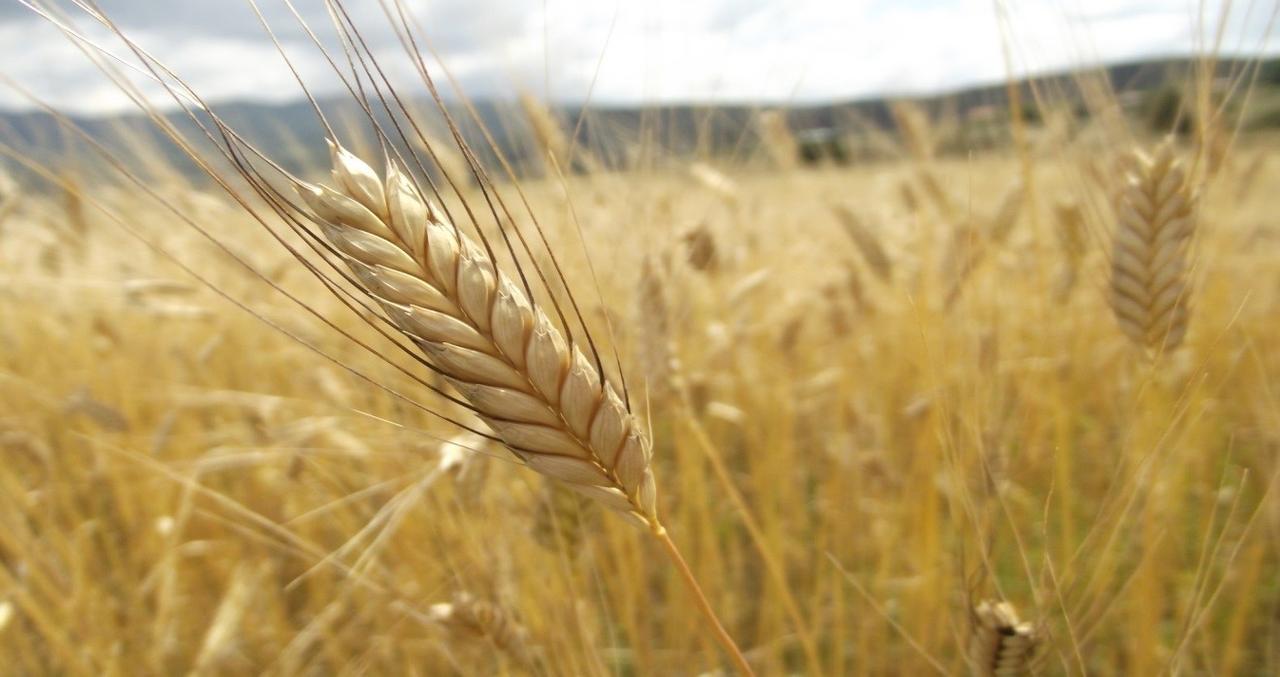
Kastamonu siyez wheat is a product registered with its place of origin, derived from a local variety of siyez (Triticum monococcum L.). It is known as the cultivated form of the diploid wild wheat species Triticum boeoticum. Its self-pollinating nature has prevented the transfer of undesirable traits from wild forms—such as small grain size and shattering—to the cultivated variety. Upon maturity, the spike does not disperse, ensuring the continuity of the cultivated form, and its grains are larger than those of the wild type. The product was registered by the Turkish Patent and Trademark Office on 25.09.2020 following an application by the Kastamonu Chamber of Agriculture.
Kastamonu siyez wheat belongs to the group of hulled wheats because its grains are tightly enclosed by husks. This husk protects the grain, conferring resistance to diseases, fungi, and pests during storage and sowing. It exhibits high resistance to “black stem rust” (Puccinia graminis f. sp. tritici), a disease that significantly affects bread and pasta wheat varieties. Thanks to its hulled structure, it is also resistant to abiotic stress factors such as poor and saline soils and cold climatic conditions, making it an important source of plant genetic material.
The product can be cultivated in the Kastamonu climate both as a winter crop (autumn sowing) and as a summer crop (early spring sowing). Its fertilizer requirement is lower than that of other wheat varieties, making it suitable for organic farming. The grain structure is classified as “Extra Soft,” and its composition differs from that of bread and pasta wheats. It has low carbohydrate content, high protein and fiber levels, and low gluten content. Additionally, it contains a higher proportion of yellow lutein than bread wheat. Plant height ranges from 70 to 130 cm, and average yield is around 200 kg/da, varying between 120 and 320 kg/da depending on land and management conditions.
The production area of Kastamonu siyez wheat is limited to Kastamonu Province. Monitoring is conducted by a five-member oversight body composed of representatives from the Kastamonu Chamber of Agriculture, Kastamonu University, Ankara Central Field Crops Research Institute, Kastamonu Provincial Directorate of Agriculture and Forestry, and Kastamonu Chamber of Commerce, under the coordination of the Kastamonu Chamber of Agriculture.
Monitoring is carried out at least twice annually during each production season, in three key stages:
The oversight body collects samples for analysis, and the cost of analysis is borne by the producer. Inspection reports are submitted to the Turkish Patent and Trademark Office by the Kastamonu Chamber of Agriculture within the timeframes specified in relevant regulations.
Turk Patent and Trademark Office. "Kastamonu Siyez Wheat Registration Certificate." Geographical Indications Portal. Accessed October 24, 2025. https://ci.turkpatent.gov.tr/Files/GeographicalSigns/46ac68d1-d902-4eb9-82ca-4da15a135a2c.pdf
Turk Patent and Trademark Office. "Kastamonu Siyez Wheat." Geographical Indications Portal. Accessed October 24, 2025. https://ci.turkpatent.gov.tr/cografi-isaretler/detay/61

Type of Geographical Indication | Origin Name | ||||||||
|---|---|---|---|---|---|---|---|---|---|
Registration Number | 545 | ||||||||
Registration Date | 25.09.2020 | ||||||||
Product / Product Group(s) | Other Products | ||||||||
Province(s) | Kastamonu | ||||||||
Applicant/Registrant(s) | Kastamonu Chamber of Agriculture | ||||||||
No Discussion Added Yet
Start discussion for "Kastamonu Siyez Wheat" article
Product Characteristics
Production Method
Geographical Boundary and Monitoring