


This article was automatically translated from the original Turkish version.
+1 More
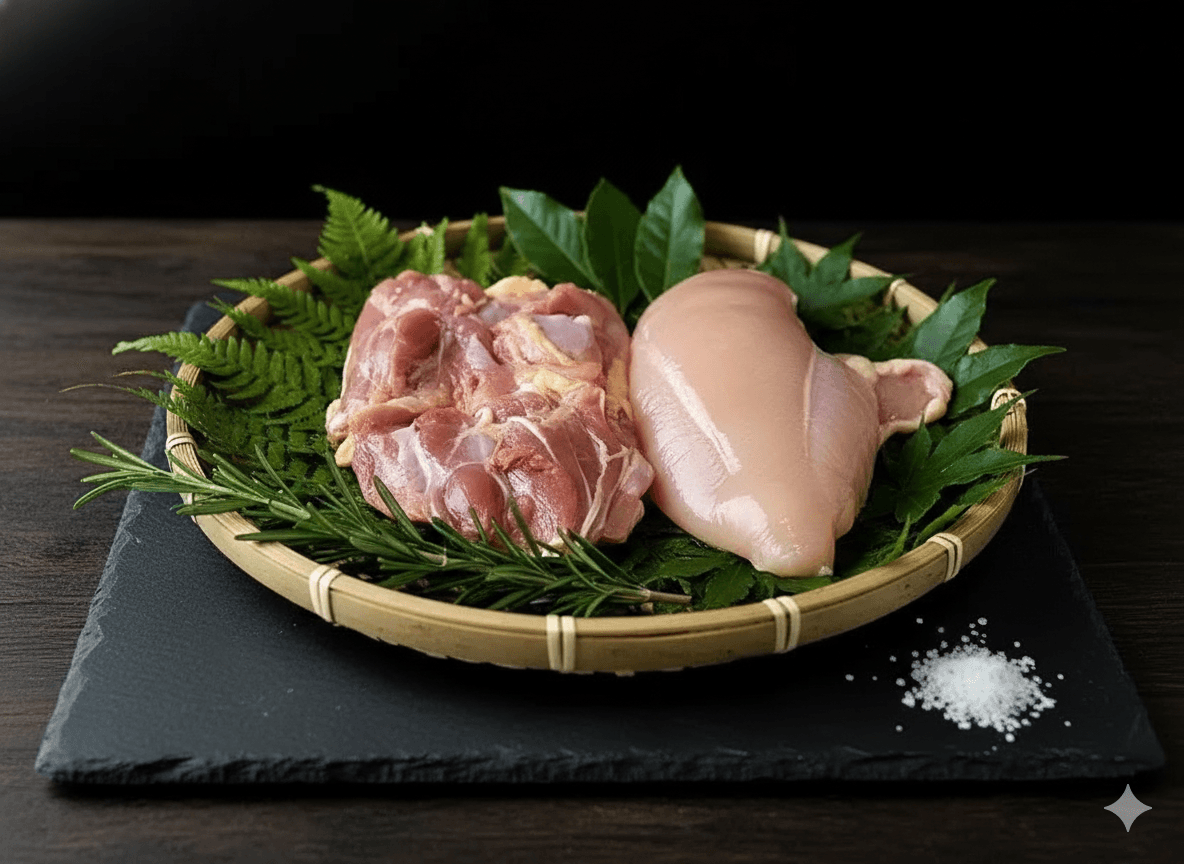
(Generated by Artificial Intelligence)
Kawamata Shamo Chicken Meat
Registration Number | 118 | ||||||||
|---|---|---|---|---|---|---|---|---|---|
Geographical Indication Name | Kawamata Shamo | ||||||||
Class | Meat | ||||||||
Protection Date | 2022/03/31 | ||||||||
Production Area | Fukushima Prefecture, Kawamata Town (Date District) | ||||||||
Applicant | Kawamata Shamo Shinkokai (Kawamata Shamo Promotion Group) | ||||||||
Registration Status | Registered | ||||||||
Kawamata Shamo (Japanese: 川俣シャモ) is a native chicken (jidori) meat brand produced in Kawamata Village, Date District, Fukushima Prefecture, Japan. It is registered under Japan’s Geographical Indication (GI) system with registration number 118 in the “Meat” category.
This chicken meat is characterized by its umami flavor, low water content, and distinct chewy (firm) texture. Its high levels of intramuscular fat and oleic acid give the meat a juicy structure. Due to its quality, it commands a price approximately five times higher than general chicken meat in the Japanese market.
The origins of Kawamata Shamo are closely tied to the village’s silk industry. During the Edo Period (1603–1867), wealthy local silk producers raised shamo (fighting cocks) as a hobby. This tradition fostered a local culture of fighting cock breeding, and eventually the meat of these birds began to be consumed.
In 1985, the Niku Shamo Kenkyukai (Meat Shamo Research Group) was established to transform this local heritage into a commercial product. Following breeding efforts, official sales began in July 1987. The current breeding stock structure was finalized in 2008.
The production area is located on plateaus at least 200 meters above sea level. The region remains cool even during summer months thanks to winds blowing from the Abukuma Mountains, creating an ideal environment for raising chickens, which are sensitive to heat.
The uniqueness of Kawamata Shamo is based on strict breeding and rearing protocols:
As of 2019, 13 producers in the region raise up to 80,000 Kawamata Shamo chickens annually. Due to its high quality, the product is sold at premium prices both within Japan and internationally.
Japan Ministry of Agriculture, Forestry and Fisheries (MAFF). "Product Summary (Registration No.118): Kawamata Shamo." Accessed October 31, 2025. https://www.maff.go.jp/e/policies/intel/gi_act/register/s118.html.
Japan's Geographical Indication. "Kawamata Shamo." Accessed October 26, 2025. https://pd.jgic.jp/en/register/entry/118.html.
Kawamata Shamo Promotion Council. "川俣シャモとは." Accessed October 31, 2025. https://fukushima-pride.com/gi/kawamata-shamo.php?lang=en

(Generated by Artificial Intelligence)
Kawamata Shamo Chicken Meat
Registration Number | 118 | ||||||||
|---|---|---|---|---|---|---|---|---|---|
Geographical Indication Name | Kawamata Shamo | ||||||||
Class | Meat | ||||||||
Protection Date | 2022/03/31 | ||||||||
Production Area | Fukushima Prefecture, Kawamata Town (Date District) | ||||||||
Applicant | Kawamata Shamo Shinkokai (Kawamata Shamo Promotion Group) | ||||||||
Registration Status | Registered | ||||||||
No Discussion Added Yet
Start discussion for "Kawamata Shamo Chicken Meat" article
History and Geographical Origin
Breeding Standards and Feeding
Market Presence