

This article was automatically translated from the original Turkish version.
+1 More
Literature Name | Kalachi Syndrome | ||||||||
|---|---|---|---|---|---|---|---|---|---|
Place | Kazakhstan Akmola Region Kalachi Village | ||||||||
Date(s) | 2010–2015 | ||||||||
Symptoms | memory loss headache dizziness Sudden sleep attacks lasting for days | ||||||||
Causes | Carbon monoxide poisoning due to inadequate ventilation | ||||||||
Affected Population | Approximately 160 people | ||||||||
Outcome | continuous gas monitoring chimney safety Ventilation | ||||||||
The Kazakhstan Mass Sleep Incident (Kalachi Syndrome) is an event observed in the early 2010s in Kalachi and its surrounding areas in the Akmola Region, characterized by sudden and prolonged episodes of intense sleep lasting for days. These recurrent episodes affected a significant portion of the village population and presented with symptoms including excessive sleepiness, headaches, dizziness, confusion, and brief memory lapses upon awakening. Although initial reports date back to 2010, the phenomenon became prominent in 2013 and occurred in waves between 2014 and 2015.
Initial clinical assessments framed the condition as “encephalopathy of unknown etiology”; evidence increasingly supported the conclusion that it was not an infectious disease. Official investigations and field measurements identified insufficient oxygen levels combined with carbon monoxide accumulation in enclosed indoor spaces as the primary cause, leading to the syndrome being defined as recurrent exposure events triggered by local environmental conditions.
Kalachi is a small rural settlement located in the Akmola Region of northern Kazakhstan, situated on a flat and wind-exposed steppe plateau. The settlement structure consists of single-story homes built on large plots, accompanied by courtyards and outbuildings. A significant proportion of homes rely on coal or stove heating, and during the long winter months, it is common practice to reduce window openings and maintain indoor temperatures as high as possible. These climatic and structural characteristics combine with daily habits that limit air renewal, requiring residents to repeatedly rebalance heating and ventilation each winter. The primary livelihoods in the village are agriculture and animal husbandry, supplemented by households employed in regional services and seasonal migrant labor.
Immediately adjacent to Kalachi lies the former Soviet-era settlement of Krasnogorsk and associated mining sites, established for uranium production. These sites formed an integrated infrastructure of underground galleries, vertical shafts, ventilation chimneys, and ore processing and storage areas, designed according to the production demands of the time. After production ceased, some tunnels and shafts were sealed while others were abandoned or left to natural processes. The post-closure period embedded the legacy of mining—underground voids, collapsed rock piles, waste dumps, and altered groundwater regimes—into the background of daily life. While this legacy alone is not considered a direct “cause,” it has consistently formed part of the environmental health monitoring context for the region.
Akmola and its surroundings constitute a significant segment of the northern Kazakhstan uranium basin. Intensive exploration and extraction activities during the advanced stages of Soviet industrialization introduced a secondary infrastructure network to the region, including mining roads, transformer stations, worker settlements, small-scale maintenance workshops, and storage areas. This network largely diminished after production ceased, with population, public services, and economic activity gradually shifting toward central settlements. This general trend is also evident in Kalachi’s demographic structure: a portion of the younger population relocates to regional or national centers for education or employment, while the village population increasingly consists of households dependent on agricultural production.
The spatial proximity between the settlement morphology and the former mining sites has created a unique risk profile for the air quality in certain homes. The intensified heating demand during winter increases stove and furnace use, while restricted ventilation and partial use of basements or attics alter indoor air composition. This situation intersects with the geographical-historical context of the syndrome’s ultimate assessment: proximity to underground voids, winter practices of sealed-cycle heating, and limited ventilation preferences are among the key local conditions explaining the non-infectious, recurrent exposure nature of the phenomenon.
In summary, Kalachi presents a distinctive framework for understanding the environmental and functional determinants of the “Kalachi Syndrome,” arising from its geographical location (steppe climate, long and harsh winters), settlement pattern (single-story, stove-heated homes with minimal ventilation), historical background (proximity to uranium mining settlements and underground infrastructure), and socio-economic structure (agriculture- and livestock-based household economies, gradual population mobility).
The clinical presentation in Kalachi manifests as a series of attacks characterized by rapid-onset intense sleepiness. In a significant proportion of cases, dizziness, headaches, confusion, and general fatigue occur immediately before or simultaneously with the onset of sleep. Once the “sleep” phase begins, individuals experience hours, sometimes days, of altered consciousness and heightened sleep drive, with only brief periods of wakefulness necessary for basic needs such as eating or using the toilet.
During the post-attack phase, partial memory gaps regarding events during the episode were detected in some patients; headaches and profound fatigue could persist for days. In early clinical classification, the condition was described as “encephalopathy of unknown etiology” and regarded as a neurological disturbance inconsistent with infectious disease.
The symptom cluster showed some variation across age groups. While children exhibited cases diagnosed as toxic encephalopathy, adults included reports of severe cerebrovascular events resembling strokes. However, the dominant presentation across all ages was the triad of excessive sleepiness, dizziness, and headache. Field observations also recorded complaints of eye irritation, blurred vision, reduced motivation to speak or walk, cognitive slowing, and attention deficits. These symptoms typically began with the attack and persisted for variable durations after awakening.
The course of cases was recurrent: multiple attacks occurred in the same individuals, separated by periods of marked improvement. Attack duration varied from several hours to several days. Clinical management was largely supportive, emphasizing monitoring of respiratory and circulatory parameters, ensuring oxygenation, maintaining hydration, and providing symptomatic treatment. Hospital evaluations assessed level of consciousness, pupillary response, motor function, and speech fluency; standard tests were applied to rule out infectious, metabolic-vascular, and toxic causes for differential diagnosis.
During the peak period, a considerable portion of the village population reportedly experienced at least one attack, with the total number of affected individuals reaching hundreds. Psychologically and neuropsychiatric assessments revealed that the attacks not only disrupted sleep patterns but also led, during the post-awakening phase, to anxiety, impaired perception of general health, increased headaches and muscle pain, and disruptions in short-term memory and attention processes. Field data indicated that symptoms such as headache, fatigue, and sleepiness were perceived more prominently following sudden weather changes and physical exertion.
The overall picture presents a clinical syndrome characterized by acute onset, days-long sleepiness and altered consciousness, accompanied by post-awakening neurocognitive vulnerability and somatic complaints. Its recurrent nature and tendency to cluster within households or neighborhoods led to waves of increased incidence during specific periods. When interpreted alongside environmental measurements, this clinical framework became the primary reference point for evaluating the phenomenon.
Investigations conducted during the peak period (2014–2015) collected data along three axes: (i) indoor air composition (oxygen levels, combustion byproducts including carbon monoxide, ventilation patterns), (ii) geological-mining legacy infrastructure (former underground galleries, shafts, ventilation chimneys, and their distance from residential structures), and (iii) regional radiation/radon background and groundwater/drinking water parameters. These axes were jointly evaluated within an environmental framework consistent with the phenomenon’s characterization as “non-infectious, recurrent exposure events.”
In Kalachi, where winters are long, the prevalent housing type consists of single-story homes heated by stoves. During cold periods, sealed windows, inefficient heating systems, basement/attic usage, and limited ventilation increase the risk of oxygen depletion and carbon monoxide accumulation. The clustering pattern of cases (simultaneous illness within the same household or neighborhood) and the rapid onset and prolonged duration of attacks were consistent with acute and recurrent respiratory exposure.
Official assessments, supported by measurement data, identified oxygen deficiency and carbon monoxide accumulation in enclosed spaces as the primary cause. This approach framed the phenomenon not as an infectious disease but as an air quality issue linked to local heating and ventilation practices and structural conditions.
The Soviet-era uranium production sites near Kalachi (Krasnogorsk and associated galleries/shafts) persist after closure as underground voids, partially collapsed sections, and traces of ventilation chimneys. While this infrastructure alone does not constitute sufficient evidence of causality, it was considered in assessing the risk of gas seepage into enclosed spaces. The relatively close positioning of some homes to underground voids, combined with increased stove use in winter, was deemed decisive in influencing indoor air composition.
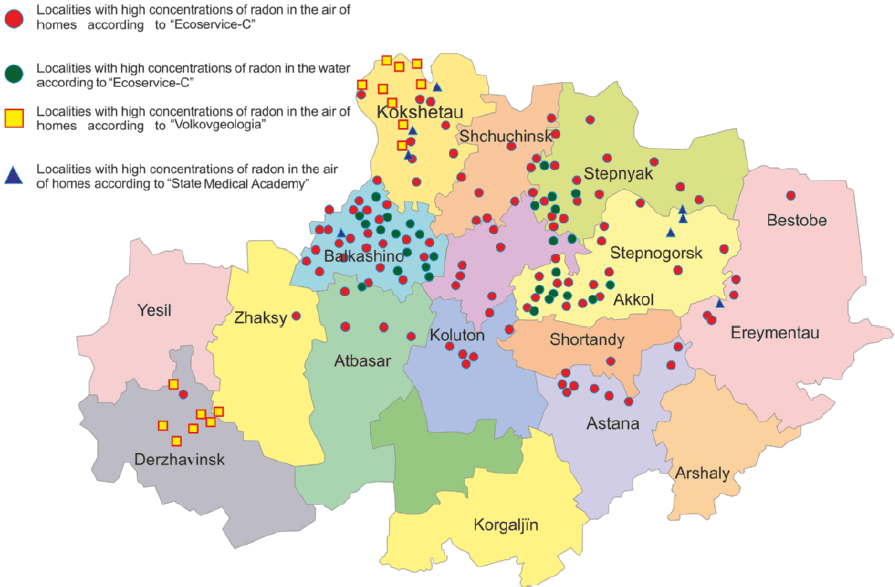
It is well documented in northern and eastern Kazakhstan that indoor air and groundwater in many settlements exhibit elevated radon levels due to their mining history. Regional studies have reported indoor radon concentrations reaching hundreds or even thousands of Bq/m³ in some locations, with instantaneous measurements in basements reaching significantly higher values. Elevated readings have also been recorded in schools and public buildings.
Surveys conducted in Akmola and surrounding areas revealed that indoor radon activity exceeded safety thresholds in many villages and towns, with high values even detected in some newly constructed buildings. Measurements in basements showed sharp increases.
The long-term health risks of radon—particularly lung cancer—are well documented in international literature; however, the acute sleepiness and altered consciousness observed in Kalachi do not match a clinical profile attributable to radon exposure. Therefore, radon was recorded as a regional background risk factor but not considered a direct cause of the acute attacks.
Regional water studies indicated that in some settlements, natural radioactive elements and radon in drinking and groundwater exceeded standard limits. In the Kalachi context, no findings suggested acute neurotoxic effects via water exposure; water sources were monitored primarily as part of long-term environmental risk assessments.
Following assessments, measures were implemented at the household level, including regular ventilation, maintenance of stoves and chimneys, use of carbon monoxide detectors, administrative interventions for high-risk structures, and community-wide monitoring and awareness campaigns. The goal of these steps was to narrow the windows of recurrent exposure linked to oxygen depletion and carbon monoxide accumulation and to prevent recurrence of the phenomenon.
Overall, environmental findings demonstrated that the clinical presentation in Kalachi was explained by deterioration in indoor air quality, while the geological-mining legacy and regional radon background served as contextual factors in the evaluation of the phenomenon.
The sleep attacks in Kalachi were not merely a medical issue; they significantly affected the local community’s psychological resilience, daily routines, and relationship with institutions. Psychometric evaluations among those directly affected indicated widespread but non-permanent disturbances in mental and physical well-being. In a field study of 60 individuals who experienced attacks, the majority reported deterioration in general health, with headaches, persistent fatigue, anxiety, and memory difficulties emerging as key concerns.
A significant portion of the sample demonstrated “threshold” or “low” stress resilience, with only a limited proportion exhibiting high stress resistance. Tests for aggression/anger profiles showed elevated scores for both physical and indirect aggression and irritability, suggesting that the recurrent and uncontrollable nature of the attacks led to accumulated tension. In emotional intelligence components—recognizing, understanding, and repairing emotions—the “repairing emotions” dimension was notably constrained; while some individuals could identify their feelings, their emotional recovery speed remained low. When considered alongside somatic complaints such as headaches and fatigue after attacks, these findings indicate a perceptible burden on short-term quality of life.
At the social level, the wave-like pattern of the phenomenon affected the continuity of public services and household labor division. Due to the unpredictability of attacks, childcare and eldercare responsibilities were reorganized in some households, temporary disruptions occurred in workforce participation, and seasonal agricultural planning experienced delays. Periodic declines in school attendance and increased visits to health facilities stood out when compared with nearby settlements.
From a healthcare perspective, the phenomenon was marked by short-term but intense waves of patient visits; the primary approach focused on symptom management and observation. Although no infectious transmission was observed, the “unknown cause” atmosphere, particularly in early stages, heightened community anxiety and fostered misunderstandings and occasionally stigmatizing attitudes. Regular informational meetings by local authorities and field teams, along with practical guidance on heating and ventilation safety, gradually reduced this tension.
Risk perception directly influenced daily behavioral patterns. Changes in stove and furnace use practices became evident: alterations in fuel type and quality, fire control, monitoring chimney draft overnight, and increased willingness to acquire carbon monoxide detectors. Indoor ventilation practices—despite the cold climate—expanded to include brief but regular window opening, and more cautious use of basements and attics. Within the neighborhood context, mutual surveillance and rapid communication strengthened, such as checking on neighbors each morning and visiting elderly residents who did not respond to door knocks. This process simultaneously enhanced social cohesion and introduced fatigue from sustained vigilance.
Economic impacts consisted of direct and indirect components. Direct effects included loss of workdays due to mandatory rest after attacks and increased healthcare expenditures. Indirect effects concentrated on expenses related to upgrading or maintaining heating systems, more frequent chimney cleaning and inspections, and acquiring warning devices. These costs imposed varying burdens on household budgets.
Migration and relocation tendencies were among the most debated social outcomes of the phenomenon. In the early phase of high uncertainty, temporary relocation to nearby relatives or friends, and sending children temporarily to urban relatives, were observed strategies. Over time, as official assessments clarified the environmental and manageable nature of the cause, permanent migration decisions gave way to local improvements and risk-reduction practices. Nevertheless, for vulnerable households (elderly living alone, those with chronic illnesses, families with young children), the option of relocation remained on the agenda.
Finally, the event transformed the nature of communication between local authorities and the public. Regular information dissemination, clear communication of measurement results in accessible language, and the implementation of practical recommendations on a defined schedule proved decisive in building trust. Consequently, certain psychological effects—particularly anxiety stemming from uncertainty and reduced sense of control—gradually diminished over time, enabling the community to adapt to the phenomenon through new behavioral patterns and heightened awareness.
From the outset, local health units, emergency response teams, and multidisciplinary teams of environmental and geological experts were deployed to the region. Clinical observations were conducted alongside assessments of indoor air quality, heating-ventilation practices, and the relationship between the settlement and the former mining infrastructure. As investigations progressed, the possibility of an infectious agent receded into the background; measurements and field observations pointed to the intersection of combustion byproducts from intensified heating during cold seasons and inadequate ventilation.
In final assessments, oxygen deficiency combined with carbon monoxide (CO) accumulation in enclosed spaces was adopted as the primary explanation for the phenomenon. This framework revealed that risk in certain homes and buildings was amplified by factors such as building location (proximity to underground voids, basement usage), poor chimney draft, and sealed windows during winter.
Official authorities emphasized in their announcements that the event was not an “outbreak” but rather an acute condition linked to recurrent environmental exposure windows. Subsequently, a series of measures were simultaneously implemented across the village:
Following these measures, the frequency and severity of new attack clusters significantly declined; the risk of recurrence was brought under manageable control through improved household heating and ventilation safety. The incident entered its resolution phase as official assessments clarified the role of CO accumulation and oxygen depletion, field interventions were implemented, and community behavioral patterns shifted. In subsequent years, periodic inspections and awareness activities continued, establishing lasting public awareness of indoor air quality and aiming to prevent similar occurrences.
Bersimbaev, Rakmetkazhy I., and Olga Bulgakova. “The Health Effects of Radon and Uranium on the Population of Kazakhstan.” *Genes and Environment* 37 (October 1, 2015): 18. Accessed October 8, 2025. https://pmc.ncbi.nlm.nih.gov/articles/PMC4918080/.
Bolton, Doug. “Mysterious ‘Sleeping Sickness’ That Affected a Kazakhstan Village Turns out to Be Carbon Monoxide Poisoning.” *The Independent,* 2015. Accessed October 8, 2025. https://www.independent.co.uk/news/world/asia/mysterious-sleeping-sickness-that-affected-a-kazakhstan-village-turns-out-to-be-carbon-monoxide-poisoning-a966.html.
Dolgov, Anna. “Bizarre ‘Sleeping Illness’ Descends on Village in Kazakhstan.” *The Moscow Times*, January 9, 2015. Accessed October 8, 2025. https://www.themoscowtimes.com/2015/01/09/bizarre-sleeping-illness-descends-on-village-in-kazakhstan-a42738.
Lee, Dmitry. “Ongoing Sleeping Sickness Investigation Intensifies.” *The Astana Times*, June 30, 2015. Accessed October 8, 2025. https://astanatimes.com/2015/06/ongoing-sleeping-sickness-investigation-intensifies/.
Lee, Dmitry. “‘Sleeping Sickness’ Mystery in North Kazakhstan (Almost) Resolved.” *The Astana Times*, June 17, 2015. Accessed October 8, 2025. https://astanatimes.com/2015/06/sleeping-sickness-mystery-in-north-kazakhstan-almost-resolved/.
Organisation for Economic Co-operation and Development (OECD). *Managing Environmental and Health Impacts of Uranium Mining.* Nuclear Energy Agency. Paris: OECD, 2014. NEA No. 7062. Accessed October 8, 2025. https://www.oecd-nea.org/upload/docs/application/pdf/2019-12/7062-mehium.pdf.
Putz, Catherine. “Explaining Kazakhstan’s Mysterious Sleeping Sickness.” The Diplomat, July 2015. Accessed October 8, 2025. https://thediplomat.com/2015/07/explaining-kazakhstans-mysterious-sleeping-sickness/.
Tolegenova, Aliya. “Psychological Research on Sleeping Sickness in Kalachi Village, Kazakhstan.” *The European Proceedings of Social & Behavioural Sciences (EpSBS).* Future Academy, January 2019. Presented at: *9th ICEEPSY - International Conference on Education and Educational Psychology.* Accessed October 8, 2025. https://www.researchgate.net/publication/330379103_Psychological_Research_On_Sleeping_Sickness_In_Kalachi_Village_Kazakhstan.
Witte, Michelle. “Carbon Monoxide, Lack of Oxygen Cause of Sleeping Sickness, Official Announces.” *The Astana Times*, July 1, 2015. Accessed October 8, 2025. https://astanatimes.com/2015/07/carbon-monoxide-lack-of-oxygen-cause-of-sleeping-sickness-official-announces/.
Worland, Justin. “Doctors Can’t Explain Why People in Kazakhstan Are Falling Asleep for Days.” TIME, March 26, 2015. Accessed October 8, 2025. https://time.com/3759511/sleeping-disorder-kazakhstan/.

Literature Name | Kalachi Syndrome | ||||||||
|---|---|---|---|---|---|---|---|---|---|
Place | Kazakhstan Akmola Region Kalachi Village | ||||||||
Date(s) | 2010–2015 | ||||||||
Symptoms | memory loss headache dizziness Sudden sleep attacks lasting for days | ||||||||
Causes | Carbon monoxide poisoning due to inadequate ventilation | ||||||||
Affected Population | Approximately 160 people | ||||||||
Outcome | continuous gas monitoring chimney safety Ventilation | ||||||||
No Discussion Added Yet
Start discussion for "Kazakhstan Mass Sleep Incident (Kalachi Syndrome)" article
Geographical and Historical Context
Symptom Profile and Clinical Findings
Environmental Findings and Measurements
Indoor Air and Respiratory Exposure
Geological-Mining Legacy and Settlement Patterns
Radiation and Radon Background
Groundwater and Drinking Water Parameters
Preventive Measures and Risk Management
Psychological and Social Impacts
Official Statements and Resolution of the Incident