


This article was automatically translated from the original Turkish version.
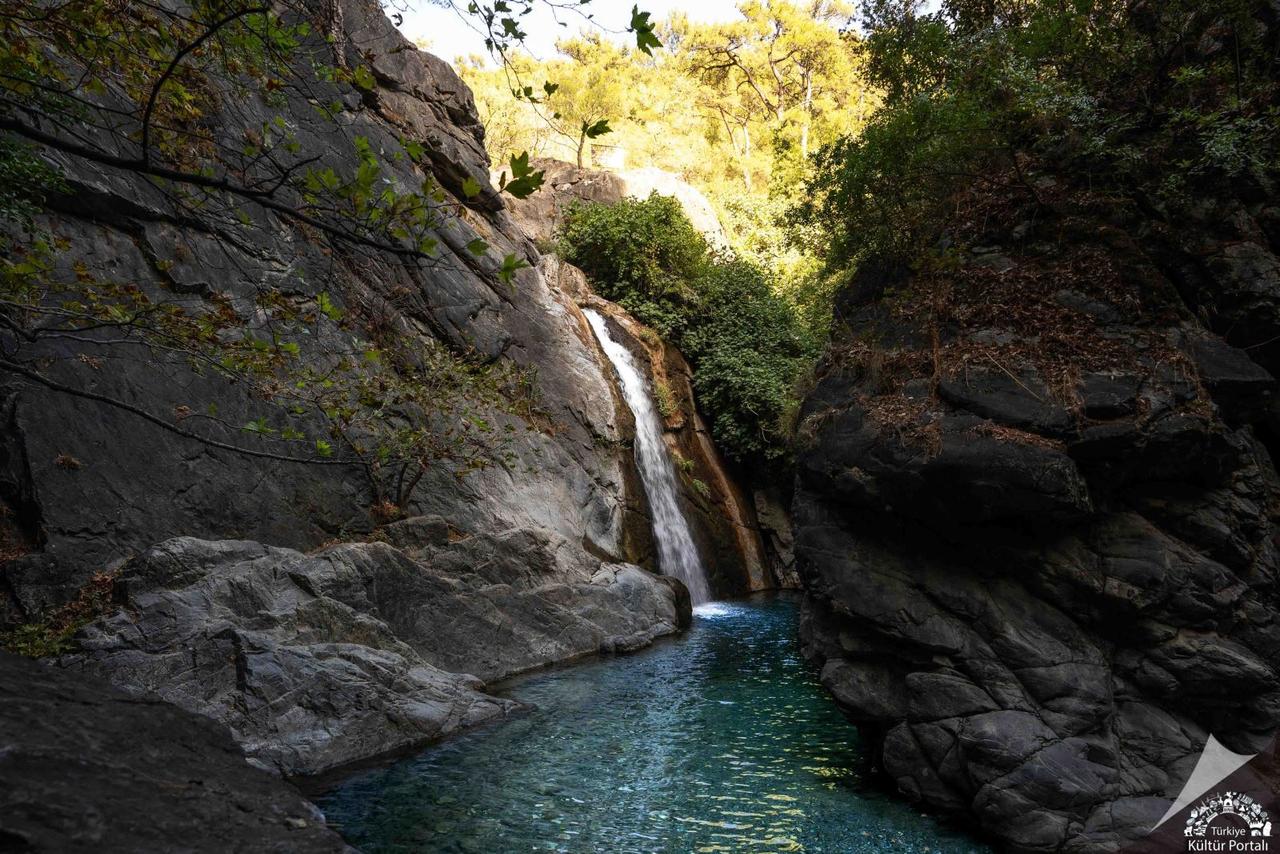
Kazdağı National Park
Location | Edremit / Balıkesir | ||||||||
|---|---|---|---|---|---|---|---|---|---|
Surface Area | 21,463 hectares | ||||||||
Climate(s) | Mediterranean and Marmara transition climate | ||||||||
Vegetation Cover | Pine Oak Maquis Types Kazdağı Fir (endemic) | ||||||||
Kazdağı National Park is located within the boundaries of the Edremit district of Balıkesir Province in Türkiye, on the southern part of the Biga Peninsula. The area was designated as a National Park on 17 April 1993 and covers an area of 21,463 hectares. The park is connected to Edremit by asphalt road 15 kilometers away and to Balıkesir by asphalt road 105 kilometers away. Within the park boundaries there is approximately 360 kilometers of forest road.

Kazdağı National Park (Balıkesir Provincial Directorate of Culture and Tourism)
Kazdağı, known in antiquity as Mount Ida, is the highest massif of the Biga Peninsula. Deep valleys and canyons extending in a north-south direction form the fundamental features of the region’s geomorphology. Particularly, the Şahindere Canyon, which is 27 kilometers long, lies at an average elevation of 600 meters. The area is notable for its oxygen-rich air currents and abundant water sources. Major natural water formations within the park boundaries include the Sütüven Waterfall, Hasanboğuldu Reservoir, and the Pınarbaşı spring area.
Kazdağı National Park stands out as an area of significant floristic and faunistic diversity. The forests on the southern slopes are sparsely distributed, while the forest cover on the northern side is denser. The region hosts maquis plant communities including laurel, cornel, myrtle, pine oak, holm oak, and wild olive. The most notable plant species is the Kazdağı Fir (Abies equi-trojani), which grows naturally only in this region. This tree, found at elevations of 1,000 to 1,500 meters, has been placed under special protection since 1988 when it was declared the “Kazdağı Fir Natural Protection Area.” The park also serves as an important habitat for predatory birds such as eagles, hawks, goshawks, kestrels, and crows, as well as for migratory and resident bird species.
Kazdağı and its surroundings were part of the ancient region of Mysia. Many civilizations including the Mysians, Carians, Trojans, Leleges, Lydians, Alexander the Great, the Kingdom of Pergamon, and the Roman Empire established settlements in the region. Ancient cities in the area include Antandros, Adramytteion, Thebe, Astria, Killa, Lyrnessos, and Krysa. The Antandros Ancient City is located within the park boundaries in the Altınoluk neighborhood and is protected as a first-degree archaeological site. Additionally, the region is home to Türkiye’s first village ethnography museum, located in Tahtakuşlar Village.
Kazdağı holds an important place in mythological narratives. As described by Homer as the “mountain of many springs and mother of wild beasts,” it is said in mythology to have hosted the first beauty contest of the world. In this contest, attended by Aphrodite, Hera, and Athena, Paris, son of King Priam of Troy, served as judge and chose Aphrodite as the winner. Additionally, the legends of Sarıkız and Hasanboğuldu originate from this region.
Within Kazdağı National Park, two day-use areas have been established: Pınarbaşı and Sütüven (Hasanboğuldu). In addition, the park features picnic areas, camping sites, restaurants, hiking trails, rock climbing zones, and a glass observation deck located above the Şahindere Canyon. The park also provides opportunities for nature observation and photography.

Roadside Maintenance and Forest Road Repairs (General Directorate of Forestry)
A master’s thesis conducted at Balıkesir University evaluated Kazdağı National Park and its surroundings as an area with potential for UNESCO Geopark status, based on its geological, geomorphological, hydrological, floristic, faunistic, cultural, historical, archaeological, and socio-economic values. In the event of a potential Geopark designation, it is recommended that current conservation policies be adapted for sustainable use, nature education centers be established, and collaborations be developed with the European and Global Geoparks Network.
Balıkesir Üniversitesi. "Kazdağı (Dağı)." *Kültür Portalı*. Accessed June 19, 2025. https://www.kulturportali.gov.tr/turkiye/balikesir/gezilecekyer/kaz-dagi-da-dagi.
Balıkesir Üniversitesi. "Kazdağı Milli Parkı ve Yakın Çevresinin UNESCO Kriterlerine Göre Jeopark Potansiyelinin Belirlenmesi ve Eğitim Amaçlı Kullanımı." Master's thesis, Balıkesir University Institute of Social Sciences, 2016. https://dspace.balikesir.edu.tr/xmlui/handle/20.500.12462/3019.
Balıkesir İl Directorate of Culture and Tourism. "Korunan Alanlar - Milli Parklar." Balikesir.ktb.gov.tr. Accessed June 19, 2025. https://balikesir.ktb.gov.tr/TR-65840/korunan-alanlar-milli-parklar.html.
Ministry of Environment, Urbanization and Climate Change of the Republic of Türkiye. "Kazdağları Milli Park Within Boundaries,Balıkesir İli,Edremit İlçesi,Altınoluk Mahallesi,Antandros Antik City First-Degree Archaeological Site 1:5000 Scale Conservation-Oriented Master Plan Notice." *tvk.csb.gov.tr*. Accessed June 19, 2025. https://tvk.csb.gov.tr/kazdaglari-milli-parki-sinirlari-icerisinde-bulunan-balikesir-ili-edremit-ilcesi-altinoluk-mahallesi-antandros-antikkenti-i.-derece-arkeolojik-sit-1-5000-olcekli-koruma-amacli-nazim-imar-plani-duyuru-428423.
T.C. Ministry of Agriculture and Forestry,BalıkesirOrman Yolu Directorate. "Kazdağı Milli Parkı İçerisinde Yürütülen Yol Kenarı Bakımlarını veOrman Bakanlığı Onarımlarını Müştereken Yerinde İncelediler." ogm.gov.tr. Accessed June 19, 2025. https://www.ogm.gov.tr/balikesirobm/haberler/kazdagi-milli-parki-icerisinde-yurutulen-yol-kenari-bakimlarini-ve-orman-yolu-onarimlarini-mustereken-yerinde-incelediler.

Kazdağı National Park
Location | Edremit / Balıkesir | ||||||||
|---|---|---|---|---|---|---|---|---|---|
Surface Area | 21,463 hectares | ||||||||
Climate(s) | Mediterranean and Marmara transition climate | ||||||||
Vegetation Cover | Pine Oak Maquis Types Kazdağı Fir (endemic) | ||||||||
No Discussion Added Yet
Start discussion for "Kazdağı National Park" article
Geographical and Natural Structure
Biodiversity and Ecosystem
Cultural and Archaeological Values
Mythological Elements
Usage Areas and Infrastructure
UNESCO Geopark Potential