This article was automatically translated from the original Turkish version.
+1 More
Location | Kamchatka Peninsula Russian Federation | ||||||||
|---|---|---|---|---|---|---|---|---|---|
Coordinate(s) | 54°35'N - 160°16'E | ||||||||
Elevation(s) | 1 856 metres | ||||||||
Volcano Type | Stratovolcano - Caldera | ||||||||
Caldera Diameter | 9 x 11 kilometres | ||||||||
Caldera Depth | 400 metres | ||||||||
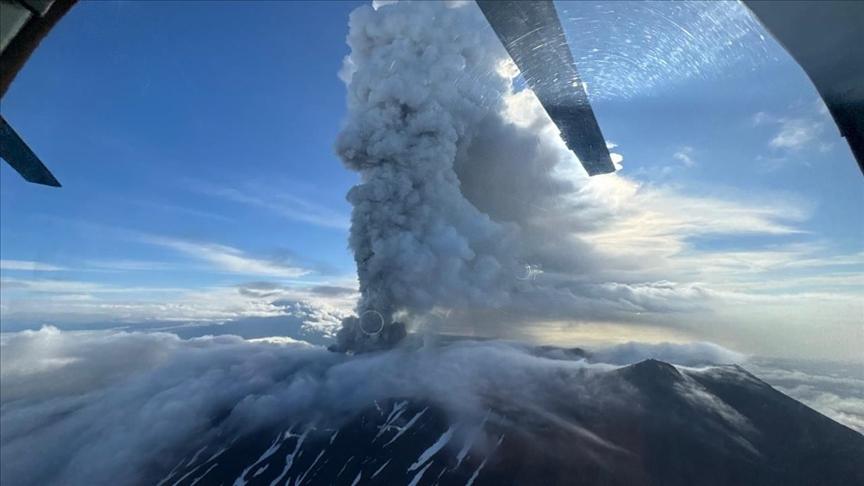
Krasheninnikov Volcano is an active stratovolcano located on the Kamchatka Peninsula in eastern Russia. Situated within the Eastern Kamchatka Volcanic Belt, the volcano became active again in 2025 after a hiatus of 600 years. Structurally composed of two main cones, the volcano is situated within a large caldera formed by collapse.
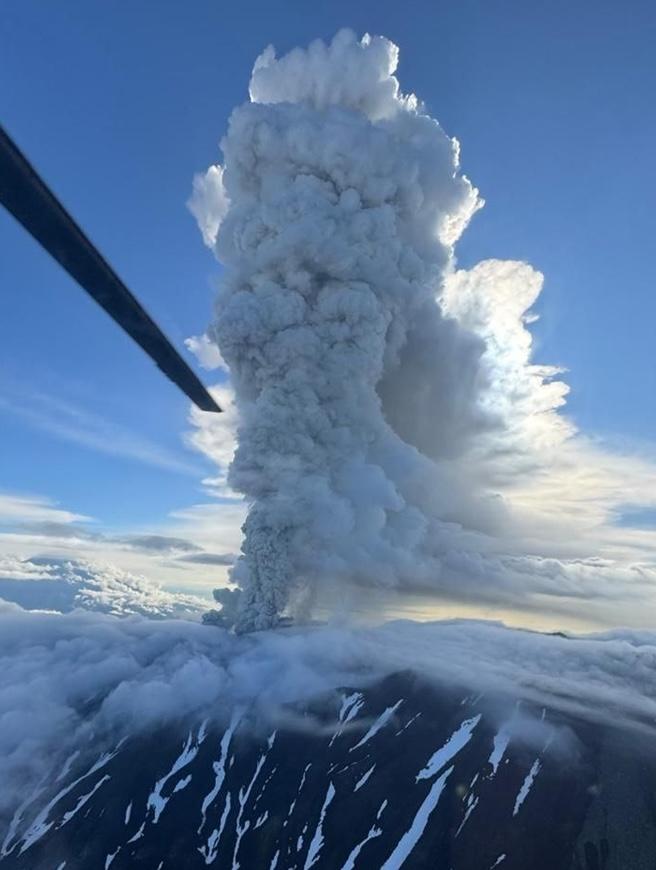
Krasheninnikov Volcano, 3 August 2025 - (Anadolu Ajansı)
Krasheninnikov Volcano is located in the center of the Kamchatka Peninsula, approximately 13 kilometers south of Lake Kronotskoye. The summit of the volcano reaches an elevation of 1,856 meters and lies within a collapse-originated caldera measuring 9 by 11 kilometers, dating back to the Pleistocene epoch. The volcanic complex consists of two adjacent main stratovolcano cones. The southern cone is crowned by a crater approximately 800 to 900 meters in diameter, while the northern cone is younger and exhibits a telescopic structure. Within the northern cone, smaller craters measuring 800 meters in diameter and lava cones have formed.
The caldera has a diameter of 9 kilometers and a depth of approximately 400 meters. The base of the volcano, formed by older volcanic structures, originally extended up to 30 kilometers in diameter but collapsed due to past large-scale eruptions. The volume of material erupted by the southern cone is estimated at approximately 15.5 km³, while that of the northern cone is about 10 km³. The volcanic rocks range from basalt to dacite, with basaltic-andesitic compositions being dominant.
The caldera of Krasheninnikov Volcano formed during a major eruption approximately 39,600 years ago. Activity of the southern cone occurred between 11,000 and 6,500 years ago, while activity of the northern cone took place between 6,400 and 2,000 years ago. A lava cone at the mid-level of the northern cone formed between 1,300 and 1,100 years ago, and the highest lava cone formed approximately 600 to 400 years ago. The eruption of the volcano in 1550 is documented as the last historically recorded eruption. No new eruptions were observed until 2025.
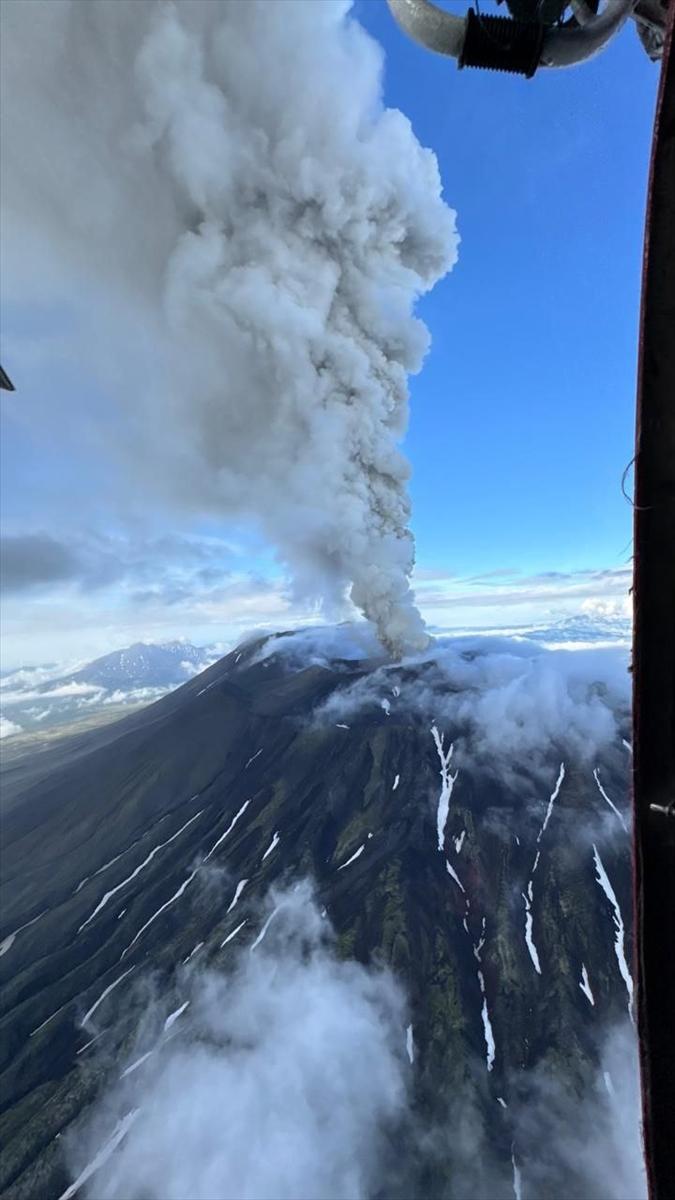
Krasheninnikov Volcano, 3 August 2025 - (Anadolu Ajansı)
On 30 July 2025, An earthquake of magnitude 8.8 occurred off the coast of Kamchatka occurred. The earthquake’s focal depth was determined to be approximately 20 to 35 kilometers. This tremor was recorded as the strongest earthquake in the region since 1952. Following the earthquake, aftershocks of magnitudes 6.9 and 6.3 occurred in the area, and tsunami warnings were issued.
Krasheninnikov Volcano became active on 3 August 2025. The ash cloud generated during the eruption reached heights of 4,000 to 6,000 meters and moved eastward toward the Pacific Ocean. Authorities confirmed that no populated areas lie along the ash cloud’s path and that no ashfall was detected in the region. An orange-level aviation hazard warning was issued for the volcano, and travel in its vicinity was prohibited.
The Kamchatka Ministry of Emergency Situations stated that no settlements or tourist groups were present in the area following the eruption. Officials from the Kronotsky Nature Reserve indicated that the terrain surrounding the volcano is covered with lava and scoria fields, eliminating any risk of fire. Personnel and infrastructure in the area were confirmed to be safe.
Olga Girina, Director of the Krasheninnikov Volcano Monitoring Center (KVERT), stated that the eruption marked the volcano’s first historically documented eruption. Geological assessments identified the proximity of the earthquake’s epicenter to the magma chamber and the fullness of the magma reservoir as the primary factors triggering the eruption.
Following the eruption, volcanic gas and ash emissions continued, but no lava flows or pyroclastic flows were observed. Scientific teams continue monitoring activities around the volcano and are intensifying research on the likelihood of new eruptions linked to ongoing volcanic activity.
Anadolu Ajansı. "Russia’s Krasheninnikov Volcano Erupts after 600 Years." Anadolu Ajansı, August 4, 2025. Accessed August 4, 2025. https://www.aa.com.tr/en/europe/russia-s-krasheninnikov-volcano-erupts-after-600-years/3649825.
Anadolu Ajansı. “Вулкан Крашенинникова в Камчатском крае РФ выбросил пепел на высоту до 4000 метров.” Accessed August 4, 2025. https://www.aa.com.tr/ru/%D0%BC%D0%B8%D1%80/%D0%B2%D1%83%D0128.
BBC News Русская служба. “Вулкан Крашенинникова на Камчатке извергся впервые за 500 лет.” BBC News Русская служба, August 3, 2025. Accessed August 4, 2025. https://www.bbc.com/russian/articles/cdj2d12keryo.
Kamchatsky-Krai.ru. “Вулкан Крашенинникова.” Accessed August 4, 2025. https://www.kamchatsky-krai.ru/geography/volcanoes/krasheninnikova.htm.
Smithsonian Institution. “Krasheninnikov.” *Global Volcanism Program*, Smithsonian Institution. Accessed August 4, 2025. https://volcano.si.edu/volcano.cfm?vn=300190.

Location | Kamchatka Peninsula Russian Federation | ||||||||
|---|---|---|---|---|---|---|---|---|---|
Coordinate(s) | 54°35'N - 160°16'E | ||||||||
Elevation(s) | 1 856 metres | ||||||||
Volcano Type | Stratovolcano - Caldera | ||||||||
Caldera Diameter | 9 x 11 kilometres | ||||||||
Caldera Depth | 400 metres | ||||||||
No Discussion Added Yet
Start discussion for "Krasheninnikov Volcano" article
Geographical Location and Morphological Structure
Geological History and Eruption Timeline
The 2025 Eruption
Impact of Seismic Activity
Eruption Event and Ash Emissions
Scientific Assessments