This article was automatically translated from the original Turkish version.
+2 More
Location | Kula-Salihli Türkiye Manisa | ||||||||
|---|---|---|---|---|---|---|---|---|---|
Area(s) | Approximately 2300 square kilometers | ||||||||
Feature(s) | Türkiye's first UNESCO-recognized geopark | ||||||||
Usage | Important center for geotourism and scientific research | ||||||||
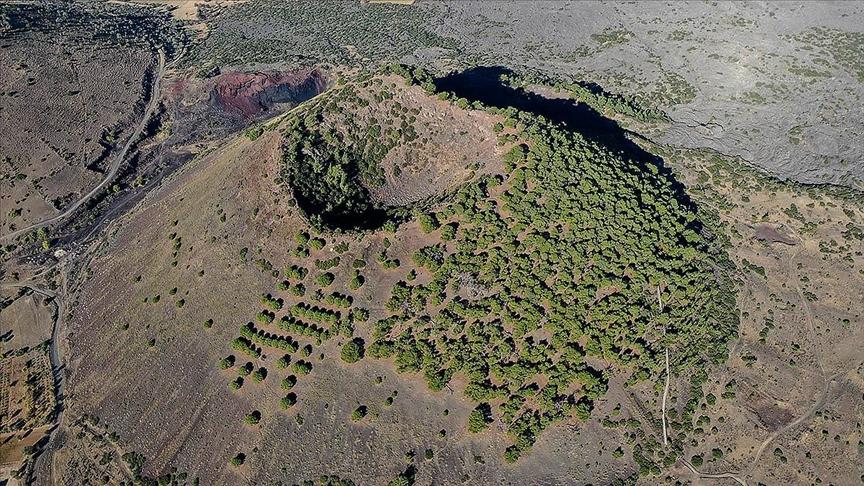
Kula-Salihli UNESCO Global Geopark is a geological and natural area located in the Manisa Province of Türkiye, covering approximately 2,230 km². It holds significance as Türkiye’s first and only UNESCO-designated geopark. The geopark possesses both scientific and touristic value due to its preservation of geological processes and its role as a host to various civilizations throughout history. Kula Geopark is one of Türkiye’s protected areas, characterized by its extensive volcanic structures, geomorphological formations and archaeological remains spread across a wide area.

Kula Geopark (AA)
The Kula Geopark is situated in the central section of the Gediz Graben in the Aegean Region and on the western edge of the Inner Western Anatolian Plateaus. It lies within the Alpine-Himalayan mountain-building belt and has been shaped by tectonic movements resulting from the collisions of the African-Arabian and Indian plates with the Eurasian plate. The geological structures in the region range from Paleozoic metamorphic rocks aged around 200 million years ago such as schist gneiss and serpentinite to prehistoric volcanic eruptions. This diversity demonstrates that the geological history of Kula Geopark spans a vast time period. Volcanic activity observed in the geopark began approximately 15 million years ago and continued into historical times. During this period, lava flows lava cones basalt columns and lava tuffs formed. The region is recognized as one of Türkiye’s youngest volcanic areas. Additionally the discovery of human footprints on volcanic tuffs in the Salihli region has enhanced the international scientific importance of Kula Geopark.
The area of Kula Geopark has hosted numerous civilizations throughout history. Archaeological remains from the Lydian Roman Byzantine and Ottoman periods are found within the region. The ancient city of Sardis the Temple of Artemis and the Bintepeler mounds are significant historical structures within the geopark boundaries. Furthermore the Homoerectus Valley where fossilized footprints from the Homo erectus period have been discovered provides important insights into the prehistoric era of the region.
The geopark area was named “Katakekaumene” (Burnt Lands) by the ancient geographer Strabo. This name was given in reference to the active volcanic areas in the region and is corroborated by historical sources as a reflection of its geological characteristics.

Kula Geopark (AA)
Kula Geopark is one of Türkiye’s leading destinations for geotourism. A total of 12 kilometers of thematic walking trails have been developed within the geopark. These trails are equipped with five observation decks ten viewing platforms Turkish and English directional signs and informational panels to enable visitors to closely observe the geological and natural richness of the area.
There are two visitor centers in the geopark: one located in the town center of Kula and the other in Çakırca Village. These centers serve to provide information to visitors and promote awareness of the region’s geological and cultural heritage.
Kula Geopark is managed in accordance with principles of conservation and sustainable use of its natural and cultural heritage. The region is actively protected by the Geopark Municipalities Union through environmental projects and initiatives against quarrying activities.
Bayram, Ahmet, and Kamil Altıparmak. “Yer Bilimcilerin Uğrak Noktası: ‘Yanık Ülke’.” Anadolu Ajansı, October 9, 2022. Accessed June 24, 2025. https://www.aa.com.tr/tr/kultur/yer-bilimcilerin-ugrak-noktasi-yanik-ulke/2706453.
Gül, Melike, and Bilge Villi. “Jeopark ve Jeoturizm Konulu Çalışmaların Bibliyometrik Analizi.” BAUNSOBED 27, no. 51-1 (2024): 197-210. Accessed June 24, 2025. https://dergipark.org.tr/en/download/article-file/3902616.
Gümüş, Erdal. “Kula UNESCO Jeoparkı.” Türkiye Turizm Ansiklopedisi, 2019. Accessed June 24, 2025. https://turkiyeturizmansiklopedisi.com/kula-unesco-jeoparki.
Jeopark Belediyeler Union. "Kula Bölgesi." Accessed June 24, 2025. https://jeoparkbelediyelerbirligi.com/s15_kula-bolgesi.aspx.
Kula-Salihli Jeoparkı. "Kula-Salihli UNESCO Global Geopark." Accessed June 24, 2025. https://kulasalihligeopark.com/.
TMMOB Jeoloji Mühendisleri Odası. “Bir Saldırı da Kula-Salihli Jeoparkı’na.” Jeoloji Mühendisliği Dergisi 19, no. 28 (December 2020): 14–15. Accessed June 24, 2025. https://www.jmo.org.tr/resimler/ekler/8bcbeccdfd1b5f4_ek.pdf.

Location | Kula-Salihli Türkiye Manisa | ||||||||
|---|---|---|---|---|---|---|---|---|---|
Area(s) | Approximately 2300 square kilometers | ||||||||
Feature(s) | Türkiye's first UNESCO-recognized geopark | ||||||||
Usage | Important center for geotourism and scientific research | ||||||||
No Discussion Added Yet
Start discussion for "Kula-Salihli UNESCO Global Geopark" article
Geological Features
Cultural and Historical Heritage
Geotourism and Visitor Infrastructure
Conservation and Sustainability