


This article was automatically translated from the original Turkish version.
+2 More
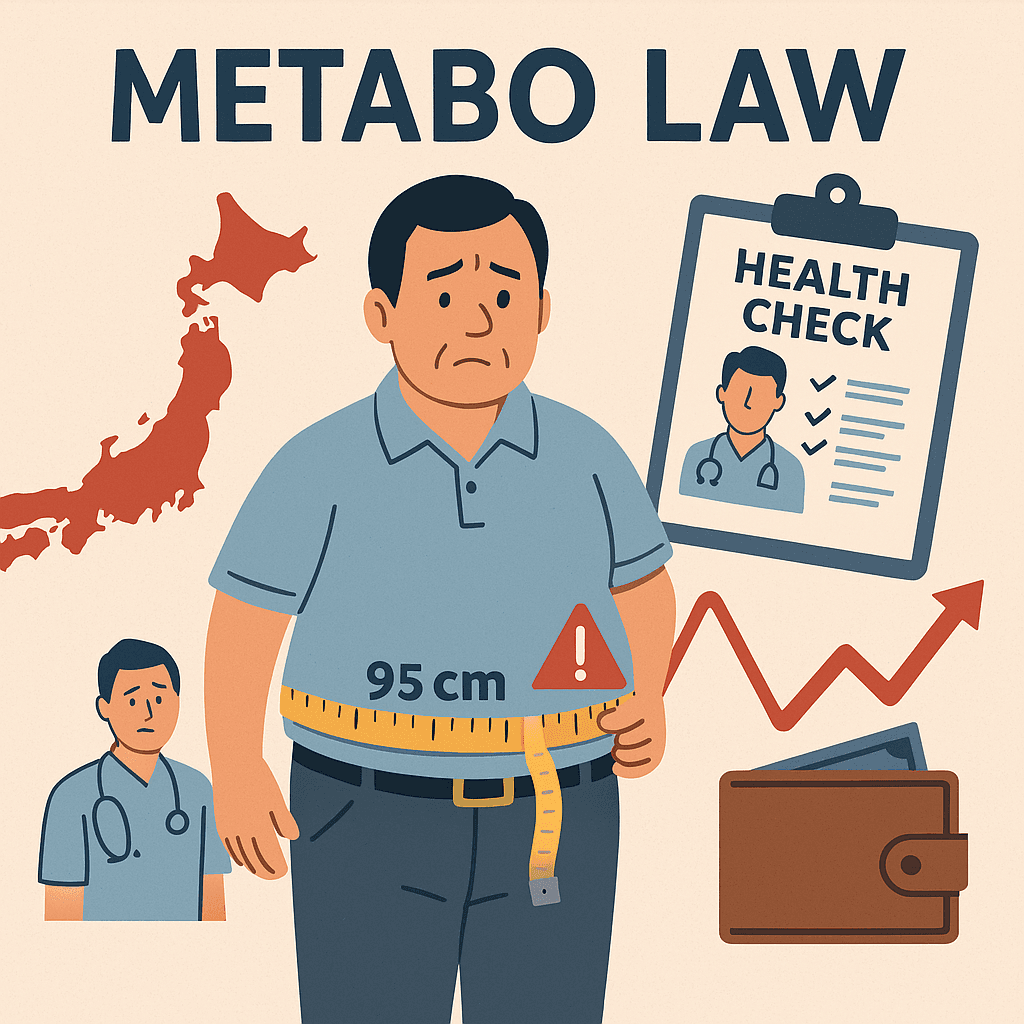
The Metabo Law is a public health policy that came into effect in 2008 in Japan and was known by this name between people. This regulation, implemented by the Ministry of Health, Work and Welfare, aims primarily to prevent metabolic syndrome through early detection. Under law, individuals aged 40 to 74 age are required to undergo annual health screenings, with waist circumference measurements serving as a key indicator.
Upper limits have been set at 85 cm for men and 90 cm for women; individuals exceeding these thresholds are referred to lifestyle counseling and follow-up programs. This approach has emerged as a preventive strategy to reduce the overall burden of obesity-related heart-vascular diseases, diabetes and hypertension like chronic conditions.
Video on the application of the law of metabolism. (CNN)
One of the law’s distinctive features is that it holds employers and local governments accountable rather than penalizing individuals directly. Organizations that fail to meet targets for improving the overall health of their employees may face financial sanctions. This incentive has encouraged employers to promote healthy lifestyles, leading to increased adoption of practices such as exercise promotion programs, healthy cafeteria menus, and health counseling.
On the other hand, over time this law has also sparked debate regarding individual freedoms and bodily autonomy. Some experts argue that the waist circumference criteria are not universally appropriate for all populations and that the policy may reinforce weight-based stigmatization. Nevertheless, Japan’s low obesity rates and successful public health outcomes continue to warrant careful examination of the law’s potential long-term benefits.
Under the Metabo Law, individuals in Japan between the ages of 40 and 74 are required to undergo annual health screenings. These screenings center on waist circumference measurement, a decisive factor in diagnosing metabolic syndrome. The threshold of 85 cm for men and 90 cm for women is recognized as an indicator of metabolic risk.
Individuals whose waist circumference exceeds these limits are presumed to be at risk for obesity-related chronic diseases and are directed toward free health counseling and lifestyle interventions. In this process, responsibility lies not only with individuals but also with institutions.
The law obligates the companies and local administrations to which individuals belong to monitor the health status of employees and implement necessary measures. These obligations are not merely advisory; institutions that fail to meet targeted health indicators face financial penalties, typically amounting to up to 10 percent of their current health insurance expenditures.
In this way, the law promotes healthy living not only at the individual level but also at the institutional level. This approach, which also seeks to ensure the financial sustainability of Japan’s social security system, has prompted companies to reshape their workplace-based health policies.
The primary purpose of the Metabo Law is to detect the growing number of metabolic syndrome cases in Japanese society at an early stage and prevent them from progressing into serious health issues such as diabetes, hypertension, and cardiovascular disease in the long term. Japan’s aging population and the resulting rise in healthcare costs have significantly influenced the government’s shift toward preventive health policies.
This law specifically targets middle-aged and older individuals, aiming to improve their quality of life while reducing the economic burden on the healthcare system. Thus, the Metabo Law is directly linked not only to individual health but also to systemic sustainability.
The outcomes of its implementation are striking. Japan has one of the lowest obesity rates among OECD countries, at around 3.6 percent. This situation is attributed not only to cultural factors but also to state-supported health screenings and lifestyle guidance. After the law’s implementation, many workplaces began offering employees healthy nutrition programs, exercise opportunities, and regular monitoring systems.
Therefore, the law has generated a multi-layered impact, ranging from individual behavior changes to the development of institutional health culture. However, it must not be forgotten that these outcomes cannot be explained solely by the law; genetic, cultural, and social factors have also played a significant role.
Although the Metabo Law is widely regarded as a rational initiative to protect public health, it has generated debate concerning individual right and freedoms. In particular, the application of fixed, universal waist circumference thresholds has been criticized as problematic for individuals with diverse body types.
Critics argue that such standardization overlooks individual differences and may transform medical guidance into a form of enforced “bodily norm.” In this context, the ethical boundaries of state surveillance imposed by the law have frequently been discussion as a topic of discussion.
The law’s potential negative effects have also been evaluated at social and psychological levels. Some experts warn that such policies may stigmatize overweight individuals, potentially increasing discrimination and social exclusion in the workplace.
The Metabo Law stands out as a notable example of Japan’s efforts to protect and improve public health. By offering a preventive, measurable, and institutionally responsibility-based approach to combating obesity and metabolic syndrome, it has transformed from a mere public health policy into a governance model. Despite its controversial aspects, it remains a practice worthy of emulation by other countries due to its documented data and outcomes.
Habertürk. “Japonlar Neden Obez Değil?” Accessed March 30, 2025. https://www.haberturk.com/stil/japonlar-neden-obez-degil-3688818.
STP Tax. "Metabo Law to Decrease Japan’s Obesity Rates." Accessed March 30, 2025. https://www.stptax.com/metabo-law.
Sandalcı, Ulvi. “Obezite ile Mücadelede Mali Cezalar: Japonya Örneği.” *Karadeniz Zirvesi 2. Uluslararası Sosyal Bilimler Kongresi.* Accessed March 30, 2025. https://www.researchgate.net/publication/335929175_OBEZITE_ILE_MUCADELEDE_MALI_CEZALAR_JAPONYA_ORNEGI
Teyit.org. "Japonya’da Kilolu Olmanın Yasak Olduğu İddiası." Accessed March 30, 2025. https://teyit.org/analiz/japonyada-kilolu-olmanin-yasak-oldugu-iddiasi.
Webtekno. "Japonya’daki Metabo Yasası Nedir?" Accessed March 30, 2025. https://www.webtekno.com/metabo-yasasi-h150191.html.
Work and Health (Substack). "What Can We Learn from Japan's Metabo Law?" Accessed March 30, 2025. https://workandhealth.substack.com/p/what-can-we-learn-from-japans-metabo.

Content and Implementation of the Law
Purpose and Effects of the Law
Criticism and Debates