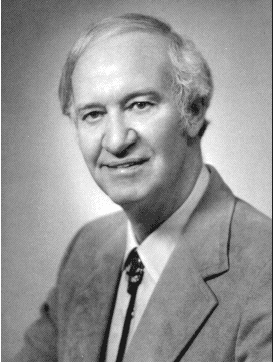
Doğum tarihi | 1913-08-24 | ||||||||
|---|---|---|---|---|---|---|---|---|---|
Ölüm tarihi | 1997-11-27 | ||||||||
Citizenship | American | ||||||||
Profession(s) | Educator Academician | ||||||||
Known Works | Informal Adult Education (1950), The Modern Practice of Adult Education: From Pedagogy to Andragogy (1970), The Adult Learner: A Neglected Species (1973), Self-Directed Learning (1975), Andragogy in Action (1984), Using Learning Contracts (1986) | ||||||||
Malcolm Shepherd Knowles (1913–1997) is one of the most influential theorists of adult education in the 20th century. He pioneered the systematic development and dissemination of the concept of andragogy, meaning adult education, within Anglo-American educational literature. Through both theoretical and practical work, he made significant contributions to shaping lifelong learning policies.
Malcolm S. Knowles was born on 24 August 1913 in Montana, United States. His father, Nathaniel Knowles, was a health inspector, and his mother, Hulda Knowles, was a homemaker. After completing high school at Palm Beach High School, Knowles was admitted to Harvard University, where he earned a bachelor’s degree in history in 1934. During his university years, his interest in learning and human development deepened, influencing his later focus on adult education.
After university, he worked for the Young Men’s Christian Association (YMCA). In the 1940s, he pursued graduate studies at the University of Chicago, where his interest in adult learning intensified. In 1946, he assumed leadership of the Department of Adult Education at the University of North Carolina. In 1974, he served as a professor at Emory University, where he taught graduate courses in adult education.
Knowles was married to Hulda Fornell Knowles. The couple had two children. He died on 27 November 1997 in Florida.
Throughout his life, Malcolm Knowles authored numerous works on adult education, learner-centered approaches, self-directed learning, and learner autonomy. Some of his key publications include:
Many of these works continue to serve as reference points in both academic literature and applied educational programs.
The term andragogy, originally used in the 19th century by German educator Alexander Kapp in the context of adult education, reemerged in Europe during the 1920s, particularly through the work of Lindeman. Malcolm Knowles systematized this concept within the Anglo-American context. His theory emphasizes principles such as the adult learner’s active participation in the learning process, experiential learning, readiness to learn, and intrinsic motivation.
His major contributions include:
Cooke, James C. *Malcolm Shepherd Knowles, the Father of American Andragogy: A Biographical Study*. PhD thesis, University of North Texas, 1994. Accessed August 14, 2025. https://digital.library.unt.edu/ark:/67531/metadc278013
Knowles, Malcolm S. *The Modern Practice of Adult Education: From Pedagogy to Andragogy*. Accessed August 14, 2025. https://colllearning.info/wp-content/uploads/2019/03/The-Modern-Practice-of-Adult-Education.pdf
Knowles, Malcolm S. “The Modern Practice of Adult Education: Andragogy Versus Pedagogy.” *ERIC (Education Resources Information Center)*. Accessed August 14, 2025. https://files.eric.ed.gov/fulltext/ED084368.pdf
Merriam, Sharan B. “Andragogy and Self-Directed Learning: Pillars of Adult Learning Theory.” *New Directions for Adult and Continuing Education* 89 (Spring 2001): 3–14. Accessed August 14, 2025. https://citeseerx.ist.psu.edu/document?doi=c7ad53c5f69a32606f4fe7d6b5c5e8ab384c4b4c&repid
Syracuse University Libraries. “Malcolm S. Knowles Papers.” Special Collections Research Center, Syracuse University. Accessed August 14, 2025. https://library.syracuse.edu/special-collections-research-center/university-archives

Doğum tarihi | 1913-08-24 | ||||||||
|---|---|---|---|---|---|---|---|---|---|
Ölüm tarihi | 1997-11-27 | ||||||||
Citizenship | American | ||||||||
Profession(s) | Educator Academician | ||||||||
Known Works | Informal Adult Education (1950), The Modern Practice of Adult Education: From Pedagogy to Andragogy (1970), The Adult Learner: A Neglected Species (1973), Self-Directed Learning (1975), Andragogy in Action (1984), Using Learning Contracts (1986) | ||||||||
No Discussion Added Yet
Start discussion for "Malcolm Shepherd Knowles" article
Life and Education
Major Works
Academic and Conceptual Contributions
Application Areas
Criticisms