

This article was automatically translated from the original Turkish version.
+2 More
Registration Number | 1334 | ||||||||
|---|---|---|---|---|---|---|---|---|---|
Registration Date | 07.02.2023 | ||||||||
Application Number | C2021/000299 | ||||||||
Application Date | 03.08.2021 | ||||||||
Name of the Geographical Indication | Manisa Grape Leaf | ||||||||
Type of the Geographical Indication | Place of Origin | ||||||||
Applicant/Registrant(s) | Manisa Provincial Directorate of Agriculture and Forestry | ||||||||
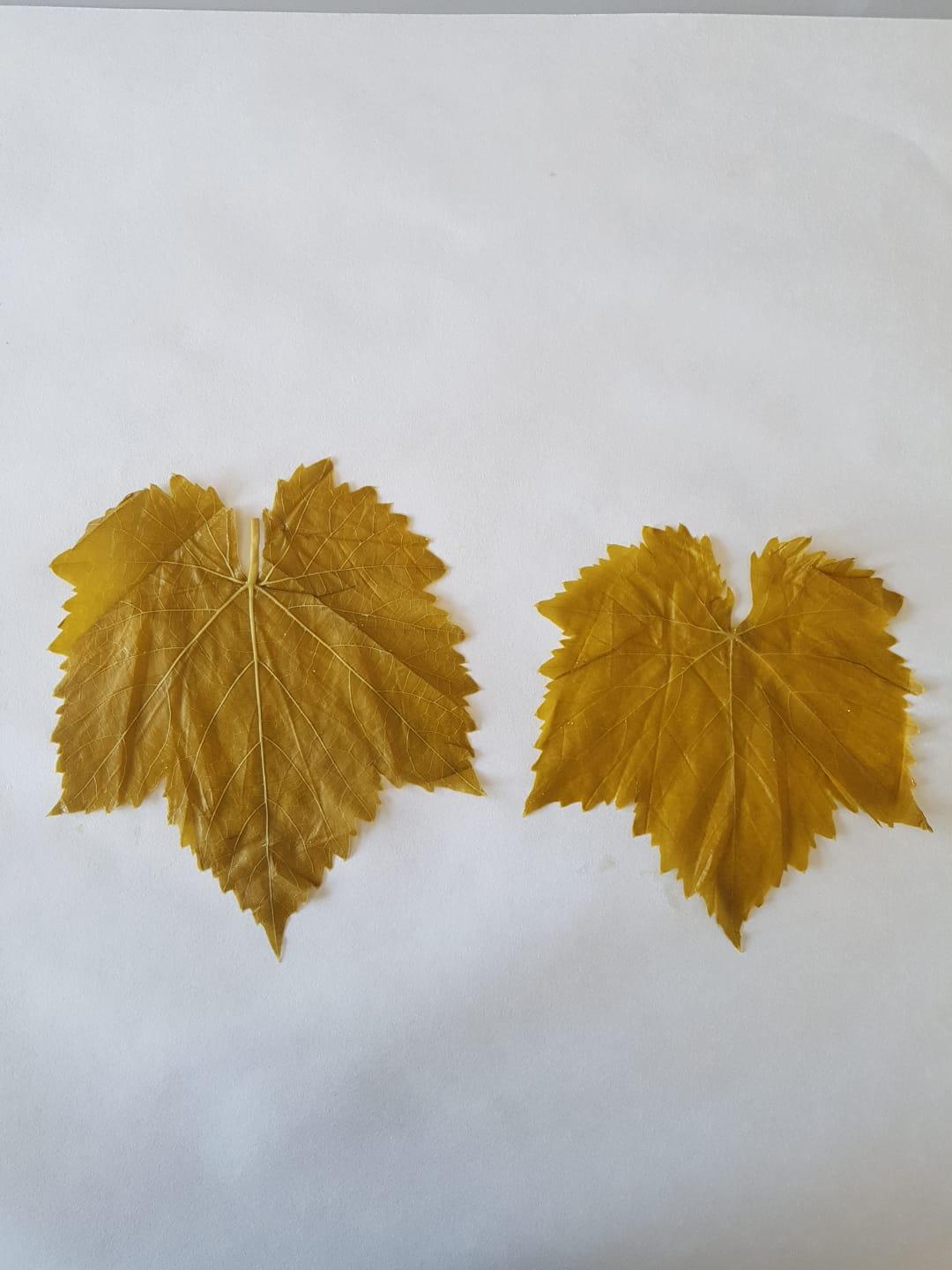
Manisa grape leaf is a geographical indication-registered (origin name) pickled grape leaf product unique to Türkiye’s Manisa province. It was registered on 7 February 2023 under Law No. 6769 on Industrial Property and registered by the Manisa Directorate of Agriculture and Forestry. The registration number is 1334.
Manisa grape leaf is cultivated across a wide geographical area encompassing the districts of Ahmetli, Akhisar, Demirci, Gölmarmara, Gördes, Kırkağaç, Köprübaşı, Kula, Salihli, Sarıgöl, Saruhanlı, Selendi, Soma, Şehzadeler, Turgutlu and Yunusemre.
This product is made from leaves harvested from Manisa Sultani seedless grape vines. The leaves are green in color, thin-textured, mostly veinless or with minimal veining, and lack lobes. The pickling process contains 8–15% salt (NaCl) and 0.1% citric acid (lemon salt). After this process, the leaves acquire a yellow-green hue.
The history of viticulture in Manisa extends back to antiquity. The region exhibits a transitional climate between Mediterranean and continental types, with hot dry summers and wet winters. The annual average temperature is 17.5 °C and the annual precipitation is 713.6 mm. Particularly during the leaf harvesting period, low humidity and high sunlight exposure ensure the leaves develop the desired color, minimal veining and lack of pubescence.
Phenolic compound: Average 14.25 mg GAE/g
Flavonoid compound: Average 6.79 mg CE/g
Mineral content: Rich in iron (Fe), zinc (Zn), calcium (Ca), potassium (K), magnesium (Mg) and manganese (Mn).
Physical characteristics: Leaf width ranges from 9–22 cm and length from 12–24 cm.
Inspections are conducted by a commission composed of representatives from the Manisa Vineyard Research Institute, Manisa Chamber of Commerce and Manisa Chamber of Agriculture, under the coordination of the Manisa Directorate of Agriculture and Forestry. Inspections are carried out at least once annually to verify compliance with geographical indication requirements.
The viticulture culture in Manisa dates back to antiquity. The Gediz Plain has been historically known as the “Vineyard Plain” and “Lydia’s Golden Plain.” Grape and leaf motifs frequently appear in stone carvings from the ancient period.
Turkish Patent and Trademark Office. "Manisa Asma Yaprağı – Coğrafi İşaret Detayı" (No. 4762). Accessed July 13, 2025. https://ci.turkpatent.gov.tr/cografi-isaretler/detay/4762
Turkish Patent and Trademark Office. *Manisa Asma Yaprağı: Coğrafi İşaret Tescil Belgesi*. Accessed July 13, 2025. https://ci.turkpatent.gov.tr/Files/GeographicalSigns/9cc431ef-8614-4e49-82ef-0eed0d02368c.pdf

Registration Number | 1334 | ||||||||
|---|---|---|---|---|---|---|---|---|---|
Registration Date | 07.02.2023 | ||||||||
Application Number | C2021/000299 | ||||||||
Application Date | 03.08.2021 | ||||||||
Name of the Geographical Indication | Manisa Grape Leaf | ||||||||
Type of the Geographical Indication | Place of Origin | ||||||||
Applicant/Registrant(s) | Manisa Provincial Directorate of Agriculture and Forestry | ||||||||
Geographical Distribution
Definition and Distinguishing Characteristics
Climate and Growing Conditions
Component Properties
Production and Processing Stages
Inspection
Cultural and Historical Significance