This article was automatically translated from the original Turkish version.
Type of Geographical İndication | Place of Origin | ||||||||
|---|---|---|---|---|---|---|---|---|---|
Registration Number | 1227 | ||||||||
Registration Date | 21.09.2022 | ||||||||
Product / Product Group(s) | Processed and unprocessed fruits vegetables and mushrooms | ||||||||
Province(s) | Muğla | ||||||||
Applicant/Registrant(s) | Marmaris Municipality | ||||||||
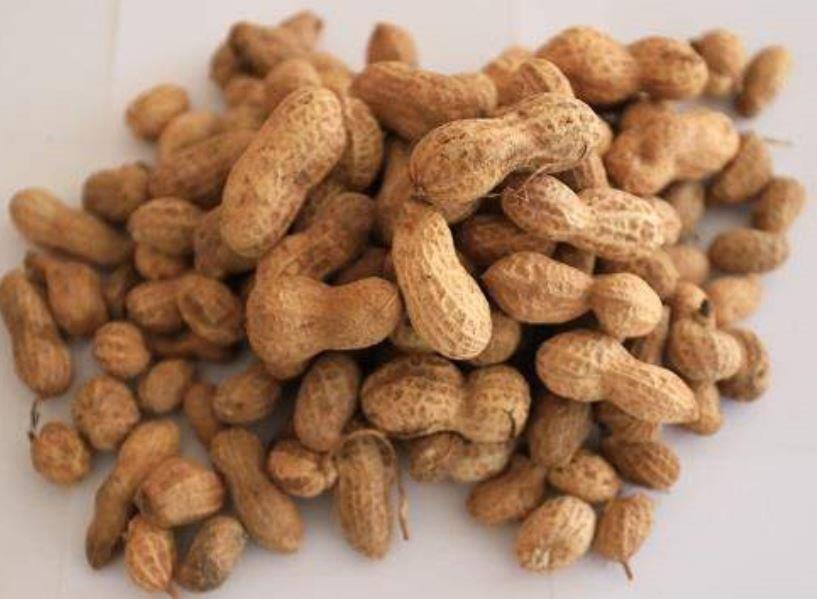
Marmaris peanut is a product derived from the plant species Arachis hypogaea L., cultivated in the Marmaris district of Muğla Province, and consumed either raw in shell or as dried nuts. This peanut is an annual warm-climate plant belonging to the legume family and is classified among Türkiye’s oilseed crops. Its hard-shelled fruits contain 50–60 percent oil. Marmaris’s well-drained, loose, sandy-loamy, and reddish terra-rosa soils facilitate seed set and contribute to the peanuts’ large size and pinkish hue. The seeds measure 17–27 mm in length and 9–12 mm in width.
Marmaris peanut is a geographical indication registered on 21 September 2022 by the Turkish Patent and Trademark Office under registration number 1227, following an application submitted by the Marmaris Municipality on 16 December 2021. Protection under Law No. 6769 on Industrial Property commenced as of 16 December 2021. The geographical boundary of the product is limited to the Marmaris district of Muğla Province. According to the registration certificate, the term “Marmaris peanut” and the geographical indication emblem must be visibly displayed on product packaging or within the production facility.
Peanuts can be planted as a main crop or a secondary crop; however, crop rotation is recommended to achieve optimal yields. Sowing occurs when soil temperature reaches 15°C, typically in April, at a rate of 10 kg of seed per hectare. Seeds are planted with row spacing of 70 cm, intra-row spacing of 15–25 cm, and at a depth of 15–25 cm. Plants develop strong root systems in soils with a ridge height of 30–40 cm. Soil preparation begins in autumn with plowing to a depth of 20–25 cm, followed by cultivation with a harrow in spring. In secondary crop planting, the field is prepared for sowing after the harvest of the preceding crop.
Irrigation is critical and must be aligned with the plant’s water requirements. The first irrigation occurs one month after sowing, the second 40–50 days later, and irrigation ceases 20 days before harvest. Sprinkler or furrow irrigation is preferred, particularly during fruit development, to maintain consistent soil moisture. Fertilization is carried out at sowing based on soil analysis results for nitrogen, potassium, and calcium requirements. Weed control is performed by hand weeding; weeding is halted once ginophore formation begins.
Harvest takes place 4–6 months after sowing, when leaves turn yellow and the kernels develop a pink hue and reach full size. Harvesting is done manually or mechanically; uprooted plants are left to dry upside down in the field for three days. The harvested product is dried under technical and hygienic conditions until moisture content falls below 9 percent. Mechanical dryers may also be used to assist drying.
The product must be stored in dry, cool, and odor-free environments. Shelled peanuts must be stored at moisture content not exceeding 9 percent, while in-shell peanuts must not exceed 7 percent. Damaged or moldy peanuts are separated, and pest control is conducted in accordance with applicable regulations. Inspections are carried out at least once annually under the coordination of the Marmaris Municipality, with participation from the Marmaris Chamber of Commerce and the District Directorate of Agriculture and Forestry. Additional inspections may be conducted in response to complaints.
Marmaris peanut is distinguished by its large size and pinkish coloration. The fruits develop underground; flowers self-pollinate and form pods via ginophores. The product is presented to consumers in packaging compliant with food regulations and is protected under its geographical indication status.
Turk Patent and Trademark Office. "Marmaris Yer Fıstığı." Turk Patent and Trademark Office. Accessed October 19, 2025. https://ci.turkpatent.gov.tr/Files/GeographicalSigns/5e38cbc1-c58f-49aa-a83c-c39e299f305c.pdf
Turk Patent and Trademark Office. "Marmaris Yer Fıstığı." Turk Patent and Trademark Office. Accessed October 19, 2025. https://ci.turkpatent.gov.tr/cografi-isaretler/detay/5684

Type of Geographical İndication | Place of Origin | ||||||||
|---|---|---|---|---|---|---|---|---|---|
Registration Number | 1227 | ||||||||
Registration Date | 21.09.2022 | ||||||||
Product / Product Group(s) | Processed and unprocessed fruits vegetables and mushrooms | ||||||||
Province(s) | Muğla | ||||||||
Applicant/Registrant(s) | Marmaris Municipality | ||||||||
History and Registration Process
Cultivation and Production
Harvest and Processing
Storage and Inspection
Characteristics and Uses