


This article was automatically translated from the original Turkish version.
+1 More
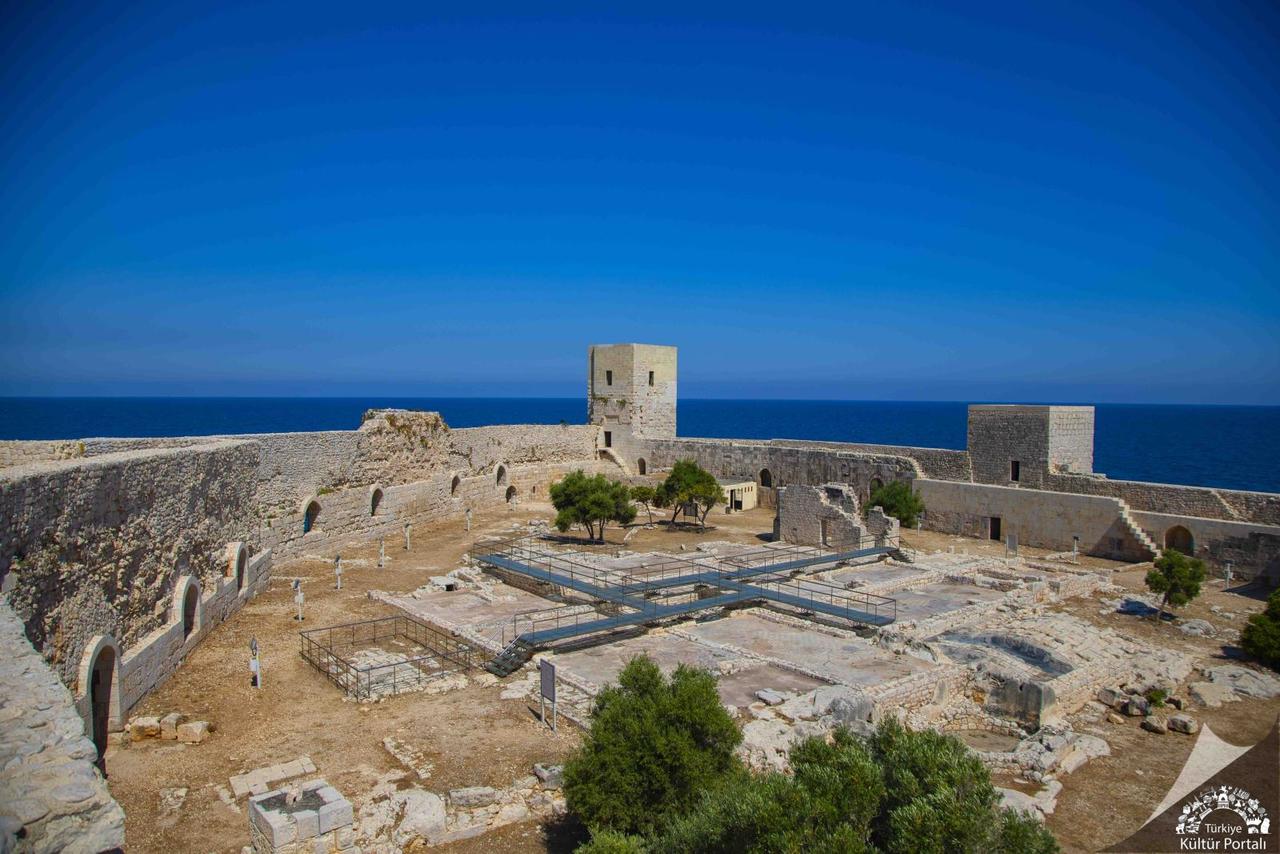
Kız Kalesi, also known as Deniz Kalesi, is situated on a small islet approximately 600 metres off the coast of Kızkalesi Village in the Erdemli district of Mersin. small serves as the symbol of the neighbourhood and is located 60 kilometres southwest of Mersin. According to historical sources, the castle was built in 1199 by I. Leon; this date is derived from an inscription on the castle itself. Additionally, according to Herodotus, city, it was founded by the Cypriot Korykos. Korykos first appeared during the Hellenistic period, reached its golden age under Roman rule, and even minted coins in its own name during the 1st century BCE.

Kız Kalesi (Culture Portal)
The history of Kız Kalesi is rooted in the region’s rich past. According to Strabo, during the Roman period pirates used the castle as a refuge. The castle was also valued by Byzantine and Armenian administrations, and was regarded as a defensive link with the mainland Korykos Castle. In 1099, I. Alexios commissioned the construction of the mainland castle to Eustatios Megas Drungarios, while I. Leon built Kız Kalesi in 1199. In 1361 the castle was captured by the Kingdom of Cyprus and remained in use during the Lusignan period. It was conquered in 1448 by Karamanoğlu II. Ibrahim and passed to Ottoman Empire in 1473–74.
Korykos came under Roman rule in 80 BCE and passed under the control of King Archelaus of Cappadocia in 20 BCE. During the Roman and Byzantine periods, Korykos was a major port city. By the 6th century it became a bishopric under the Antakya Patriarchate. In the 7th century the city fell under Sassanid and Arab rule, and during the 9th–10th centuries it was incorporated into the Theme of Seleukeia. In 1275, during the reign of Mamluk Sultan Baybars, the city gained prominence through its saffron production. In 1329, after the murder of the last ruler of the Hetumid dynasty, Osin, it came under the rule of IV. Leon.

Kız Kalesi (Culture Portal)
Kız Kalesi was constructed using spolia and rubble stones; the use of rubble stones is likely attributable to the Lusignan period. The castle is surrounded by curtain walls 192 metres in length, featuring arrow slits and incorporating eight towers of triangular, quadrangular and circular shapes. A well-preserved gallery runs along the western wall, ending in a door opening toward the sea. The castle’s entrance is located on the north side.
Mersin Archaeology Museum excavations revealed a building is not possible to provide a meaningful translation for the single word "yapı" without additional context. In Turkish, "yapı" can mean:- building - structure - construction - organization (in abstract contexts) Please provide the full sentence or paragraph for an accurate and context-appropriate translation. complex in the central area of the castle. The chapel within this complex is older than the other chapel in the castle courtyard and is notable for its mosaic floor and opus sectile pavement. The mosaic floor bears an inscription in five lines within a circular hair pattern, while another inscription is located on the west at the corner. The surrounding square planar rooms open into the central hall, and the floor slopes upward toward the north. The castle courtyard also contains cisterns and workshops. In the city of Korykos, the harbour gate, large and small temples, churches, colonnaded streets, the northern gate, baths such as and other architectural remains reflect the city’s diversity. Water aqueducts and canals transporting water from the Lamas River were also part of the city’s infrastructure.

Kız Kalesi (Culture Portal)
Kız Kalesi is associated with a legend: “Once there was a king who consulted a soothsayer to learn his beloved daughter’s future. Upon learning that she would die from a snakebite, the king had this castle built in the sea to protect her. Believing he had secured her safety, he sent his daughter a basket of fruit. Hidden inside the basket, however, was a snake that bit and killed the princess.” A similar version of this legend is told for Istanbul’s Kız Kulesi.
Kız Kalesi can be reached by water transport from Mersin. The castle lies 150 metres offshore in the blue waters of the East Mediterranean, within the boundaries of the coast village of holiday. Visitors can reach the castle by swimming, by small passenger boats, or by oar. Together with the mainland Korykos Castle, it forms a prominent “two-castle” destination.

History
Architectural Features
Legend of Kız Kalesi
Access