


This article was automatically translated from the original Turkish version.
+2 More
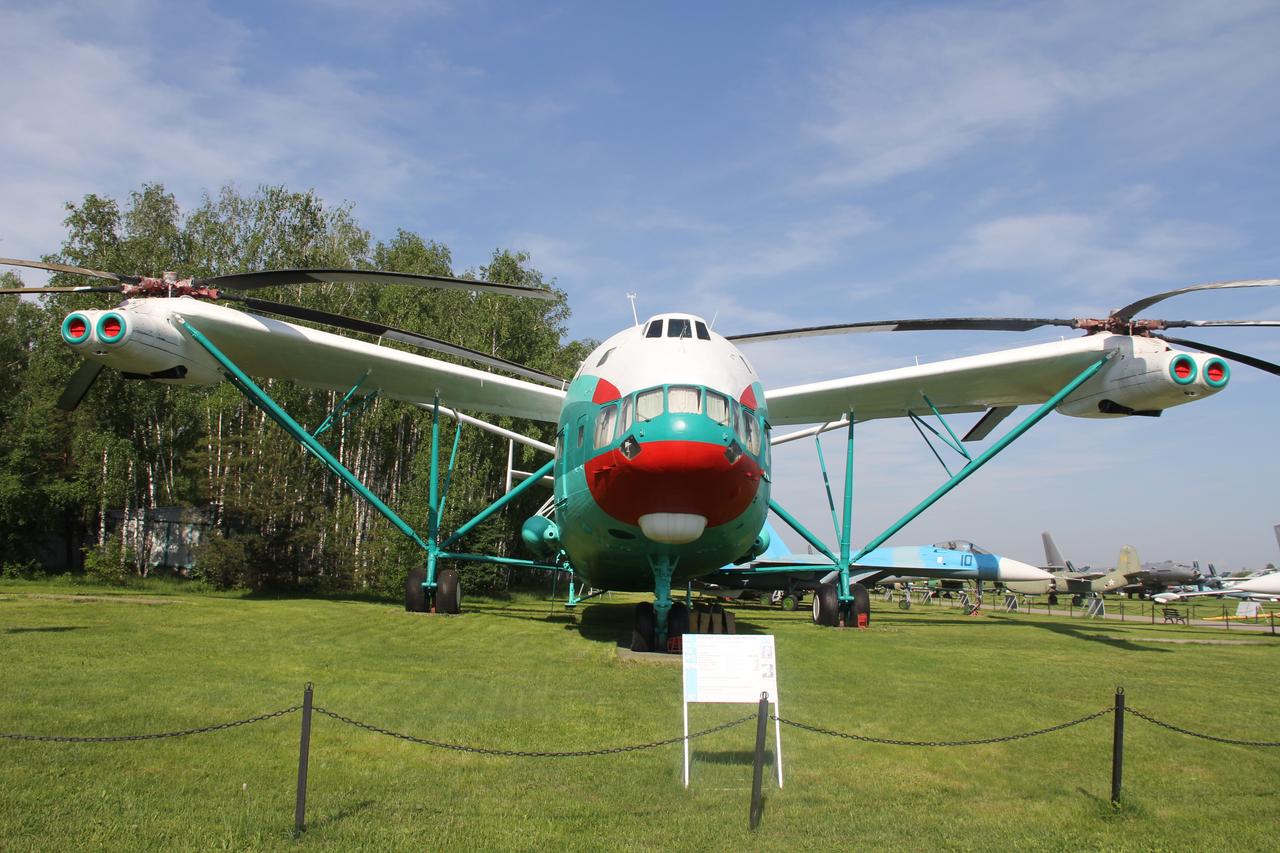
Mil V-12 (Flickr)
Range(s) | 500 km | ||||||||
|---|---|---|---|---|---|---|---|---|---|
Length(s) | 37 Meters | ||||||||
Engine(s) | 4x Turboshaft | ||||||||
Manufacturer(s) | Mill Bureau | ||||||||
Status | Cancelled | ||||||||
Type(s) | Heavy Transport | ||||||||
Origin(s) | Soviet Union | ||||||||
First Flight(s) | 1968 | ||||||||
Maximum Speed | 260 km/h | ||||||||
Payload Capacity | 40 Tons | ||||||||
Wingspan | 67 Meters | ||||||||
Crew | 6 People | ||||||||
Production Number | 2 Prototypes | ||||||||
The Mil V-12 is a heavy-lift aircraft developed in the mid-1960s by the Mil Moscow Helicopter Plant in the Soviet Union and holds the distinction of being the largest and heaviest helicopter ever built. Designated by NATO with the codename "Homer," this aircraft remained at the prototype stage and never entered serial production. Its design objective was to transport strategic military payloads such as intercontinental ballistic missiles (ICBMs) to remote areas lacking runway infrastructure and to achieve a payload capacity equivalent to the Antonov An-22 cargo aircraft.
The Mil V-12 project was initiated in 1965 in response to a requirement from the Soviet Air Force for a vertical takeoff and landing (VTOL) aircraft capable of carrying heavy missile components.【1】 Soviet officials sought an aircraft with the same payload capacity as the Antonov An-22 in terms of weight and volume but without the need for runways, enabling direct transport from source locations to launch sites or hard-to-reach regions such as Siberia. Engineers initially considered a tandem rotor system similar to the Boeing CH-47 Chinook but ultimately settled on a transverse configuration, with rotors mounted on wingtips extending from either side of the fuselage, due to technical limitations and stability concerns.
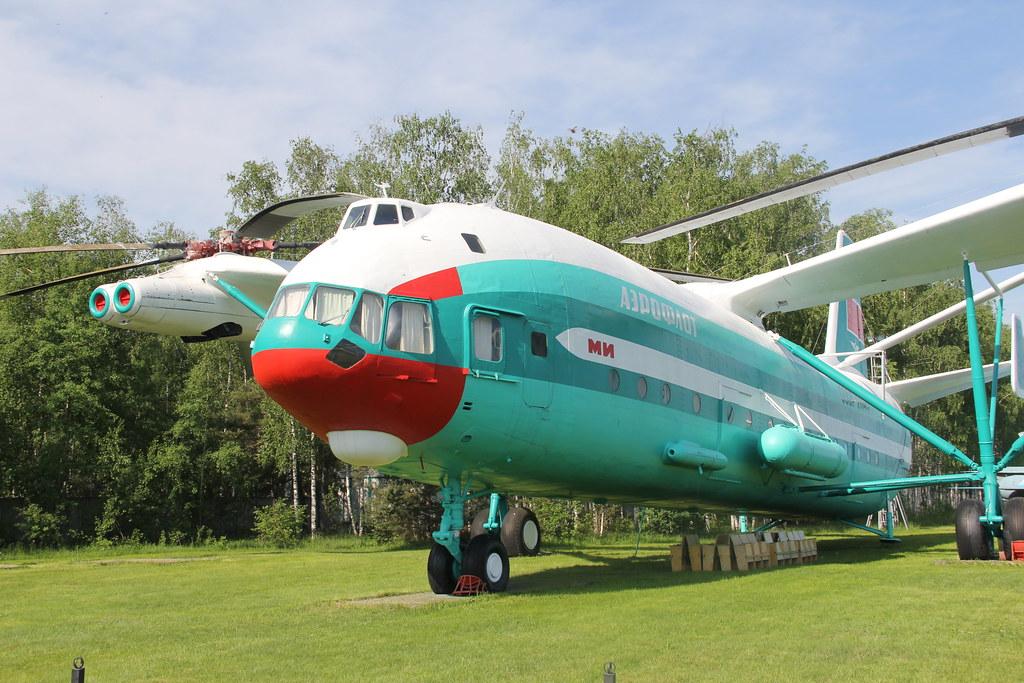
Mil V-12 (Flickr)
The Mil V-12's design exhibits characteristics more akin to a fixed-wing aircraft than a conventional helicopter. Its fuselage is constructed as a semi-monocoque metal structure with dimensions closely matching the internal volume of the Antonov An-22.
The Mil V-12 is regarded as an engineering marvel far ahead of its time, given its massive size and lifting capacity.
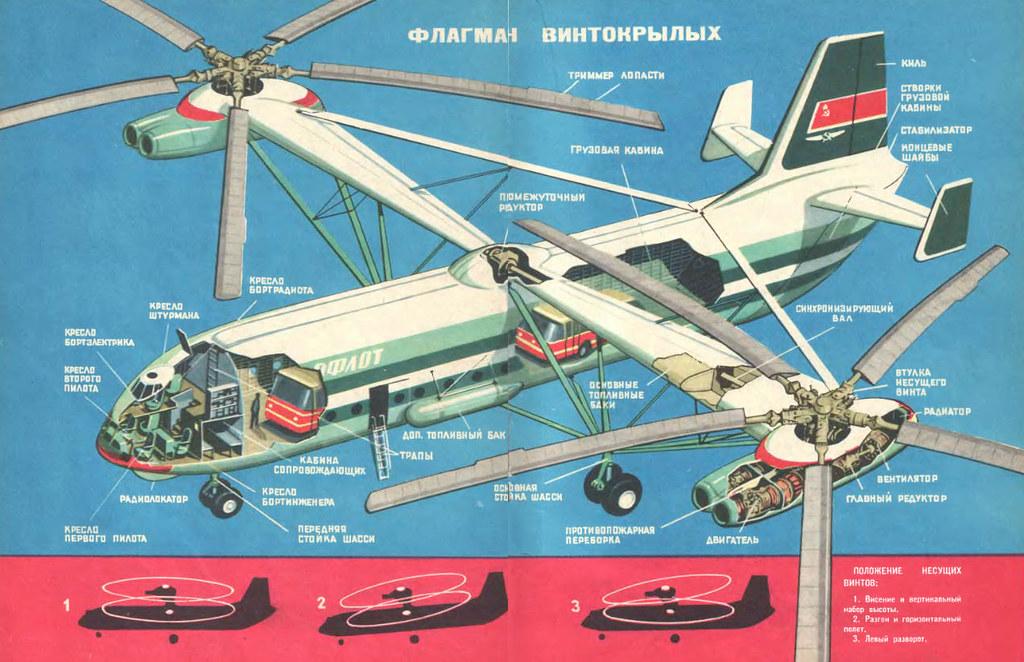
Mil V-12 (Flickr)
Despite its short operational lifespan, the Mil V-12 set aviation records that remain unbroken to this day.
Mil V-12 (Youtube)
Despite its technical achievements, the Mil V-12 project never progressed to serial production and was terminated in 1974. Key factors leading to its cancellation include:
Of the two prototypes built, one is on display at the Monino Air Force Museum in Russia, while the other remains at the Mil factory near Moscow.
Accessed November 26, 2025.
Accessed November 26, 2025.
Aircraft Recognition Guide. "Mil V-12." Aircraft Recognition Guide, Accessed February 19, 2026.
Aviastar.org. "Mil V-12 helicopter - development history, photos, technical data." Aviastar.org, Accessed February 19, 2026.
Aydoğdu, Erhan. "İlginç Uçaklar – Mil V-12." Göklerdeyiz.net, 2016. Accessed February 19, 2026.
Finlay, Mark, Jake Hardiman, Alexander Mitchell, and Dr. Omar Memon. "Mil V-12: The Story Of The Largest Helicopter Ever Built." Simple Flying, June 12, 2024. Accessed February 19, 2026.
Mustard. "This Insane Helicopter Was The Largest Ever Built: The Mil V-12 Story." YouTube, n.d. Accessed February 19, 2026.
Vasters, Clemens. "Mil V-12/Mi-12 | Biggest Helicopter ever built." Flickr, June 1, 2013. Accessed February 19, 2026.
Vertical Flight Society. "Mil V-12." Vertipedia, n.d. Accessed February 19, 2026.
Wigley, Tom. "Mil Mi-12 Homer or V-12." Flickr, January 13, 2010. Accessed February 19, 2026.
Çeyrek Mühendis. "Rekortmen Helikopter: Mil V-12." Çeyrek Mühendis, June 1, 2021. Accessed February 19, 2026.
[1]
Aviastar.org. "Mil V-12 helicopter - development history, photos, technical data." Aviastar.org, Erişim: 19 Şubat 2026.
[2]
Aircraft Recognition Guide. "Mil V-12." Aircraft Recognition Guide, Erişim: 19 Şubat 2026.
[3]
Finlay, Mark, Jake Hardiman, Alexander Mitchell ve Dr. Omar Memon. "Mil V-12: The Story Of The Largest Helicopter Ever Built." Simple Flying, 12 Haziran 2024. Erişim: 19 Şubat 2026.
https://simpleflying.com/mil-v-12-largest-ever-helicopter-story/
[4]
Aviastar.org. "Mil V-12 helicopter - development history, photos, technical data." Aviastar.org, Erişim: 19 Şubat 2026.
[5]
Aviastar.org. "Mil V-12 helicopter - development history, photos, technical data." Aviastar.org, Erişim: 19 Şubat 2026.
[6]
Finlay, Mark, Jake Hardiman, Alexander Mitchell ve Dr. Omar Memon. "Mil V-12: The Story Of The Largest Helicopter Ever Built." Simple Flying, 12 Haziran 2024. Erişim: 19 Şubat 2026.
https://simpleflying.com/mil-v-12-largest-ever-helicopter-story/

Mil V-12 (Flickr)
Range(s) | 500 km | ||||||||
|---|---|---|---|---|---|---|---|---|---|
Length(s) | 37 Meters | ||||||||
Engine(s) | 4x Turboshaft | ||||||||
Manufacturer(s) | Mill Bureau | ||||||||
Status | Cancelled | ||||||||
Type(s) | Heavy Transport | ||||||||
Origin(s) | Soviet Union | ||||||||
First Flight(s) | 1968 | ||||||||
Maximum Speed | 260 km/h | ||||||||
Payload Capacity | 40 Tons | ||||||||
Wingspan | 67 Meters | ||||||||
Crew | 6 People | ||||||||
Production Number | 2 Prototypes | ||||||||
Development Process and Historical Context
Design and Aerodynamic Structure
Technical Specifications and Powerplant
Performance and Records
Project Cancellation and Current Status