

This article was automatically translated from the original Turkish version.
Type of Geographical İndication | Mahreç Sign | ||||||||
|---|---|---|---|---|---|---|---|---|---|
Registration Number | 1209 | ||||||||
Registration Date | 06.09.2022 | ||||||||
Product / Product Group(s) | Meals and soups | ||||||||
Province(s) | Muğla | ||||||||
Applicant/Registrant(s) | Milas Chamber of Commerce and Industry | ||||||||
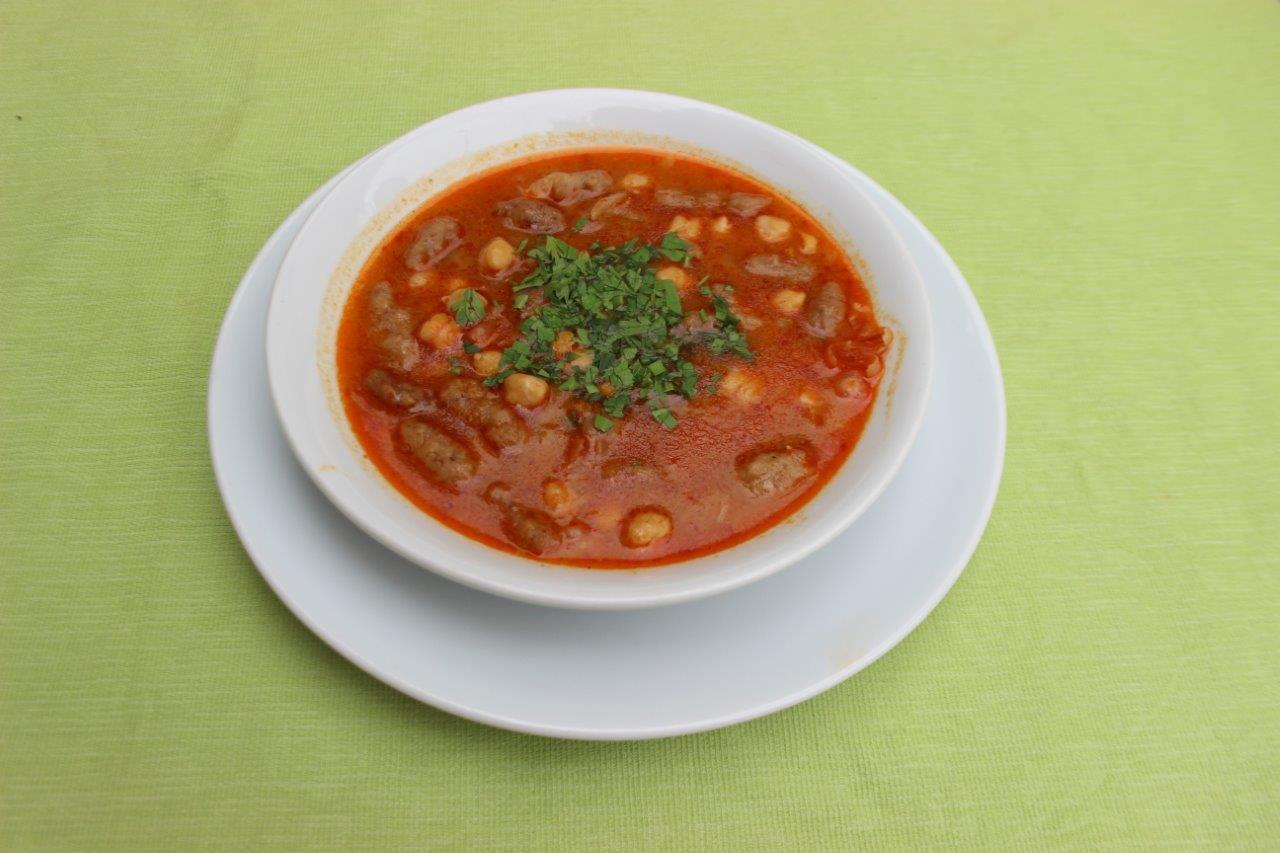
Milas ekşili köfte reflects the richness of Aegean cuisine, characterized by olive oil and fresh ingredients, as a dish unique to the Milas district of Muğla. This flavor, registered as a geographical indication under Law No. 6769 on Industrial Property, was granted protected status on 6 September 2022 following an application submitted on 20 August 2021. The registration was carried out by the Milas Chamber of Commerce and Industry and ensures that the dish is produced only within Milas boundaries using traditional methods.
The origins of Milas ekşili köfte are rooted in the district’s deep culinary heritage. Traditionally served at weddings, mevlit ceremonies, and other communal gatherings, this dish holds an important place in Milas’s social life. The region’s agricultural abundance and widespread use of olive oil form the foundation of its character. Its official protection since 6 September 2022 marks a critical step in preserving Milas’s culinary heritage and transmitting it to future generations.
Milas ekşili köfte is produced in two stages: preparation of the meatballs and cooking of the dish. The ingredients for the meatballs are as follows:
In preparation, finely grated onion is mixed with the ground beef, salt, black pepper, and flour. Hands are oiled with olive oil to prevent the dough from sticking. Kneading is completed when the onion is no longer distinguishable. The dough is divided into 100 gram portions, rolled on a floured board to a thickness of 1–1.5 cm, shaped into spindle-like forms measuring 2.5–3 cm in length, and arranged on a floured tray. The meatballs are fried in 150 ml of hot olive oil, then drained; if needed, they may be stored in a deep freezer after cooling.
The following ingredients are used for cooking the dish:
The onions are sautéed in olive oil until golden, then tomatoes, tomato paste, pepper paste, and hot water are added and brought to a boil. Boiled chickpeas and fried meatballs are added, and the mixture is simmered over medium heat for approximately 30 minutes until the meatballs soften. Crushed garlic is beaten with lemon juice and stirred into the dish, which is then brought to a final boil. It is served with parsley leaves garnished on top.
The meatballs are spindle-shaped, 1–1.5 cm thick and 2.5–3 cm long, with a sour flavor derived from lemon juice and garlic. Production is restricted to within the geographical boundaries of Milas and cannot be replicated outside these limits. Inspections are conducted annually or upon complaint, coordinated by the Milas Chamber of Commerce and Industry, in collaboration with experts from the Milas District Directorate of Agriculture and Forestry and Muğla Sıtkı Koçman University. These inspections verify compliance with ingredient standards, adherence to traditional production methods, and correct use of the geographical indication mark.
Milas ekşili köfte reveals the culinary identity of Milas through its simple yet meticulous preparation. Its geographical indication status preserves its cultural heritage while ensuring standardization.
Turk Patent and Trademark Office. "Milas Ekşili Köfte Geographical Indication Certificate." *Geographical Indications Portal.* Accessed October 19, 2025. https://ci.turkpatent.gov.tr/Files/GeographicalSigns/19cf4fb2-76b3-49fa-85b2-17438df43064.pdf.
Turk Patent and Trademark Office. "Milas Ekşili Köfte." Coğrafi İşaretler Portalı. Accessed October 19, 2025. https://ci.turkpatent.gov.tr/cografi-isaretler/detay/4862.

Type of Geographical İndication | Mahreç Sign | ||||||||
|---|---|---|---|---|---|---|---|---|---|
Registration Number | 1209 | ||||||||
Registration Date | 06.09.2022 | ||||||||
Product / Product Group(s) | Meals and soups | ||||||||
Province(s) | Muğla | ||||||||
Applicant/Registrant(s) | Milas Chamber of Commerce and Industry | ||||||||
History and Cultural Significance
Ingredients and Preparation
Characteristics and Inspection