
This article was automatically translated from the original Turkish version.
Milas liver kebab is a traditional kebab variety produced by frying calf liver in olive oil in the Milas district of Muğla Province. This dish holds an important place in Milas’s culinary culture and traditions. It was registered as trademark No. 1594 by the Milas Chamber of Commerce and Industry. The registration was completed on 28 May 2024 under Law No. 6769 on Industrial Property and is protected as of 12 August 2022.
In production, fresh calf liver obtained daily from calves raised in Milas and fed on straw of cereals such as wheat barley rye and triticale along with alfalfa corn sorghum or corn silage is used. Ready-made feeds such as sugar beet pulp are not included in the diet. Additionally olive oil extracted from memecik olives with an acidity level of no more than 1 is preferred.
The liver is cleaned of membranes and blood vessels then cut into pieces measuring 2–3 cm² in size 0.5 cm in thickness and 3–4 cm in length. It is heated in a pan at a temperature of 120–130°C with olive oil and continuously stirred with a wooden spoon for no more than five minutes. Salt is added after cooking as adding salt at the beginning may cause the liver to become tough. The liver is served hot and is not reheated before serving.
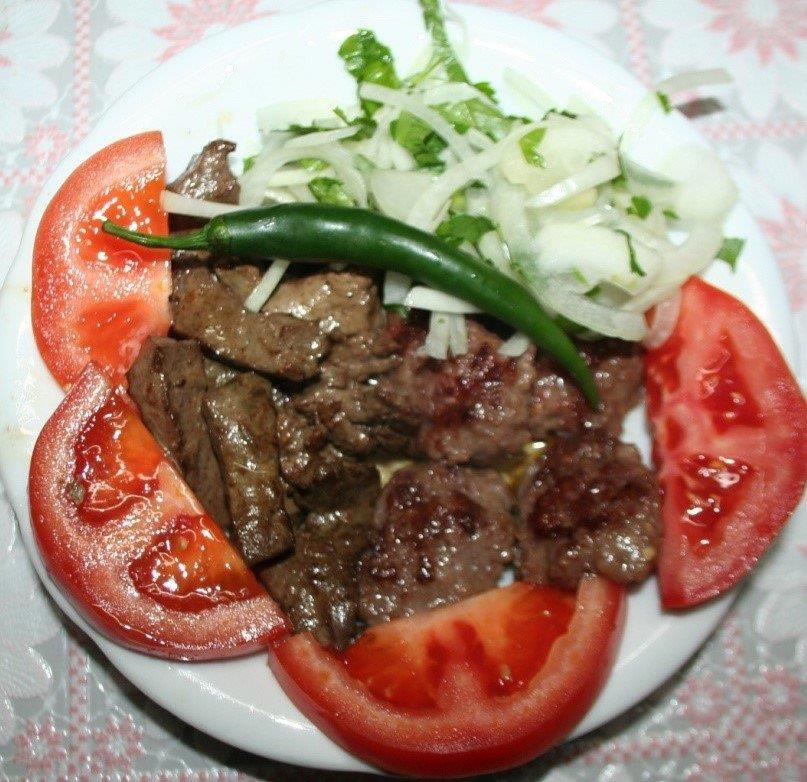
Milas liver kebab is served on porcelain plates with thinly sliced dried onion coarsely chopped parsley sliced tomato and two or three chili peppers. Traditionally it is served alongside pide bread baked in wood-fired stone ovens in Milas. It may be accompanied by cumin hot and sweet red pepper flakes and black pepper.
The entire production process takes place within the boundaries of the Milas district. Inspections are conducted once a year by a four-member commission composed of representatives from the Milas District Directorate of Agriculture and Forestry the Milas Vocational School of Culinary Arts at Muğla Sıtkı Koçman University and the Milas Food Producers and Sellers Chamber under the coordination of the Milas Chamber of Commerce and Industry. Additional inspections are carried out when necessary or upon complaint.
Turk Patent and Trademark Office. "Milas Ciğer Kavurması Mahreç İşareti Tescil Belgesi." Turk Patent and Trademark Office. Accessed October 19, 2025. https://ci.turkpatent.gov.tr/Files/GeographicalSigns/c49f44a5-90c7-4228-9bf3-fde07d81b523.pdf.
Turk Patent and Trademark Office. "Milas Ciğer Kavurması" Turk Patent and Trademark Office. Accessed October 19, 2025. https://ci.turkpatent.gov.tr/cografi-isaretler/detay/7324.

Ingredients and Production Method
Serving Style
Geographical Boundary and Inspection