

This article was automatically translated from the original Turkish version.
Location | Easter Island (Rapa Nui) Chile | ||||||||
|---|---|---|---|---|---|---|---|---|---|
Civilization | Rapa Nui People (Polynesian origin) | ||||||||
Construction Date(s) | AD 1000–1600 | ||||||||
Number of Moai on the Island | Approximately 900–1000 | ||||||||
Material(s) | Volcanic Tuff Stone (mostly) Basalt | ||||||||
Place They were Moved to | From Rano Raraku Crater to Coastal Areas | ||||||||
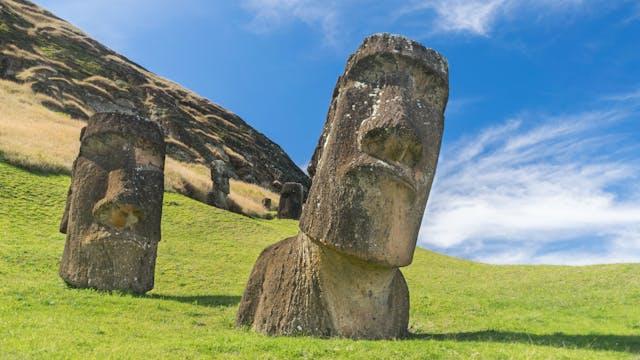
Moai are monumental statues carved from volcanic rock, located on Rapa Nui (Easter Island), an isolated Pacific island belonging to Chile. They were constructed by the Rapa Nui people between AD 1000 and 1600. It is currently estimated that nearly 1,000 moai exist on the island. The majority of these statues are positioned along the island’s coastline with their backs facing the sea and their faces turned inland. This arrangement reflects their symbolic role in the local belief system as representations of ancestors.
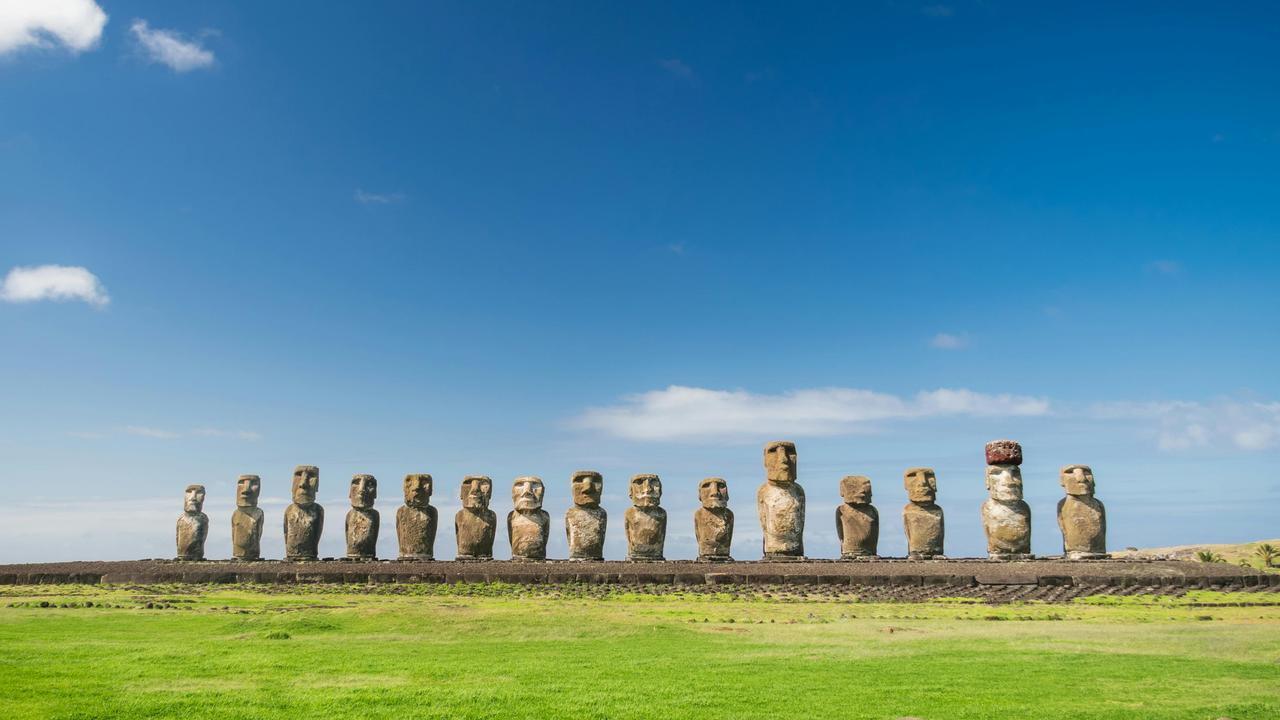
Concrete Statues Under the Blue Sky (Pexels)
Moai statues were primarily carved from tuff, a compacted volcanic ash, at the volcanic crater of Rano Raraku. Some examples were made from harder stones such as basalt. The statues typically range in height from 4 to 10 metres and have an average weight of approximately 10 to 12 tons. However, some specimens exceed 80 tons. The largest unfinished moai, known as “El Gigante,” is estimated to be about 21 metres long and weigh between 200 and 270 tons.
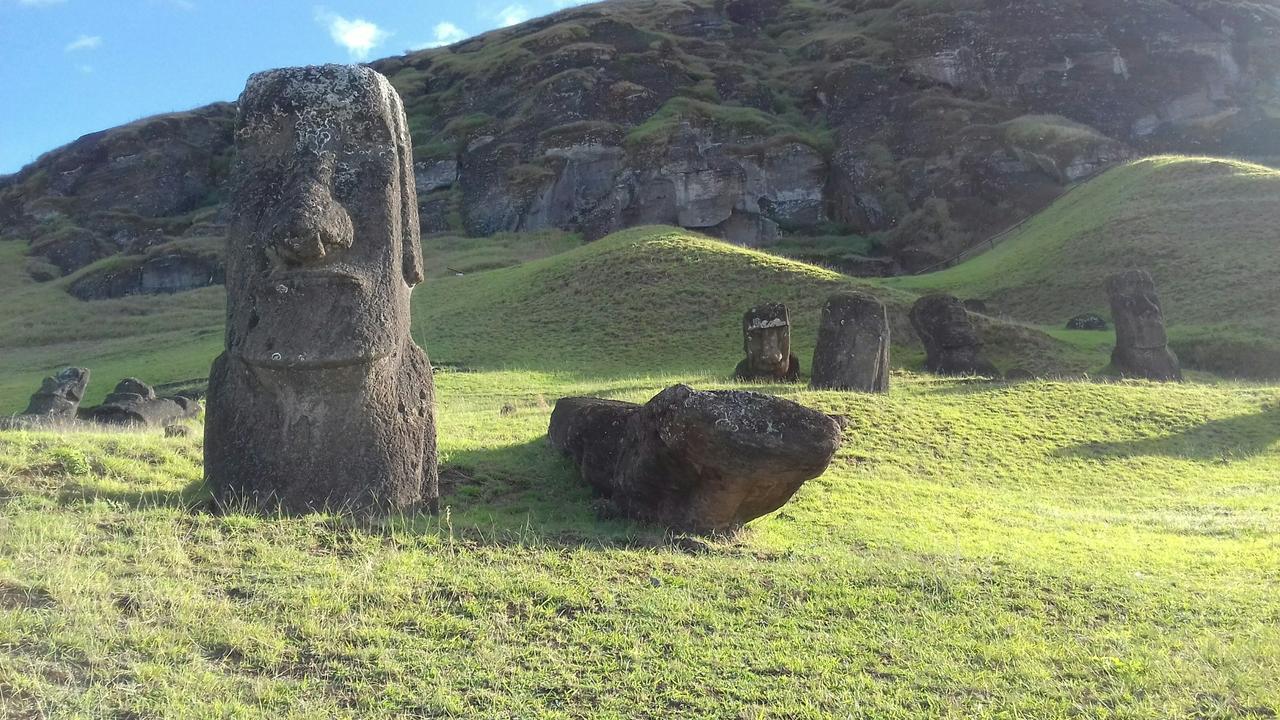
Moai (Unsplash)
The transportation and erection of the statues have been the subject of various theories. Traditional explanations suggest that moai were moved by sliding them on wooden logs or by using specialized rocking or walking techniques while maintaining an upright position. Alternative theories propose that unfinished moai were transported using different methods before completion.
Moai were placed on stone platforms called ahu. These platforms typically served as ceremonial spaces. Archaeological excavations around ahu have revealed evidence of burials and cremation remains, suggesting that the moai were part of a cultic practice honoring ancestors.
The moai were regarded by the Rapa Nui people as “aringa ora,” meaning “living faces.” It is believed that they represented important figures in society, whose spirits resided within the statues and protected the community. Some statues had eyes made of coral and obsidian inserted into their eye sockets. The cylindrical red stone caps placed on top of their heads are called “pukao” and are thought to symbolize topknots of hair.
Today, the moai statues face multiple threats including coastal erosion caused by climate change, rising sea levels, and wildfires. A major fire in 2022 caused “irreparable damage” to hundreds of moai in the Rano Raraku region. Cracks forming on the stone surfaces increase the risk of structural collapse due to long-term exposure to rainfall.
Some moai statues removed from Easter Island in the 19th century and taken to European museums are now at the center of cultural ownership debates. For instance, the Rapa Nui local government has formally requested the return of the moai “Hoa Hakananai’a” and “Moai Hava” displayed at the British Museum, and discussions have begun between the museum and the island community.
Travel to the Moai Statues of Rapa Nui (Easter Island) (Art History) (KhanAcademyTurkce)
Collaboration between the local community, academic research teams, and international institutions is underway to preserve the moai statues. The Rapa Nui community emphasizes that the statues hold not only archaeological but also cultural and spiritual significance. Research conducted on the statues aims to generate knowledge about past civilizations while ensuring the protection of cultural heritage.
British Museum. “Moai.” The British Museum. Accessed May 26, 2025. https://www.britishmuseum.org/about-us/british-museum-story/contested-objects-collection/moai.
Enomoto, Livia. “İnsan Kafası Oluşumu.” Unsplash. Accessed May 26, 2025. https://unsplash.com/photos/human-head-formation-rNLucmInugQ.
Gonzalez, Diego. “Beton Heykeller Mavi Gökyüzü Altında.” Pexels. Accessed May 26, 2025. https://www.pexels.com/photo/concrete-statues-under-the-blue-sky-14379466/.
Gonzalez, Diego. “Peyzaj, Manzara, Kırsal Bölge, Arazi.” *Pexels*. Accessed May 26, 2025. https://www.pexels.com/tr-tr/fotograf/peyzaj-manzara-kirsal-bolge-arazi-14545823/.
Işık, Ali Özden. “Paskalya Adası Moai Heykelleri: İnşa Süreçleri, Mühendislik Zorlukları ve Alternatif Teoriler.” 2025. https://www.academia.edu/127366167/Paskalya_Adas%C4%B1_Moai_Heykelleri_%C4%B0n%C5%9Fa_S%C3%BCre%C3%A7leri_M%C3%BChendislik_Zorluklar%C4%B1_ve_Alternatif_Teoriler.
KhanAcademyTurkce. “Rapa Nui (Paskalya Adası)'ndaki Moai Heykellerine Yolculuk (Sanat Tarihi).” YouTube, Video. Accessed May 26, 2025. https://www.youtube.com/watch?v=Y47kG-eJAYI.
National Geographic. “Paskalya Adası’nın İkonik Heykelleri Hakkında Her Şey.” National Geographic. Accessed May 26, 2025. https://www.nationalgeographic.com/history/article/everything-to-know-about-easter-islands-iconic-statues.

Location | Easter Island (Rapa Nui) Chile | ||||||||
|---|---|---|---|---|---|---|---|---|---|
Civilization | Rapa Nui People (Polynesian origin) | ||||||||
Construction Date(s) | AD 1000–1600 | ||||||||
Number of Moai on the Island | Approximately 900–1000 | ||||||||
Material(s) | Volcanic Tuff Stone (mostly) Basalt | ||||||||
Place They were Moved to | From Rano Raraku Crater to Coastal Areas | ||||||||
Construction and Material
Transportation and Erection Process
Ahu Platforms and Ceremonial Function
Symbolic Value and Meaning
Environmental Factors and Threats
Cultural Debates and Repatriation Demands
Conservation and Research