


This article was automatically translated from the original Turkish version.
+1 More
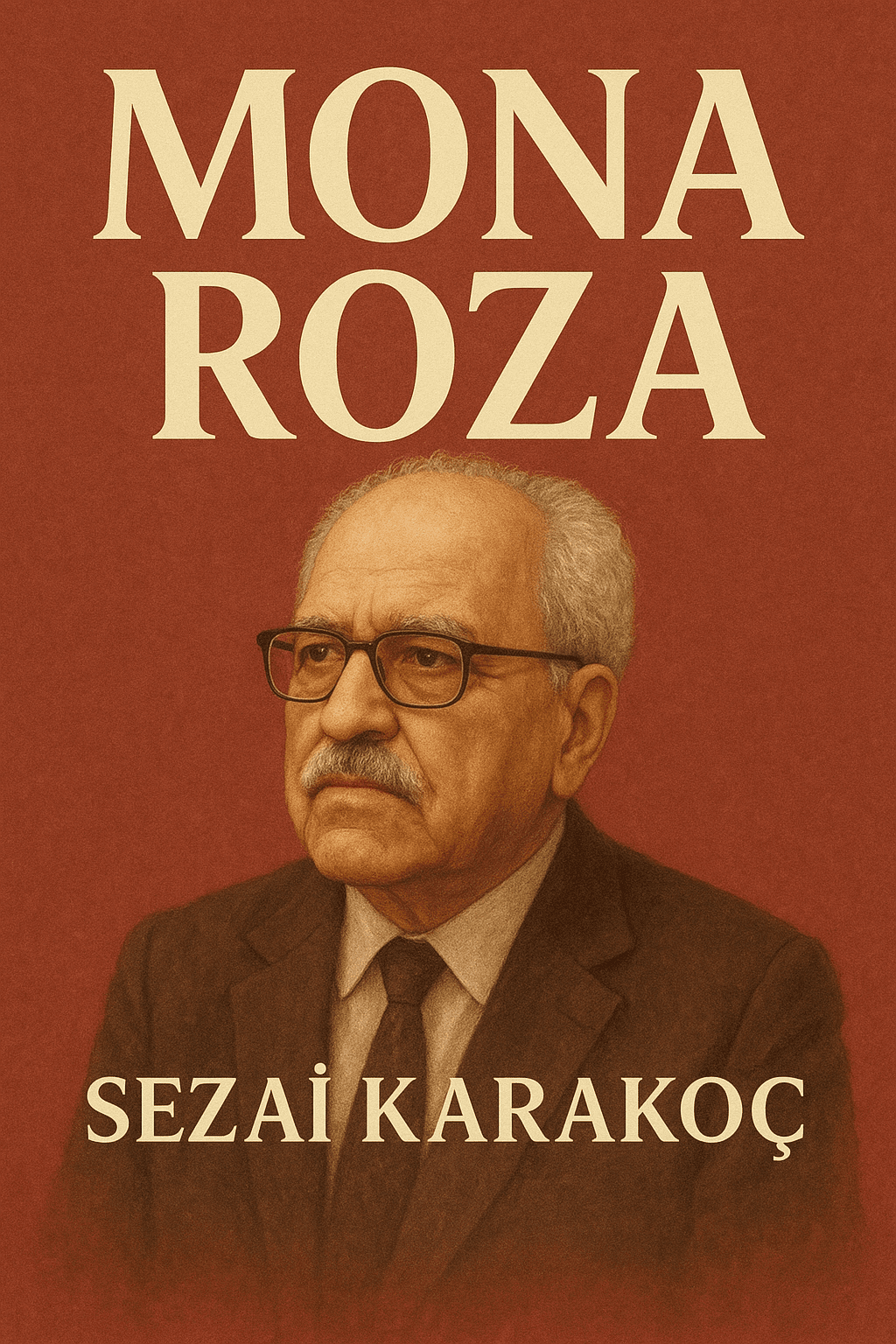
Mona Rosa's Poem (Generated with Artificial Intelligence.)
Title(s) | Mona Rosa | ||||||||
|---|---|---|---|---|---|---|---|---|---|
Author(s) | Sezai Karakoç | ||||||||
Type(s) | Lyric Poetry | ||||||||
Period of Composition | Early 1950s (when the poet was 19 years old) | ||||||||
Publication Venues | Hisar, Mülkiye and İstanbul magazines | ||||||||
Central Themes | Love, Suffering, Longing | ||||||||
Central Image | Rose | ||||||||
“Mona Roza,” recognized as one of the lyrical masterpieces of Turkish literature, was written by Sezai Karakoç during his student years at the Mülkiye School in the early 1950s. Composed when the poet was only nineteen years old, this work is regarded as the foundational point of his literary career. The poem was first published in 1952 in the journals Hisar and Mülkiye under the title “Mona Roza (1 – Love and Torments)” and later completed in 1953 in the journals Mülkiye and İstanbul with sections titled “Death and Frames,” “Regret and Torments,” and “And Mona Roza.”【1】
Karakoç responded to the prevailing perception that the Garip (First New) poetry movement, which rejected meter rhyme and figurative language, had eroded poetic value by seeking to revive traditional forms through a modern sensibility.
The central figure of the poem is Muazzez Akkaya, a classmate of Karakoç at Mülkiye. Karakoç and his close friend Cemal Süreya both harbored a platonic love for the same young woman and reportedly entered into a wager: whoever wrote the weaker poem would remove one letter from their surname. It is said that Cemal Süreya’s surname lost its final “y” as a result of this contest.【2】
It is known that Muazzez Akkaya was the first female student to pass the entrance examination for the Mülkiye dormitory but could not reside there due to lack of space, so she commuted daily from home. She was described as cheerful and sociable, and her status as an international table tennis champion is even linked to Karakoç’s poem “Ping Pong Table.” Muazzez Hanım did not reciprocate Karakoç’s love and later regretfully admitted that she had lost the poems he had secretly kept for her, fearing they might cause complications if discovered.【3】
A key secret of the poem lies in its acrostic: the first letters of its fourteen stanzas spell out “Muazzez Akkaya’m.” Additionally, the line “Now believe me, migrant girl” corresponds to the fact that Akkaya was the daughter of a family that had settled in Geyve as migrants.
Sezai Karakoç’s Muazzez Akkaya Broke Her Silence with AA Regarding the Poem Written in His Name (Anadolu Agency)
Mona Roza, black roses, white rosesGeyve’s roses and the white bedA bird with broken wings begs mercyAh, your face will stain me with bloodMona Roza, black roses, white roses
Dirty jackals howl against the moonRabbits glance timidly toward the hillsMona Roza, today I feel something strangeRain falls crookedly upon the earthDirty jackals howl against the moon
Do not open your window, draw the curtainsMona Roza, I must not see youOne glance from you would be enough to kill meUnderstand, Mona Roza, I am madDo not open your window, draw the curtains…
Olive trees, willow shadowsIn me the sun rises into lightA betrothal ring, a door’s creakAlways remind me of youOlive trees, willow shadows
Lilies bloom in the loneliest placesAnd every wild flower holds its prideA wind waiting behind a candleShakes and stills my darkened soulLilies bloom in the loneliest places
Your hands, your hands and fingersCrush like a pomegranate blossomA woman’s presence is clear in themAs if walking along the seabedYour hands, your hands and fingers
How swiftly time passes, MonaIt is twelve o’clock, the lamps have gone outSleep now, let the cranes enter your dreamsDo not stare so strangely at the skyHow swiftly time passes, Mona
In the evenings, fig birds arrivePerching on the garden’s fig treesSome are white, others yellowAh! Would that a bird would strike me insteadIn the evenings, fig birds arrive
For I will find you, Mona RozaIn the gaze of the fig birdsThey fill this empty sail with lifeThose innocent eyes by the water’s edgeFor I will find you, Mona Roza
Do not look at me with such resentment, RozaYou have not yet heard my songsMy love does not suit every reedThe most beautiful song is sung by a bulletDo not look at me with such resentment, Roza
Now believe me, migrant girlListen and accept my confessionA cold, strange, blue acheHas burned me limb by limbNow believe me, migrant girl
After the rains, the ears of grain have grownFruits ripen with patienceOne day look deep into my eyesYou will understand why the dead live onAfter the rains, the ears of grain have grown
Golden bracelets on that fragrant skinAnswer this bloody featherA feather that gives life when you smileA feather that holds closed night and dayGolden bracelets on that fragrant skin– Sezai Karakoç
Although Sezai Karakoç is one of the most important poets of modern Turkish poetry, his works are often classified within the Second New movement, yet he pursued a uniquely personal path both thematically and formally. Karakoç stated that he wrote “Mona Roza” as a reaction against the dominant poetic sensibility of the time—the simplified aesthetics of the Garip (First New) movement. In an environment where poetic values were neglected due to Garip’s rejection of meter, rhyme, and figurative language, “Mona Roza” stood out by adhering to traditional poetic forms.
The central image in the poem is the “rose.” The opening line, “Mona Roza, black roses, white roses,” establishes this image as central to Karakoç’s poetic universe. In his poetry, the rose symbolizes not only the beloved but also, in traditional and mystical terms, the Prophet Muhammad. The rose carries multiple meanings—resurrection, message, essence, heart, goodness, love, and beauty—thereby grounding the poem in Karakoç’s fundamental philosophical concept of “Resurrection.”
Anadolu Ajansı. "Sezai Karakoç'un adına "Mona Roza" şiirini yazdığı Muazzez Akkaya sessizliğini AA'ya bozdu." YouTube. Accessed November 12, 2025. https://www.youtube.com/watch?v=OIQve6N6H6M&t=234s
Anadolu Ajansı. "Türk edebiyatının ‘Mona Roza’sı 70 yıl sonra sessizliğini AA’ya bozdu." Accessed November 12, 2025. https://www.aa.com.tr/tr/kultur/turk-edebiyatinin-mona-rozasi-70-yil-sonra-sessizligini-aaya-bozdu/3097902
Bulut, Nurullah. “Sezai Karakoç’un Şiirlerini Oluşturan Konular.” *Avrasya Beşeri Bilim Araştırmaları Dergisi* 3, no. 1 (2023): 1–30. Accessed November 12, 2025. https://dergipark.org.tr/en/download/article-file/3356381
Doğan, Mehmet Can. “İkinci Yeni Söyleminin Öncüsü, İkinci Yeni Şiiri’nin Gönülsüzü: Sezai Karakoç.” Turkish Studies - International Periodical for the Languages, Literature and History of Turkish or Turkic 6, no. 3 (Summer 2011): 731–744. https://www.academia.edu/24891980/%C4%B0K%C4%B0NC%C4%B0_YEN%C4%B0_S%C3%96YLEM%C4%B0N%C4%B0N_%C3%96NC%C3%9CS%C3%9C_%C4%B0K%C4%B0NC%C4%B0_YEN%C4%B0_%C5%9E%C4%B0%C4%B0R%C4%B0N%C4%B0N_G%C3%96N%C3%9CLS%C3%9CZ%C3%9C_SEZA%C4%B0_KARAKO%C3%87
Kara, İsmail. "Mona Roza ile Sezai Karakoç aynı karede." Prof. Dr. İsmail Kara Arşivi – Türkiye’de Dini Hayat Arşivi, İstanbul Zaim Üniversitesi. Accessed November 12, 2025. https://ismailkara.izu.edu.tr/xmlui/bitstream/handle/ismailkara/1896/%c4%b0KA1205.pdf?sequence=1&isAllowed=y
Karabulut, Mustafa. “Sezai Karakoç’un Şiirlerinde Gül Sağnağı.” Presentation paper, *International Marmara Scientific Research and Innovation Congress*. Accessed November 12, 2025. https://turkoloji.cu.edu.tr/pdf/gul_sagnagi.pdf
Çaydeğirmeni Çok Programlı Anadolu Lisesi. "A. Sezai Karakoç – Mona Roza." Devrek, Zonguldak: T.C. Millî Eğitim Bakanlığı. Accessed November 12, 2025. https://caydegirmenicpal.meb.k12.tr/icerikler/asezai-karakoc-mona-roza_16265863.html
[1]
Doğan, Mehmet Can, “İkinci Yeni Söyleminin Öncüsü, İkinci Yeni Şiiri’nin Gönülsüzü: Sezai Karakoç,” Turkish Studies - International Periodical for the Languages, Literature and History of Turkish or Turkic 6, no. 3 (Summer 2011): 731–744, sayfa 732, erişim adresi
[2]
Anadolu Ajansı, “Türk edebiyatının ‘Mona Roza’sı 70 yıl sonra sessizliğini AA’ya bozdu,” Anadolu Ajansı, erişim tarihi 12 Kasım 2025, https://www.aa.com.tr/tr/kultur/turk-edebiyatinin-mona-rozasi-70-yil-sonra-sessizligini-aaya-bozdu/3097902
[3]
Kara, İsmail, " Mona Roza ile Sezai Karakoç aynı karede," Prof. Dr. İsmail Kara Arşivi – Türkiye’de Dini Hayat Arşivi, İstanbul Zaim Üniversitesi, erişim 12 Kasım 2025. https://ismailkara.izu.edu.tr/xmlui/bitstream/handle/ismailkara/1896/%c4%b0KA1205.pdf?sequence=1&isAllowed=y

Mona Rosa's Poem (Generated with Artificial Intelligence.)
Title(s) | Mona Rosa | ||||||||
|---|---|---|---|---|---|---|---|---|---|
Author(s) | Sezai Karakoç | ||||||||
Type(s) | Lyric Poetry | ||||||||
Period of Composition | Early 1950s (when the poet was 19 years old) | ||||||||
Publication Venues | Hisar, Mülkiye and İstanbul magazines | ||||||||
Central Themes | Love, Suffering, Longing | ||||||||
Central Image | Rose | ||||||||
The Origin Story and Acrostic of the Poem
The Poem “Mona Roza”
Literary Context and Formal Features
Themes and Imagery