

+1 More

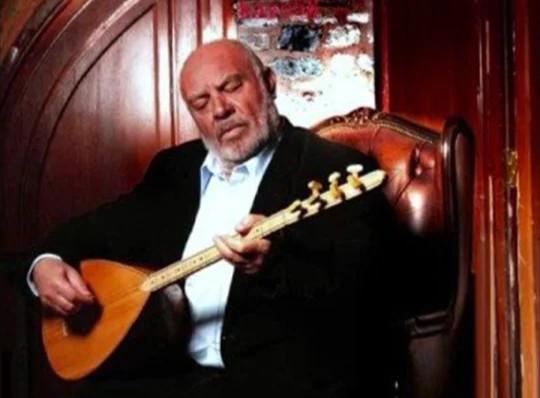
Musa Eroğlu
Year and Place of Birth | 1946, Kumaçukuru Village, Mut, Mersin | ||||||||
|---|---|---|---|---|---|---|---|---|---|
Profession(s) | Bağlama Artist Educator Composer Compiler | ||||||||
Educational Status | Elementary School | ||||||||
Artistic Fields | Bağlama Education Aşık Tradition Folk Music | ||||||||
Title(s) | State Artist Source Person | ||||||||
Musa Eroğlu (b. 1944, Kumaçukuru Village, Mut, Mersin) is one of the contemporary representatives of Turkish folk music tradition. Official records list his birth year as 1946. He was raised within the Alevi belief and cultural environment and is of Tahtacı Turkmen origin. Eroğlu, who does not write poetry but knows hundreds of folk songs by heart, aims to become the voice of the people through “usta malı” songs and also serves as a source contributor in the TRT repertoire.
Eroğlu, who received no formal musical education beyond primary school, began his artistic career with the violin and saz skills he learned from his family. Through techniques he developed himself for the bağlama, he established a bridge between tradition and modernity. He defines himself as an “icracı” and explicitly states that he is neither an ozan nor an âşık.
Eroğlu’s artistic life has not been limited to stage performances; he has also earned an important place in Turkish music history through his roles as a collector, interpreter, educator, and thinker on music policy.
His village lies along migration routes of the Central Taurus Mountains, exposing him from an early age to diverse cultural interactions. Musa Eroğlu’s childhood unfolded in a Tahtacı Turkmen village dominated by the Alevi belief system, where life was deeply intertwined with nature and the philosophical concept of vahdet-i vücut prevailed. In this environment, nature was regarded as sacred, people did not fear God but saw Him as a “beloved,” and the belief system was grounded in individual inquiry. This intellectual framework formed the foundation of the thematic unity later expressed in Musa Eroğlu’s art.
Among the first artists he heard as a child in the village were Zaralı Halil, Malatyalı Fahri, Âşık Veysel, Antepli Hasan Hüseyin, Celâl Güzelses, and especially Nida Tüfekçi—master figures of folk music. These artists entered Musa Eroğlu’s childhood memory through radio broadcasts and shaped his musical taste. His participation in a school play about Karacaoğlan solidified his interest in folk poetry and traditional storytelling. Nida Tüfekçi’s bağlama performances, in particular, became a model for him. In this context, learning by ear, observation, and imitation were decisive in Eroğlu’s musical development.
Musa Eroğlu’s education coincided with a significant period in Turkey’s educational history, centered on the Köy Enstitüsü system. He completed the first three grades in a school following this model and finished the fourth and fifth grades in a traditional primary school format. However, he was unable to continue his education beyond middle school and was forced to end his formal schooling at that level.
Nevertheless, Musa Eroğlu’s educational formation is not confined to his school years. His family is musical; his father builds and plays the violin and saz. He began his musical journey at age 14 with a saz his father made in 1952. Although the violin was his first instrument, the saz (bağlama) soon became his primary instrument. This transition, while not following the traditional “usta-çırak” relationship, exemplifies a widespread model supported by domestic experience.
Musa Eroğlu does not write poetry in the classical sense and defines himself not as an ozan or âşık but solely as an “icracı.” He performs “usta malı” expressions and considers interpreting and transmitting poetry his duty. This perspective led him to view musical transmission within the folk literature tradition as a form of representation. As he himself says: “The most beautiful poems were written before me,” reflecting this understanding.
The music center Eroğlu later established and the instruction he provided there demonstrate his role as an informal folk music educator. The teaching at this center followed not the classical conservatory approach but direct observation, listening, and instrumental practice. This pedagogical method aligns precisely with the historical transmission methods of Anatolian folk music.
Musa Eroğlu’s musical career began in the mid-1960s. In 1965 he moved to Ankara and failed to pass the audition to become a vocalist at Ankara Radio. He returned to his village but did not abandon music. In 1966 he released his first record, marking his professional entry into the music world; on this debut record he performed a lament attributed to Kul Muhammet. That same year he married and shortly thereafter completed his military service. After returning from service, he settled in Ankara but never severed his ties to his village. In Ankara, he devoted himself exclusively to music, earning his entire livelihood through artistic performance, stage appearances, and recordings. He contributed numerous songs to the TRT repertoire as a collector, and his name appears as a source contributor for a significant portion of these songs. In this regard, he is regarded not merely as a performer but also as a collector and musical memory keeper.
In his musical career, Musa Eroğlu stands out for performing Anatolia’s traditional music and oral culture through contemporary methods. By developing an original bağlama technique, he pushed the instrument’s potential without disrupting traditional forms. This quality transformed him from merely a folk music artist into a methodical musical practitioner. As he describes himself, he performs on stage as a musician who “understands what he interprets.”
Musa Eroğlu has been honored with the title “State Artist” by the Ministry of Culture of the Republic of Türkiye. He was also awarded the “Asian Cultures Research Prize” by then-President Süleyman Demirel. In addition, he has received numerous plaques and awards from various local administrations, universities, and cultural institutions. Yet among these honors, he considers the research prize the most meaningful, as it affirmed not only his role as a stage performer but also as a cultural transmitter.
Since the 2000s, Eroğlu has adopted a critical stance toward the growing popularity of folk music interpreters, viewing art not merely as entertainment but as education, history, and aesthetics. In this context, his musical memory and repertoire knowledge are remarkable. He claims to know and perform over 5,000 songs from the TRT repertoire by heart. This powerful memory elevates his performance success from a technical achievement to a cultural transmission.
Musa Eroğlu has never joined any music union or association. He believes such organizations can restrict an artist’s freedom and has instead supported social initiatives. This attitude reflects his independent and unmediated artistic philosophy.
Musa Eroğlu is regarded not merely as a carrier of the Turkish folk music tradition but as its re-shaper. In his artistic production, he seeks to preserve the memory of oral culture while expressing it through contemporary forms. In this regard, he is one of the rare artists who simultaneously fulfill the roles of bağlama instructor, repertoire collector, interpreter, and composer.
His approach to collecting extends beyond melodic transmission to include the local contexts, usage, and socio-cultural meanings of songs. Many songs in the TRT Turkish Folk Music repertoire were added through this understanding. In his collecting activities, he does not consider musical notation sufficient; he insists that lyrics, instrumentation, and local nuances of performance must also be preserved in transmission.
In bağlama instruction, he adopted a method based on the traditional meşk and usta-çırak relationship and continued this approach at his music center. He maintained direct personal contact with his students and reached many other musicians indirectly through video and audio recordings. As he himself says: “The student learns by watching with the eyes and listening with the ears.”
Musa Eroğlu is also an accomplished “notist.” During the TRT collection process, he directly contributed to transcription efforts, preparing or correcting the notation for many pieces. This technical knowledge demonstrates that his musical knowledge is not merely intuitive but also analytical.
Musa Eroğlu has released more than 25 solo albums. These albums do not merely feature folk songs but also include compositions that reference Turkey’s social and cultural issues. Even the titles of his albums reflect this orientation. Notable albums include:
The 2007 album Dede’m Korkut is a testament to his reverence for the Dede Korkut narrative tradition and represents an effort to reconstruct historical memory through music.
One of Musa Eroğlu’s most renowned projects is the Muhabbet series, created with Arif Sağ, Muhlis Akarsu, and Yavuz Top. This series consists of seven albums aiming to bring the folk music repertoire to wider audiences. Two of the albums are instrumental, demonstrating the technical and aesthetic power of the bağlama in wordless performance. Eroğlu describes this project as “an event that ignites the fuse of folk songs.”
Throughout his artistic life, he has performed approximately 600 compositions but has written only a very small number of poems. A significant portion of his works is based on anonymous or “usta malı” songs. Nevertheless, some songs, such as “Yollarına kar mı yağdı gelmedin,” have lyrics attributed to him. Although nearly 1,000 poems in the TRT repertoire are registered under his name, he has publicly stated they are not his and has had them reclassified as anonymous. This attitude reflects his ethical sensitivity in music.
Another important aspect of Eroğlu is his storytelling of folk tales. At gatherings, muhabbet sessions, or informal settings, while performing the verses of ozans like Pir Sultan Abdal and Kul Himmet, he also narrated stories in narrative form. In this way, he has become a transmitter not only of music but also of narrative tradition.
Musa Eroğlu - Candan İleri Adlı Şarkısı (YouTube)
Musa Eroğlu’s life reflects a cultural practice deeply intertwined with music. For him, playing the bağlama in his free time is not merely a pastime but an existential activity. Eroğlu has maintained since childhood the relationship with nature he developed early on, valuing elements such as violets, roses, water, and trees as sacred and symbolic. This perspective explains his deep interest in folk poetry rooted in oral culture.
He holds profound respect for literature, especially folk poetry, yet does not define himself as a “poet.” His reasoning is clear: “The most beautiful poems were written before me.” Accordingly, rather than attempting to write poetry, he focuses on understanding, internalizing, and performing existing poems. He conveys the linguistic richness of works dealing with themes such as nature, love, separation, questioning, and humanity through musical expression.
Since his youth, Musa Eroğlu has been interested in folk tales, stories, and legends, tracing within them cultural codes, philosophical references, and traces of belief systems and ways of life. Consequently, his knowledge of representative figures of folk thought such as Karacaoğlan, Pir Sultan Abdal, and Yunus Emre is exceptionally deep.
In his artistic philosophy, he prefers the term “comprehension” over “learning.” For him, the issue is not merely playing or singing well technically but understanding what the subject is, why it is sung, and for whom it was created.
Musa Eroğlu married in 1966 at the age of twenty. He has two daughters and one son from this marriage. Music is common in his family; his father builds and plays the saz, and his siblings are also involved in music. Thus, music has not merely been a personal preference but a form of familial transmission in his life.
Eroğlu has never severed his ties to his village, even while pursuing music in major cities, returning to his birthplace whenever possible. The cultural codes, belief system, and philosophy of life in his native village of Kumaçukuru have continued to form the foundation of his art. He identifies as Alevi but views Alevism not as an identity label but as a way of life. He advocates an understanding that unites rather than divides religious and sectarian identities: “If God is beloved, one does not fear Him.” Thus, he has embraced a belief and artistic philosophy grounded in love rather than fear.
Throughout his life, he has never joined any association or union, believing such institutions limit personal artistic independence. Nevertheless, he has supported social activities of numerous civil society organizations.
Musa Eroğlu believes the artist is simply a human being. To him, the ozan is a person who transcends boundaries and serves as an educator of the people. He interprets the principle “own your hand, your waist, your tongue” as standing up for one’s self, culture, and values.
In the later stages of his musical life, Eroğlu has focused more on education and cultural guidance than performance. In this context, he established a music center bearing his name, where he has given individual lessons over various periods. This center has been active for over 24 years with the aim of sustaining the usta-çırak relationship. His educational approach, beyond classical conservatory training, is based on direct transmission and experience. He educates his students not only to play the bağlama but also to understand a culture.
His interactions with universities in recent years are noteworthy. In academic events as a guest speaker, he has evaluated the current state of folk music and expressed satisfaction at the growing interest among younger generations. In this context, he emphasizes that folk music is not merely a legacy of the past but also one of the foundational elements of the future.
Eroğlu’s intellectual stance is critically oriented, particularly in the field of cultural policy. He frequently asserts that Türkiye needs a qualified ministry of culture and that folk culture must be preserved not merely as folkloric forms but by integrating it into the education system. According to him, “Great schools should be built in the name of Karacaoğlan.” These statements reveal that he views folk music not merely as an art but as an educational tool.
In public statements, he has stressed the need to protect folk music from degradation, noting that this can only be achieved through collaboration among masters, writers, historians, and sociologists. “Interpreters sing songs they do not understand. Everyone does not need to sing 100 songs. It is enough to sing ten with true understanding,” he has said, emphasizing the importance of quality in folk music performance.
Although his musical production has diminished in recent years, he continues his cultural production through archival work, storytelling, and live performances. He regularly appears in archival recordings on TRT and other private platforms and serves as a consultant on various documentaries.
Musa Eroğlu is not merely a performer who influenced his own era but a source figure who has left lasting imprints on Türkiye’s cultural memory. The large number of songs in the TRT Turkish Folk Music repertoire for which he is listed as a source contributor demonstrates that he is a producer who draws from tradition without being confined by it. His collections, oral narratives, bağlama performances, and repertoire knowledge constitute a valuable asset not only for listeners but also for academic circles and educators.
Many structural distortions and missing notations found in folk music collections have been corrected through Musa Eroğlu’s testimonies, and the true historical contexts of some songs have been reconstructed thanks to his oral accounts. In this sense, he is not merely a performer but a “oral history carrier” who provides cultural documentation.
Eroğlu’s works provided a distinctive foundation during the popularization of folk music after the 1980s. His albums, produced with consistent aesthetic sensitivity and free from commercial concerns, demonstrated how music could be effectively created beyond market-driven motives. Today, students learning the bağlama in conservatories, folk education centers, and private courses still regard his playing style and performance methods as reference points.
Musa Eroğlu is a source of inspiration for many young artists active in folk music. As an artist who demonstrates how technical simplicity and narrative depth can be combined, he, alongside masters like Arif Sağ and Yavuz Top, helped define the musical orientation of a generation.
In Eroğlu’s music, loyalty to anonymous culture is as important as individual interpretation. This balance makes him not merely a “transmitter” but also a “reconstructive” interpreter. He is not merely someone who sings songs; he deciphers the meanings carried by them, reveals their historical contexts, and, when necessary, restructures their lyrics. This approach has made him one of the rare figures in folk music to develop structural thought.
Moreover, the usta-çırak model Eroğlu adopted in music education retains its relevance even in today’s digital age. Through video recordings, stage performances, and interviews, many young performers are influenced by his repertoire understanding and performance style. In this way, Eroğlu functions not merely as an artist but as a living school.
Eroğlu, Musa. "Gönül Albüm Kapağı." Musa Eroğlu Resmi Web Sitesi. Accessed May 21, 2025. https://www.musaeroglu.com.tr/albumler.html#a17
Gerekten, Sami Emrah. “Halk Müziğinin Aktarımında Kaynak Kişilerden Faydalanma: Musa Eroğlu ve Kaynaklık Ettiği Türküler Üzerine Bir Anlatı Araştırması.” EJMD: Eğitimde Kuram ve Uygulama Dergisi 18 (2021): 215–231.
Gökçe, Emrah. “Asrımızın Dede Korkut’u: Musa Eroğlu.” Türk Kültürü ve Hacı Bektaş Velî Araştırma Dergisi, no. 51 (2020): 327–336. https://web.archive.org/web/20161108195136/http://www.hbvdergisi.gazi.edu.tr/index.php/TKHBVD/article/viewFile/1099/1088
YouTube. "Benim Annem Benim Babam Bölüm 11 - Musa Eroğlu." TRT Haber, 4 min 33 sec. Accessed May 21, 2025. https://www.youtube.com/watch?v=N2igHUwNbVw
YouTube. "Candan İleri." Musa Eroğlu-Konu. Accessed May 21, 2025. https://www.youtube.com/watch?v=ihJUzYTJBvM
Musa Eroğlu
Year and Place of Birth | 1946, Kumaçukuru Village, Mut, Mersin | ||||||||
|---|---|---|---|---|---|---|---|---|---|
Profession(s) | Bağlama Artist Educator Composer Compiler | ||||||||
Educational Status | Elementary School | ||||||||
Artistic Fields | Bağlama Education Aşık Tradition Folk Music | ||||||||
Title(s) | State Artist Source Person | ||||||||
Childhood and Youth
Educational Life
Career and Achievements
Career Path
Key Achievements
Key Works and Contributions
Works and Projects
1970s
1980s
1990s
2000s
2010s
2020s
Personal Life
Hobbies and Interests
Private Life
Later Years
Legacy and Influence