
This article was automatically translated from the original Turkish version.
+2 More
Purpose of Establishment | Documenting the violence and suffering during the Cyprus events of 1963-1974 | ||||||||
|---|---|---|---|---|---|---|---|---|---|
Visit | Weekdays from 08:00 to 15:30 | ||||||||
Exhibition | the preserved original location of the events documents victims' belongings Photographs | ||||||||
Location | Lefkoşa Turkish Republic of Northern Cyprus | ||||||||
Establishment | 1966-01-01 | ||||||||
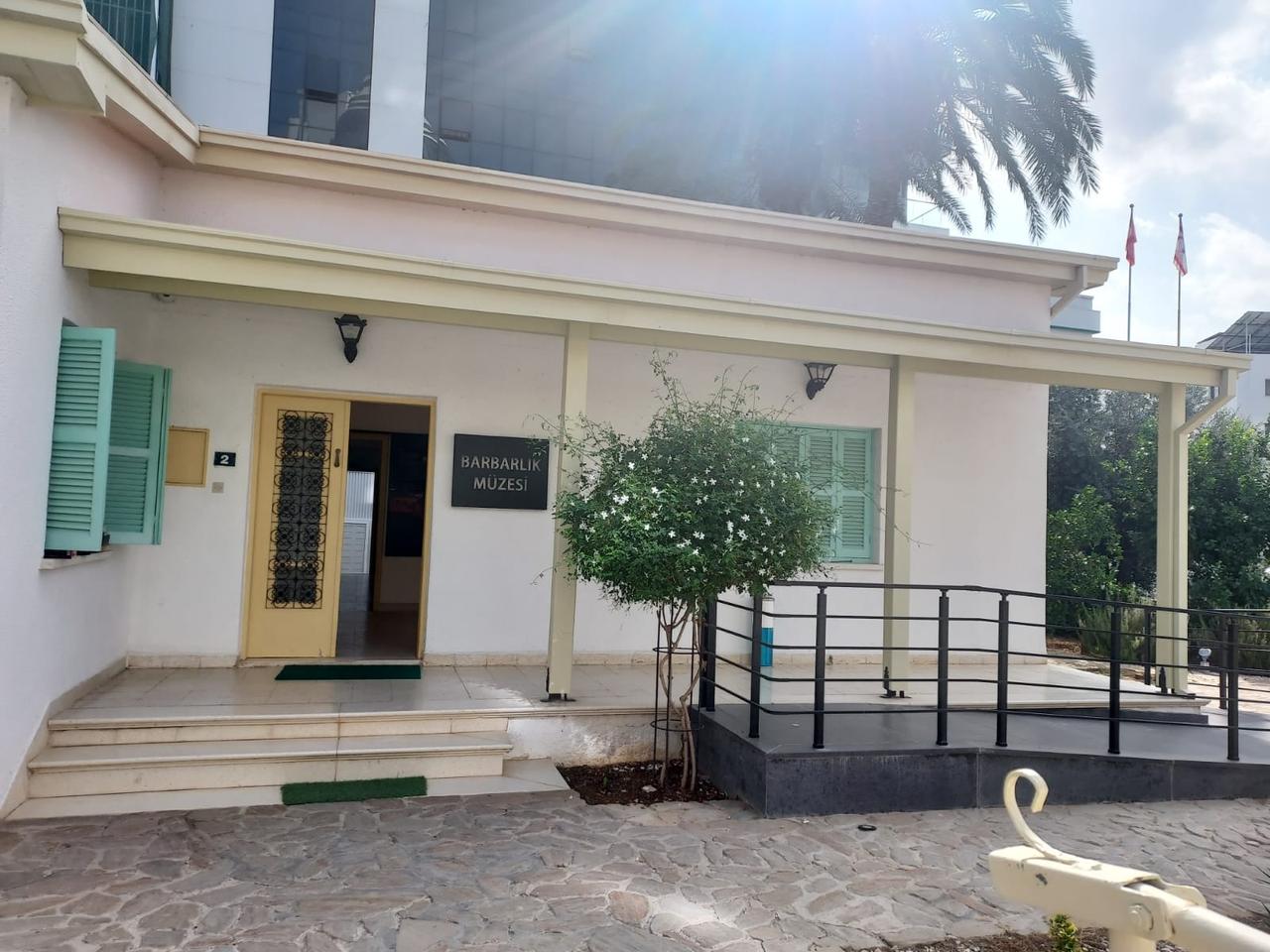
Museum of Barbarity is a memorial museum located in Lefkoşa, the capital of the Turkish Republic of Northern Cyprus (TRNC), displaying concrete documentation related to the massacre of Turkish Cypriot civilians in 1963. The museum was established by converting the home where Dr. Major Nihat İlhan’s wife and three children were murdered during an attack carried out by Greek Cypriot militants on 24 December 1963 while he was on duty with the Turkish Battalion.
The foundation of the museum rests on the Kumkale Tragedy, which occurred during a series of armed attacks beginning on 21 December 1963 and known as the “Bloody Christmas.” The events began with the killing of two young Turkish Cypriots in Lefkoşa, followed by attacks conducted by Greek Cypriot gangs linked to EOKA that resulted in the deaths of numerous civilians. These events culminated in the attack known as the Kumkale Massacre, regarded as one of the most horrific incidents of the period.

Turkish Cypriots Displaced from Their Homes During the Process Beginning with the Bloody Christmas Massacre (Anadolu Agency)
On the night of 24 December 1963, the home of Major Nihat İlhan was targeted; his wife Mürüvvet İlhan and their children Murat, Kutsi and Hakan were shot dead in the bathtub with machine guns. Journalists and witnesses of the time described the incident as “a genocidal campaign initiated under the Akritas Plan” by Greek Cypriots.

The Bathroom Where the Attack Took Place, Displaying Bullet and Blood Stains (Anadolu Agency)
In response to these attacks, the Turkish Resistance Organization (TMT), the underground resistance movement of the time, was forced to emerge from secrecy and assume a defensive posture. During this period, a total of 364 Turkish Cypriots lost their lives, 103 villages were evacuated, and approximately 30,000 people were forced to flee their homes.
The museum was first formally organized in 1965, and the building was opened to the public on 1 January 1966 by the Social Affairs Directorate of the Turkish Community Council. In 1975, it was restored and reorganized by the TRNC Directorate of Antiquities and Museums.
The restoration process initiated in 2019 was completed by the Turkish Cooperation and Coordination Agency (TİKA). As part of this restoration, the building’s physical and digital infrastructure was renewed, the surrounding area was landscaped, and modern museum elements were incorporated.
The museum has been arranged in strict accordance with the original structure of the house where the attack occurred. Bullet marks on the walls have been preserved. The bathtub, blood-stained robes, and the children’s toys are on display, presenting visitors with an authentic recreation of the scene.
The museum contains photographs documenting the events of the period, explanatory panels, audio-guided narratives, and digital chronology screens. Visitors are also shown a 14-minute documentary summarizing the events.

Exhibition Depicting the Events in Cyprus (Anadolu Agency)
One of the museum’s most striking sections is the Memory Pool, which contains approximately 2,000 pieces of information and visual documentation relating to Turkish Cypriots who were killed or went missing between 1963 and 1974. These documents ensure the digital preservation and presentation of tangible evidence related to the events.
The Museum of Barbarity is maintained with contributions from the TRNC Directorate of Culture and Turkish Republic institutions. The project, implemented by TİKA, aims to preserve cultural heritage and transmit the recent history of the Turkish Cypriot people.
Anadolu Ajansı. “Kıbrıs Türk Halkına Yönelik Zulmün Simgesi Barbarlık Müzesi Tarihe Işık Tutuyor.” Accessed June 20, 2025. https://www.aa.com.tr/tr/gundem/kibris-turk-halkina-yonelik-zulmun-simgesi-barbarlik-muzesi-tarihe-isik-tutuyor/3278365.
Anadolu Ajansı. “Kıbrıs'ta Rumların Gerçekleştirdiği Kanlı Noel Katliamının Üzerinden 58 Yıl Geçti.” Accessed June 20, 2025. https://www.aa.com.tr/tr/dunya/kibrista-rumlarin-gerceklestirdigi-kanli-noel-katliaminin-uzerinden-58-yil-gecti/2452203.
North Cyprus Turkish Republic Directorate of Ancient Monuments and Museums. "Barbarlık Müzesi." North Cyprus Turkish Republic Prime Ministry – Directorate of Ancient Monuments and Museums. Accessed June 20, 2025. https://eemd.gov.ct.tr/M%C3%9CZE-VE-%C3%96REN-YERLER%C4%B0/Lefko%C5%9Fa-B%C3%B6lgesi/Barbarl%C4%B1k-M%C3%BCzesi.
Turkish Cooperation and Coordination Agency (TİKA). "KKTC’de TİKA’nın Restore Ettiği Barbarlık Müzesi Açıldı." TİKA. Accessed June 20, 2025. https://tika.gov.tr/detail-kktc_de_tika_nin_restore_ettigi_barbarlik_muzesi_acildi/.

Purpose of Establishment | Documenting the violence and suffering during the Cyprus events of 1963-1974 | ||||||||
|---|---|---|---|---|---|---|---|---|---|
Visit | Weekdays from 08:00 to 15:30 | ||||||||
Exhibition | the preserved original location of the events documents victims' belongings Photographs | ||||||||
Location | Lefkoşa Turkish Republic of Northern Cyprus | ||||||||
Establishment | 1966-01-01 | ||||||||
No Discussion Added Yet
Start discussion for "Museum of Barbarism" article
Historical Background
Establishment and Development
Physical Structure and Exhibition Content