


 Recently Added:
This article was automatically translated from the original Turkish version.
MV Hondius Hantavirus Outbreak is an international outbreak caused by hantavirus cases detected aboard the Dutch-flagged passenger vessel MV Hondius in April and May 2026.
Cases of hantavirus were identified among passengers and crew aboard the vessel, which departed from Ushuaia port in Argentina and was en route to Cabo Verde. The World Health Organization (WHO), the Africa Centres for Disease Control and Prevention (Africa CDC), and health authorities of the Netherlands, Spain, South Africa and the United Kingdom coordinated a joint response to the incident. As of 4 May 2026, seven cases were identified among the 147 passengers and crew on board (two laboratory-confirmed and five suspected); three of these cases resulted in death.
MV Hondius vessel - (FRANCE 24 Español)
MV Hondius is a Dutch-flagged passenger vessel. On 1 April 2026, it departed from Ushuaia port in Argentina on an expedition voyage across the Atlantic Ocean toward Cabo Verde. The itinerary includes some of the world’s most remote settlements, such as the Antarctic Peninsula, South Georgia and Tristan da Cunha in the South Atlantic Ocean.
The journey was organized as a nature expedition focused on Antarctica and the South Atlantic; cabin fares ranged from 14,000 to 22,000 euros (approximately 16,000 to 25,000 US dollars). A total of 147 people were on board, comprising 88 passengers and 59 crew members, all nationals of 23 different countries. The majority of passengers were citizens of the United Kingdom, the United States and Spain.
While the vessel remained anchored off Cabo Verde, passengers were not permitted to disembark pending health inspections. Cabo Verde health teams, supported by the WHO, boarded the vessel to assess suspected cases.
The vessel operator, Oceanwide Expeditions, instructed passengers to remain in their cabins. Disinfection procedures were initiated, and staff caring for symptomatic individuals were required to use full protective equipment.
Two crew members, one British and one Dutch, developed acute respiratory symptoms. The British crew member, identified as the ship’s doctor, and the Dutch crew member were medically evacuated via Cabo Verde under coordination by Dutch authorities. One individual linked to the deceased German passenger was also included in the evacuation list. After the evacuations, the vessel was scheduled to proceed toward Spain’s Canary Islands.
Hantavirus is a group of viruses primarily carried by rodents. Human infection most commonly occurs through inhalation of aerosolized particles from infected rodents’ feces, urine or saliva. In rarer cases, transmission may occur via contact with contaminated surfaces followed by touching the mouth, nose or eyes, or through rodent bites or scratches.
The virus can cause two distinct severe clinical syndromes. The first, Hantavirus Pulmonary Syndrome (HPS), typically begins with fatigue, fever and muscle aches, followed by headache, dizziness, chills and abdominal discomfort. In cases where respiratory symptoms develop, the fatality rate is approximately 38 percent.
The second syndrome, Hemorrhagic Fever with Renal Syndrome (HFRS), is characterized as a severe illness primarily affecting the kidneys. Complications may include hypotension, internal bleeding and acute kidney failure.
There is no specific treatment for hantavirus infection. Supportive care, including oxygen therapy, mechanical ventilation, antiviral treatment and dialysis when necessary, is administered. Intubation may be required in severe cases.
The National Institute of Communicable Diseases of South Africa (NICD) confirmed that the Andes strain was detected in both laboratory-confirmed cases. The Andes strain is the only known hantavirus type capable of human-to-human transmission and is primarily found in South America, especially Argentina. However, authorities emphasized that such transmission is extremely rare and occurs only under conditions of very close contact.
Maria Van Kerkhove, Director of the WHO’s Outbreak and Pandemic Preparedness and Prevention, stated that limited human-to-human transmission may have occurred on board. She highlighted the potential for transmission among close contacts such as spouses and individuals sharing cabins.
WHO assessments indicated that multiple transmission routes may have occurred simultaneously. The first case may have been infected prior to boarding, while some passengers and crew may have been exposed during excursions to islands visited by the vessel that harbor rodent populations. Oceanwide Expeditions informed authorities that no rodents were present on the vessel.
Hantavirus has an incubation period typically ranging from one to six weeks. Therefore, the WHO also considered the possibility that the Dutch couple contracted the virus while in Argentina before boarding the vessel.
Canary Islands Governor Anselmo Pestana announced that, following the recommendation of the World Health Organization, the MV Hondius would be directed to the Canary Islands. The Spanish Ministry of Health stated that Cabo Verde lacked the capacity to carry out the necessary health operations, while the Canary Islands were the nearest region with the required facilities. The ministry also emphasized that providing assistance to those on board was a “moral and legal obligation.”
Oceanwide Expeditions stated that the vessel’s arrival in the Canary Islands would take approximately three to four days. It was planned that the vessel would dock at either Gran Canaria or Tenerife, though the final port would be determined during the journey.
Spanish authorities announced that upon arrival, all passengers and crew would undergo health screenings, receive necessary medical treatment and then be repatriated to their countries of origin. Health operations would be conducted in designated areas using specialized transport to prevent contact with the local population and ensure the protection of medical personnel.
The operation will be carried out under the coordination of the European Centre for Disease Prevention and Control (ECDC) and the World Health Organization.
Africa CDC. "Statement on Multi-Country Hantavirus Cluster Associated with Cruise Ship Travel." Africa Centres for Disease Control and Prevention. Accessed May 6, 2026. https://africacdc.org/news-item/statement-on-multi-country-hantavirus-cluster-associated-with-cruise-ship-travel/
Al Jazeera. "Spain Agrees to Let Hantavirus-Hit Cruise Ship Dock in Canary Islands." Al Jazeera. Accessed May 6, 2026. https://www.aljazeera.com/news/2026/5/6/spain-agrees-to-let-hantavirus-hit-cruise-ship-dock-in-canary-islands
Al Jazeera. "Two Hantavirus Cases Confirmed, Five More Suspected on Stranded Cruise Ship." Al Jazeera. Accessed May 6, 2026. https://www.aljazeera.com/news/2026/5/5/seven-cases-of-hantavirus-confirmed-or-suspected-on-cruise-says-who
Anadolu Ajansı. "DSÖ’den Bir Gemide Görülen Hantavirüsün Nadir de Olsa ‘İnsandan İnsana Bulaşabileceği’ Uyarısı." Anadolu Ajansı. Accessed May 6, 2026. https://www.aa.com.tr/tr/dunya/dsoden-bir-gemide-gorulen-hantavirusun-nadir-de-olsa-insandan-insana-bulasabilecegi-uyarisi/3927926
Anadolu Ajansı. "Hantavirus Outbreak on Atlantic Cruise Ship." Anadolu Ajansı Infographic. Accessed May 6, 2026. https://www.aa.com.tr/en/info/infographic/51784
Anadolu Ajansı. "İspanya, Hantavirüsün Tespit Edildiği Yolcu Gemisinin Kanarya Adaları'na Demirlemesine İzin Verecek." Anadolu Ajansı. Accessed May 6, 2026. https://www.aa.com.tr/tr/dunya/ispanya-hantavirusun-tespit-edildigi-yolcu-gemisinin-kanarya-adalarina-demirlemesine-izin-verecek/3927695
BBC News. "Cruise Ship with Hantavirus Outbreak to Sail to Canary Islands." BBC News. Accessed May 6, 2026. https://www.bbc.com/news/articles/ce8pypvjx1ko
BBC News. "Hantavirus May Have Spread between Passengers on Cruise Ship, WHO Says." BBC News. Accessed May 6, 2026. https://www.bbc.com/news/articles/cm2p186gyp2o
BBC News. "What Is the Hantavirus That Has Been Confirmed on an Atlantic Cruise Ship?" BBC News. Accessed May 6, 2026. https://www.bbc.com/news/articles/c8r8j1l6j0go
FRANCE 24 Español. "Brote de Infección por Hantavirus en Crucero que Viajaba de Argentina a Cabo Verde." YouTube Video, May 6, 2026. https://www.youtube.com/watch?v=WSeTwxIgWXM
Reuters. "Two Cases of Hantavirus Which Spreads Human-to-Human Linked to Ship, South Africa Says." Reuters. Accessed May 6, 2026. https://www.reuters.com/business/healthcare-pharmaceuticals/two-cases-hantavirus-which-spreads-human-to-human-linked-ship-south-africa-says-2026-05-06/
The Guardian. "Sick British Crew Member to Be Urgently Evacuated as Hantavirus-Hit Cruise Ship Heads to Canary Islands." The Guardian. Accessed May 6, 2026. https://www.theguardian.com/world/2026/may/05/british-crew-member-dutch-mv-hondius-cruise-ship-hantavirus-cases
7 May 2026, the Director-General of the WHO, Tedros Adhanom Ghebreyesus, announced that laboratory tests confirmed five of the eight cases reported aboard the MV Hondius, which departed from Argentina, were hantavirus infections, while three other cases remained under suspicion. Three individuals have died.
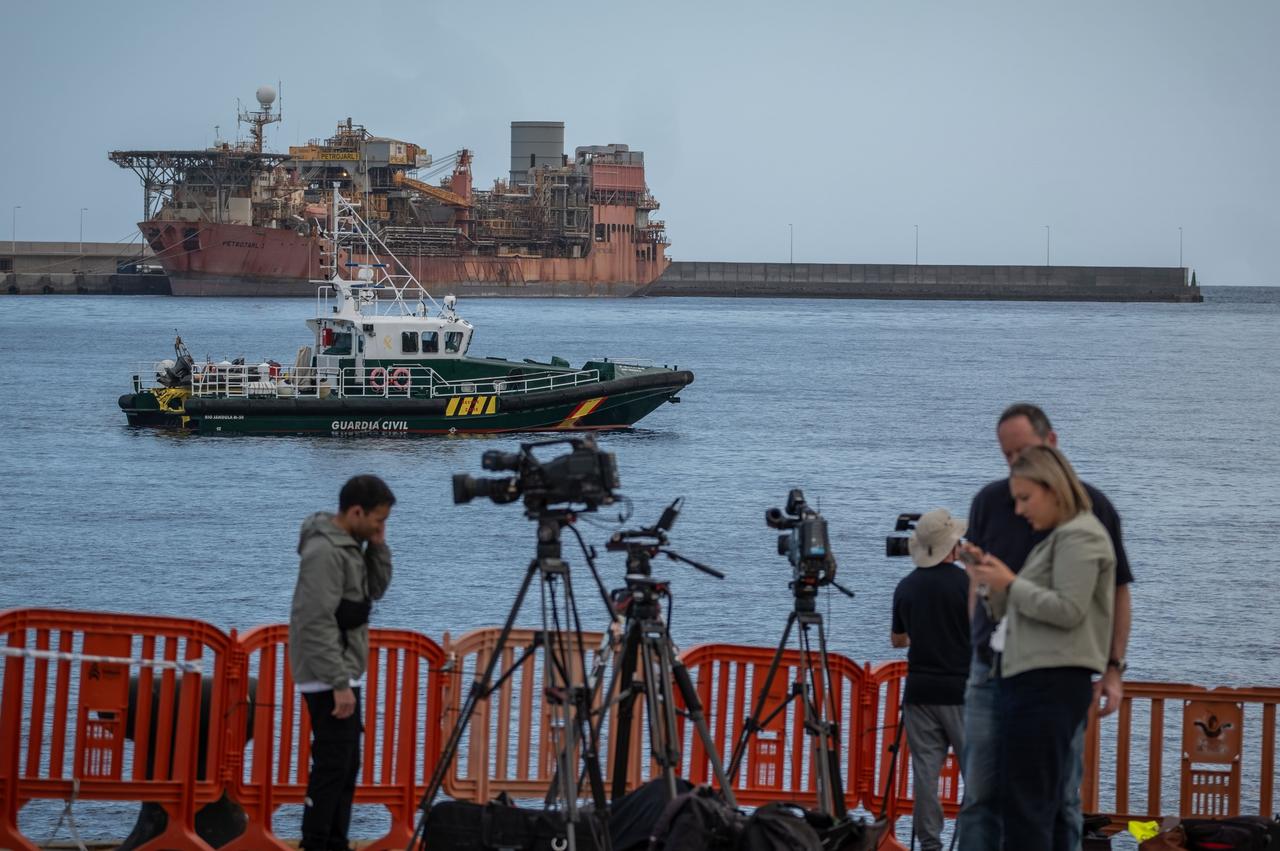
Preparations are underway at the port in Tenerife, where passengers suspected of hantavirus infection will be transferred, 9 May 2026 - (Anadolu Ajansı)
According to Ghebreyesus, the first patient began showing symptoms on 6 April and died on board the ship on 11 April. No sample was taken from this patient. The second death occurred during a flight to Johannesburg on 25 April, when the patient’s condition deteriorated and they died on 26 April. Samples from this case were tested at the National Institute for Communicable Diseases (NICD) in South Africa and confirmed as hantavirus. The third death occurred in a woman who developed symptoms on 28 April and died on 2 May.
Ghebreyesus stated that the eighth case, identified in a man who disembarked from the ship at Saint Helena, had previously reported symptoms in Zürich, Switzerland. On 6 May, the case was confirmed as hantavirus infection via hantavirus testing. It was reported that University Hospitals of Geneva confirmed the virus strain as the Andes virus through genomic sequencing.
WHO Director of the Division of Epidemic and Pandemic Diseases, Maria Van Kerkhove, emphasized that this virus differs from COVID-19, as it does not spread like coronaviruses but requires close and intimate contact. Kerkhove noted that most hantaviruses are transmitted by rodents, and the Andes virus is the only known strain capable of human-to-human transmission.
7 May 2026, after the evacuation of three suspected cases from Cabo Verde, the MV Hondius departed for the Canary Islands, where it had anchored for approximately three days. The three evacuated individuals were identified as citizens of Britain, the Netherlands, and Germany.
The ship operator, Oceanwide Expeditions, noted that two of the evacuated passengers had shown symptoms, while the third was a close relative of the passenger who died on 2 May.
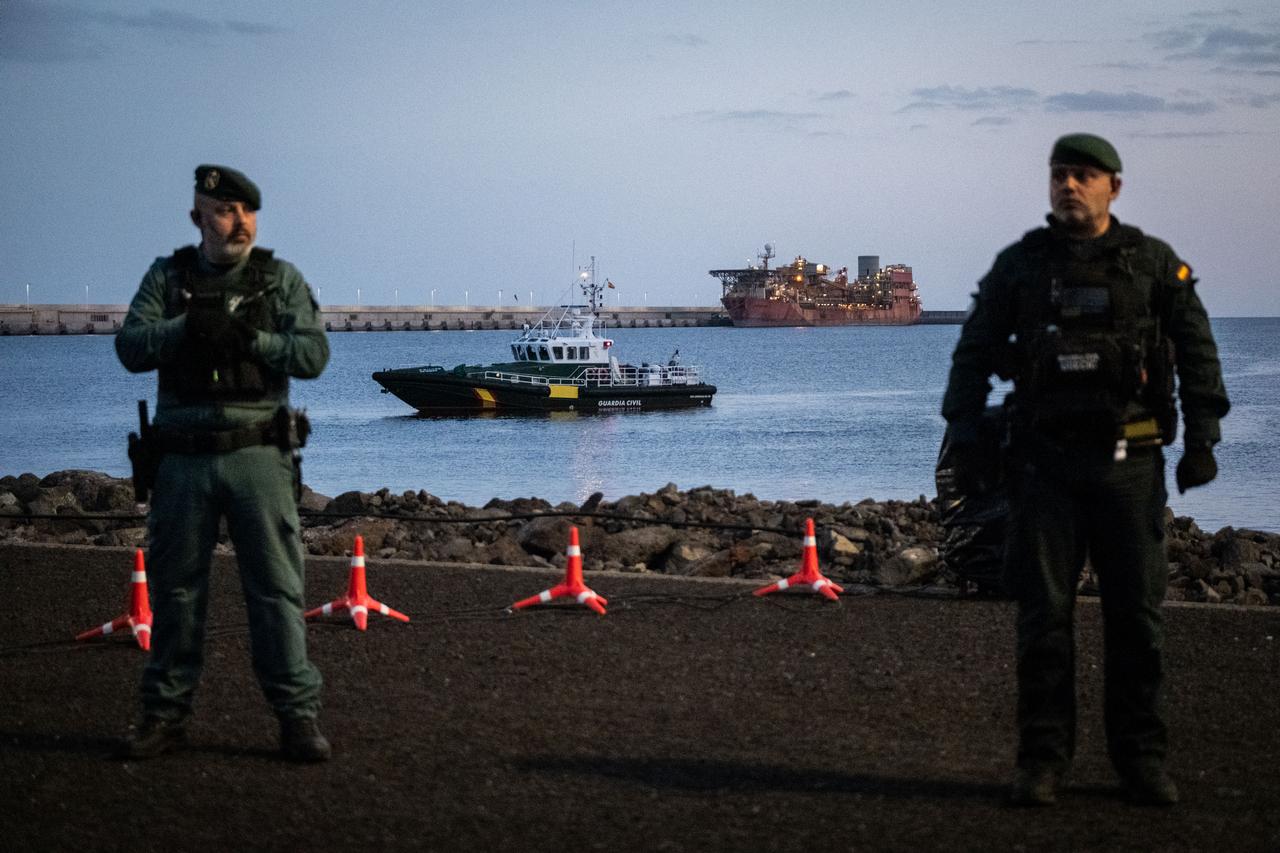
Preparations are underway at the port in Tenerife, where passengers suspected of hantavirus infection will be transferred, 9 May 2026 - (Anadolu Ajansı)
The Netherlands Ministry of Foreign Affairs reported that after the first passenger died, approximately 40 passengers on the ship were evacuated to Saint Helena Island in the South Atlantic.
According to Dutch media reports, a flight crew member employed by KLM Royal Dutch Airlines (KLM) was admitted to a hospital in Amsterdam with hantavirus symptoms. The individual had been in contact with the 69-year-old Dutch woman who died in Johannesburg and was isolated in the hospital with mild symptoms. WHO spokesperson Christian Lindmeier confirmed that the individual’s test results were negative.
Germany admitted a 65-year-old German woman to the infection disease unit at Düsseldorf University Hospital for precautionary testing, as she may have been exposed to hantavirus during the outbreak on board. The hospital stated that her condition was stable and no active infection had been detected as of that date, but monitoring continued due to the variable incubation period of the virus.
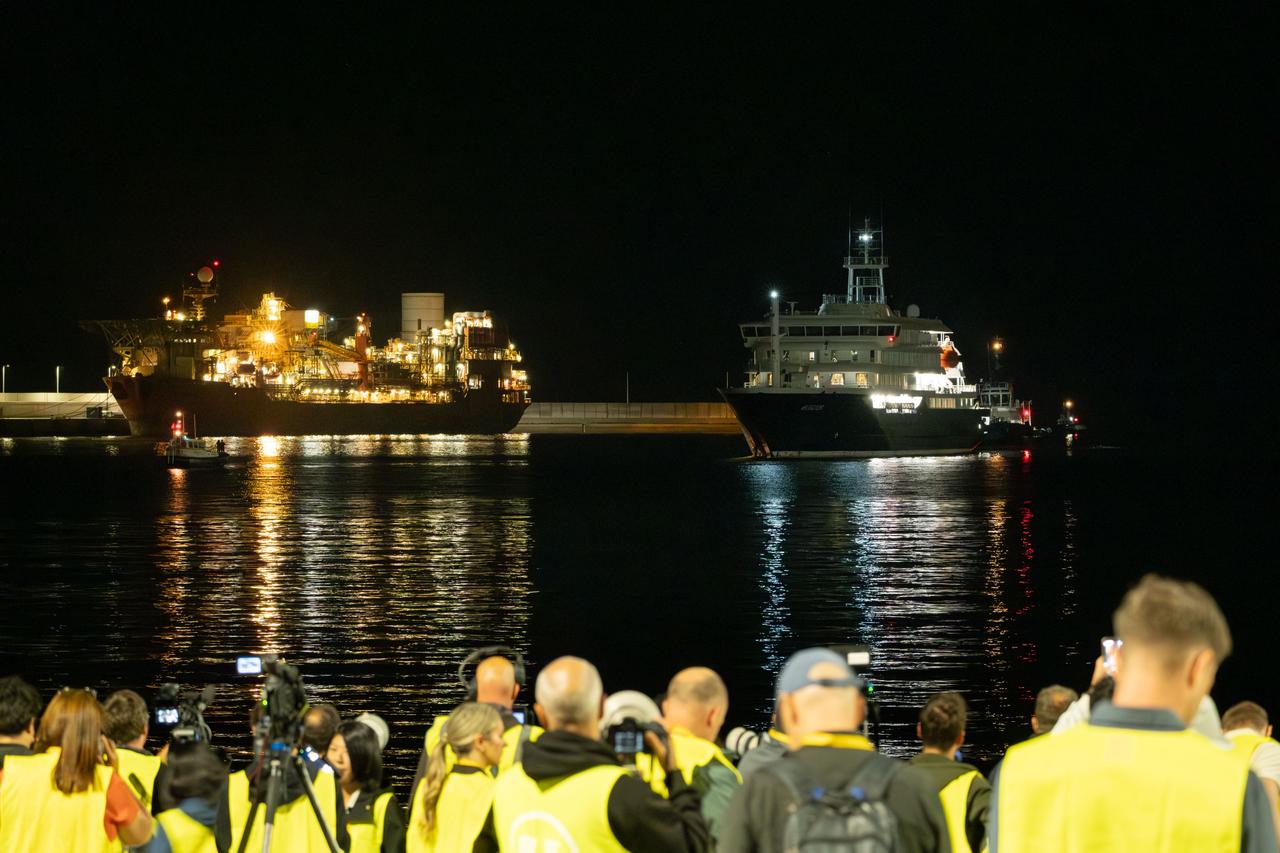
Hantavirus-suspected cases aboard the MV Hondius at Granadilla Port, 10 May 2026 - (Anadolu Ajansı)
EU Commission spokesperson Eva Hrncirova stated on 7 May 2026 that, based on current data, the risk to Europeans was low and no cause for alarm existed at this stage. It was reported that the EU had maintained continuous communication since the first case was reported with the WHO, member states, and the European Centre for Disease Prevention and Control (ECDC). It was also noted that the ECDC had dispatched an expert to the ship.
WHO spokesperson Christian Lindmeier stated on 8 May 2026 that while hantavirus is dangerous for infected individuals, the risk to the general population is certainly low. Lindmeier confirmed that contact tracing was being conducted effectively and that the ship had waited in Cabo Verde for a period while two doctors from the Netherlands boarded to join the crew.
WHO Regional Director for the Eastern Mediterranean, Hanan Balkhy, announced that as of that date, no hantavirus cases had been reported in the Eastern Mediterranean Region. Balkhy noted that the case fatality rate of this disease can reach up to 50 percent, making early access to intensive supportive care critical.
United States Centers for Disease Control and Prevention (CDC) classified hantavirus cases as a "Level 3 emergency" and activated its Emergency Operations Center. It was clarified that this is the lowest emergency level, indicating low risk to the public, but that the situation remains under active monitoring by public health authorities.
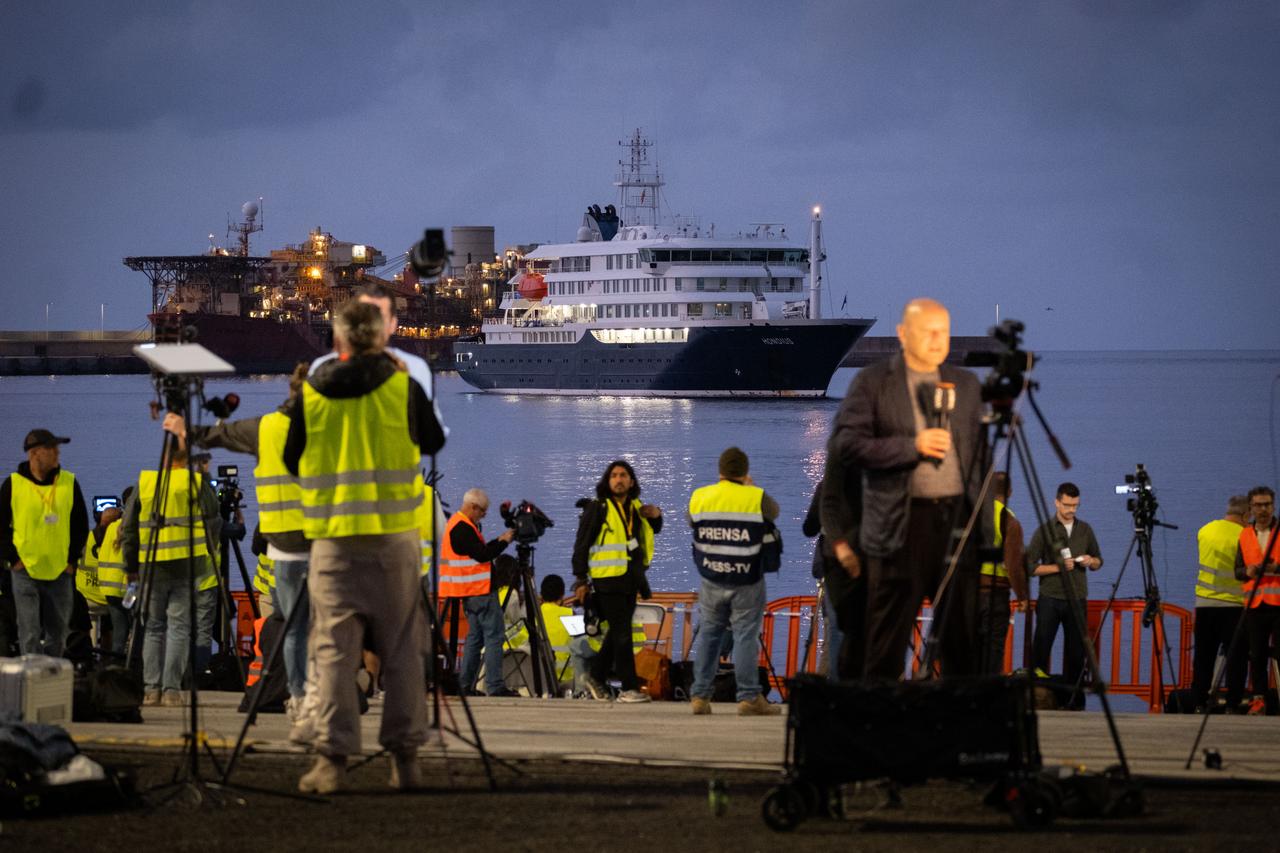
Hantavirus-suspected cases aboard the MV Hondius at Granadilla Port, 10 May 2026 - (Anadolu Ajansı)
United Kingdom announced on 8 May 2026 that another British citizen had been identified with suspected hantavirus infection. According to the UK Health Security Agency (UKHSA), the suspected case had been aboard the ship during its stop at Tristan da Cunha Island last month. The statement noted that no symptoms had been observed among British citizens currently on board, but their health status was being closely monitored.
It was indicated that British passengers returning to the United Kingdom, even if asymptomatic, might be required to undergo 45 days of isolation. With this development, the total number of confirmed or suspected British cases linked to the outbreak rose to 3.
One of the British citizens confirmed with hantavirus infection was identified as Martin Anstee, a 56-year-old retired police officer and expedition guide. Anstee was evacuated from the ship on 6 May Wednesday and transported to the Netherlands along with a Dutch crew member and a German passenger; his condition was reported as stable. The other British passenger, aged 69, was transferred to South Africa on 27 April and is receiving intensive care, with their condition reported as improving. In addition, no symptoms had been detected as of that date in two other British citizens voluntarily in isolation in the United Kingdom due to potential exposure.
Spain Minister of the Interior, Fernando Grande Marlaska, stated on 8 May 2026 that the evacuation of passengers and crew from the MV Hondius would occur under full security and without any contact between the evacuees and the rest of the local population.
According to the evacuation protocol, passengers would remain aboard the ship until their flights were prepared; each transfer would take approximately 10 minutes. If any country failed to send a flight to retrieve its citizens, two EU rescue aircraft would be deployed to carry out the transfers. It was also stated that a ban had been imposed on the ship approaching within a nautical mile of the shore and that the entire port area would be fully quarantined.
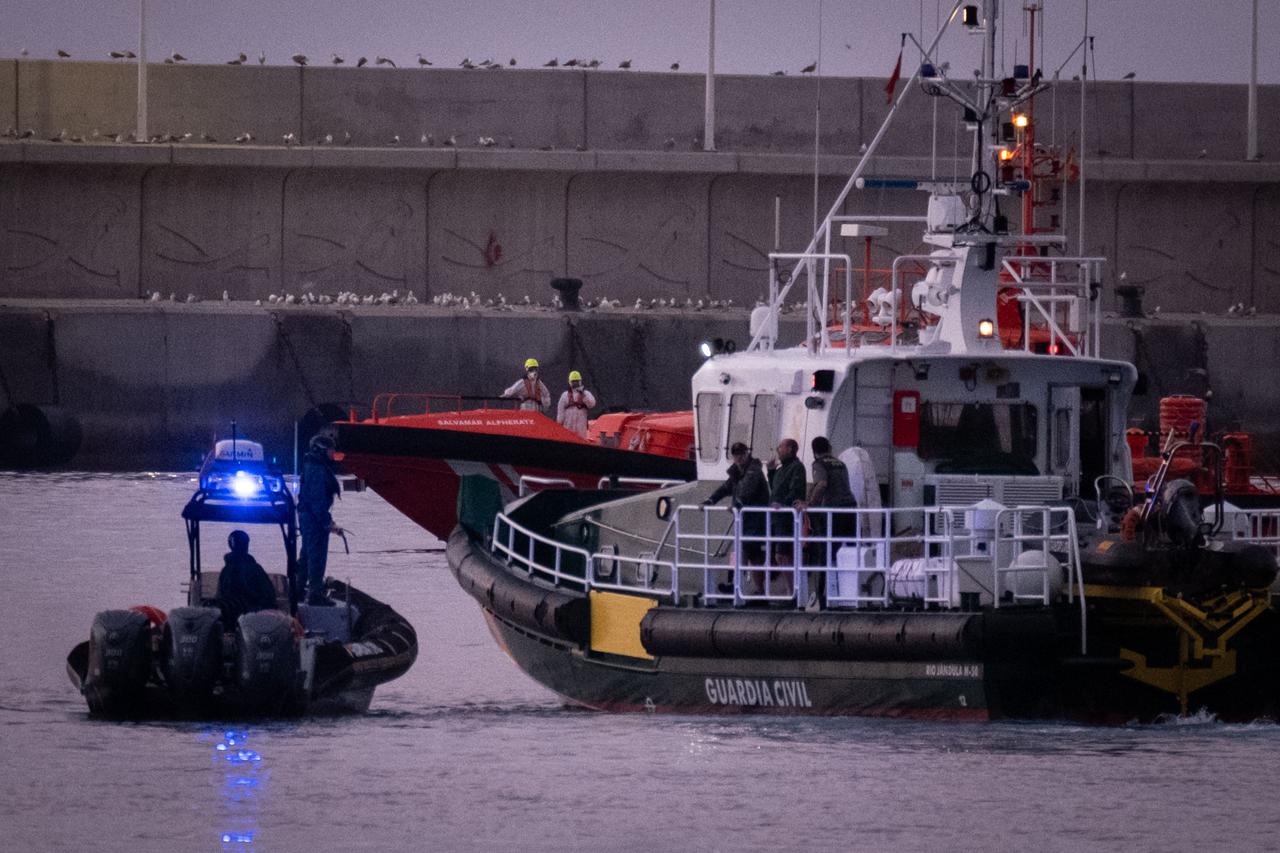
Hantavirus-suspected cases aboard the MV Hondius at Granadilla Port, 10 May 2026 - (Anadolu Ajansı)
Spain Minister of Health, Monica Garcia, announced that all foreign nationals aboard the ship, except those requiring urgent medical intervention, would be repatriated to their home countries even if symptoms were detected. It was reported that 14 Spanish citizens had agreed to be transported from Tenerife to Madrid and placed in quarantine at a military hospital for the expected 45 days.
WHO Director-General Ghebreyesus, in a message to the people of Tenerife on 9 May 2026, confirmed that passengers would be disembarked far from residential areas and would not come into contact with the local population. Ghebreyesus reminded the public that the virus aboard the MV Hondius was the Andes hantavirus, a serious virus that had already caused the deaths of 3 people. He explained that passengers would be transferred ashore via a sealed and guarded corridor to the industrial port of Granadilla, using sealed and protected vehicles, and then immediately repatriated to their home countries. “Viruses do not care about politics or borders. Our best immunity is solidarity,” he said. Ghebreyesus noted that approximately 150 people from 23 countries had been at sea for weeks, some observing mourning rituals, all fearful and missing home.
According to Interior Minister Marlaska, as of that date, a total of 6 individuals aboard the ship had been diagnosed with hantavirus.
The distribution of passengers and crew aboard the ship by nationality is as follows: 38 from the Philippines (all crew), 23 from the United Kingdom, 17 from the United States, 14 from Spain, 11 from the Netherlands, 8 from Germany, five each from France and Ukraine, four each from Canada and Australia, 3 from Türkiye, two each from India, Belgium, and Ireland, and one each from Greece, Poland, Portugal, Montenegro, Japan, New Zealand, Russia, Argentina, and Guatemala, totaling 147 individuals.
United States announced it would send a charter flight coordinated by the Department of State and the Centers for Disease Control and Prevention (CDC) to evacuate the 17 American citizens aboard the MV Hondius. Following a risk assessment by the health team, the passengers will be transferred to the National Quarantine Unit at the University of Nebraska Medical Center.
Türkiye Ministry of Health announced on 9 May 2026 that the three Turkish citizens aboard the ship, who had shown no symptoms or signs of illness, would be repatriated the following day. The ministry stated that during the ongoing monitoring process in coordination with international authorities, no symptoms or signs of illness had been detected in these citizens; upon arrival in Türkiye, they would be placed in quarantine and subjected to rigorous health procedures.
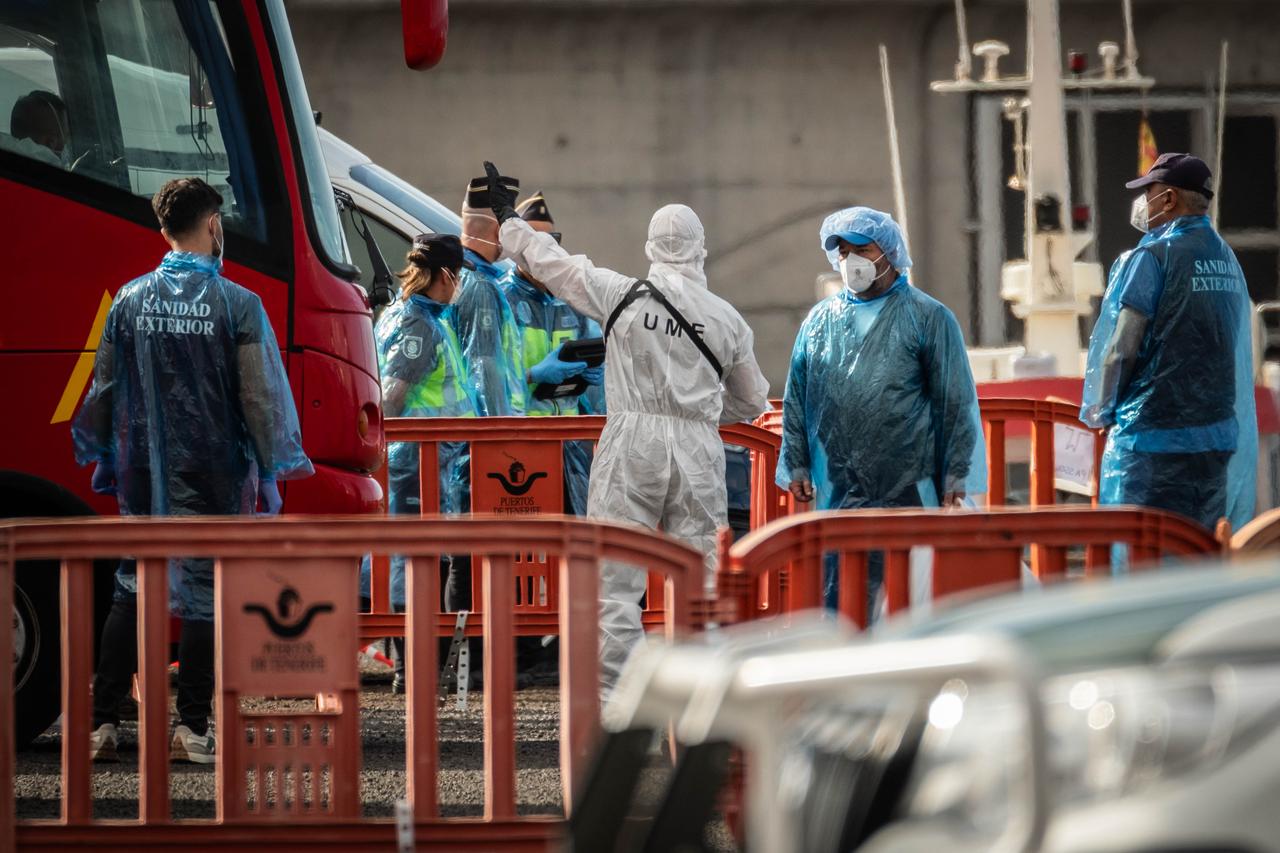
Evacuations from the passenger ship to the airport, 10 May 2026 - (Anadolu Ajansı)
MV Hondius entered the Granadilla de Abona Port in Tenerife, Spain, at approximately 06.00 local time (08.00 UTC). The ship anchored at the port entrance without being permitted to dock.
WHO Director-General Ghebreyesus, along with Spanish Health Minister Monica Garcia and Interior Minister Marlaska, was present in Tenerife to coordinate the evacuation operation.
First to board the ship were doctors dispatched by the Spanish Ministry of Health, wearing white protective gowns, caps, and FFP2 masks to prevent potential transmission. After health screenings of passengers and crew, the first group to disembark consisted of 14 Spanish passengers and an epidemiologist employed by the WHO who had boarded in Cabo Verde.
Since the ship was not allowed to dock, 15 individuals were transported ashore in groups via a vessel operated by the Port Authority. These 15 individuals were scheduled to be flown to Madrid aboard a Spanish state aircraft and quarantined at the Gomez Ulla Military Hospital. Passengers requiring passport processing would be transported by bus operated by the Military Emergency Response (UCM) unit to the airport. Protective gear was provided to prevent potential virus transmission, and passengers were permitted to carry only a small suitcase.
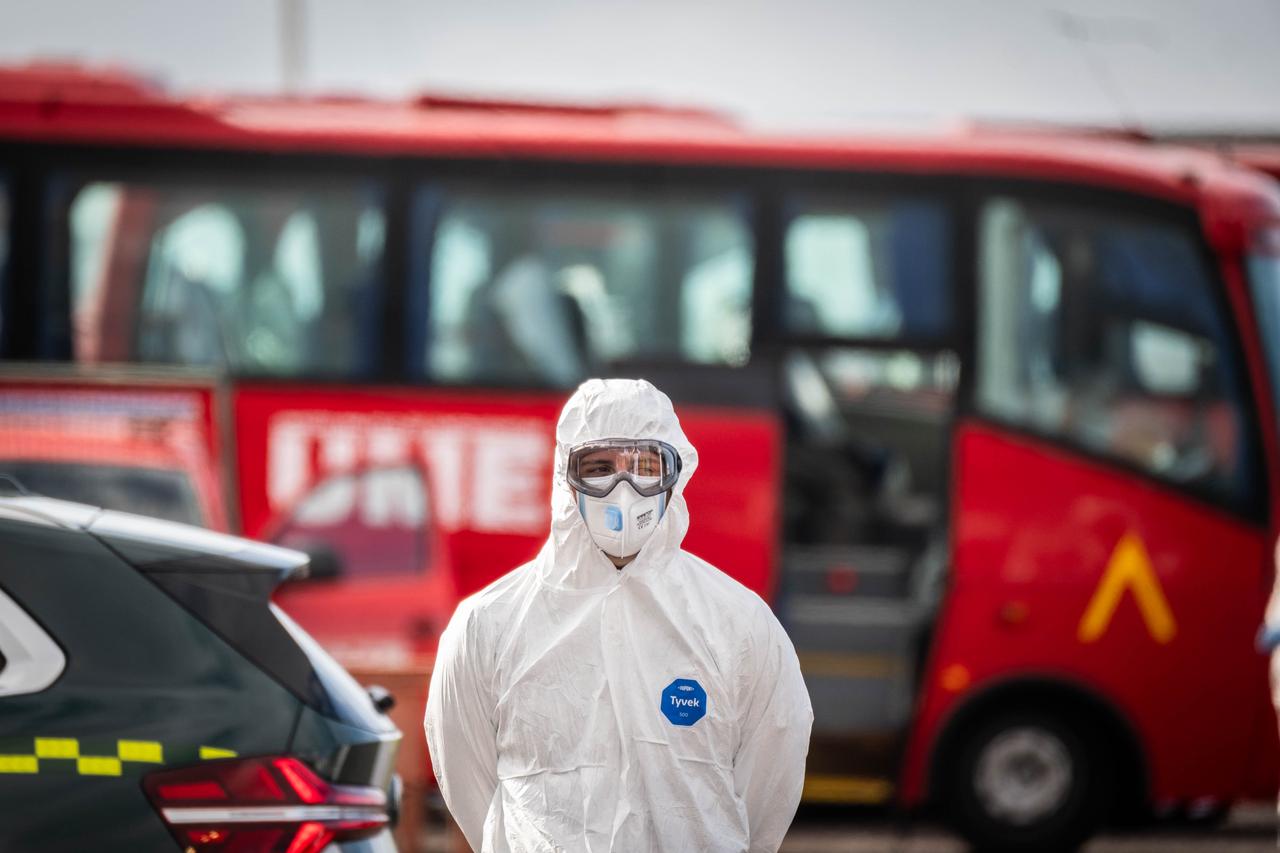
Evacuations from the passenger ship to the airport, 10 May 2026 - (Anadolu Ajansı)
Spain Health Minister Garcia reported that all individuals aboard the ship were asymptomatic. She confirmed that flights were scheduled to depart for the Netherlands, Germany, Belgium, Ireland, the United Kingdom, the United States, Greece, France, and Türkiye (for the three Turkish citizens aboard). She added that the final flight, destined for Australia, was scheduled for the following morning.
European Commission Commissioner for Equality, Preparedness and Crisis Management, Hadja Lahbib, announced that, at Spain’s request under the EU Civil Protection Mechanism, a medical air ambulance from Norway would be dispatched to Tenerife. It was also reported that additional EU capacity was on standby.
WHO Director-General Ghebreyesus confirmed that the evacuation had begun and that WHO experts on site were working with the Spanish Ministry of Health to conduct epidemiological assessments of passengers and coordinating charter flights with the Ministry of the Interior.
According to Ministry of Health officials, following the first group, five French and four Canadian passengers were also flown back to their countries. It was announced that the same day, flights would depart from Tenerife airport for the Netherlands (11), Türkiye (3), the United Kingdom (23), Ireland (2), and the United States (17). The schedule indicated that the following day, flights would depart for Australia and New Zealand, and that other passengers unable to secure flights would be repatriated via a second aircraft from the Netherlands, given the ship’s Dutch flag.
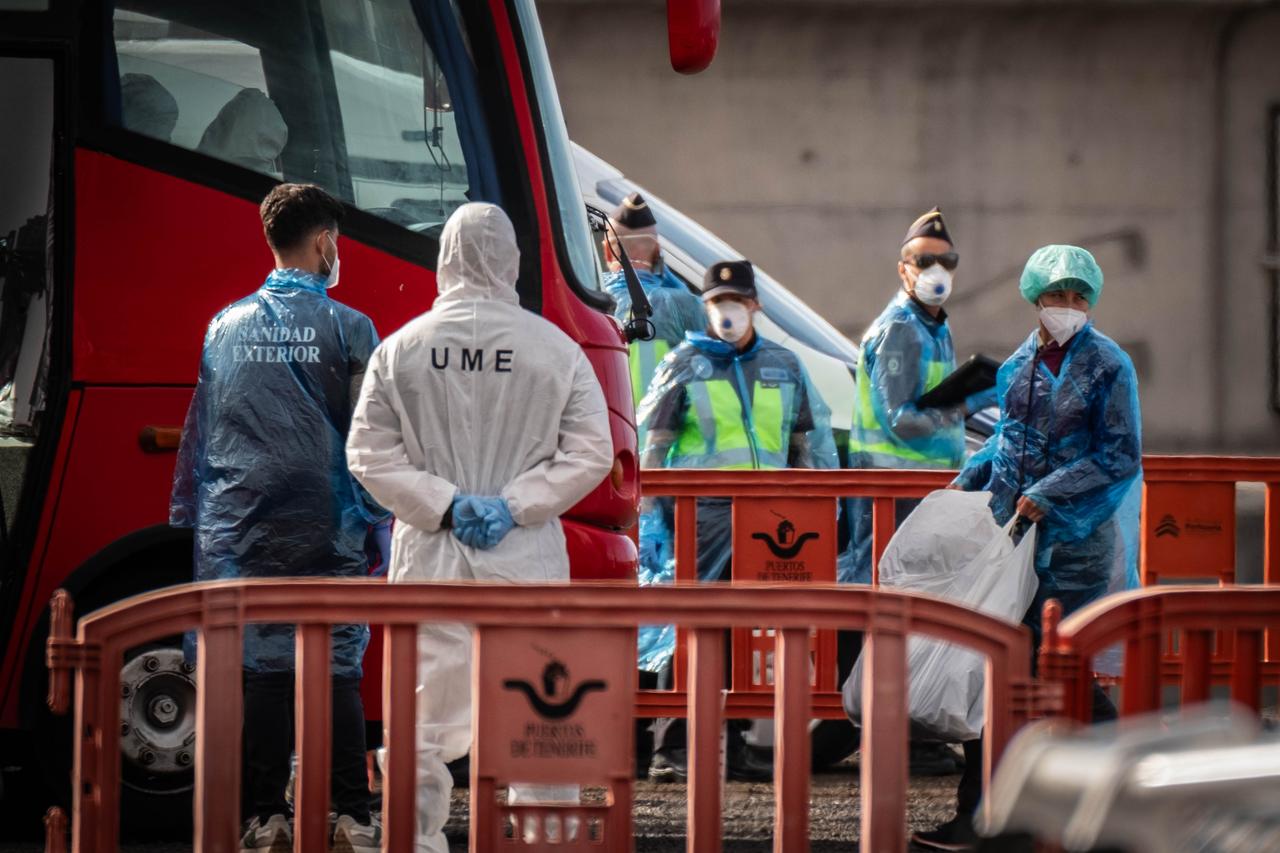
Evacuations from the passenger ship to the airport, 10 May 2026 - (Anadolu Ajansı)
Spain Health Minister Garcia, in her statement on the operation, said: “The operation continues. Despite all challenges encountered, progress is proceeding without incident, and nothing can deter us from ensuring the success of this evacuation. This is an unprecedented and complex operation.”
WHO Director-General Ghebreyesus stated that following the evacuation, the risk of potential hantavirus transmission was low and that all countries receiving the passengers had taken preventive measures.
After completion of the evacuation operations, the MV Hondius is scheduled to depart from Tenerife under a reduced crew and proceed to Rotterdam Port in the Netherlands.
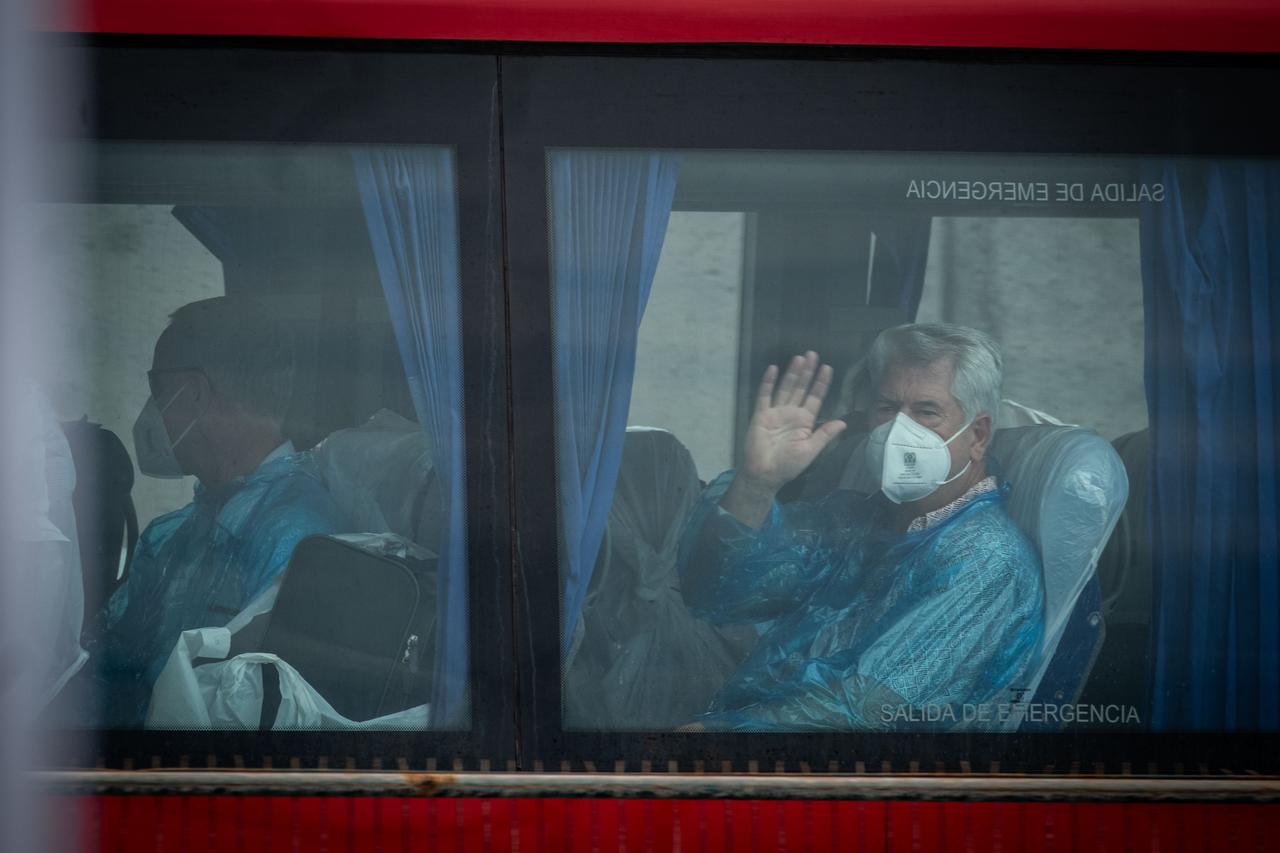
Evacuations from the passenger ship to the airport, 10 May 2026 - (Anadolu Ajansı)
France Health Minister Stephanie Rist announced on 11 May 2026 that one of the five French citizens evacuated from the ship tested positive for hantavirus. The female passenger reported feeling unwell shortly after disembarkation; tests on the other four passengers returned negative results. It was announced that all five French citizens would be quarantined in the capital, Paris.
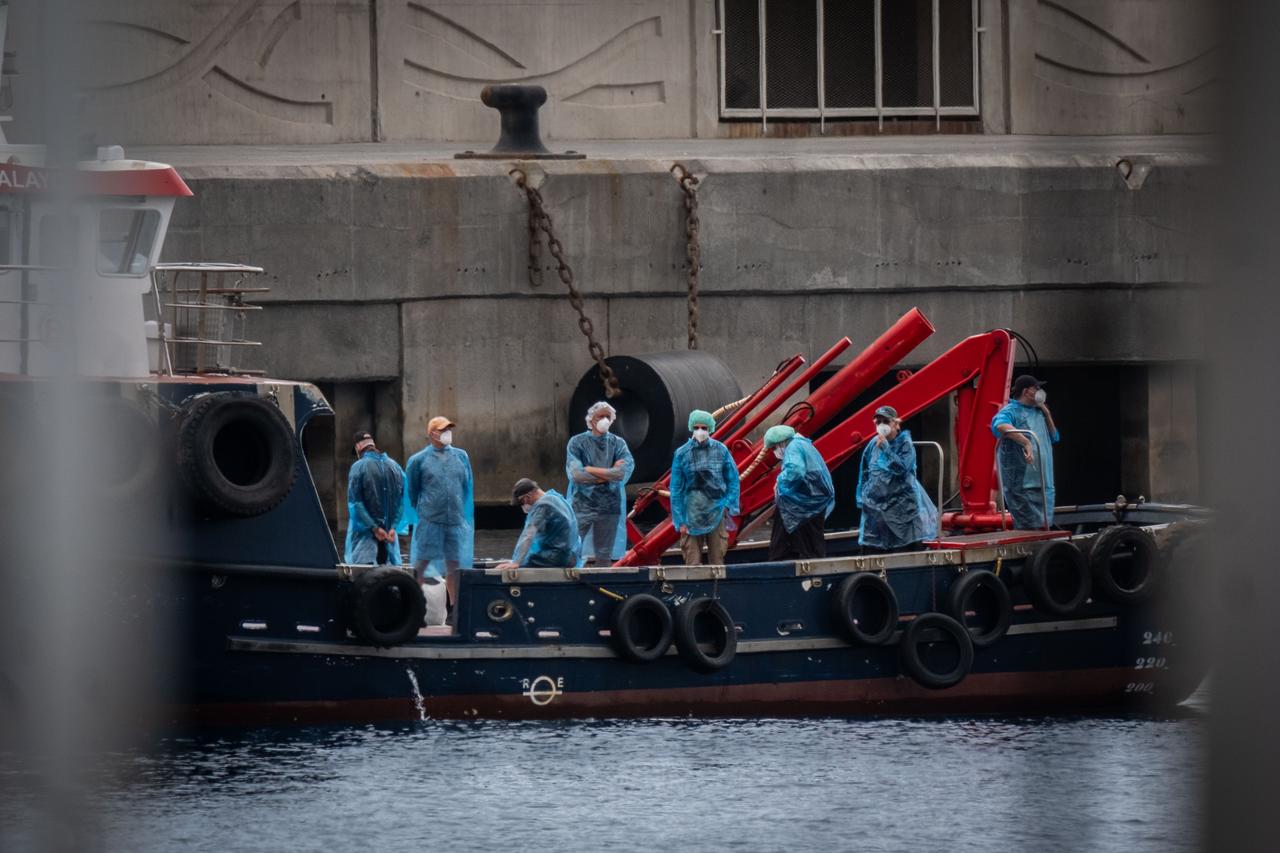
Evacuations from the passenger ship to the airport, 10 May 2026 - (Anadolu Ajansı)
United States Department of Health and Human Services (HHS), in its statement on the status of the 17 American citizens evacuated from the ship, reported that two passengers required heightened monitoring and were placed under protective care. One passenger had a mildly positive hantavirus test result, while the other exhibited mild symptoms. It was confirmed that the American passengers would be placed at the University of Nebraska Medical Center for detailed clinical evaluation.
Anadolu Ajansı. "AB: Şu Aşamada Hantavirüs Nedeniyle Avrupalılar İçin Endişe Yaratacak Bir Durum Yok." Accessed May 11, 2026. https://www.aa.com.tr/tr/dunya/ab-su-asamada-hantavirus-nedeniyle-avrupalilar-icin-endise-yaratacak-bir-durum-yok/3930089
Anadolu Ajansı. "ABC: ABD, Hantavirüs Vakalarını 3. Seviye Acil Durum Koduyla Takibe Aldı." Accessed May 11, 2026. https://www.aa.com.tr/tr/dunya/abc-abd-hantavirus-vakalarini-3-seviye-acil-durum-koduyla-takibe-aldi/3930870
Anadolu Ajansı. "ABD, Hantavirüs Vakası Görülen Gemiden Vatandaşlarının Tahliyesi İçin Uçak Gönderecek." Accessed May 11, 2026. https://www.aa.com.tr/tr/dunya/abd-hantavirus-vakasi-gorulen-gemiden-vatandaslarinin-tahliyesi-icin-ucak-gonderecek/3932105
Anadolu Ajansı. "DSÖ, Bir Yolcu Gemisinde Bildirilen 8 Vakadan 5’inin Hantavirüs Olduğunun Doğrulandığını Belirtti." Accessed May 11, 2026. https://www.aa.com.tr/tr/dunya/dso-bir-yolcu-gemisinde-bildirilen-8-vakadan-5inin-hantavirus-oldugunun-dogrulandigini-belirtti/3930344
Anadolu Ajansı. "DSÖ: Hantavirüs Enfekte Olan Kişi İçin Tehlikeli, Genel Nüfus İçin Risk Kesinlikle Düşük." Accessed May 11, 2026. https://www.aa.com.tr/tr/dunya/dso-hantavirus-enfekte-olan-kisi-icin-tehlikeli-genel-nufus-icin-risk-kesinlikle-dusuk/3931214
Anadolu Ajansı. "DSÖ: Şu Anda Hantavirüsün Küresel Nüfus İçin Oluşturduğu Riski Düşük Olarak Değerlendiriyoruz." Accessed May 11, 2026. https://www.aa.com.tr/tr/dunya/dso-su-anda-hantavirusun-kuresel-nufus-icin-olusturdugu-riski-dusuk-olarak-degerlendiriyoruz/3931120
Anadolu Ajansı. "DSÖ’den Hantavirüslü Hastaları Taşıyan Geminin Yanaşacağı Tenerife Halkına Mesaj." Accessed May 11, 2026. https://www.aa.com.tr/tr/dunya/dsoden-hantaviruslu-hastalari-tasiyan-geminin-yanasacagi-tenerife-halkina-mesaj/3932463
Anadolu Ajansı. "Hantavirüs Vakalarının Olduğu Gemiden Karaya Çıkartılan Yolcular Ülkelerine Gönderiliyor." Accessed May 11, 2026. https://www.aa.com.tr/tr/dunya/hantavirus-vakalarinin-oldugu-gemiden-karaya-cikartilan-yolcular-ulkelerine-gonderiliyor/3933151
Anadolu Ajansı. "Hantavirüs Vakalarının Tespit Edildiği Yolcu Gemisi Kanarya Adaları’nın Tenerife Kentindeki Limana Geldi." Accessed May 11, 2026. https://www.aa.com.tr/tr/dunya/hantavirus-vakalarinin-tespit-edildigi-yolcu-gemisi-kanarya-adalarinin-tenerife-kentindeki-limana-geldi/3932787
Anadolu Ajansı. "Hantavirüs Vakalarının Çıktığı Yolcu Gemisinde Limandan Havalimanına Tahliyeler Başladı." Accessed May 11, 2026. https://www.aa.com.tr/tr/dunya/hantavirus-vakalarinin-ciktigi-yolcu-gemisinde-limandan-havalimanina-tahliyeler-basladi/3932929
Anadolu Ajansı. "Hantavirüs Vakası Görülen Gemideki 3 Türk Vatandaşı Yarın Türkiye’ye Getirilecek." Accessed May 11, 2026. https://www.aa.com.tr/tr/gundem/hantavirus-vakasi-gorulen-gemideki-3-turk-vatandasi-yarin-turkiyeye-getirilecek/3932689
Anadolu Ajansı. "Hantavirüs Şüphesiyle 3 Yolcusu Tahliye Edilen Yolcu Gemisi Kanarya Adaları’na Hareket Etti." Accessed May 11, 2026. https://www.aa.com.tr/tr/dunya/hantavirus-suphesiyle-3-yolcusu-tahliye-edilen-yolcu-gemisi-kanarya-adalarina-hareket-etti/3930154
Anadolu Ajansı. "Hantavirüsten Etkilenen Gemidekiler İspanya’da Halkla Hiçbir Temas Kurmadan Ülkelerine Gönderilecek." Accessed May 11, 2026. https://www.aa.com.tr/tr/dunya/hantavirusten-etkilenen-gemidekiler-ispanyada-halkla-hicbir-temas-kurmadan-ulkelerine-gonderilecek/3931339
Anadolu Ajansı. "MV Hondius Gemisinden Tahliye Edilen Fransa ve ABD Vatandaşı İki Kişinin Hantavirüs Testleri Pozitif Çıktı." Accessed May 11, 2026. https://www.aa.com.tr/tr/dunya/mv-hondius-gemisinden-tahliye-edilen-fransa-ve-abd-vatandasi-iki-kisinin-hantavirus-testleri-pozitif-cikti/3933658
Anadolu Ajansı. "İngiltere, Bir İngiliz Vatandaşında Daha Hantavirüs Şüphesi Tespit Edildiğini Açıkladı." Accessed May 11, 2026. https://www.aa.com.tr/tr/dunya/ingiltere-bir-ingiliz-vatandasinda-daha-hantavirus-suphesi-tespit-edildigini-acikladi/3931075
Anadolu Ajansı. "İspanya, Hantavirüs Vakalı Gemideki Yolcuları Karantina Altında Tahliye Edecek." Accessed May 11, 2026. https://www.aa.com.tr/tr/dunya/ispanya-hantavirus-vakali-gemideki-yolculari-karantina-altinda-tahliye-edecek/3932513
Centers for Disease Control and Prevention. "Hantavirus: Current Situation." Accessed May 11, 2026. https://www.cdc.gov/hantavirus/situation-summary/index.html
Dünya Sağlık Örgütü. "Hantavirus Cluster Linked to Cruise Ship Travel, Multi-Country." Accessed May 11, 2026. https://www.who.int/emergencies/disease-outbreak-news/item/2026-DON600
Dünya Sağlık Örgütü. "Message by the WHO Director-General to the People of Tenerife Regarding the Hantavirus Response." Accessed May 11, 2026. https://www.who.int/news/item/09-05-2026-message-by-the-who-director-general-to-the-people-of-tenerife-regarding-the-hantavirus-response
Dünya Sağlık Örgütü. "WHO’s Response to Hantavirus Cases Linked to a Cruise Ship." Accessed May 11, 2026. https://www.who.int/news/item/07-05-2026-who-s-response-to-hantavirus-cases-linked-to-a-cruise-ship
Reuters. "British Paratroopers Lead Airdrop onto Tristan da Cunha for Suspected Hantavirus Case." Accessed May 11, 2026. https://www.reuters.com/business/healthcare-pharmaceuticals/british-paratroopers-lead-airdrop-onto-tristan-da-cunha-suspected-hantavirus-2026-05-10/
Sky News. "Hantavirus Latest: WHO Gives Update on Number of Cases after Cruise Evacuation – and Sides with Spain over US." Accessed May 11, 2026. https://news.sky.com/story/three-dead-as-virus-breaks-out-on-atlantic-cruise-ship-13503266
11 May 2026, Spain’s Minister of Health Monica Garcia announced that only 32 crew members remained on board the vessel after passenger evacuation was completed. It was stated that MV Hondius, which had spent the day refueling, would depart from Tenerife in the evening with its remaining crew.
After anchoring off the port of Tenerife for two days due to adverse weather conditions, MV Hondius was temporarily moored at the port at the recommendation of the Coast Guard to facilitate the final disembarkation of passengers. The last 27 passengers were transported by bus to Tenerife Airport, where they boarded two aircraft waiting to take them to the Netherlands.
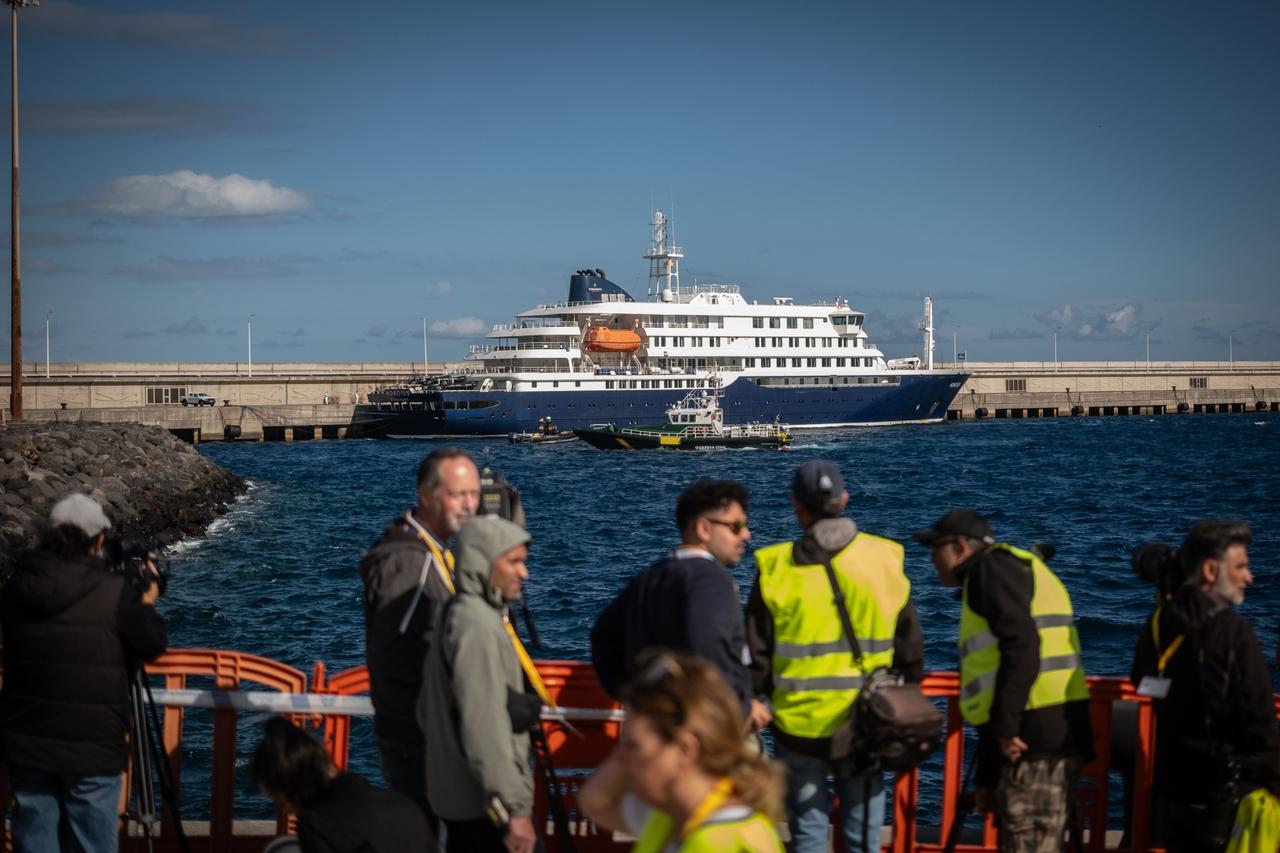
The passenger ship with hantavirus cases departs Tenerife for Rotterdam, 11 May 2026 - (Anadolu Agency)
It was also reported that the final 22 passengers were flown back to the Netherlands on a flight arranged by the Dutch government. Approximately 120 people from 23 countries were evacuated.
All military and civilian personnel and passengers involved in the evacuation operation were provided with protective gear to minimize the risk of viral exposure. It was announced that the port and its surroundings would be thoroughly disinfected following the ship’s departure.
Minister Garcia stated that, in accordance with protocol, disinfection of the port would begin immediately and would be carried out by specialized experts. The ship, accompanied by its 27 crew members, a doctor and a nurse from the WHO, set course for Rotterdam Port in the Netherlands.
WHO Director-General Tedros Adhanom Ghebreyesus, alongside three Spanish ministers (Interior, Health, and Regional Policy and Democratic Memory), announced to the press that the operation had been successfully completed.

The passenger ship with hantavirus cases departs Tenerife for Rotterdam, 11 May 2026 - (Anadolu Agency)
Ghebreyesus thanked the Spanish ministers and Prime Minister Pedro Sanchez, stating, “The mission is complete. The Spanish government’s determination ensured everything went smoothly.” He confirmed that all passengers from MV Hondius would undergo necessary follow-up care, adding, “Everyone will receive the care they need. Had they remained on the ship longer, the situation would have worsened.” Ghebreyesus noted that the quarantine period, as determined by scientific guidelines, would be six weeks, or 42 days, effective from the previous day. He added that passengers could be quarantined either in hospitals or at home. Reiterating that the situation was unrelated to COVID-19, Ghebreyesus called on countries accepting the evacuated passengers to show understanding and empathy.
Spain’s Health Minister Garcia, in her statement on the conclusion of the operation, said, “We have successfully concluded this operation. We thank the WHO, all supporting countries, the European Commission, all local staff, and the people of the Canary Islands.”
Türkiye’s Ministry of Health announced on 11 May 2026 that the final 3 Turkish citizens aboard the international voyage vessel had been transported to Türkiye by ambulance aircraft, and that a close monitoring and isolation process had been initiated. As with the two Turkish citizens who had previously entered the country, necessary samples were collected from these individuals and recorded.
The ministry’s statement included the following information: “All three citizens tested negative for hantavirus and will remain in quarantine for the recommended period. Their clinical conditions are continuously assessed by Ministry of Health teams and closely monitored. To date, no clinical symptoms or signs have been detected in any of the five individuals under observation. The process is being meticulously and closely monitored by our ministry.”
With this announcement, it was officially confirmed that none of the total 5 Turkish citizens aboard the vessel exhibited any clinical symptoms or signs of hantavirus infection.
12 May 2026, Spain’s official news agency EFE, citing Ministry of Health sources, reported that hantavirus tests conducted on 14 Spanish passengers transported from Tenerife to Gomez Ulla Military Hospital in Madrid yielded one positive and 13 negative results.
Health Ministry sources stated that the passenger with the positive test result showed no symptoms, was in good general health, and would undergo a second test to confirm or rule out the preliminary result. In accordance with protocol, the individual, who tested negative along with the other 13 passengers, was transferred to the hospital’s High-Level Isolation and Treatment Unit (UATAN).
Spain’s Deputy Minister of Health Javier Padilla declined to provide further details about the patient, confirming only that the individual was male. Padilla explained that although the patient was asymptomatic, the medical team was immediately notified of the preliminary positive result and the patient was transferred to UATAN without physical contact, under strict safety protocols.
With this development, the total number of hantavirus cases identified among passengers evacuated from Tenerife has reached three: one French, one American, and one Spanish.
12 May 2026, the WHO stated that the hantavirus detected aboard MV Hondius and potentially detectable in subsequent contact tracing does not constitute the beginning of a new pandemic.
WHO clarified that current data indicate the first confirmed case aboard the ship likely contracted the infection prior to the voyage through environmental exposure during activities in Argentina and Chile. It was noted that this individual likely had contact with rodents during birdwatching activities. The WHO added that investigations are ongoing to determine the full itinerary of the first case and potential exposure factors, and that existing evidence suggests transmission occurred onboard the ship after initial infection.
WHO stated that the hantavirus strain linked to this outbreak will be compared with strains circulating in Argentina, Chile, and Uruguay, where the disease is endemic. Viral sequencing analyses are also underway.
WHO noted that, based on previous outbreaks, hantavirus does not spread easily from person to person, and warned that additional cases may occur among those exposed before quarantine measures were implemented. It was recorded that the current intervention, including rapid isolation of new suspected cases and monitoring of contacts, is expected to limit further spread.
WHO advised that individuals on the affected ship and aircraft should practice frequent hand hygiene and monitor themselves for early symptoms—including headache, dizziness, chills, fever, muscle pain, and gastrointestinal issues such as nausea, vomiting, diarrhea, and abdominal pain—for 42 days following their last possible exposure. Individuals with respiratory symptoms were advised to follow respiratory hygiene and wear masks. It was emphasized that anyone developing early symptoms or sudden respiratory distress must immediately notify health authorities and isolate themselves until medical evaluation is completed.
WHO’s written statement included the following: “Considering the duration of exposure and the incubation period before symptom onset, we may expect additional cases and potential case signals as those aboard the ship and their contacts are closely monitored. Each country will develop its own specific plan for hantavirus. This is not the beginning of a new pandemic, as with COVID-19. What we know about hantavirus is that it does not spread easily; it typically transmits from rodents to humans, though limited human-to-human transmission has been reported. While human-to-human transmission may have occurred on the ship, the risk remains highest for those in close contact.”
Anadolu Ajansı. "DSÖ'ye Göre Vaka Artışı İhtimali Bulunan Hantavirus Bir Pandemi Başlangıcı Değil." Accessed May 12, 2026. https://www.aa.com.tr/tr/dunya/dsoye-gore-vaka-artisi-ihtimali-bulunan-hantavirus-bir-pandemi-baslangici-degil/3934631
Anadolu Ajansı. "Hantavirus Vakalarının Olduğu Yolcu Gemisi Tenerife'den Ayrılarak Rotterdam'a Hareket Etti." Accessed May 12, 2026. https://www.aa.com.tr/tr/dunya/hantavirus-vakalarinin-oldugu-yolcu-gemisi-tenerifeden-ayrilarak-rotterdama-hareket-etti/3934289
Anadolu Ajansı. "Hantavirus Vakalarının Tespit Edildiği Yolcu Gemisinin Tenerife'deki Tahliye İşlemleri Bitti." Accessed May 12, 2026. https://www.aa.com.tr/tr/dunya/hantavirus-vakalarinin-tespit-edildigi-yolcu-gemisinin-tenerifedeki-tahliye-islemleri-bitti/3933894
Anadolu Ajansı. "Madrid'de Karantinada Tutulan İspanyol Yolculardan Birinin Hantavirus Testi Pozitif Çıktı." Accessed May 12, 2026. https://www.aa.com.tr/tr/dunya/madridde-karantinada-tutulan-ispanyol-yolculardan-birinin-hantavirus-testi-pozitif-cikti/3934399
Anadolu Ajansı. "Sağlık Bakanlığı: Üç Vatandaşımızın Hantavirus Sonuçlarının Negatif Olduğu Saptandı." Accessed May 12, 2026. https://www.aa.com.tr/tr/gundem/saglik-bakanligi-uc-vatandasimizin-hantavirus-sonuclarinin-negatif-oldugu-saptandi/3934031
BBC News. "Last Passengers Leave Virus-Hit Cruise Ship as Three More Test Positive." Accessed May 12, 2026. https://www.bbc.com/news/articles/cjep78l5835o
12 May 2026, WHO Director-General Tedros Adhanom Ghebreyesus and Spain Prime Minister Pedro Sanchez held a joint press conference at the Moncloa Palace in Madrid following their meeting.
Sanchez emphasized that assisting the MV Hondius passenger ship was viewed by the Spanish government as both a legal and moral responsibility. He stated: "This world cannot tolerate more selfishness. Solidarity is required. The 150 tourists and their families were going through the worst time of their lives. Helping them is our legal and moral duty. It was also important to demonstrate to the entire world Spain’s commitment to international law multilateralism and international obligations."
Sanchez noted that the evacuation of passengers from the ship in Tenerife was carried out strictly according to scientific protocols and based on coordination between international cooperation and national institutions. He stated that approximately 6 million Spaniards travel abroad each year and that from now on all Spaniards will know their health is guaranteed during their travels.
Sanchez indicated that the crisis has not yet ended and that all cases and passenger conditions are being closely monitored. He added: "From now on political responsibility lies with every country to which passengers have been sent. As the Spanish government we will continue to monitor the progress of Spanish passengers treated at the military hospital in Madrid. The first PCR tests have been conducted. Second tests will be carried out in seven to eight days. All necessary steps will be taken to guarantee public health for the Spanish people."
France Prime Minister Sebastien Lecornu stated on 12 May 2026 that improved coordination across Europe and internationally is unavoidable in the fight against hantavirus.
Lecornu reported that he has instructed relevant ministries to strengthen coordination with neighboring countries and to enforce strict health protocols within the European Union (EU) and the Schengen area. It was noted that the French Ministry of Health is already in close contact with countries reporting hantavirus cases.
European Medicines Agency (EMA), on 13 May 2026, announced that there is currently no antiviral treatment or vaccine approved within the European Union framework for hantavirus infections.
EMA’s Head of Press and Public Relations Yasmina Alcazar noted that treatment for such cases relies on clinical supportive care and early diagnosis. Alcazar stated that no existing antivirals have been proven effective or recommended for this type of hantavirus and that sufficient clinical evidence for regulatory approval is lacking. It was also reported that there is no clinical data supporting the use of Favipiravir, an antiviral drug used in COVID-19 cases, for hantavirus infections.
Alcazar said: "For this virus transmitted from animals, vaccines or antibodies targeting specific proteins to help your immune system fight the disease are still in early stages of development."
Alcazar noted that the EMA has an Emergency Task Force (ETF) responsible for managing regulatory activities during pandemics, public health emergencies and similar uncertain situations. She confirmed that the EMA is prepared to support through the ETF the development and regulatory assessment of vaccines and treatments for hantaviruses. As part of preparedness activities, the EMA has mapped pharmaceutical companies developing antivirals and vaccines against hantaviruses and other viruses in the Bunyaviricetes class, which are transmitted via rodents. It was reported that the EMA is closely monitoring the situation in coordination with the ECDC, the European Commission and the European medicines regulatory network.
United Kingdom announced on 13 May 2026 that it will bring 10 citizens linked to the MV Hondius ship, where a hantavirus outbreakoccurred, into the country under preventive quarantine.
A written statement from the UK Health Security Agency (UKHSA) stated that the 10 individuals to be brought from the UK’s overseas territories of Saint Helena and Ascension are either passengers from the ship or healthcare workers who had contact with confirmed cases. It was reported that these individuals are currently in isolation and show no symptoms. They will be brought to the United Kingdom to ensure access to specialized healthcare services under the National Health Service (NHS) network for high-risk infectious diseases.
The statement noted that assessment and testing of passengers aboard the ship are ongoing at Arrowe Park Hospital in Merseyside and that the passengers have completed more than 24 hours of their 72-hour isolation period. This group includes 20 British citizens one German citizen resident in the United Kingdom and one Japanese passenger. It was recorded that individuals discharged from the hospital will be required to continue isolation at home for up to 45 days.
UKHSA Chief Scientific Officer Professor Robin May emphasized that those evacuated are healthy and asymptomatic. He said: "We aim to assure both passengers and the public that strong health measures are in place and that everyone involved in the process will be supported at every stage."
Anadolu Ajansı. "Avrupa İlaç Ajansı: Hantavirus İçin Onaylı Tedavi ve Aşı Yok." Accessed May 13, 2026. https://www.aa.com.tr/tr/gundem/avrupa-ilac-ajansi-hantavirus-icin-onayli-tedavi-ve-asi-yok/3935813
Anadolu Ajansı. "Fransız Hükümetinden Hantavirusle Mücadelede Etkin Uluslararası Koordinasyon Sağlanması Çağrısı." Accessed May 13, 2026. https://www.aa.com.tr/tr/dunya/fransiz-hukumetinden-hantavirusle-mucadelede-etkin-uluslararasi-koordinasyon-saglanmasi-cagrisi/3935268
Anadolu Ajansı. "Sanchez, Hantavirus Vakalarının Olduğu Gemiye Yardımı Yasal ve Ahlaki Sorumluluk Olarak Açıkladı." Accessed May 13, 2026. https://www.aa.com.tr/tr/dunya/sanchez-hantavirus-vakalarinin-oldugu-gemiye-yardimi-yasal-ve-ahlaki-sorumluluk-olarak-acikladi/3934744
Anadolu Ajansı. "İngiltere, Hantavirus Salgınıyla Bağlantılı 10 Vatandaşını Önleyici Karantina Kapsamında Ülkeye Getirecek." Accessed May 13, 2026. https://www.aa.com.tr/tr/dunya/ingiltere-hantavirus-salginiyla-baglantili-10-vatandasini-onleyici-karantina-kapsaminda-ulkeye-getirecek/3936219

On the passenger ship MV Hondius sailing in the Atlantic Ocean, three people died from hantavirus cases, and seven confirmed or suspected cases were identified; the WHO stated that the rare possibility of human-to-human transmission is being assessed, and Spain permitted the ship to dock at the Canary Islands.
No Discussion Added Yet
Start discussion for "MV Hondius Hantavirus Outbreak (2026)" article
May 6, 2026
Vessel and Voyage Information
May 6, 2026
First Cases and Deaths
May 6, 2026
Outbreak Expansion and Evacuations
May 6, 2026
Virus Characteristics and Transmission Routes
May 6, 2026
Direction to Spain and the Canary Islands
May 11, 2026
Update on Case Numbers and Confirmation of Andes Virus (7 May 2026)
May 11, 2026
Evacuation of Three Patients from Cabo Verde and Movement of the Ship to the Canary Islands (7 May 2026)
May 11, 2026
Positions of the United States, European Union and Member States (7–8 May 2026)
May 11, 2026
Preparations for Tenerife (8–9 May 2026)
May 11, 2026
Arrival of the MV Hondius in Tenerife and Commencement of Evacuation Operations (10 May 2026)
May 11, 2026
Completion of Evacuation and Repatriation of Passengers (10 May 2026)
May 11, 2026
New Cases Identified After Evacuation (11 May 2026)
May 12, 2026
Completion of the Tenerife Evacuation Operation and MV Hondius’ Departure to Rotterdam (11 May 2026)
May 12, 2026
Positive Hantavirus Test Result in a Spanish Passenger in Madrid Quarantine (12 May 2026)
May 12, 2026
WHO’s Pandemic Assessment and Monitoring Protocol (12 May 2026)
May 13, 2026
Joint Press Conference by Spanish Prime Minister Sanchez and WHO Director-General Ghebreyesus (12 May 2026)
May 13, 2026
France’s Call for International Coordination (12 May 2026)
May 13, 2026
European Medicines Agency Statement on Treatment and Vaccines (13 May 2026)
May 13, 2026
United Kingdom’s Decision to Bring 10 Citizens from Saint Helena and Ascension Islands under Preventive Quarantine