
This article was automatically translated from the original Turkish version.
Nerve | Innervated by the nerve mandibularis (V3) via a branch from the nerve mylohyoideus. | ||||||||
|---|---|---|---|---|---|---|---|---|---|
Artery | Its arterial supply is provided by the artery alveolaris inferior and the artery submentalis. | ||||||||
Function(s) | Supports the floor of the mouth and assists in swallowing and speech. elevates the hyoid bone | ||||||||
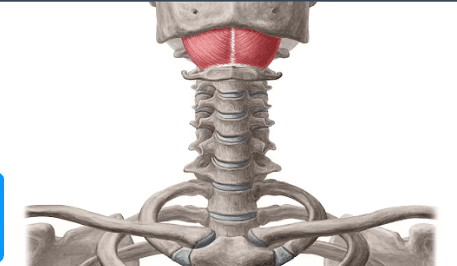
The Mylohyoid Muscle is a bilateral, flat, and triangular suprahyoid muscle. It forms the primary muscle of the floor of the mouth (diaphragma oris) and extends from the mandible to the hyoid bone. It plays a crucial role in elevating the hyoid bone and the tongue during swallowing, chewing, and speech.
The mylohyoid muscle is a thin, flat structure that constitutes the floor of the mouth. These bilateral muscles converge along the midline to form a diaphragmatic structure, creating an anatomical barrier between the oral cavity and the neck. The muscle originates from the mylohyoid line on the internal surface of the mandible. This line begins at the mandibular symphysis and extends to the last molar tooth. The site of insertion varies according to the orientation of the muscle fibers. The anterior and middle fibers meet along a fibrous band known as the median raphe, while the posterior fibers attach to the anterior surface of the hyoid bone, ensuring functional continuity of the muscle. The superior surface of the mylohyoid muscle contains the sublingual space, which houses important structures such as the sublingual salivary gland, the lingual nerve, the hypoglossal nerve, and the sublingual artery. Inferior to the muscle lies the submandibular space, where the superficial lobe of the submandibular gland is located. The posterior border of the muscle is free, allowing transition between the sublingual and submandibular spaces. This anatomical opening serves as a clinically significant pathway for the spread of infection between these two regions.
The mylohyoid muscle is embryologically derived from the first branchial arch (mandibular arch), a feature that classifies it among the suprahyoid muscles associated with mastication. The first branchial arch gives rise to certain muscles and skeletal structures in the embryonic head and neck region; muscles originating from this arch are innervated by the mandibular division of the trigeminal nerve (n. mylohyoideus, V3). The mylohyoid muscle is motorically innervated by the mylohyoid nerve, a branch of the mandibular nerve, consistent with this innervation pattern. The mylohyoid muscle develops as precursor cells migrate from the paraxial mesoderm to the mandibular arch region, forming a key structure that contributes to the formation of the floor of the mouth and the positional control of the hyoid bone. Considering its embryological origin, neural innervation, and functional properties, the mylohyoid muscle is classified as a specialized suprahyoid muscle involved in mastication as well as in swallowing and speech.
The mylohyoid muscle is innervated by the mylohyoid nerve, a branch of the inferior alveolar nerve, which itself is a division of the mandibular nerve (V3). The mylohyoid nerve arises from the inferior alveolar nerve just before its entry into the mandibular canal and runs along the mylohyoid groove, providing motor innervation to both the mylohyoid muscle and the anterior belly of the digastric muscle. This innervation enables voluntary contraction of the muscle, contributing to the coordination of mandibular movements during mastication, swallowing, and speech. The fact that the mylohyoid nerve also innervates the anterior belly of the digastric muscle allows for synchronized action of these two structures during jaw-opening movements. The vascular supply of the muscle is primarily provided by the mylohyoid branch of the inferior alveolar artery. Additional contributions may come from neighboring arterial branches such as the submental artery and the lingual artery. These arterial structures support the metabolic demands of the muscle and ensure its functional continuity. The organization of its neural and vascular components is essential not only for the physiological function of the mylohyoid muscle but also for defining critical anatomical parameters during surgical interventions, particularly in oral floor and mandibular surgery.
The primary function of the mylohyoid muscle is to elevate the hyoid bone, thereby stabilizing the floor of the mouth during swallowing and speech. It also assists in depressing the mandible to open the oral cavity. Support of the floor of the mouth enhances the efficiency of tongue movements during chewing and facilitates control of food in the oral phase. The mylohyoid muscle can exhibit significant anatomical variations among individuals. The median raphe may be absent in some individuals, resulting in a fused appearance of the two muscle bellies. It may also be continuous with or even replace the anterior belly of the digastric muscle. Rarely, accessory mylohyoid muscles may be observed. Another clinically significant variation is the herniation of sublingual gland tissue or adipose tissue between the muscle fibers, a condition observed in 10–50% of individuals. Clinically, the mylohyoid muscle is important in understanding the pathways of odontogenic infection spread. Infections originating from anterior teeth typically spread to the sublingual space, while those from posterior teeth commonly extend to the submandibular space. Computed tomography (CT) and magnetic resonance imaging (MRI) are frequently used to evaluate these regions.
Accessed November 26, 2025.
Accessed November 26, 2025.
Fukuda, Mariko, Kojiro Tanoue, Natsuki Ohmori, and Ryosuke Nakamura. "Evaluation of the Mylohyoid Ridge in Edentulous Mandibles Using CBCT: Implications for Implant Dentistry." International Journal of Implant Dentistry 9, no. 1 (2023): 1–10. Accessed July 26, 2025.
Iqbal, Shahid, Talat Naqash, and Naveen Shukla. "Variant Innervation of the Mylohyoid Muscle by the Lingual Nerve." ResearchGate, November 2021. Accessed July 26, 2025.
Khan, Zainab, Shahid Iqbal, and Naveen Shukla. "Structural Analysis of the Mylohyoid Muscle as a Septum Dividing the Floor of the Oral Cavity for the Purposes of Dental Implant Surgery: Variety of Muscle Attachment Positions and Ranges of Distribution." ResearchGate, December 2023. Accessed July 26, 2025.
Khan, Zainab, Talat Naqash, Shahid Iqbal, and Naveen Shukla. "Defining the Shape of the Mylohyoid Muscle: A Morphometric Imaging Study." ResearchGate, February 2024. Accessed July 26, 2025.
Shukla, Naveen, Shahid Iqbal, Talat Naqash, and Zainab Khan. "Mylohyoid Muscle: Anatomical and Clinical Aspects." International Journal of Morphology 40, no. 5 (2022): 1194–1198. Accessed July 26, 2025.
Shukla, Naveen, Talat Naqash, and Shahid Iqbal. "A Curious Submandibular Mass Associated with the Mylohyoid Muscle." ResearchGate, September 2022. Accessed July 26, 2025.
Özdemir, Fazıl. “Mylohyoid Kasının Klinik Önemi.” *Fırat Üniversitesi Sağlık Bilimleri Dergisi* 15, no. 3 (2001): 223–226. Accessed July 26, 2025. https://dergipark.org.tr/tr/download/article-file/232596.

Nerve | Innervated by the nerve mandibularis (V3) via a branch from the nerve mylohyoideus. | ||||||||
|---|---|---|---|---|---|---|---|---|---|
Artery | Its arterial supply is provided by the artery alveolaris inferior and the artery submentalis. | ||||||||
Function(s) | Supports the floor of the mouth and assists in swallowing and speech. elevates the hyoid bone | ||||||||
Anatomical Structure
Morphology and Attachment Points
Embryological Origin and Classification
Innervation and Vascular Supply
Function and Clinical Relevance