


This article was automatically translated from the original Turkish version.
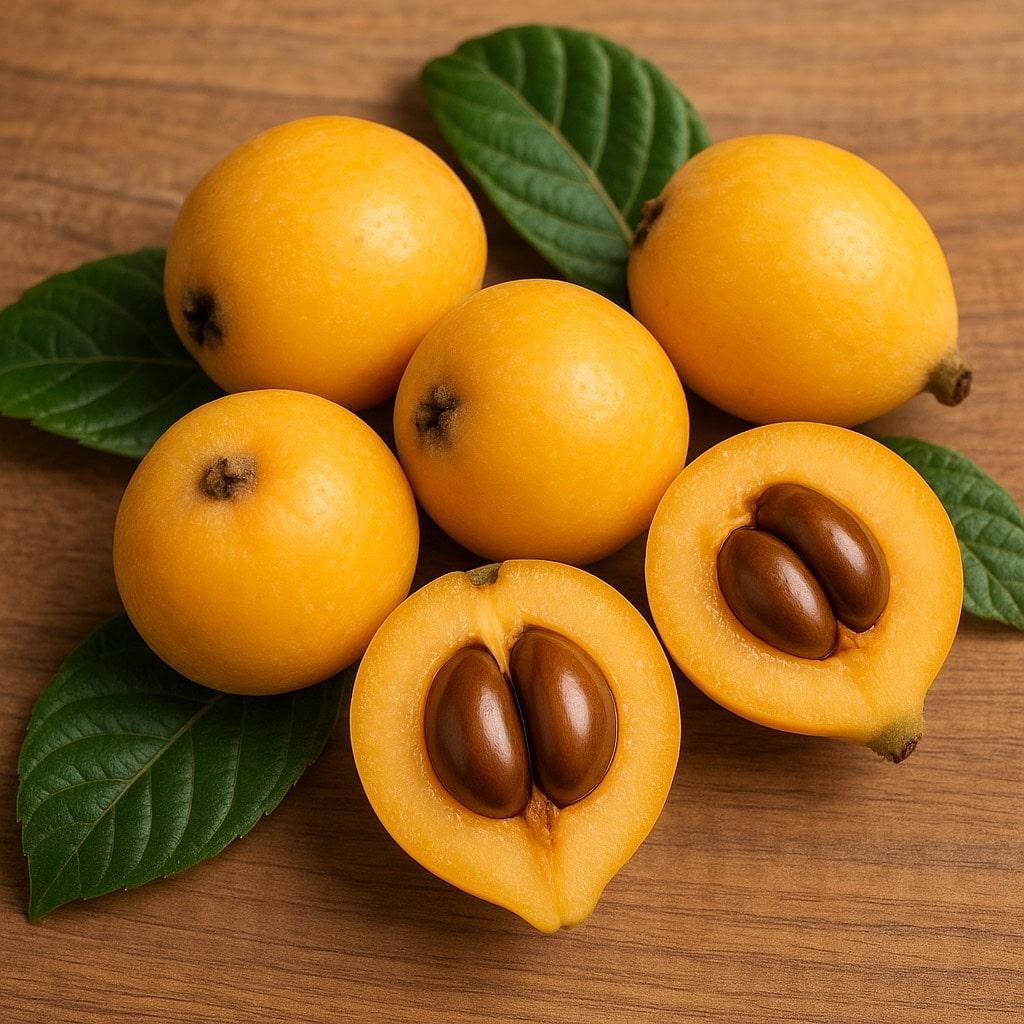
Loquat (Eriobotrya japonica) is a fruit species belonging to the Rosaceae family that thrives in subtropical climates. It is distinguished by its evergreen leaves and broad-oval canopy structure. The fruit is consumed fresh and has high commercial value due to its early spring market availability. It is a non-climacteric fruit, meaning its ripening process is limited after harvest.
Loquat is native to China and Japan and has been cultivated in Japan for over a thousand years. It was introduced to Europe in the 1700s and reached Türkiye via Algeria and Lebanon in the 1800s. Today, it is widely cultivated in Türkiye, particularly in the Mediterranean Region. Approximately 97% of total production comes from this region, with the highest yields recorded in Antalya and Mersin provinces.
Loquat trees can grow up to 5–6 meters in height. They possess a strong fibrous root system that is shallow in structure. The leaves are firm-textured, short-stalked, and measure 12–40 cm in length. Flowering occurs between November and February. Flower clusters are 10–17 cm long and may contain 60–70 individual flowers.
The fruit may be round, elliptical, or pear-shaped and typically weighs 55–60 grams. It contains 1–5 seeds. Fruits ripen between March and June.
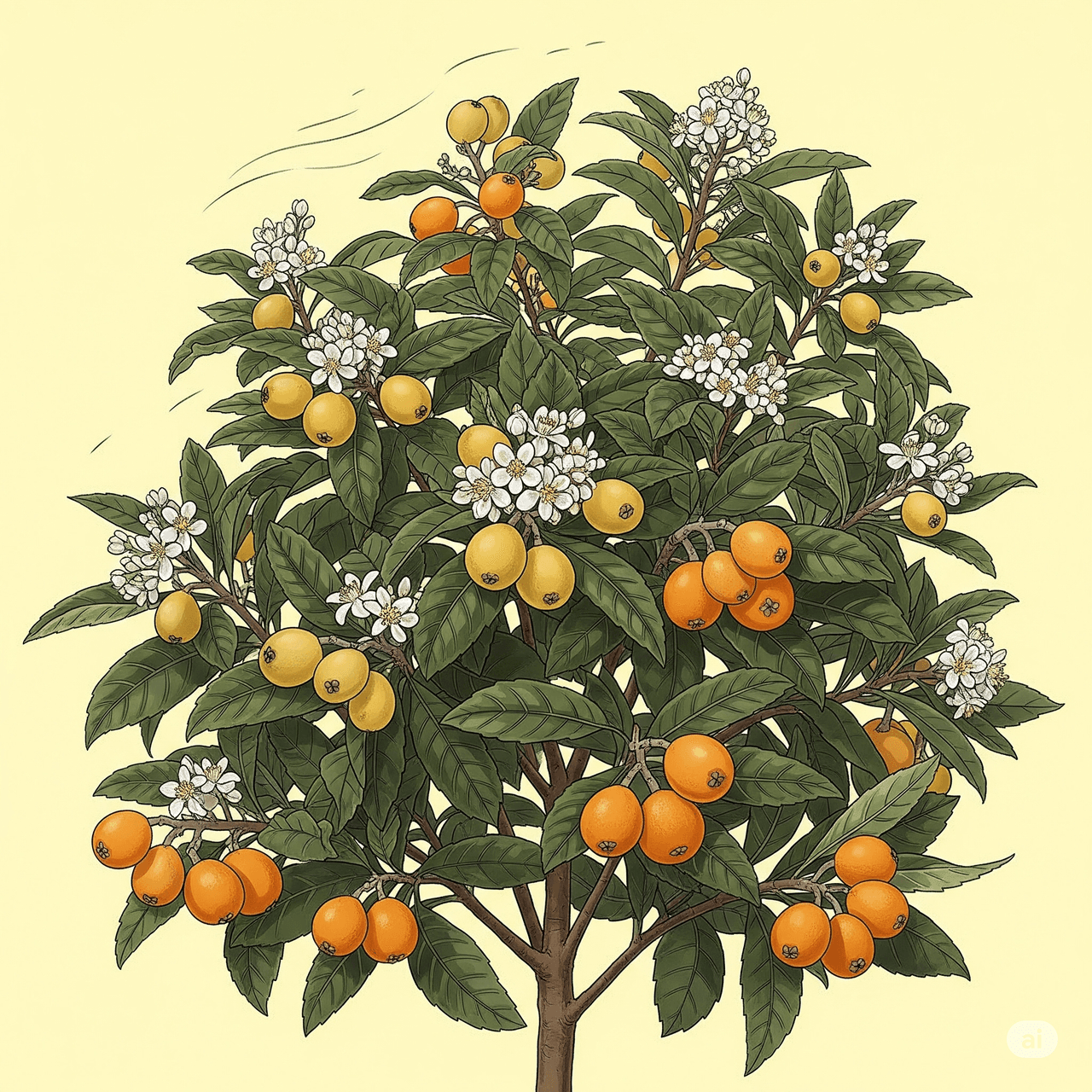
Loquat Tree Illustration. (Generated by Artificial Intelligence.)
Loquat thrives in subtropical conditions with low risk of frost. Flowers and fruits begin to suffer damage at -3°C; the trees themselves can withstand temperatures as low as -12°C. Temperatures above 30°C may cause sunburn on the fruit.
Strong winds negatively affect pollination and fertilization, reducing yields. Preferred soils are well-drained, rich in organic matter, loamy-sandy, and have a neutral pH. Areas with high groundwater levels are unsuitable.
Today, grafted seedlings are preferred for loquat cultivation. The rootstock used is quince, and T-bud or chip budding techniques are applied for grafting. Some varieties are self-incompatible, so the presence of pollinator varieties increases yield.
Regular irrigation and balanced fertilization are essential for high quality and yield. Excessive nitrogen fertilization can negatively affect flowering.
Harvesting is done with shears, cutting the fruit with its stem attached, based on size and color. Since fruits do not ripen simultaneously, harvesting is carried out in multiple rounds.
How Are Loquat Fruit Seeds Grown? (Mansourigol Garden)
The most common disease in loquat is scab, which can cause yield loss and tree dieback. Control requires cultural practices and appropriate spraying. Major pests include the yellow wood borer and aphids.
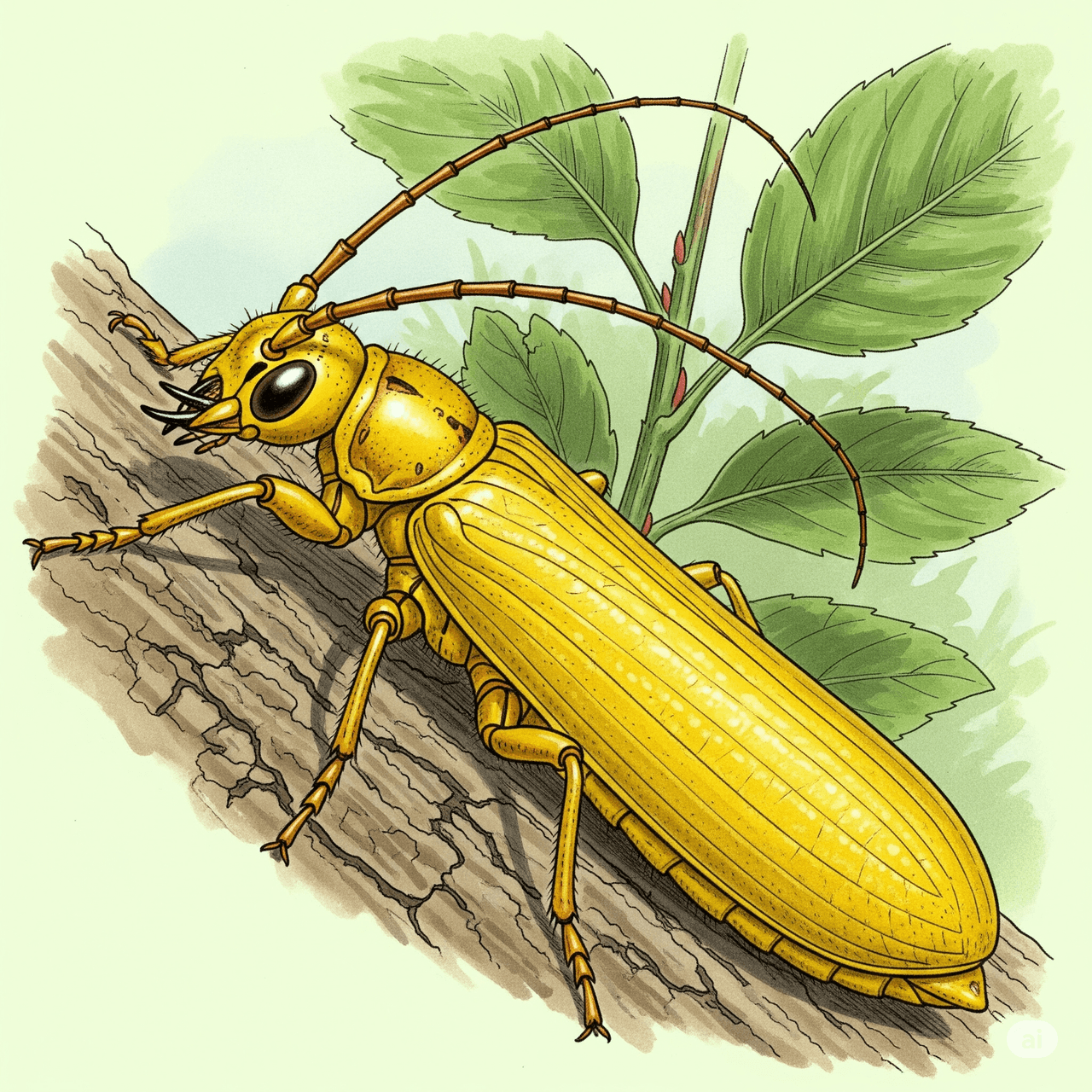
Yellow Wood Borer Illustration. (Generated by Artificial Intelligence.)
Due to its delicate tissue structure and high moisture content, loquat fruit cannot be stored for long periods without spoilage. With an average moisture content of 85–90%, loquat fruits can remain unspoiled for approximately 10 days in an environment at 20–25°C after harvest.
This sensitivity and high moisture content lead to challenges in long-term storage. Due to inadequate storage conditions, a significant portion of fresh produce spoils. Therefore, controlled removal of the fruit’s high moisture content is necessary.
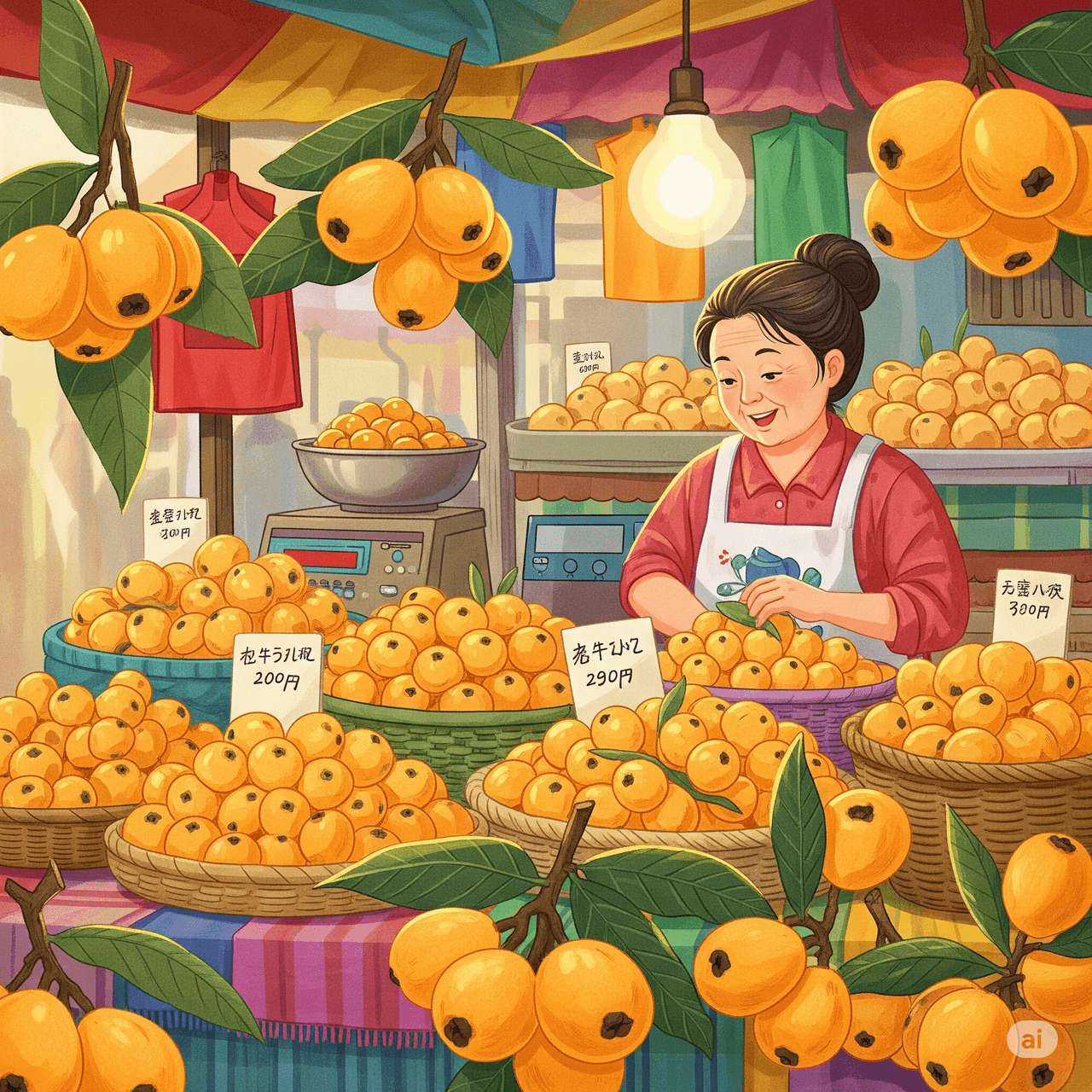
Loquat Fruit at Market Stall Illustration. (Generated by Artificial Intelligence.)
A study was conducted using a microwave oven to determine the optimal final quality parameters of loquat fruit in terms of drying kinetics and color criteria.
In the study, the fruit was dried at power levels of 360, 540, 720, and 900 W. Moisture content was reduced to a range of 10–13% on a wet basis, with average drying times determined as 28, 15.5, 12, and 10 minutes, respectively, for the four power levels. It was observed that increasing power reduced drying time.
The effects of drying on the color of loquat fruit were also analyzed.
L, a, and b values of fresh and dried loquat fruits were measured to calculate chroma, hue angle, and browning index values.
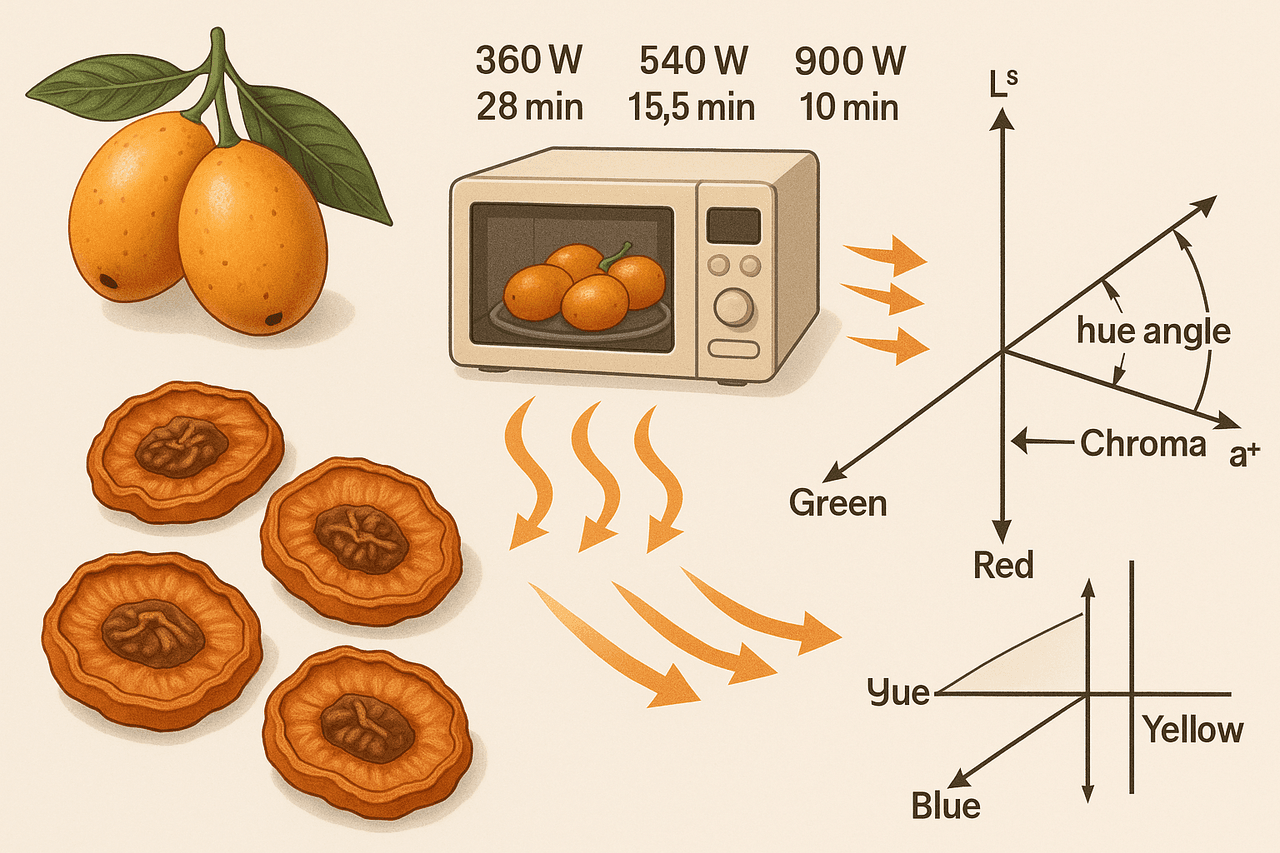
Loquat Fruit Dried in a Microwave Oven Illustration. (Generated by Artificial Intelligence.)

No Discussion Added Yet
Start discussion for "New World (Eriobotrya japonica)" article
Origin and Distribution
Botanical Characteristics
Climatic and Soil Requirements
Cultivation Practices
Important Varieties
Diseases and Pests
Storage and Drying:
Determination of Drying Kinetics and Quality of Loquat (Eriobotrya japonica L.) Fruits Dried in a Microwave Oven