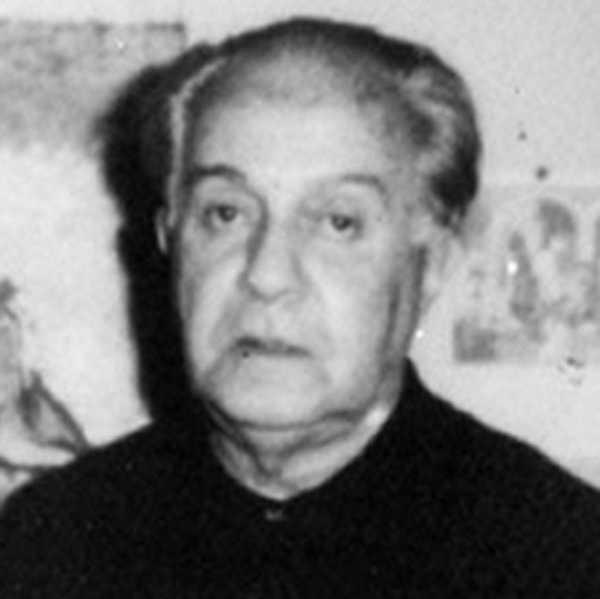
+2 More

Birth | 1906 | ||||||||
|---|---|---|---|---|---|---|---|---|---|
Death | 1982 | ||||||||
Profession(s) | Painter | ||||||||
Style | Constructivist and Cubist painter. | ||||||||
Education | second Paris period at the ateliers of André Lhote and Fernand Léger (1932). Ernest Laurent studio) Paris Ecole des Beaux-Arts (1924–1928 Sanayi-i Nefise Mektebi Nişantaşı and Galatasaray High School | ||||||||
Activities | São Paulo Biennales. Venice Exhibitions: Istanbul 1946: Paris Cernuschi Museum – Turkish Art Exhibition 1953: AICA Türkiye (Founder) 1933: D Group (Founder) 1929: Independent Painters and Sculptors Union (Founder) | ||||||||
Position(s) | 1939–1968: Academy of Fine Arts – Faculty Member 1962–1969: Istanbul Museum of Painting and Sculpture – Director. | ||||||||
Books | Turkish Sculpture. Painting Knowledge Painting in Türkiye Art Conversations Modern Art Works: Leonardo da Vinci | ||||||||
Award(s) | 1947: Çanakçılı Competition – Second Prize 1966: 27th State Exhibition – First Prize. | ||||||||
Born in Istanbul in 1906, Nurullah Berk became one of the pioneering figures of modern Turkish painting. He developed his artistic vision through education at the Sanayi-i Nefise Mektebi and in Paris, integrating influences from Cubism and Constructivism into a unique East-West synthesis. Beyond painting, he made lasting contributions to contemporary Turkish art through his work as an educator, writer, and museum director.
Nurullah Berk, born in Istanbul in 1906, completed his secondary education at Nişantaşı and Galatasaray High Schools before studying at the Sanayi-i Nefise Mektebi (today Mimar Sinan Fine Arts University) in the ateliers of Hikmet Onat and İbrahim Çallı. After graduating in 1924, he traveled to Paris where he worked in the atelier of Ernest Laurent at the École des Beaux-Arts.
In 1932 he returned to Paris and studied at the academies of prominent artists of the time, André Lhote and Fernand Léger. Upon returning to Turkey, he continued his artistic career by combining teaching with writing. In 1939 he was appointed as an assistant at the Academy of Fine Arts, where he taught for nearly thirty years. From 1962 to 1969 he served as director of the Istanbul Museum of Painting and Sculpture. He died in Istanbul in 1982.

Natürmort (Culture Portal)
Nurullah Berk was among the first Turkish artists to embrace the principles of Cubism and Constructivism. His work emphasized volumetric composition, geometric structure, and figurative abstraction. Influenced by Lhote’s classical structure and Léger’s modernist line, he drew inspiration from traditional Ottoman and Persian miniatures to develop an original artistic language rooted in East-West synthesis. Although he moved toward abstraction, he never abandoned figurative elements and incorporated text as an integral part of his paintings. He was a founding member of the Independent Painters and Sculptors Union established in 1929 and of Group D founded in 1933. In 1946 he organized an exhibition on Turkish painting at the Cernuschi Museum in Paris and held his first solo exhibition in 1954. He participated in the Venice and São Paulo Biennales. He founded the AICA Turkey committee, representing Turkey on the international stage, and authored books on art including “Leonardo da Vinci,” “Modern Art,” and “Conversations on Art.”

Damlar (Culture Portal)
Nurullah Berk’s notable works include Damlar, Tayyareciler, İskambil Kâğıtlı Natürmort, Kahve, Liman, Ayçiçekleri (1978), and Ütü Yapan Kadın (1977). His paintings are exhibited in the painting and sculpture museums of Istanbul, Ankara, and İzmir, as well as in private collections both in Turkey and abroad. Other works such as Gergef İşleyen Kadın, Nargile İçen Adam, Yatan Kadın, Ayvalı Natürmort, Bulutlar, and Portre 1973 are held in public collections. In 1976 he also engaged in printmaking studies in the atelier of Süleyman Saim Tekcan, expanding his creative output into this medium. Nurullah Berk left a significant legacy in Turkish art through his academic, creative, and institutional contributions. He died in Istanbul in 1982 and is recognized as one of the founding figures of modern Turkish painting due to his prolific output and his enduring influence through art education and writing.
Ankara Resim ve Heykel Müzesi. "Nurullah Berk (1904–1982)." Sanatçı Kataloğu. T.C. Kültür ve Turizm Bakanlığı. Accessed August 16, 2025. https://arhm.ktb.gov.tr/artists/detail/2070/nurullah-berk-1904-1982
Culture Portal. "Nurullah Cemal Berk." Ministry of Culture and Tourism of the Republic of Türkiye. Accessed August 16, 2025. https://www.kulturportali.gov.tr/portal/nurullah-cemal-berk-
Istanbul Museum of Graphic Arts (IMOGA). "Nurullah Berk." Accessed August 16, 2025. https://www.imoga.org/tr/collection/artists/nurullah-berk
İstanbul Sanat Evi. "Türk Ressamlar Listesi (Alfabetik)." Accessed August 16, 2025. https://www.istanbulsanatevi.com/turk-ressamlar-listesi-alfabetik/

Birth | 1906 | ||||||||
|---|---|---|---|---|---|---|---|---|---|
Death | 1982 | ||||||||
Profession(s) | Painter | ||||||||
Style | Constructivist and Cubist painter. | ||||||||
Education | second Paris period at the ateliers of André Lhote and Fernand Léger (1932). Ernest Laurent studio) Paris Ecole des Beaux-Arts (1924–1928 Sanayi-i Nefise Mektebi Nişantaşı and Galatasaray High School | ||||||||
Activities | São Paulo Biennales. Venice Exhibitions: Istanbul 1946: Paris Cernuschi Museum – Turkish Art Exhibition 1953: AICA Türkiye (Founder) 1933: D Group (Founder) 1929: Independent Painters and Sculptors Union (Founder) | ||||||||
Position(s) | 1939–1968: Academy of Fine Arts – Faculty Member 1962–1969: Istanbul Museum of Painting and Sculpture – Director. | ||||||||
Books | Turkish Sculpture. Painting Knowledge Painting in Türkiye Art Conversations Modern Art Works: Leonardo da Vinci | ||||||||
Award(s) | 1947: Çanakçılı Competition – Second Prize 1966: 27th State Exhibition – First Prize. | ||||||||
No Discussion Added Yet
Start discussion for "Nurullah Cemal Berk" article
Life
Artistic Vision and Contributions
Notable Works and Legacy