


This article was automatically translated from the original Turkish version.
+2 More
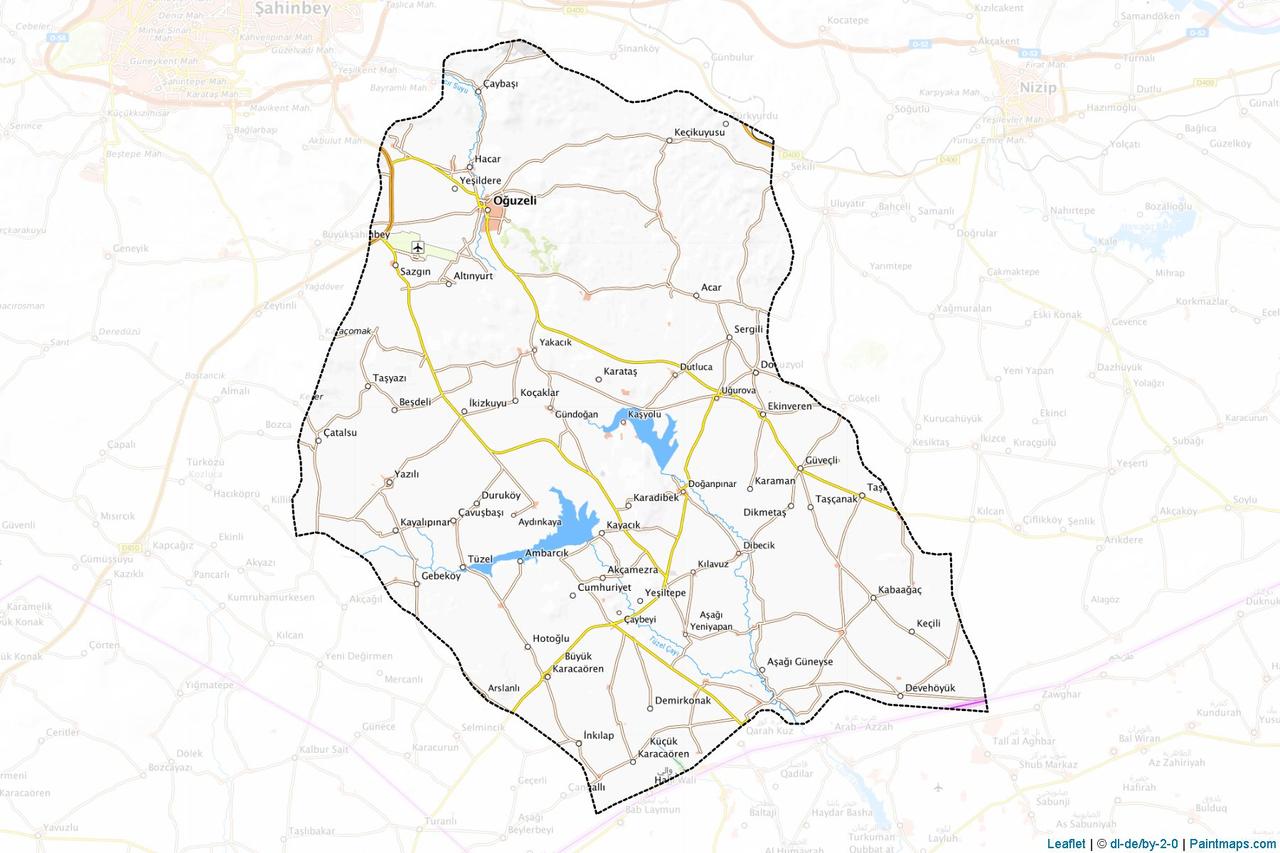
Oğuzeli (District)
Oğuzeli, a district of Gaziantep Province in Türkiye. Located 17 km south of Gaziantep, place, the district attracts attention due to its historical, geographical, and economic characteristics. Oğuzeli gained district status on 14 April 1946 and became the third district of Gaziantep on 23 July 2004.
Oğuzeli has a deeply rooted past. Excavations at Tilbaşar Castle, located in the village of Tilbaşar under its jurisdiction, have uncovered artifacts dating back to the 3000s BCE. Region, throughout history, the region came under the rule of the Hittites, Assyrians, Medes, Persians, Romans, Sassanids, and Byzantines. During the time of Hz. Omar, Oğuzeli was conquered by Islamic armies in 639 and frequently changed hands between Muslims and Byzantines. During Abbasids, the region became entirely Islamic territory and transitioned to Turkic-Islamic dominance with the arrival of the Turks to Anatolia. Oğuzeli came under firm Turkish control during the reign of Seljuk Sultan I. Mesut and was incorporated into Ottoman territory after the Battle of Marj Dabiq in 1516. Known in Ottoman records as “Kızılhisar-ı Fevkani,” the district resisted French occupation during the National Struggle with Kuva-yi Milliye units and proved its status as Turkish land.
The district is believed to derive its name from the Oğuz Turkic origins of the families residing there, though its former name was Büyükkızılhisar Village. This name is thought to originate from houses built of red earth in a fortress shape. In 1995, Elbeyli district and on 23 village Oğuzeli were detached and attached to Kilis Province. It is known that in the poetry of the 17th-century people poet Karacaoğlan, Tilbaşar, İkizkuyu, Sazgın, and Nafak Pınarı like regions are mentioned. Additionally, Ezo Gelin, whose fame spread across the region, was born in Dokuzyol (Uruş) Village, which belongs to Oğuzeli. The ruins of Tilbaşar Castle, Hamzababa, Gaffurbaba, Şıh Bilecan Türbesi, and the minaret of the Orta Camii from the Seljuk period are among the district’s main historical monuments.
Tilbaşar Castle is located on the Tilbaşar Höyük, approximately 12 km southeast of Oğuzeli in Gündoğan Village. The site has been inhabited since the 3000s BCE and shows continuous settlement from the Bronze Age. During the Classical era, the ancient city of Abara was established nearby. Reconstructed in the 11th and 12th centuries during the Crusades due to its strategic importance, the castle controlled key trade routes owing to its position on a high hill. Excavations conducted in 1995 by the Gaziantep Archaeology Museum and the French Institute of Anatolian Studies revealed settlements from the Early Bronze Age, Byzantine, Ayyubid, and Crusader periods. The castle sits atop one of Anatolia’s largest tells, and remnants of Crusader-period cut-stone stone wall and traces of its fortification walls are still visible.
Oğuzeli is situated in the southeast of Gaziantep, along the Sacır River. To its east lies Nizip, to its west Elbeyli (Kilis), to its north Şahinbey and Şehitkamil, and to its southeast Karkamış districts, while to its south it shares a border with Syria. The district contains fertile agricultural lands such as the Tilbeşar, Tüm, and Barak plains. These plains are irrigated by the Kayacık Dam, constructed in 2006 and covering an area of 20,000 hectares. The general topography of the district is flat, with no high mountains nearby. The most significant elevation is Delikli Tepe (835 m) in the east. Its elevation above sea level is 740 meters.
Oğuzeli exhibits transitional characteristics between Mediterranean and continental climates. Its inland location and elevation of 740 meters shape this climatic profile. The highest recorded temperature was 44°C on 30 July 2000, and the lowest was -13°C on 2 February 1992. The average annual temperature is 15.02°C. Annual precipitation is approximately 550 mm, with rainfall typically occurring in winter and spring months in a rain pattern; snowfall is rare. During Summer months, the influence of the Basra Low Pressure System from the south brings sand and dust storms. In winter, moist-cold winds from the north and northwest prevail, while in summer, hot-dry winds from the south and southeast dominate.
The dry periods of the climate have influenced the plant plant cover. In arid areas, drought-resistant grasses, shrubs, and olive, pistachio, fig, and grape crops are cultivated. In wetter areas, maize and pomegranate are predominant.
Industry and trade in Oğuzeli have developed around the Airport Industrial Zone and the Livestock Organized Industrial Zone. The Airport Industrial Zone, established in 1993 on an area of 1,000,000 m², provides employment for 1500 to 2000 people across 95 enterprises in sectors such as carpet manufacturing, food production, and machinery. The Livestock Organized Industrial Zone, established in 2004 to to develop livestock production, is located 4500 hectares east of Gaziantep and aims to systematically increase livestock and related products.
Oğuzeli is connected to Gaziantep by a 17 km asphalt state road. All villages within the district are connected to the road network, and most roads have been asphalted under the KÖYDES Project. Gaziantep Airport is located within the district boundaries. The airport, which began operations in 1976, has international status and is situated 19.6 km from the city center. It features a runway measuring 3000 m by 45 m. The new terminal building covers 23,000 m² and has an annual passenger capacity of 4 million. The old apron accommodates 2 aircraft, while the new apron can handle 6. At the airport, 168 DHMİ personnel, 45 cleaning staff, and 14 technical personnel are on duty. A specialized fire brigade and various vehicles provide 24 hour services.

Oğuzeli (District)
History
Tilbaşar Castle
Geographical Location
Climate
Vegetation
Industry and Trade
Transportation